
Unveiling Hidden Empires: How Modern Archaeology Is Rewriting Ancient History
For centuries, our understanding of ancient civilizations has been shaped by monumental ruins, classical texts, and the occasional lucky discovery. Yet, beneath dense jungles, vast deserts, and even ocean waves, countless hidden empires have lain dormant, their stories untold. Thanks to the revolutionary tools and techniques of modern archaeology, these lost worlds are now emerging from the shadows, challenging long-held assumptions and dramatically expanding our knowledge of human history. From sprawling urban centers in the Amazon to sophisticated societies that predate familiar empires, today’s archaeologists are not just digging; they’re scanning, mapping, and analyzing on an unprecedented scale, offering us an intriguing and enlightening glimpse into the forgotten chapters of our past.

The Shifting Sands of Time: Why Empires Go Missing
It might seem incredible that entire civilizations could vanish without a trace, but history is replete with examples of powerful societies succumbing to various forces. Environmental catastrophes, such as prolonged droughts, tsunamis, or volcanic eruptions, could render once-fertile lands uninhabitable. Over time, nature reclaims these sites, burying cities under soil, sand, or dense vegetation. Think of the legendary city of “Z” in the Amazon, long dismissed as a myth, or the numerous settlements swallowed by advancing deserts.
Conquest and political upheaval also played a significant role. When an empire falls, its conquerors sometimes deliberately dismantle its infrastructure, erase its records, or simply build over its ruins, obscuring its legacy. Furthermore, many ancient societies left no written records decipherable to us, or their records have simply not survived. This lack of historical documentation means their existence remained largely unknown until the physical evidence could be unearthed and interpreted. The sheer remoteness of some regions, like the vast Amazon rainforest or the rugged Andes, also kept many significant sites hidden from conventional exploration for millennia.

Beyond the Trowel: The New Toolkit of Modern Archaeology
The image of an archaeologist with a brush and trowel meticulously excavating a site is still valid, but it’s now just one part of a much larger, technologically advanced toolkit. Modern archaeology leverages cutting-edge science to locate, map, and understand ancient sites without always needing to break ground.

Seeing Through the Canopy: Lidar and Satellite Imagery
Perhaps the most revolutionary tool in recent decades is Lidar (Light Detection and Ranging). Mounted on aircraft, Lidar systems fire billions of laser pulses at the ground, measuring the time it takes for each pulse to return. This creates an incredibly detailed 3D map of the landscape, effectively “seeing through” dense forest canopies to reveal subtle changes in elevation that indicate ancient structures, roads, and agricultural features. What once took decades of arduous fieldwork to map a few square miles can now be done in hours, revealing vast, interconnected urban systems previously invisible.
Complementing Lidar are various forms of satellite imagery and remote sensing. Hyperspectral imaging can detect changes in soil composition that might indicate buried walls or ancient farming practices, while thermal imaging can reveal subsurface anomalies based on temperature differences. These techniques allow archaeologists to survey vast, inaccessible areas, pinpointing potential sites for further investigation with remarkable precision.
Peering Beneath the Surface: Geophysics and Underwater Exploration
Before even thinking about digging, archaeologists can now use geophysical surveys to create virtual maps of what lies beneath the surface. Technologies like Ground Penetrating Radar (GPR), magnetometry, and electrical resistivity surveys can detect buried walls, foundations, hearths, and even graves by measuring subtle changes in the Earth’s magnetic field, electrical conductivity, or radar reflections. This non-invasive approach helps identify the most promising areas for excavation, saving time and preserving fragile sites.
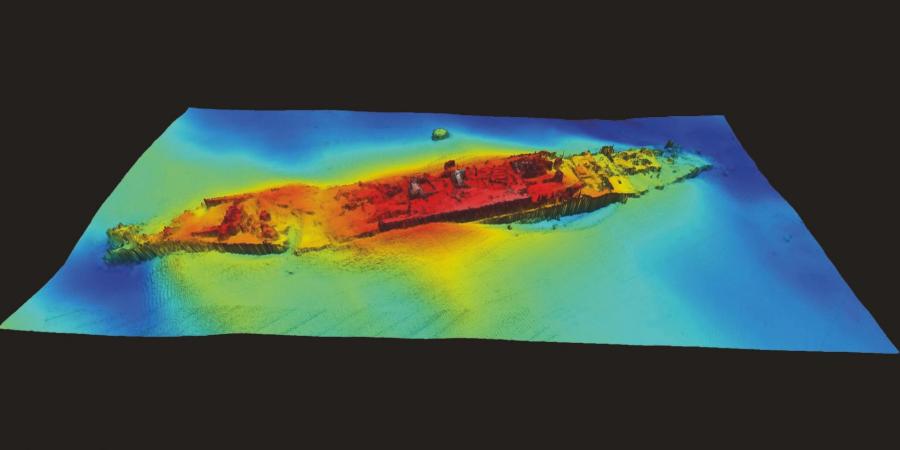
For civilizations lost to the sea, underwater archaeology has transformed from daring dives to sophisticated technological operations. Sonar mapping creates detailed bathymetric maps of the seafloor, identifying potential submerged structures. Remotely Operated Vehicles (ROVs) and Autonomous Underwater Vehicles (AUVs) equipped with cameras and manipulators can explore deep-sea sites, while advanced diving equipment and conservation techniques allow archaeologists to meticulously document and recover artifacts from wrecks and submerged cities, bringing forgotten maritime cultures to light.

Unlocking Biological Secrets: DNA and Isotope Analysis
The revolution extends beyond detection to analysis. Ancient DNA (aDNA) analysis from human remains, animal bones, and even soil samples can reveal migration patterns, genetic relationships, diets, diseases, and the origins of domesticated plants and animals. Similarly, isotope analysis of human and animal bones (examining ratios of elements like strontium, oxygen, and carbon) can provide insights into ancient diets, geographical origins, and mobility patterns, painting a vivid picture of how people lived and moved within and between ancient societies.
Digital Archaeology: Preserving and Reconstructing the Past
Once data is collected, digital archaeology takes over. 3D modeling and photogrammetry create highly accurate virtual reconstructions of sites and artifacts, allowing researchers to study them in detail and share them with the public without risking damage to the originals. Geographic Information Systems (GIS) integrate vast amounts of spatial data, helping archaeologists analyze settlement patterns, resource distribution, and the relationships between ancient communities on a grand scale.
Case Studies: Unveiling Hidden Empires
These advanced tools have led to some truly breathtaking discoveries, forcing us to rethink the timeline and complexity of human civilization.
El Mirador, Guatemala: A Maya Megalopolis in the Jungle
For decades, archaeologists knew of some ruins in Guatemala’s Mirador Basin, but the sheer scale of the ancient Maya civilization there remained largely unknown, hidden beneath an impenetrable rainforest canopy. That changed dramatically with Lidar technology. In the early 21st century, Lidar scans revealed not just a few scattered settlements, but an immense, interconnected network of cities, towns, and villages, all linked by elevated causeways stretching for miles.
The heart of this hidden empire was El Mirador, a sprawling metropolis that flourished centuries before the classic Maya cities like Tikal. Lidar revealed massive pyramids, some among the largest ever built by the Maya, towering residential complexes, and extensive water management systems. This discovery demonstrated that the Maya had developed highly complex, large-scale urbanism far earlier than previously thought, challenging the narrative of their initial development. The Mirador Basin Project continues to reveal more of this vast, early Maya political and economic landscape, showing a level of organization and monumental construction that truly redefines our understanding of early Mesoamerican societies.
Caral-Supe, Peru: South America’s Earliest Urban Civilization
While not “hidden” by jungle in the same way, the true antiquity and significance of Caral-Supe in Peru’s Supe Valley were overlooked for a long time. Though known to locals, its monumental architecture was initially misidentified or dismissed. However, through meticulous excavation and advanced radiocarbon dating, archaeologists confirmed that Caral was built around 2600 BCE, making it the oldest known urban center in the Americas, predating even the Olmec civilization in Mesoamerica by centuries.
Caral-Supe represents the Norte Chico civilization, a hidden empire of sorts, whose sophisticated social organization and monumental construction were achieved without warfare, pottery, or extensive agriculture (relying heavily on marine resources). Its massive pyramids, sunken plazas, and ceremonial structures indicate a highly organized society with a complex religious and political structure. The re-evaluation of Caral-Supe, driven by precise dating techniques and interdisciplinary research, has fundamentally rewritten the timeline of civilization in the New World, demonstrating that advanced societies emerged much earlier and in different forms than previously imagined.
The “Garden Cities” of Angkor, Cambodia: A Vast Khmer Hydraulic Empire
The magnificent temples of Angkor Wat and Angkor Thom are iconic symbols of the Khmer Empire. However, Lidar surveys conducted in 2012 and 2015 dramatically unveiled the true extent of this hidden empire. These scans revealed a vast, sprawling medieval city, far larger and more complex than previously understood, encompassing an area roughly the size of modern-day Los Angeles.
Beneath the dense jungle, Lidar revealed an intricate network of ancient roads, canals, dams, and reservoirs – an immense hydraulic engineering system that supported a population of up to a million people. This advanced water management system was crucial for agricultural productivity, allowing the Khmer to thrive for centuries. The Lidar data showed that the urban sprawl extended far beyond the visible temple complexes, connecting numerous smaller settlements and agricultural fields. This discovery transformed our understanding of the Khmer Empire, revealing it as a highly integrated urban-agrarian landscape, challenging previous notions of its urban boundaries and demonstrating its incredible ingenuity in managing resources.
Amazonian “Garden Cities”: Challenging the Myth of Pristine Wilderness
For decades, the Amazon rainforest was largely seen as a pristine wilderness before European contact, with only small, scattered indigenous populations. Modern archaeology, particularly using Lidar and satellite imagery, is utterly debunking this myth, revealing a multitude of hidden empires and complex societies.
Recent discoveries in the Llanos de Mojos region of Bolivia, using Lidar, have unveiled a vast network of pre-Columbian urban settlements, monumental earthworks, and sophisticated land management systems dating back over 1,500 years. These include large ceremonial platforms, interconnected causeways, canals, and agricultural fields (known as terra preta or “dark earth”), suggesting highly organized societies that actively shaped their environment. Similar discoveries are emerging from Ecuador, Brazil, and other parts of the Amazon basin, revealing large, interconnected “garden cities” that supported significant populations. These findings demonstrate that the Amazon was home to advanced, settled civilizations for millennia, with intricate social structures and sustainable practices that allowed them to thrive in challenging environments.
Göbekli Tepe, Turkey: Rewriting the Dawn of Civilization
While not an “empire” in the classical sense of a sprawling political entity, Göbekli Tepe in southeastern Turkey is perhaps the most profound “hidden” discovery of modern archaeology, profoundly reshaping our understanding of the origins of civilization itself. Discovered in the mid-1990s and extensively excavated using advanced techniques, this site consists of massive, intricately carved stone pillars arranged in circular enclosures, dating back to approximately 9,600 BCE.
What makes Göbekli Tepe so revolutionary is its age. It predates Stonehenge by 6,000 years and the invention of pottery, metallurgy, and even settled agriculture. This means that monumental architecture and complex ceremonial sites were being built by hunter-gatherers, challenging the long-held belief that agriculture was a prerequisite for the development of complex societies. The discovery of Göbekli Tepe, meticulously excavated and dated, suggests that the desire for communal ritual and monumental construction might have actually driven the shift towards settled life and agriculture, rather than being a consequence of it. It’s a truly hidden empire of ideas and spiritual complexity that existed at the very dawn of human civilization.
The Impact of New Discoveries: Rewriting History Books
These ongoing discoveries are not just fascinating anecdotes; they are fundamentally reshaping our understanding of human history. They challenge linear models of societal development, demonstrating that complexity and sophistication emerged in diverse forms and at different times across the globe. We’re learning that:
- Civilization is Older and More Diverse: The timelines for urbanism, monumental architecture, and complex social structures are continually being pushed back, and appearing in unexpected places.
- The “Blank Spaces” Were Populated: Regions once thought to be sparsely inhabited, like the Amazon or dense jungles, are now revealed to have supported vast, organized populations.
- Alternative Paths to Complexity: Not all civilizations followed the same path. Some, like Caral-Supe, achieved complexity without warfare or pottery, while others, like the early Maya, built vast networks before the “classic” period.
- The Resilience of Human Ingenuity: Ancient peoples developed incredibly sophisticated solutions