
Cracking Ancient Enigmas: Unveiling Mysteries and Lost Knowledge from Our Past
From the silent, colossal stones of forgotten temples to the indecipherable scripts of vanished civilizations, the ancient world whispers tales of mysteries and lost knowledge that continue to captivate us. These enigmatic puzzles challenge our understanding of human history, hinting at advanced capabilities, forgotten wisdom, and events that reshaped the course of civilization in ways we are only beginning to comprehend. Delving into these ancient enigmas is not just about solving riddles; it is about connecting with the deep past and perhaps even discovering clues to our future.

The Enduring Allure of the Unknown
What is it about a 5,000-year-old riddle that keeps us up at night? Perhaps it is the thrill of the chase, the intellectual challenge of piecing together fragments of a forgotten world. Or maybe it is the profound realization that our ancestors, often dismissed as primitive, achieved feats of engineering, astronomical observation, and philosophical thought that still defy modern explanation. Our fascination with ancient mysteries is a testament to the human spirit’s insatiable curiosity, a primal urge to understand our origins and the vast stretches of time that precede us.

Echoes of Lost Civilizations: Wonders Beyond Our Grasp
Imagine entire civilizations, thriving with sophisticated knowledge and unique cultures, only to vanish into the mists of time, leaving behind just enough evidence to tantalize us. These lost worlds spark our imagination, prompting us to question how much of human history remains undiscovered beneath layers of earth and legend.
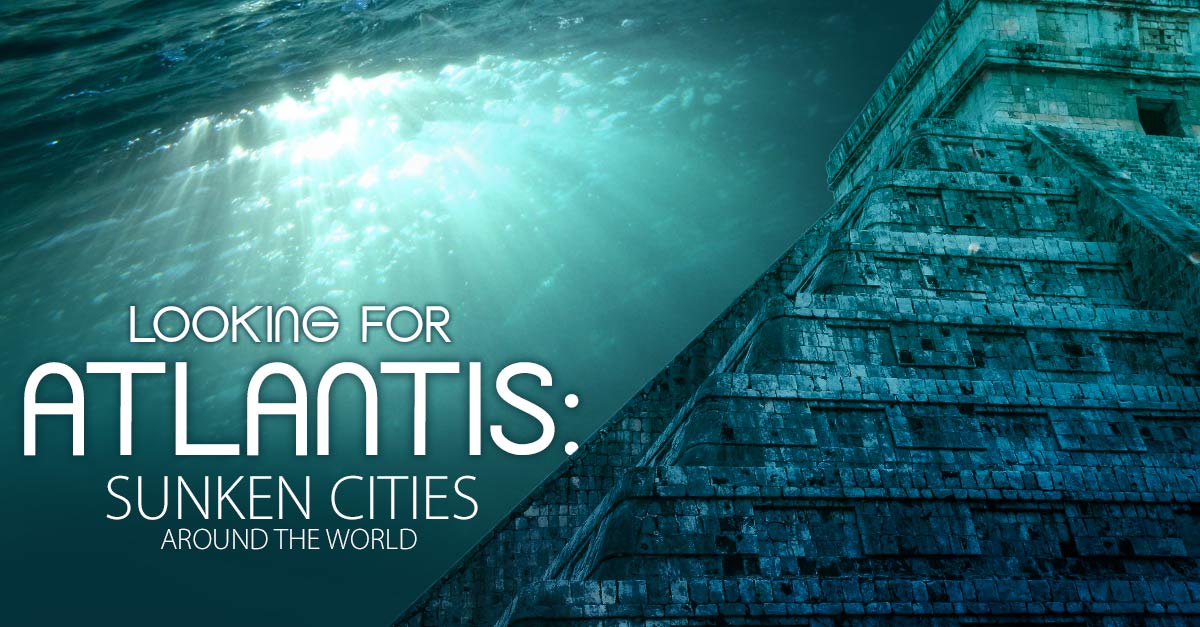
The Lost City of Atlantis: Myth, Legend, or Buried Truth?
Few ancient mysteries hold as much sway over the popular imagination as the lost city of Atlantis. First described by the Greek philosopher Plato around 360 BCE, Atlantis was portrayed as a powerful, technologically advanced island nation that sank beneath the waves in a single day and night of catastrophic destruction. Was Plato relaying a historical account, a cautionary tale, or a purely allegorical narrative?
For centuries, explorers, archaeologists, and dreamers have scoured the globe for tangible evidence of Atlantis. Theories have placed it everywhere from the Mediterranean Sea and the Caribbean to Antarctica and off the coast of Spain. While no definitive proof has emerged, the story of Atlantis continues to symbolize the ultimate lost civilization, a beacon of what might have been and a reminder of the fragility of even the greatest empires.

Mohenjo-Daro and the Indus Valley Civilization: A Script Unread
Journeying to the dusty plains of modern-day Pakistan, we encounter the ruins of Mohenjo-Daro, one of the largest and most advanced cities of the ancient Indus Valley Civilization. Flourishing from around 2500 to 1900 BCE, this civilization boasted sophisticated urban planning, complete with grid layouts, elaborate drainage systems, and multi-story buildings, all without evidence of kings, armies, or monumental palaces.
The most tantalizing enigma of Mohenjo-Daro, and indeed the entire Indus Valley, is its undeciphered script. Thousands of short inscriptions have been found on seals, pottery, and tablets, but despite extensive efforts by linguists and cryptographers, the language remains a mystery. What secrets do these symbols hold? Were they administrative records, religious texts, or something else entirely? Unlocking this script could unveil the beliefs, social structures, and daily lives of a truly remarkable ancient society, offering unparalleled insight into a lost world.
Enigmatic Artifacts: Whispers from Forgotten Hands
Sometimes the past does not just leave behind grand cities or monuments, but smaller, more personal objects that defy our conventional understanding of ancient technology. These artifacts, often found out of place and time, suggest a level of ingenuity that makes us question the timeline of human invention.
The Antikythera Mechanism: An Astounding Ancient Computer
Discovered in a shipwreck off the coast of the Greek island of Antikythera in 1901, this corroded bronze device initially appeared to be a mere blob of metal. However, careful conservation and advanced imaging techniques revealed something extraordinary: a complex astronomical calculator, or “analog computer,” dating back to the 2nd century BCE.
The Antikythera Mechanism consists of dozens of intricately meshing gears, dials, and pointers, capable of predicting solar and lunar eclipses, tracking the movements of the planets, and even calculating the dates of ancient Olympic games. Its complexity rivals 18th-century clockwork, pushing back the known timeline of such sophisticated mechanical engineering by over a thousand years. Who built such a device, and why was this incredible knowledge seemingly lost for so long? It remains an unparalleled testament to ancient Greek genius.
The Baghdad Battery: A Precursor to Modern Electricity?
In 1938, a German archaeologist named Wilhelm König stumbled upon a peculiar artifact in the Baghdad Museum: a small clay jar containing a copper cylinder, an iron rod, and traces of acid corrosion. Dating back to the Parthian era (around 250 BCE to 250 CE), this “Baghdad Battery” immediately sparked intense debate. Could it have been an ancient galvanic cell, capable of producing a small electrical current?
If so, what was its purpose? Theories range from electroplating jewelry and religious objects to providing mild therapeutic shocks for pain relief, or even being used in some unknown ritualistic context. While definitive proof of its electrical function in antiquity remains elusive, the Baghdad Battery challenges our assumptions about the origins of electrical knowledge and offers a tantalizing glimpse into potentially lost scientific applications.
The Piri Reis Map: A Cartographic Conundrum
Few documents ignite the imaginations of cartographers and conspiracy theorists alike as much as the Piri Reis Map. Compiled in 1513 by the Ottoman admiral and cartographer Piri Reis, this world map depicts parts of the western coast of Africa, the eastern coast of South America, and, most remarkably, a portion of Antarctica, seemingly free of ice.
The map’s accuracy, especially concerning landmasses supposedly undiscovered or covered by ice until centuries later, has baffled historians. Piri Reis himself stated he compiled his map from twenty older maps, some dating back to the time of Alexander the Great. Could these ancient source maps have depicted a pre-glacial Antarctica, suggesting a lost advanced civilization with global mapping capabilities? While conventional explanations suggest a combination of speculation, misinterpretation, and coincidence, the Piri Reis Map continues to fuel speculation about lost ancient geographical knowledge.
Unsolved Architectural Puzzles: Monuments to Ingenuity and Mystery
Across the globe, ancient builders left behind structures so grand, so precise, and so seemingly impossible to construct with known ancient technologies that they continue to defy our full understanding. These monuments stand as silent questions, prompting us to wonder about the methods, motivations, and perhaps even the lost knowledge of their creators.
The Great Pyramid of Giza: A Feat of Engineering or Something More?
The Great Pyramid of Giza, the oldest and largest of the three pyramids in the Giza Necropolis, stands as the only remaining wonder of the ancient world. Built for Pharaoh Khufu around 2580–2560 BCE, it consists of an estimated 2.3 million stone blocks, each weighing an average of 2.5 tons, meticulously placed with astonishing precision. The sheer scale and accuracy of its construction are mind-boggling.
How did the ancient Egyptians achieve this? Mainstream theories involve vast armies of laborers, intricate ramp systems, and ingenious use of levers and rollers. Yet the exact methods remain debated, with some questioning whether such precision could have been achieved without more advanced tools or a deeper understanding of physics than typically attributed to the era. The Great Pyramid is not just a tomb; it is a colossal riddle carved in stone, a testament to human ambition and perhaps a whisper of lost engineering secrets.
Stonehenge: A Celestial Calendar or Sacred Burial Ground?
On the Salisbury Plain in England, the monumental stone circle of Stonehenge has stood for millennia, its origins shrouded in mystery. Constructed between 3000 and 2000 BCE, this prehistoric monument involved moving massive sarsen stones (up to 30 tons) from Marlborough Downs, 20 miles away, and smaller bluestones (up to 4 tons) from the Preseli Hills in Wales, a journey of over 150 miles.
Its purpose remains hotly debated. Many theories suggest it functioned as an ancient astronomical observatory, precisely aligned with the solstices and equinoxes, allowing its builders to track celestial events. Other theories propose it was a sacred burial ground, a healing center, or a site for ancient rituals. The effort involved in its construction, the precision of its alignments, and the sheer mystery of its purpose make Stonehenge an enduring symbol of ancient human ingenuity and our ancestors’ connection to the cosmos.
Puma Punku: Precision Stonecraft Beyond Ancient Capabilities?
High in the Bolivian Andes, near Tiwanaku, lies the archaeological site of Puma Punku. What makes this site particularly intriguing are the ruins of incredibly precisely cut andesite and diorite stones, some weighing over 100 tons. These stones are carved with such intricate angles, sharp edges, and interlocking features that they appear almost machine-made.
The H-blocks, for example, are cut with such uniformity that they could have been mass-produced using a template. The stone surfaces are polished to a mirror-like sheen, and the precise drill holes and grooves suggest advanced tooling. The challenge? The Tiwanaku civilization, believed to be the builders, had no known metal tools hard enough to work such difficult stone with this level of precision. This has led to speculation about lost technologies, advanced drilling techniques, or even the use of sonic vibrations to soften stone, pushing the boundaries of what we believe was possible in the ancient world.
Deciphering the Undecipherable: Lost Languages and Scripts
Languages are the keys to a culture’s soul, preserving its history, beliefs, and daily life. But what happens when those keys are lost, leaving behind only tantalizing fragments of an unreadable script?
The Voynich Manuscript: The World’s Most Mysterious Book
Housed at Yale University, the Voynich Manuscript is perhaps the most famous unsolved code in history. This medieval book, dating to the early 15th century, is filled with unusual illustrations of plants, astrological diagrams, and naked women, all accompanied by a unique, elegant script that has defied every attempt at decipherment.
For centuries, cryptographers, linguists, and codebreakers have pored over its pages, proposing theories ranging from a sophisticated hoax to a lost natural language, an elaborate cipher, or even an extraterrestrial message. The text flows naturally, suggesting it is not random gibberish, yet no known language or coding system has successfully unlocked its meaning. The Voynich Manuscript remains a compelling testament to the existence of knowledge that is literally right before our eyes, yet completely inaccessible.
Rongorongo of Easter Island: A Vanished Written Tradition
Easter Island, or Rapa Nui, is famous for its colossal moai statues. Less known, but equally enigmatic, is its unique system of glyphs known as Rongorongo. Discovered in the 19th century, these wooden tablets and artifacts bear a script unlike any other, read in a boustrophedon fashion (alternating lines read left-to-right then right-to-left, with the tablet rotated).
By the time Europeans arrived, the knowledge of how to read Rongorongo had largely been lost due to disease, slavery, and cultural disruption. Only a handful of islanders claimed to understand it, and their accounts were often contradictory. Despite efforts to decipher it, the meaning of Rongorongo remains largely unknown. What stories, histories, or spiritual beliefs did these unique symbols preserve? The loss of this knowledge is a poignant reminder of how fragile cultural heritage can be.
Cataclysms and Vanished Worlds: Theories of Global Disasters
Some mysteries are not about specific artifacts or structures, but about grand, sweeping events that might have reshaped the ancient world, potentially wiping out entire civilizations and vast stores of knowledge.
Younger Dryas Impact Theory: A Cosmic Catastrophe?
One compelling theory that could explain some of the lost knowledge and sudden shifts in ancient human development is the Younger Dryas Impact Theory. Roughly 12,800 years ago, Earth experienced an abrupt and intense return to glacial conditions known as the Younger Dryas cooling event. This period saw the extinction of many megafauna and a significant disruption to early human cultures.
Proponents of the Younger Dryas Impact Theory suggest that this cooling was triggered by a cosmic impact—a comet or asteroid fragment—that struck North America, causing widespread wildfires, an “impact winter” due to atmospheric dust, and rapid climate change. If true, such a cataclysm could have annihilated advanced hunter-gatherer or early agricultural societies, effectively resetting humanity’s technological and cultural clock, and burying any nascent knowledge under layers of ice and sediment. While still debated, this theory offers a powerful, albeit dramatic, explanation for why some ancient advancements seem to appear, disappear, and then re-emerge millennia later.
The Quest for Lost Knowledge: Why Do We Still Search?
Our journey through these ancient enigmas is more than a mere historical exercise; it is a testament to our enduring curiosity and our desire to understand the full scope of human potential. Each unsolved puzzle, each undeciphered script, each inexplicable artifact challenges the tidy narratives we often construct about progress and development. They suggest that history is not a linear march forward, but a complex tapestry with threads that have been frayed, cut, and sometimes completely lost.
By continually probing these mysteries, we not only pay homage to the ingenuity of our ancestors but also push the boundaries of our own understanding. We learn to question assumptions, to embrace complexity, and to remain open to the possibility that there is far more to our shared past than we currently comprehend. The search for lost knowledge is, in essence, a search for ourselves—for the forgotten capabilities, the triumphs, and the untold stories that shape the human experience. It reminds us that the greatest discoveries often lie not in finding new things, but in re-evaluating what we thought we already knew.
The Unfolding Tapestry of Our Past
The ancient world, with its silent cities, cryptic texts, and impossible constructions, continues to beckon us with its unsolved riddles. These enigmas are not mere historical footnotes; they are vibrant, living questions that challenge our perceptions of intelligence, technology, and civilization itself. Each discovery, each new theory, adds another thread to the rich, unfolding tapestry of our human story, reminding us that the past is far from settled and that the greatest secrets may still lie buried, waiting to be rediscovered.
The journey into the unknown is a continuous one, fueled by wonder and a relentless desire to understand. Are you ready to test your knowledge of these incredible ancient mysteries? Delve into ancient enigmas with our interactive quiz and see how well you know the secrets of our past!