
Cracking Ancient Enigmas: Unraveling Lost Knowledge and Unsolved Puzzles from History’s Depths
Have you ever gazed upon an ancient ruin, a cryptic symbol, or an artifact shrouded in secrecy and felt an irresistible pull to understand its story? Humanity’s past is a vast, intricate tapestry, woven with threads of incredible achievement, profound wisdom, and tantalizing ancient mysteries that continue to baffle and intrigue us. From colossal structures that defy modern engineering to texts written in languages no one can decipher, the world is brimming with unsolved puzzles that challenge our understanding of history, technology, and even our own origins.
For centuries, explorers, archaeologists, and curious minds have dedicated their lives to piecing together these fragments of a forgotten past. They seek not just answers, but a deeper connection to the lost knowledge that might reshape our perception of human civilization. This journey into the unknown is more than an academic pursuit; it is an adventure into the heart of what it means to be human—to wonder, to question, and to strive for understanding. Join us as we delve into some of the most captivating enigmatic artifacts and historical conundrums, exploring the theories, the evidence, and the enduring questions that keep these ancient enigmas alive in our collective imagination. Get ready to embark on a thrilling expedition through time, where every discovery sparks new questions and every answer reveals another layer of mystery.
The Allure of Ancient Mysteries and Lost Knowledge
There is something inherently captivating about the unknown, especially when it concerns the foundations of our civilization. The sheer scale of time separating us from ancient cultures often means that records are incomplete, interpretations are speculative, and the true purpose behind many creations remains elusive. This gap in our understanding fuels a powerful human desire to connect with and comprehend the minds that shaped these distant worlds. What did they know that we have forgotten? How did they achieve feats that still seem impossible today? These questions echo through the ages, drawing us into a relentless pursuit of lost knowledge.
Our fascination is not merely about solving a puzzle; it is about expanding our own potential. If ancient civilizations possessed advanced understanding or technologies, it suggests possibilities for human innovation that we might yet rediscover. This quest for answers allows us to consider alternative narratives for human development, challenging conventional timelines and sparking incredible debates among historians, scientists, and mystery enthusiasts alike. The very act of engaging with these unsolved puzzles enriches our perception of human ingenuity and resilience.
Whispers from Forgotten Civilizations: Legends and Lore
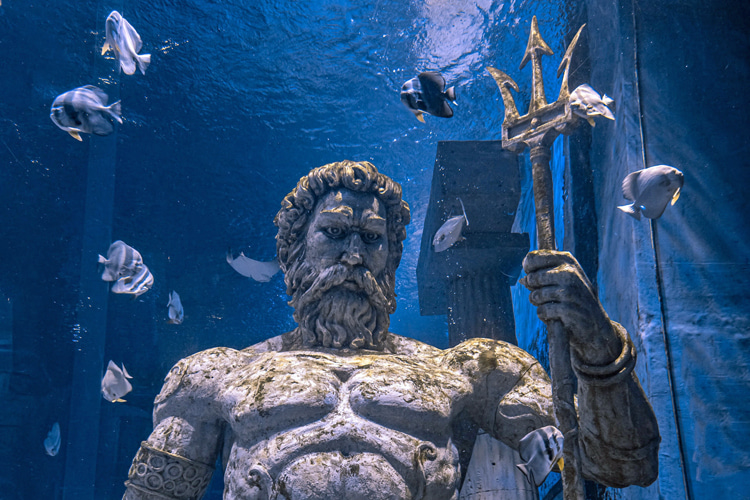
Across the globe, tales persist of advanced civilizations that vanished, leaving behind only tantalizing clues and mythical accounts. The most famous among these is the legend of Atlantis, first recounted by Plato. Described as a technologically advanced island nation that sank beneath the waves in a single day and night, Atlantis embodies the ultimate lost knowledge. While many dismiss it as pure myth, the enduring popularity of the story highlights our collective yearning for a golden age of wisdom and power that was tragically lost.
Beyond Atlantis, countless other civilizations have left behind their own share of ancient mysteries. The sudden and dramatic collapse of the Classic Maya civilization around the 9th century CE, for instance, remains a significant historical enigma. Flourishing with sophisticated writing, mathematics, and monumental architecture, the Maya seemingly abandoned their great cities. Was it environmental catastrophe, warfare, disease, or a combination of factors? The complexity of their demise continues to spark intensive research and debate, offering a chilling reminder of the fragility of even the most advanced societies. Such stories compel us to look closer at the world around us, seeking echoes of what once was.

Enigmatic Artifacts: Objects That Defy Explanation
Some of the most compelling ancient mysteries are found not in sprawling ruins, but in the palm of your hand—or, at least, within a museum exhibit. These enigmatic artifacts are objects that seem to possess knowledge or technology far beyond what we typically attribute to their supposed creators. They challenge our timelines of innovation, forcing us to reconsider the capabilities of ancient peoples and the possibility of lost knowledge. Each discovery of such an artifact opens a Pandora’s Box of questions, pushing the boundaries of what we thought we knew about the past.
These artifacts are not merely curiosities; they are tangible links to a world we barely comprehend. They whisper of forgotten sciences, advanced engineering, and a level of sophistication that often feels anachronistic. Examining these objects closely allows us to engage directly with the unsolved puzzles they represent, inviting us to become detectives in the grand theater of history.

The Antikythera Mechanism: An Ancient Computer?
Discovered in a shipwreck off the coast of the Greek island of Antikythera in 1901, the Antikythera Mechanism is perhaps the most astonishing example of an enigmatic artifact. Dating back to around 150–100 BCE, this intricate device is a complex system of bronze gears and dials, often described as the world’s first analog computer. Its purpose was to predict astronomical positions and eclipses decades in advance, track the cycles of the Olympic Games, and calculate various celestial phenomena with remarkable accuracy.
The sophistication of the Antikythera Mechanism is astounding. Its gear trains are incredibly complex, requiring a level of precision engineering not seen again until the clockwork marvels of the 14th century. This raises profound questions: How was such a device constructed over two millennia ago? What other similar devices might have existed? The mechanism suggests a profound level of lost knowledge in Hellenistic Greece regarding mechanical engineering and astronomy, pushing back the timeline of advanced scientific instrumentation by over a thousand years. It stands as a powerful testament to the forgotten brilliance of ancient minds.
The Voynich Manuscript: A Code Unbroken
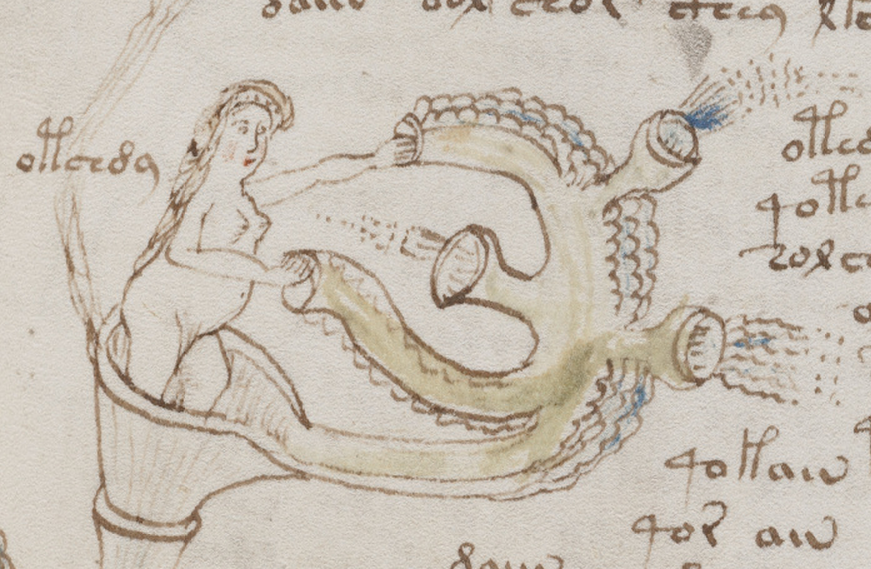
Among the most famous unsolved puzzles in the world is the Voynich Manuscript, a medieval codex filled with mysterious illustrations and an unknown writing system. Discovered in 1912 by Polish book dealer Wilfrid Voynich, this 240-page book has resisted all attempts at decipherment for over a century. Its pages are adorned with bizarre botanical drawings of nonexistent plants, astronomical charts that match no known celestial phenomena, and curious depictions of nude women interacting with strange plumbing systems.
The language itself is the greatest enigma. It exhibits linguistic characteristics, such as consistent word lengths and patterns, suggesting that it may be a genuine language rather than a hoax. However, every cryptographer, linguist, and historian who has tackled it has failed to crack its code. Theories abound: Is it an elaborate hoax, a forgotten natural language, an artificial language, a coded message, or perhaps a magical grimoire or alchemical text? The Voynich Manuscript remains a tantalizing symbol of lost knowledge, a complete book whose contents are utterly inaccessible, challenging our very understanding of communication and secrecy in the ancient world.
Baghdad Battery: Prehistoric Power Source?
In 1938, during an archaeological excavation near Baghdad, Iraq, a peculiar clay pot containing a copper cylinder and an iron rod was unearthed. Dating back to the Parthian era (around 250 BCE to 224 CE), this artifact—now famously known as the Baghdad Battery—immediately sparked intense debate. When filled with an electrolyte like grape juice or vinegar, the assembly could potentially generate a small electrical current. This led some to speculate that the ancient Parthians, or perhaps even earlier Mesopotamian civilizations, possessed knowledge of electricity.
If true, the Baghdad Battery would represent an incredible piece of lost knowledge, suggesting that ancient peoples understood basic electrochemical principles long before Alessandro Volta’s invention of the modern battery in 1800. While mainstream archaeologists often interpret it as a container for scrolls or a device for electroplating small objects with precious metals, the possibility that it was a functional battery continues to fascinate. It invites us to question how much prehistoric technology might have gone unrecognized or been misunderstood by modern historians, hinting at a past far more technologically advanced than we commonly assume.
Unsolved Puzzles: Structures and Sites That Baffle Experts
Beyond individual artifacts, entire sites and monumental structures stand as colossal unsolved puzzles, testaments to the incredible skill and enduring ancient mysteries of their builders. These locations often present engineering challenges that would be daunting even with modern tools, prompting us to wonder about the methods, motivations, and sheer intellectual capacity of the people who created them. They are open-air museums of the unknown, inviting us to ponder the limits of human potential and the vast expanses of lost knowledge.
These architectural marvels are more than just impressive buildings; they are cultural statements, religious centers, and perhaps even cosmic observatories. Their scale and precision speak volumes about the societies that built them, yet the specifics of their construction and their ultimate purpose remain shrouded in the mists of time, fueling endless speculation and debate among history lovers worldwide.
Göbekli Tepe: Humanity’s Earliest Temple?
Nestled in southeastern Turkey, Göbekli Tepe is a site that has fundamentally rewritten our understanding of early human civilization. Dating back to approximately 9600–8200 BCE, it predates Stonehenge by some 6,000 years and the invention of writing and the wheel by millennia. This monumental complex consists of massive carved stone pillars, some weighing up to 20 tons, arranged in circular enclosures. What makes it truly extraordinary is that it was built by hunter-gatherers, long before the advent of agriculture and settled life.
The discovery of Göbekli Tepe challenges the long-held belief that complex social structures and monumental architecture only arose after the development of agriculture. It suggests that the desire for communal ritual and religious expression might have been the catalyst for human settlement, rather than the other way around. The intricate carvings of animals and symbols on the T-shaped pillars also hint at a sophisticated belief system. Göbekli Tepe is a profound ancient mystery, forcing us to reconsider the timeline of human societal development and the origins of organized religion—and potentially unearthing vast amounts of lost knowledge about our earliest spiritual practices.
The Nazca Lines: Messages from Above?
Stretching across the arid plains of Peru, the Nazca Lines are a series of enormous geoglyphs etched into the desert floor between 500 BCE and 500 CE. These striking designs include hummingbirds, lizards, monkeys, spiders, and geometric shapes, some extending for hundreds of meters. What makes them an unsolved puzzle is their sheer scale and the fact that many can only be fully appreciated from an aerial perspective. How did the ancient Nazca people create such precise, large-scale designs without the ability to view them from above?
The purpose of the Nazca Lines remains one of the most enduring ancient mysteries. Theories range from astronomical calendars and ritual pathways to water cult symbols or, controversially, landing strips or messages for extraterrestrial beings. While archaeological evidence points to their creation by the Nazca people for religious or ceremonial purposes, the methods employed and the exact meaning behind each intricate design continue to be debated. The Nazca Lines stand as a powerful testament to the ingenuity and unique worldview of an ancient culture, holding secrets that the desert winds have yet to fully reveal.
Stonehenge: A Megalithic Marvel
Perhaps the most iconic of all ancient structures, Stonehenge—located in Wiltshire, England—is a prehistoric monument of towering sarsen and bluestone megaliths arranged in a distinctive circular pattern. Constructed between 3000 BCE and 2000 BCE, it represents an astonishing feat of engineering for its time. The bluestones, weighing up to 4 tons each, were transported from quarries over 150 miles away in Wales, while the massive sarsen stones, some weighing up to 25 tons, were brought from Marlborough Downs, 20 miles to the north.
How the builders of Stonehenge managed to quarry, transport, and erect these colossal stones with such precision, using only primitive tools and sheer manpower, remains a monumental unsolved puzzle. The alignment of the stones with the solstices and equinoxes clearly indicates a sophisticated understanding of astronomy and calendrical cycles. While its exact purpose is still debated—perhaps a temple, an astronomical observatory, a burial ground, or a healing center—Stonehenge undoubtedly embodies a wealth of lost knowledge about ancient engineering, cosmology, and ritual. Its enduring presence continues to inspire awe and spark profound questions about the capabilities of our distant ancestors.
Theories and Speculations: Peering Through the Veil of Time
The lack of definitive answers for these ancient mysteries has naturally given rise to a rich tapestry of theories and speculations. These range from mainstream archaeological hypotheses to more unconventional ideas, each attempting to fill the gaps in our understanding of lost knowledge and enigmatic artifacts. Exploring these theories is part of the intrigue, as they push the boundaries of conventional thought and invite us to consider possibilities that might initially seem far-fetched.
It is important to approach these discussions with an open mind, recognizing that while some theories may lack empirical evidence, they often highlight the human desire to make sense of the inexplicable. The debate itself is a vital part of the ongoing quest to crack these unsolved puzzles, driving further research and archaeological expeditions.
Ancient Astronauts and Advanced Civilizations
One of the most provocative theories surrounding many ancient mysteries is the idea of “ancient astronauts” or “paleocontact.” Proponents suggest that extraterrestrial beings visited Earth in antiquity, sharing advanced technology or knowledge with early humans, or even influencing their development. This theory attempts to explain seemingly impossible feats of engineering (like