Suppressed History: The Battle for Truth in a World of Hidden Narratives
The year is 1945. In a salt mine in Germany, Allied forces stumble upon something that should not exist. Nestled among crates of looted art and Nazi gold, researchers find a collection of ancient texts that challenge the very foundations of human history. Within weeks, military officials classify the documents. They vanish into a vault, never to be seen again.
This story, repeated in countless variations across time and place, raises troubling questions that every history scholar and truth-seeker must eventually confront. What if the history you learned in school is incomplete? What if significant portions of our shared human story have been deliberately withheld, subtly altered, or entirely erased?
The pursuit of suppressed history is not the domain of conspiracy theorists. It is, increasingly, the rigorous work of respected academics, investigative journalists, and forensic archaeologists who refuse to accept comfortable narratives at face value. They ask the dangerous questions: Who writes history? Who benefits from its distortion? And what truths lie buried beneath centuries of institutional censorship?
This investigation will take you through the mechanics of historical suppression, examine documented cases that have reshaped our understanding of the past, and explore why the fight for historical truth matters more now than ever.
—
The Architecture of Historical Suppression
Before we can uncover hidden truths, we must understand how they become hidden in the first place. Historical suppression rarely happens through dramatic book burnings or midnight raids. It operates through far more subtle and effective mechanisms.

The Gatekeepers of Official Memory
Every society has its gatekeepers—institutions that determine which historical narratives receive validation and which are marginalized. These gatekeepers include academic establishments, government archives, religious authorities, and major media organizations. Their power lies not in outright censorship but in the ability to define what constitutes “legitimate” scholarship.
Consider the documents locked away in the Vatican’s Secret Archives. For centuries, the Catholic Church controlled access to millions of documents spanning over twelve centuries of human history. While the archive opened to researchers in 1881, scholars describe a system of selective accessibility that continues to shape historical understanding. Documents deemed “sensitive” remain difficult to access, with no public index and no appeal process for denied requests.
Similarly, national governments maintain classification systems that keep historical documents hidden for decades—sometimes centuries. The British government’s “100-year rule” keeps sensitive colonial records sealed long after the events they describe have passed into history. When asked why certain colonial massacre documents remain classified, officials cite “national security” concerns that few historians find credible.
The question every investigator must ask: What are they still hiding, and why?

The Flooding Technique: Hiding Truth in Plain Sight
Not all suppression involves hiding information. Some of the most effective historical cover-ups work by flooding the historical record with so much noise that truth becomes indistinguishable from fiction.
During the Cold War, intelligence agencies on both sides perfected this technique. They flooded archives, bookstores, and academic journals with carefully crafted misinformation. Genuine documents were mixed with forgeries. Legitimate scholarship was buried under waves of speculative pseudo-history. The result was not the suppression of truth but its dilution—making genuine historical inquiry nearly impossible.
This technique continues today. Popular history sections overflow with sensationalized accounts of ancient aliens, secret societies, and lost civilizations. While some of these works contain kernels of genuine suppressed history, many serve as deliberate distractions, designed to discredit the entire field of alternative historical investigation.
When everything is a conspiracy, nothing is. The flooding technique ensures that serious researchers must wade through oceans of nonsense—and that the broader public dismisses all challenges to the official narrative as baseless speculation.
The Economics of Historical Production
Follow the money, and you will find the secrets. Historical research is expensive. Excavations require funding. Archives require maintenance. Publication requires publishers willing to take risks. This economic reality creates powerful incentives for historians to color within the lines.
A scholar who challenges the story of human migration into the Americas, for instance, may find that funding sources dry up. A researcher who questions the official account of a wartime atrocity may discover that no academic publisher will touch her work. An archaeologist who finds evidence that contradicts established chronologies may learn that future excavation permits are suddenly unavailable.
This economic suppression operates silently but effectively. It never announces itself. It simply redirects resources away from inconvenient questions and toward safer topics. Over time, the absence of research in certain areas becomes indistinguishable from the absence of evidence.
—
Documented Cases: When Suppressed Evidence Surfaced
The abstract mechanisms of historical suppression become tangible when we examine specific cases. These aren’t speculative theories—they are documented instances where suppressed evidence emerged and reshaped our understanding of the past.
The Dead Sea Scrolls: Fifty Years of Academic Monopoly
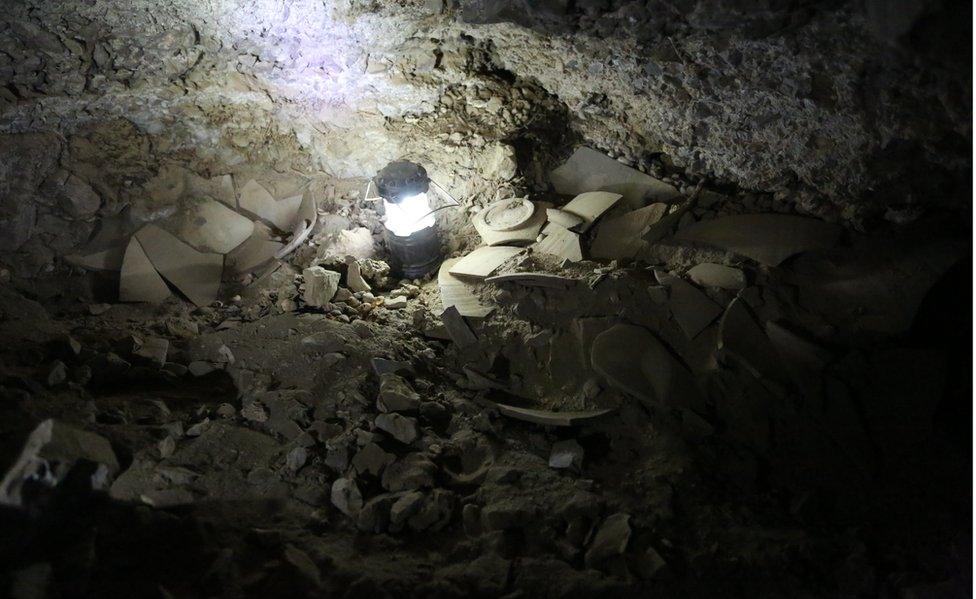
In 1947, Bedouin shepherds discovered ancient scrolls in caves near the Dead Sea. These documents, dating from the third century BCE to the first century CE, promised to revolutionize understanding of early Judaism and Christianity. Yet for decades, a small team of scholars maintained a monopoly on access to the scrolls.
The scandal came to be known as the “academic cartel.” A handful of researchers controlled publication of the scrolls, doling out fragments to favored colleagues while denying access to outsiders. Scholars who requested access were refused. Photographs of the scrolls were kept under lock and key. The official justification was scholarly caution—the need for careful, methodical publication. Critics saw something more sinister: a desire to control the narrative about early Christianity.
The monopoly finally broke in 1991 when the Huntington Library announced it would make its photographs of the scrolls available to all scholars. The result was a torrent of new research that challenged longstanding assumptions. The scrolls revealed a Judaism far more diverse than previously acknowledged—and hinted at the existence of a messianic figure remarkably similar to the Christian Jesus, appearing decades before the traditional timeline.
Why would scholars suppress their own field’s most important discovery? The answer lies in the threat the scrolls posed to comfortable academic consensus. Quick publication would have meant admitting that many established theories were wrong. The delay, whatever its motivations, ensured that the old guard controlled the narrative for another generation.
The Tartaria Enigma: A Civilization Erased
Few topics in suppressed history generate more controversy than Tartaria. According to mainstream history, Tartaria was a vaguely defined region of Siberia and Central Asia, home to nomadic tribes before Russian expansion. But a growing body of researchers argues that Tartaria was something far more significant—a vast, technologically advanced civilization whose achievements were systematically erased.
Proponents point to a wealth of physical evidence: sophisticated architecture found from Moscow to Mongolia, advanced construction techniques that are difficult to explain, and historical maps that depict Tartaria as a unified empire spanning thousands of miles. Perhaps most intriguing are the photographs of early Russian cities—grand buildings with ornate facades that seem to appear suddenly, with no documented construction periods.
The mainstream historical establishment dismisses these claims as pseudo-history. But the questions remain: Why did so many maps from the seventeenth and eighteenth centuries depict Tartaria as a major world power? Why did the term “Tartarian” persist for centuries if no unified Tartarian civilization existed? And what happened to the architectural knowledge that supposedly never existed?
This is suppression by erasure—the deliberate removal of a civilization from historical memory. If the Tartaria hypothesis proves even partially correct, it would require a fundamental revision of our understanding of early modern history.
The Silenced Story of the Cathars
Medieval history offers another documented case of historical suppression. The Cathars were a Christian sect that flourished in southern France during the twelfth and thirteenth centuries. They rejected the authority of the Catholic Church, practiced gender equality, and developed a sophisticated theology that threatened papal power.
The Church’s response was the Albigensian Crusade—a brutal military campaign that resulted in the massacre of tens of thousands of Cathars. When military force proved insufficient, the Church established the Inquisition to root out remaining heretics. The Cathars were systematically eliminated, their texts destroyed, their beliefs demonized.
For eight centuries, the official narrative portrayed the Cathars as dangerous heretics who threatened the social order. Only in recent decades have historians begun to reconstruct the Cathar worldview from scattered sources—Inquisition records, surviving texts, and archaeological evidence. What emerges is a portrait of a sophisticated spiritual movement that challenged the Church’s monopoly on religious truth.
The suppression of Cathar history was so effective that we are only now beginning to understand what was lost.
—
The Revisionist’s Dilemma: Distinguishing Truth from Propaganda
The study of suppressed history presents a fundamental challenge: How do we distinguish genuine suppressed evidence from deliberate misinformation? After all, the same mechanisms that hide truth can also be used to promote falsehood.
This is the revisionist’s dilemma. The term “revisionist history” carries negative connotations—suggesting the manipulation of history for political purposes. Holocaust deniers, for instance, employ the language of suppressed history to promote their hateful agenda. They claim to uncover “hidden truths” about World War II, when in reality they spread deliberate falsehoods.
Yet honest historical revision—the reassessment of established narratives based on new evidence—is essential to historical progress. Every generation must reexamine the past through fresh eyes, questioning inherited assumptions and seeking evidence that challenges official accounts. The difficulty lies in distinguishing between revisionism motivated by evidence and revisionism motivated by ideology.
The Criteria for Credible Historical Revision
Serious investigators of suppressed history employ rigorous criteria to evaluate claims:
First, they demand physical evidence. Documents can be forged, memories can fail, but physical artifacts provide a foundation for credible historical inquiry. The Dead Sea Scrolls, whatever the controversy surrounding their publication, exist. They can be radiocarbon-dated, chemically analyzed, and subjected to rigorous authentication.
Second, they seek multiple independent sources. A single document, no matter how compelling, proves little. Credible historical revision requires corroboration from multiple sources that emerge independently. When a suppressed historical claim is supported by documents, archaeological evidence, and linguistic analysis, it demands serious attention.
Third, they examine the motives of those who suppressed the evidence. Historical suppression always serves someone’s interests. Understanding whose interests were served by the suppression of particular evidence provides crucial context for evaluating the evidence itself.
The Case of the Suppressed Viking Presence in North America
The story of Viking exploration in North America illustrates the complexity of historical revision. For centuries, the official narrative held that Christopher Columbus “discovered” America in 1492. Yet Norse sagas described voyages to a land called Vinland, believed to be in North America, centuries earlier.
Mainstream historians dismissed these accounts as legend. Then, in 1960, archaeologists discovered a Norse settlement at L’Anse aux Meadows in Newfoundland. The discovery forced a revision of the established narrative—but only partially. Many textbooks now mention the Viking presence as a footnote, while continuing to emphasize Columbus.
The deeper suppression involves the extent of Norse exploration. Some researchers argue that Norse voyages extended far beyond Newfoundland—perhaps as far south as New England or beyond. They point to runic inscriptions, architectural elements, and other evidence that has been dismissed or deprioritized by mainstream archaeology. The debate continues, but the lesson is clear: even when suppressed evidence emerges, its implications may take generations to work through academic systems.
—
The Modern Battlefield: Suppression in the Digital Age
The mechanisms of historical suppression have evolved. The digital age promised democratization—universal access to information that would make suppression impossible. Instead, it has created new battlefields where historical truth is contested in unprecedented ways.
The Digital Archive: Preservation or New Control?
Massive digitization projects have made historical documents more accessible than ever before. Google Books, the Internet Archive, and national digitization initiatives have placed millions of documents at researchers’ fingertips. This represents genuine progress in the fight against suppression.
Yet digital archives also create new vulnerabilities. Documents can be altered without trace. Databases can be purged. Access can be restricted or removed. A document that exists only in digital form exists at the mercy of those who control the servers.
More subtly, digitization priorities shape historical understanding. When archives choose which documents to digitize first—and which to leave in physical form—they implicitly determine which histories are accessible. Documents that challenge official narratives may be legitimately low priority, or they may be deliberately delayed. The result is the same: suppression by omission.
The Search Engine as Gatekeeper
The modern gatekeepers are not librarians or archivists but algorithms. Search engines determine which information most people see when they seek historical knowledge. These algorithms are not neutral—they prioritize certain sources, favor certain narratives, and shape historical understanding in ways that remain opaque to users.
When a student searches for information about suppressed history, what do they find? Often, the top results are debunking articles from mainstream sources, followed by sensationalized content from fringe websites. The nuanced middle ground—serious scholarship that questions official narratives—is often buried or absent entirely.
This algorithmic suppression operates invisibly but effectively. It doesn’t remove information; it simply ensures that certain information remains difficult to find. For most users, information that doesn’t appear on the first page of search results effectively doesn’t exist.
The Social Media Distortion Field
Social media has created new challenges for historical truth. The same platforms that allow suppressed evidence to reach wide audiences also enable the rapid spread of misinformation. When a suppressed historical claim goes viral, it often arrives stripped of nuance, context, and supporting evidence. The public receives a simplified version that is easily dismissed by critics.
This creates a paradox: The tools that enable the discovery of suppressed history also enable its discrediting. Every genuine revelation is accompanied by a flood of commentary, much of it designed to dismiss or distort the original finding. The result is a public discourse where serious historical inquiry struggles to find traction.
—
Why the Fight for Historical Truth Matters
At this point, a reasonable person might ask: Why does any of this matter? The events in question happened decades, centuries, or millennia ago. Why should we care about historical suppression in the present?
The answer is that history is not the past—it is the story we tell about the past. That story shapes our understanding of who we are, what is possible, and what should come next. When that story is incomplete or distorted, our understanding of ourselves and our world is correspondingly distorted.
The Connection Between Historical Truth and Political Power
Historical narratives legitimate political power. Governments justify their existence by reference to historical events—wars won, treaties signed, national founding myths. When those narratives are challenged by suppressed evidence, the legitimacy of existing power structures is threatened.
Consider how the suppression of colonial atrocities shapes modern international relations. When European governments classify documents related to colonial massacres, they protect not just historical reputations but current geopolitical interests. Acknowledging past crimes might create obligations in the present—reparations, apologies, changed relationships. Suppression is not about the past; it is about maintaining power in the present.
The Psychological Cost of Suppressed Truth
Suppressed history also carries a psychological cost. When people discover that the historical narratives they were taught are incomplete or false, they experience something like betrayal. Trust in institutions erodes. The result is often a descent into cynicism—or a flight into extreme alternative narratives that are equally disconnected from evidence.
The healthiest response to suppressed history is neither naive acceptance of official narratives nor wholesale rejection of mainstream scholarship. It is a commitment to rigorous inquiry, a willingness to hold multiple possibilities in mind, and an openness to evidence that challenges comfortable assumptions.
The Pattern of Revelation
There is a pattern to how suppressed history emerges. First, evidence appears—usually accidentally, often through the actions of outsiders or amateurs. Second, mainstream institutions dismiss the evidence as insignificant, misinterpreted, or fraudulent. Third, additional evidence accumulates, making dismissal increasingly difficult. Fourth, a new generation of scholars, less invested in the old consensus, begins to take the evidence seriously. Finally, the new understanding becomes the new orthodoxy—and the cycle begins again.
This pattern has played out repeatedly, from the acceptance of continental drift to the recognition of Norse presence in North America. It gives reason for hope: Suppressed history does eventually emerge, even if slowly.
—
The Investigator’s Path: How to Engage with Suppressed History
For those committed to uncovering hidden truths, the path forward requires both courage and discipline. It demands a willingness to question authority while maintaining rigorous standards of evidence. It requires navigating between the Scylla of naive acceptance and the Charybdis of reflexive skepticism.
Begin with the Evidence
The foundation of all historical inquiry is evidence. When exploring suppressed history, start with what can be verified: documents, artifacts, archaeological findings, contemporary accounts. Ask: What is the source of this evidence? How was it preserved? Who has examined it? What do independent experts say?
Be especially wary of evidence that appears only in secondary sources. A claim that “ancient texts describe advanced technology” is only as credible as the texts themselves. When possible, go back to the original sources.
Seek Multiple Perspectives
Never rely on a single source, no matter how compelling. Seek out multiple perspectives, including those that challenge your assumptions. Read mainstream scholarship alongside alternative interpretations. Consult experts from different backgrounds and disciplines. The truth, if it exists, will emerge from the convergence of multiple independent lines of evidence.
Follow the Money
Always ask: Who benefits from this narrative? Who benefits from the suppression of alternative narratives? Understanding the interests at stake provides crucial context for evaluating claims. This applies to both official narratives and alternative ones—both have their own agendas and funding sources.