Suppressed Historical Evidence: Uncovering the Truth Behind Censored Narratives
Picture yourself standing in a vast library. Not the kind with buzzing fluorescent lights and coffee carts, but an ancient wonder—the Library of Alexandria. Shelves sag under the weight of half a million scrolls containing the collected wisdom of antiquity. Then, in a flash of deliberate fire, it all turns to ash. Whatever truths those scrolls held become fuel for rumor, myth, and speculation for millennia. That image, though historically debated in its details, captures a universal anxiety: what if the most critical chapters of our past were intentionally erased? For centuries, powerful institutions have suppressed history to control the present. And the evidence suggests that what we accept as “settled history” is often a curated fiction. In this investigative dive, we’ll pull back the curtain on suppressed history, examine hidden truths that refuse to stay buried, deconstruct historical cover-ups spanning continents and eras, and question whether revisionist history is a scholarly necessity or a dangerous weapon. If you’ve ever felt that the official story doesn’t add up, you’re not alone—and the answers may be closer than you think.
:focal(1000x752:1001x753)/https://tf-cmsv2-smithsonianmag-media.s3.amazonaws.com/filer_public/3b/df/3bdf846f-c28f-4afd-8534-4024eef0db20/scrolls.jpg)
The Architecture of Suppression: Who Decides What We Remember?
Before we can understand why certain narratives vanish, we need to ask a deceptively simple question: who writes history? In theory, the answer is “the winners.” But reality is messier. States, religious institutions, corporations, and even academic guilds all have a hand in shaping collective memory. And when new evidence threatens established power or profit, suppression mechanisms kick in.
Consider the toolkit of historical cover-ups. It’s not always about burning libraries. More often, it’s about classification, defunding research, discrediting witnesses, or simply letting uncomfortable archives rot in unmarked boxes. Governments hide embarrassing intelligence behind “national security” claims. Religious bodies lock away texts that challenge orthodoxy. Universities marginalize scholars who follow the data to inconvenient conclusions. In each case, the goal is the same: to maintain a narrative that serves the powerful.
But suppression leaves fingerprints. Contradictory documents surface in estate sales. Whistleblowers leak classified reports. Indigenous oral traditions preserve events that written records “forgot.” By following these breadcrumbs, today’s truth-seekers can reconstruct what was deliberately erased. And in doing so, they reveal a past far more complex—and often more uncomfortable—than the textbooks suggest.

Famous Cases of Hidden Truths: When Evidence Breaks Free
Let’s walk through a few startling examples where suppressed history eventually erupted into public consciousness. These aren’t fringe theories; they’re well-documented instances of information being buried, only to be excavated later by persistent researchers.
The Dead Sea Scrolls Embargo
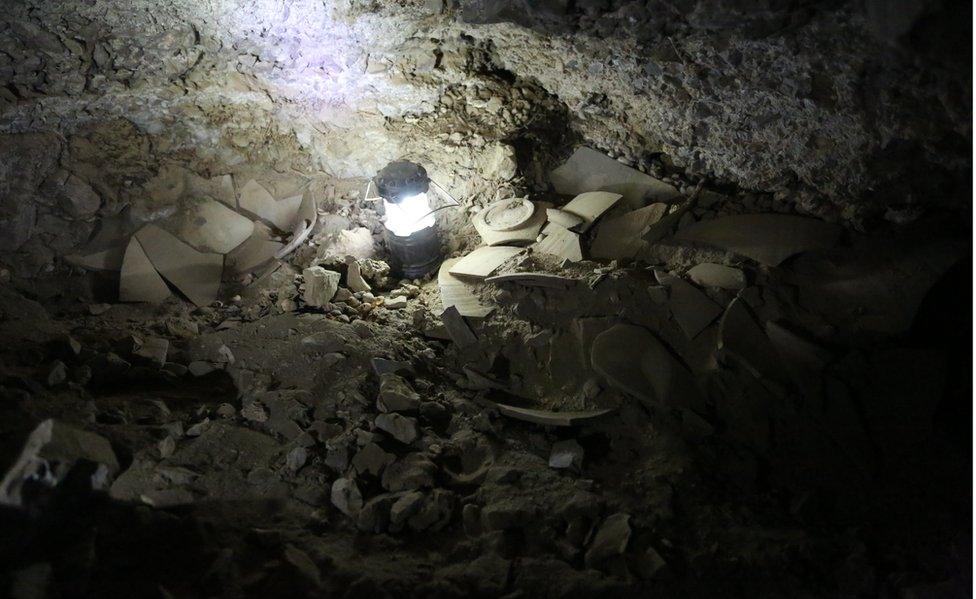
When Bedouin shepherds stumbled upon ancient scrolls in the Qumran caves in 1947, they didn’t just find religious texts—they unearthed a time capsule that could rewrite the origins of Christianity and Rabbinic Judaism. Yet for nearly four decades, a small clique of scholars controlled access to the scrolls, publishing at a glacial pace and denying outside researchers the chance to examine the manuscripts. Why the secrecy? Some fragments hinted at a messianic figure predating Jesus with striking parallels to the New Testament. Others suggested that early Jewish sects held beliefs dangerously close to Christian dogma. By the early 1990s, public pressure and the release of photographic archives finally broke the embargo. Today, the complete Dead Sea Scrolls are available to anyone, and they continue to challenge long-held assumptions about the development of monotheistic faiths. The scandal revealed how scholarly gatekeeping can be just as effective as political censorship when it comes to hiding hidden truths.

The Tuskegee Syphilis Study: A Medical Cover-Up with a Body Count
For forty years, from 1932 to 1972, the U.S. Public Health Service conducted an experiment on 600 African American men in Alabama—399 with syphilis and 201 without—under the guise of free healthcare. The men were never told they had syphilis, nor were they treated with penicillin when it became the standard cure in the 1940s. The study’s real purpose was to observe the full progression of the untreated disease, even as subjects went blind, insane, or died. When whistleblower Peter Buxtun leaked the details to the press in 1972, the ensuing public fury forced an end to the study. But government agencies had actively suppressed the truth for decades, burying internal reports and ignoring pleas from ethical doctors. The Tuskegee travesty isn’t ancient history—it’s a chilling reminder that historical cover-ups can happen in modern democracies, justified by scientific progress and racial prejudice. Only relentless investigative journalism brought this suppressed history into the light, leading to federal regulations on human subjects research.

The Gulf of Tonkin Incident: Manufacturing a War
In August 1964, President Lyndon B. Johnson went on national television to announce that North Vietnamese torpedo boats had launched “unprovoked attacks” on U.S. destroyers in the Gulf of Tonkin. Congress swiftly passed the Gulf of Tonkin Resolution, granting broad war powers that escalated the Vietnam War. But the truth—revealed decades later through declassified documents and NSA decrypts—was that the second, more serious attack on August 4th never happened. Radar blips, faulty sonar readings, and overheated intelligence analysis had fabricated an enemy assault. Senior officials suppressed internal doubts and cherry-picked data to sell a pre-determined narrative. The hidden truth? Johnson’s administration lied to launch a war that would kill over 58,000 Americans and millions of Vietnamese. When historian Daniel Ellsberg leaked the Pentagon Papers in 1971, they exposed a long pattern of deliberate deception. Yet the full scope of the cover-up only became clear in the 2000s, proving how historical cover-ups can shape geopolitics for generations.
The Armenian Genocide: When Denial Becomes Policy
Between 1915 and 1923, the Ottoman Empire systematically exterminated approximately 1.5 million Armenians through mass killings, death marches, and starvation. Contemporary diplomats, missionaries, and journalists documented the atrocities in real time. Yet almost immediately, Turkish authorities launched a campaign of denial, suppressing photographs, burning documents, and threatening anyone who spoke out. Today, Turkey’s official position remains that the deaths were a tragic consequence of war, not genocide. As a result, scholars who study the genocide face harassment, lawsuits, and diplomatic pressure, effectively creating a revisionist history that serves nationalist interests. Despite overwhelming evidence, this suppressed history continues to be a geopolitical football, illustrating how institutional denial can persist for over a century.
Revisionist History: A Scholar’s Tool or a Propagandist’s Weapon?
By now, you might be wondering: if so much is hidden, how do we know what’s true? This is where the term “revisionist history” gets tricky. For serious historians, revisionism is the lifeblood of the discipline. New evidence emerges, methodologies improve, and earlier interpretations must be updated—sometimes radically. The discovery that Christopher Columbus did not “discover” a pristine wilderness but invaded a hemisphere populated by millions is a healthy revision. So is the recognition that enslaved peoples were not passive victims but active agents of resistance.
But there’s a dark side. Revisionist history can also be a euphemism for denialism. Holocaust deniers masquerade as “revisionists” to legitimize anti-Semitism. Apologists for empire recast colonialism as a benevolent civilizing mission. In these cases, revisionism isn’t about uncovering truth; it’s about weaponizing historical ambiguity to rehabilitate abhorrent ideologies. The line between legitimate reappraisal and dangerous distortion can be razor-thin. Our job as truth-seekers is to distinguish evidence-based revision from politically motivated erasure. The litmus test is transparency: real historians show their sources and welcome scrutiny; cover-up artists hide behind secrecy and ad hominem attacks.
Modern-Day Cover-Ups in the Digital Age
It’s tempting to believe that in our era of ubiquitous smartphones and leaked emails, historical cover-ups are a relic of the past. But the digital age has invented new forms of suppression that are, in some ways, more insidious than burning scrolls.
Digital Memory-Holing
News websites quietly edit or delete old articles that become politically inconvenient. Governments retroactively classify documents that were already in the public domain. Social media platforms “moderate” historical content under vague hate speech or misinformation policies, sometimes removing scholarly discussions of controversial topics. While such actions are often justified as protecting safety, they also create a digital landscape where nothing can be trusted to remain. Suppressed history now happens in real time, with algorithms deciding what millions of people see or don’t see.
The Academic Gatekeepers
Large journal publishers and university presses can steer the historical consensus by choosing what gets published—and what doesn’t. Scholars who challenge establishment narratives on topics like the origins of human civilization, the efficacy of certain medical protocols, or the role of intelligence agencies in political upheaval often find themselves frozen out of prestigious journals. Their work is labeled “conspiratorial,” not because the evidence is faulty, but because it threatens careers. This soft censorship creates an illusion of consensus where none genuinely exists. For researchers of hidden truths, the first battlefield is often the peer-review process itself.
FOIA as a Double-Edged Sword
Freedom of Information laws are among the most powerful tools for uncovering suppressed history. But governments have learned to game the system. Responses are delayed for years. Documents arrive with entire pages blacked out under sweeping exemptions. Agencies routinely claim they can’t find records that archival trails prove exist. The recent saga of the JFK assassination files is a prime example: six decades after President Kennedy’s death, thousands of documents remain redacted, with agencies citing undefined “national security” concerns. For a generation that grew up on the Zapruder film, the lingering secrecy fuels a perpetual sense that the full story remains just beyond reach.
Unearthing Truth: Methodologies for the Truth-Seeker
If you’re feeling a mix of outrage and curiosity, you’re in good company. Every major revelation of hidden truths began with a person who refused to accept the official line. But uncovering suppressed history isn’t about donning a tinfoil hat; it requires rigorous, time-tested methods. Here’s how scholars and citizen researchers level the playing field:
- Primary Document Archaeology: Seek out original sources—letters, diaries, meeting minutes, declassified cables—before they are filtered through secondary interpretation. Even mundane government archives can contain explosive material hidden in plain sight.
- Cross-Disciplinary Verification: When written records fail, turn to archaeology, genetics, linguistics, or climate science. The sudden collapse of the late Bronze Age civilizations, for instance, was long a historical mystery until tree-ring data and soil analysis revealed a devastating megadrought that no chronicler recorded. Nature doesn’t lie.
- Oral History and Indigenous Knowledge: Communities that have been written out of history often preserve their own stories. The enduring oral traditions of Australian Aboriginal peoples accurately describe sea level rises and geographical changes from over 10,000 years ago—a fact later confirmed by geologists, proving that non-textual sources can be astonishingly reliable.
- FOIA and Legal Leverage: Even heavily redacted documents reveal patterns. The metadata, the dates, the named officials—all can be cross-referenced to build a bigger picture. Persistent litigants have forced the release of everything from CIA torture reports to environmental risk assessments that corporations wanted buried.
- Network Analysis of Gatekeepers: When you hit a wall, ask who benefits from the silence. Map the institutional, financial, and political ties of those controlling the evidence. Follow the money trail; it often leads to a very modern motive for an ancient cover-up.
Above all, truth-seeking demands intellectual humility. The goal isn’t to confirm your biases, but to follow the evidence wherever it leads, even—and especially—when that destination makes you uncomfortable.
Why This Matters Now More Than Ever
It’s easy to treat suppressed history as a dusty academic concern. But if we can’t trust the record of the past, how can we make informed decisions about the present? When governments lie about wars, when medical authorities conceal experiments on vulnerable populations, when corporations bury evidence of environmental harm, the lessons we fail to learn become tragedies we are doomed to repeat. Each suppressed narrative is a missed opportunity for justice, for empathy, for wisdom.
Moreover, the right to history is a human right. Without access to an uncensored record, societies cannot hold power to account. The Truth and Reconciliation Commissions that followed apartheid in South Africa and genocide in Rwanda relied on a brutal but exacting accounting of the past. Healing required truth—raw, unmanipulated, and public. The same principle applies globally: we cannot build a just future on a foundation of curated lies.
So what can you do? Start by reading beyond the headline. Question the sanitized version of events. Support independent researchers and journalists who do the painstaking work of excavating historical cover-ups. Share what you learn. And when you encounter a gap in the record, don’t shrug—lean in. That gap is not an absence of history; it’s the silhouette of a story someone wanted erased.
The pursuit of hidden truths isn’t a gentle stroll; it’s a confrontation with power, and power doesn’t give up its secrets willingly. But every time a whistleblower steps forward or a scholar publishes a long-suppressed manuscript, the walls of censorship crack a little more. Each crack lets in light. And in that light, we can read what was meant to be forgotten.
—
Don’t let the past stay buried. If this article stirred your curiosity and you suspect there’s much more to uncover, you’re right. Our team of historians and investigative researchers is dedicated to unearthing suppressed history that mainstream outlets ignore. Subscribe to our newsletter for exclusive updates on suppressed historical evidence—you’ll receive in-depth reports, document leaks, and expert analyses delivered straight to your inbox. Join a community of truth-seekers who refuse to accept the official story. The real history is waiting to be written, and you can be part of it.