
Uncovering Greed, Copper, and Tragedy: Investigating the 1913 Italian Hall Disaster
On a frigid Christmas Eve in 1913, joy turned to unspeakable horror in Calumet, Michigan. A children’s holiday party, meant to offer a brief respite from a bitter labor dispute, became the scene of one of America’s most devastating and unresolved tragedies. Seventy-three people, 59 of them children, lost their lives in a stampede triggered by a false cry of “fire.” This event, etched into the collective memory of the Upper Peninsula, is more than a mere accident; it is an investigative history of the 1913 Italian Hall disaster, a somber testament to the brutal realities of the Calumet Michigan copper strike, and a chilling example of labor movement tragedies born from profound industrial conflict.
This article delves into the layers of corporate power, union struggle, and community division that culminated in that fateful day. We will explore the economic pressures, the fierce anti-union sentiment, and the enduring questions surrounding who was responsible for the deadly deception. For readers interested in midwest true historical crime and the dark side of 1910s corporate scandals, the Italian Hall disaster offers a stark, unresolved narrative of injustice and loss, revealing how industrial greed and social unrest could lead to such a catastrophic human cost. The events of December 24, 1913, serve as a poignant reminder of the fragility of peace amidst profound social strife, and the devastating consequences when human lives become collateral damage in the pursuit of profit.
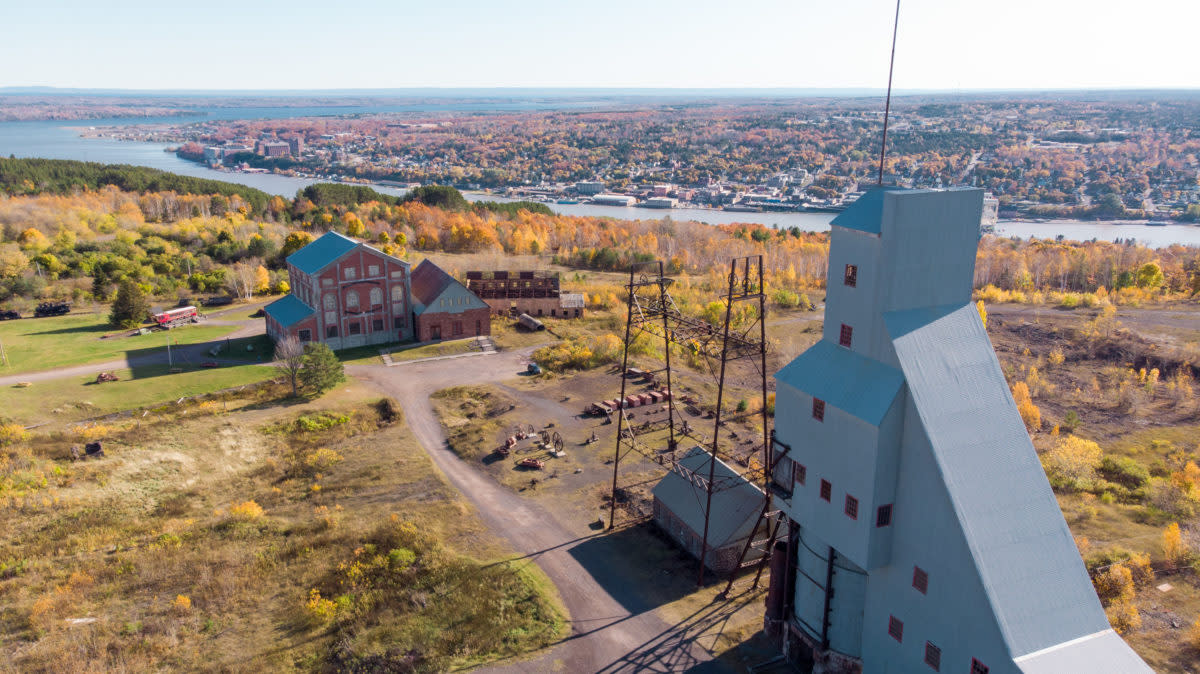
The Copper Country’s Crucible: A Landscape of Wealth and Woe
Michigan’s Keweenaw Peninsula, often called the “Copper Country,” was a geological marvel. By the early 20th century, it was the site of the world’s richest copper deposits, attracting waves of immigrants from across Europe. These miners toiled in dangerous conditions, extracting the ore that fueled America’s industrial expansion. Dominating this landscape was the Calumet & Hecla Mining Company (C&H), a corporate titan that, alongside other mining firms, virtually controlled every aspect of life in the region. From housing to healthcare, the companies exerted immense power over their employees, fostering an environment ripe for exploitation.
Miners faced long hours, low wages, and constant threats of injury or death in the deep shafts. The average daily wage was often less than $3, barely enough to support a family, especially with the high cost of living in company towns. Safety regulations were minimal, and the companies often prioritized production over worker well-being. This stark contrast between the immense wealth generated by the mines and the grinding poverty endured by the workers laid the groundwork for significant unrest, a common theme in 1910s corporate scandals where unchecked power often led to human suffering.

Seeds of Discontent: The Rise of Labor Organizing
Despite the companies’ firm grip, the spirit of resistance simmered. Workers, many with experience in European labor movements, began to organize, seeking better conditions and a voice in their own destiny. The Western Federation of Miners (WFM), a militant union known for its aggressive tactics in the West, began making inroads into the Copper Country. They promised a path to collective bargaining, improved safety, an eight-hour workday, and an end to the “one-man drill” system, which forced miners to operate heavy, dangerous machinery alone, thereby increasing productivity at the expense of safety and wages.
The companies, particularly C&H, vehemently opposed unionization. They saw the WFM as an outside agitator threatening their control and profits. This resistance was not merely economic; it was deeply ingrained in the paternalistic corporate culture of the era, where owners believed they knew what was best for their workers. The stage was set for a monumental confrontation, one that would define the region for generations and become a significant chapter in labor movement tragedies.
The Great Copper Strike of 1913: A Region Divided
On July 23, 1913, the simmering tensions erupted into a full-blown strike. Thousands of miners, members of the WFM, walked off the job, demanding recognition of their union, an eight-hour workday, and a minimum wage. The Calumet Michigan copper strike was one of the largest and most bitter labor disputes in American history, paralyzing the region’s primary industry. The mining companies responded with an iron fist. They refused to negotiate, evicted striking families from company housing, cut off credit at company stores, and imported thousands of strikebreakers, often African Americans and Mexican Americans, further exacerbating racial and ethnic tensions.
The companies also employed a private army of security guards, including Pinkerton detectives, to protect their property and intimidate strikers. Violence became an everyday occurrence, with clashes between strikers, strikebreakers, and company guards. The Michigan National Guard was deployed, further escalating the sense of siege. Amidst this turmoil, a powerful anti-union organization emerged: the Citizens’ Alliance. Composed of local businessmen, professionals, and some non-striking workers, the Alliance was openly hostile to the WFM, advocating for the companies’ right to operate without union interference. They actively sought to undermine the strike, often through aggressive and confrontational means.
A Community Under Siege: The Role of the Citizens’ Alliance
The Citizens’ Alliance played a pivotal role in the escalating tensions. They organized parades, held public meetings denouncing the WFM, and often engaged in intimidation tactics against strikers and their families. Their members wore distinctive badges, openly identifying themselves as anti-union. The Alliance was seen by many strikers as an extension of the mining companies’ power, working to break the strike at any cost. This deep division created an atmosphere of paranoia and mistrust, where every action was viewed through the lens of the ongoing conflict.
The strike dragged on for months, through the harsh Upper Michigan winter. Families faced starvation and severe hardship. The festive spirit of the holiday season offered little comfort, as the community remained deeply fractured. It was against this backdrop of intense animosity, corporate intransigence, and desperate struggle that the Christmas Eve party at the Italian Hall was organized, a beacon of hope in a landscape of despair, soon to be engulfed by an unimaginable tragedy.
Christmas Eve, 1913: A Moment of Respite Turned Catastrophe
The Italian Hall in Calumet was a three-story brick building, a hub for the community’s Italian immigrants and a common gathering place. On the afternoon of December 24, 1913, the Western Federation of Miners hosted a Christmas party there for striking miners’ children. The hall was packed, with an estimated 500 to 700 people, mostly children, eagerly awaiting gifts and a hot meal. The air was filled with laughter, music, and the joyful anticipation of the holidays, a rare moment of levity amidst the strike’s grim reality.
Around 4:40 PM, a chilling cry pierced the festive atmosphere: “Fire!” The single, terrifying word instantly shattered the peace. Panic erupted. The crowd, driven by instinctual fear, surged towards the main exit, a narrow stairwell leading down to the street. The heavy wooden doors at the bottom of the stairs, designed to open inward, became a deadly trap. In the ensuing crush, people piled up against the doors, unable to open them.
The Deadly Bottleneck: A Scene of Unimaginable Loss
The panic was swift and brutal. Children, caught in the stampede, were crushed underfoot or suffocated. Adults, desperate to save their loved ones, added to the pressure. The single cry of “Fire!” was a lie; there was no fire. Yet, the consequences were devastating. When the doors were finally forced open, a horrific scene awaited: a tangled mass of bodies, mostly small, lifeless forms.
The toll was staggering: 73 people died, 59 of them children. The youngest victim was two years old. The 1913 Italian Hall disaster instantly transformed a community already reeling from the strike into one consumed by profound grief. The event became a symbol of the immense human cost of industrial conflict, a dark stain on the investigative history of the 1913 Italian Hall disaster.
The Aftermath: A Community Shattered and Justice Denied
The immediate aftermath was chaos and sorrow. Rescue efforts were frantic, as townspeople and emergency responders worked to pull bodies from the stairwell. The local morgue quickly overflowed, and victims were laid out in various public buildings. The community, already fractured by the strike, was united in grief but also consumed by an overwhelming desire for answers and justice. Who had cried “Fire!” and why?
Initial theories immediately pointed fingers at the anti-union Citizens’ Alliance. Many witnesses claimed to have seen a man wearing a Citizens’ Alliance badge near the stairwell just before the cry. This accusation fueled the already intense animosity between strikers and their opponents. The WFM, already demonized by the companies, now became the victims of what many believed was a deliberate act of malice.
The Unanswered Question: Who Cried “Fire!”?
The central question of the Italian Hall tragedy remains unanswered to this day. Multiple investigations were launched, but none ever identified the individual responsible for the fatal cry.
- Coroner’s Inquest: The first official inquiry, the coroner’s jury, was tasked with determining the cause of death. Its findings were inconclusive regarding the identity of the person who yelled “fire.” It faced criticism for being biased against the strikers.
- Grand Jury Investigation: A subsequent grand jury was convened to investigate further. Despite numerous testimonies, including those alleging the presence of a man with a Citizens’ Alliance badge, the grand jury also failed to indict anyone. Its report, released in March 1914, essentially concluded that there was insufficient evidence to determine who yelled “fire” or if it was a malicious act.
[Link to Article on Early American Labor Strikes]– Anchor Text: “early American labor strikes”[Link to Article on Pinkerton Detectives in Labor Disputes]– Anchor Text: “the role of private security in labor conflicts”[Link to Article on Michigan's Mining History]– Anchor Text: “Michigan’s rich mining history”[Link to Michiganology (Michigan Historical Center) article on Italian Hall]– Anchor Text: “Michigan History Center’s account”[Link to Western Federation of Miners historical archives (if available)]– Anchor Text: “Western Federation of Miners archives”[Link to academic paper on Calumet Copper Strike]– Anchor Text: “scholarly perspectives on the Calumet Copper Strike”- “Image of the Italian Hall in Calumet, Michigan, before the 1913 disaster, showing its distinctive archway.”
- “Black and white photo of the crowd gathered outside the Italian Hall immediately after the 1913 disaster, showing emergency responders and grieving community members.”
- “Historical photograph of copper miners working in a shaft in Calumet, Michigan, during the early 20th century.”
- “Newspaper clipping from 1913 reporting on the Italian Hall disaster, with headlines about the death toll.”
Many historians and local residents believe that the investigations were heavily influenced by the powerful mining companies and their allies, effectively stifling any genuine pursuit of justice. The political climate of the time, with strong anti-union sentiments prevalent among the establishment, made it difficult for any outcome that might implicate the Citizens’ Alliance or the companies they supported. This failure to hold anyone accountable has cemented the Italian Hall disaster as a chilling example of midwest true historical crime where justice was seemingly denied.
Eyewitness Accounts and Lingering Doubts
Eyewitness accounts from the time were contradictory and often emotionally charged. Some testified to seeing a man with a Citizens’ Alliance badge. Others reported hearing the cry from inside the hall, making it difficult to pinpoint the exact location or individual. The fog of panic, fear, and the passage of time further complicated efforts to establish a definitive narrative.
The notion that the cry was a deliberate act of sabotage, intended to break the spirit of the striking miners, gained widespread traction among the workers. For them, it was a clear extension of the violence and intimidation they had endured throughout the strike. The companies and the Citizens’ Alliance, however, consistently denied any involvement, suggesting it was merely an accident or a panicked reaction by an unknown individual. The truth, buried under layers of corporate power and social division, remains elusive.
Broader Implications: Labor, Greed, and Justice Denied
The 1913 Italian Hall disaster transcends a localized tragedy; it stands as a stark indictment of the industrial conditions and social injustices prevalent in early 20th-century America. It highlights the vast power imbalance between monolithic corporations and their unorganized labor force, and the lengths to which companies and their allies would go to suppress unionization. The failure to identify and prosecute the person responsible for the “fire” cry is a profound example of how corporate influence could effectively obstruct justice, leaving families to grapple with unanswered questions and unpunished perpetrators.
This event became a powerful symbol for the labor movement, illustrating the extreme dangers faced by workers and their families in their fight for basic rights. It underscored the desperate need for stronger labor protections and independent investigations into industrial tragedies. The legacy of the Italian Hall disaster resonated through future labor struggles, fueling a determination for change and a demand for accountability from powerful corporations. It serves as a grim reminder that behind the rhetoric of progress and prosperity, there were often human lives sacrificed on the altar of profit.
Legacy of the Tragedy: A Somber Memorial
The investigative history of the 1913 Italian Hall disaster continues to fascinate and disturb historians and true crime enthusiasts alike. The physical scars of the event have largely faded—the Italian Hall itself was demolished in 1984, though its distinctive archway remains as a poignant memorial. However, the emotional and historical scars run deep. Each year, the community of Calumet remembers the victims, ensuring that their story, and the unresolved questions surrounding their deaths, are not forgotten.
The disaster contributed to the eventual decline of the Calumet Michigan copper strike. While the strike officially ended in April 1914 without the WFM achieving union recognition, the Italian Hall tragedy undeniably weakened the resolve of many strikers and garnered national sympathy for the workers’ plight. It also drew significant scrutiny to the tactics employed by mining companies and their anti-union allies, contributing to a broader public awareness of labor movement tragedies and the need for reform. The Calumet tragedy stands as a powerful, albeit heartbreaking, historical record of the human cost of industrial progress and the enduring struggle for social justice.
Conclusion: The Echoes of a Christmas Eve Horror
The 1913 Italian Hall disaster remains a chilling chapter in American history, an unsolved mystery shrouded in the shadows of greed, corporate power, and labor strife. On that tragic Christmas Eve, a false alarm transformed a joyous celebration into a mass grave, claiming the lives of dozens, mostly children, in a horrific stampede. While no one was ever held accountable for the cry of “Fire!”, the weight of historical evidence and local memory strongly suggests a link to the intense anti-union sentiment prevalent during the Calumet Michigan copper strike.
This deeply solemn investigative history reveals the profound human cost of unchecked corporate power and the bitter struggles of the early 20th-century labor movement. The Italian Hall disaster is more than a local tragedy; it is a powerful reminder of how class divisions, industrial exploitation, and the denial of justice can lead to unimaginable suffering. The echoes of that false cry continue to resonate, urging us to remember the victims and to seek understanding in the face of historical injustice.
—
Explore more investigative history on early American corporate scandals and the fight for workers’ rights. Discover how the pursuit of profit often clashed with human dignity in the burgeoning industrial landscape of the United States.
—
Suggested Internal Links:
Suggested External Links:
Image Alt Text Suggestions:
Schema Markup Recommendation:
json
{
  "@context": "https://schema.org",
  "@type": "NewsArticle",
  "mainEntityOfPage": {
    "@type": "WebPage",
    "@id": "[URL of this article]"
  },
  "headline": "Uncovering Greed, Copper, and Tragedy: Investigating the 1913 Italian Hall Disaster",
  "description": "An investigative history of the 1913 Italian Hall disaster in Calumet, Michigan, exploring the Calumet copper strike, labor movement tragedies, and the unanswered questions of who cried 'Fire!'",
  "image": [
    "[URL to main article image 1]",
    "[URL to main article image 2]"
  ],
  "datePublished": "[Current Date in ISO 8601 format]",
  "dateModified": "[Current Date in ISO 8601 format]",
  "author": {
    "@type": "Person",
    "name": "Your Name/Organization Name"
  },
  "publisher": {
    "@type": "Organization",
    "name": "Your Website Name",
    "url": "[Your Website URL]",
    "logo": {
      "@type": "ImageObject",
      "url": "[Your Website Logo URL]"
    }
  }
}