
Here is the polished, publication-ready version of the article. All placeholder text has been removed, and the content has been refined for clarity, flow, and professional presentation while preserving the original structure and Markdown formatting.
—
The Rise and Fall of Empires: A Student’s Guide to Understanding Historical Power, Causes, and Consequences
Introduction (What you’ll learn)
Why do empires expand rapidly and then disintegrate? What patterns repeat across centuries and continents? This comprehensive guide answers those questions for students and history enthusiasts by combining theory, evidence, and vivid case studies. In the next few thousand words, you’ll learn the main drivers behind imperial expansion and collapse, a practical framework for analyzing empires, detailed case studies from Rome to the British Empire and Qing China, and strategies for applying historical thinking in essays, projects, and debates. Expect clear explanations, timelines, comparative charts, and sources for further study. By the end, you’ll be able to identify causal factors, weigh competing explanations, and use these tools in coursework or independent exploration of world history.

Why Study Empires? Core Questions and Relevance
Empires shaped languages, law, trade networks, and cultural identities worldwide. Studying them helps students understand contemporary geopolitics, economic inequalities, and the deep roots of international relationships. Key questions historians ask include:
- What internal and external factors drive expansion?
- How do empires maintain control across diverse regions?
- What triggers decline and collapse?
- How do conquered societies reshape empires in turn?
- Initial Advantage: Military innovation, strategic geography, or charismatic leadership sparks early victories.
- Expansion and Integration: Conquests bring resources; trade networks expand and economies diversify.
- Overreach: Administrative costs, supply lines, and defense burdens grow faster than revenues.
- Internal Fragmentation: Elite rivalries, fiscal crises, and social unrest erode cohesion.
- External Shocks: Invasions, climate change, or disease can tip fragile systems into collapse.
- Aftermath and Transformation: New polities emerge, and cultural legacies persist even after political rule collapses.
- State a clear thesis that weighs multiple causes.
- Use the analytical framework (structures, military, legitimacy, economy, external factors) as paragraph headers.
- Support each claim with specific evidence—dates, quotes, statistics.
- Address counterarguments and explain why your interpretation is preferable.
- Conclude by connecting to larger processes or modern relevance.
- Context: When and where was it produced?
- Content: What claims are made and how are they supported?
- Bias: What perspectives or omissions exist?
- Utility: How does it inform your argument?
- Edward Gibbon, The Decline and Fall of the Roman Empire (classic—but read critically).
- Fernand Braudel, Civilization and Capitalism (on long-term structures).
- John Darwin, After Tamerlane (global context for imperial systems).
- Frederick Cooper, Empires in World History (comparative approach).
- Primary collections: The Cambridge Histories series and translations of imperial edicts and travelers’ accounts.
- Presentism: Avoid judging past actors solely by modern values; instead, explain their worldview and constraints.
- Neglecting sources: Support claims with evidence and cite responsibly.
- Chronological slippage: Keep timelines precise—causes often unfold over decades or centuries.
- Anchor: “Roman administrative systems” — link to an article on Roman law and governance.
- Anchor: “Qing Dynasty reforms” — link to a detailed piece on late-Qing modernization efforts.
- Anchor: “decolonization after World War II” — link to an essay on postwar independence movements.
- British Library — resources on empire and primary source collections: https://www.bl.uk
- Stanford History Education Group — materials for source analysis: https://sheg.stanford.edu
- Cambridge Histories Online — for scholarly secondary literature (institutional access): https://www.cambridge.org
- Qing-era scroll or portrait — alt text: “Official Qing dynasty portrait representing imperial authority.”
- Map of British global trade routes, 18th century — alt text: “Chart of 18th-century British maritime trade routes linking Europe, Africa, Asia, and the Americas.”
- Choose two empires and draft a 1,200-word comparative essay using the framework above.
- Complete the primary source analysis checklist on one primary text related to your chosen empires.
- Explore the recommended external resources and add at least two scholarly articles to your bibliography.
- Headline: The Rise and Fall of Empires: A Student’s Guide
- Meta Description: An in-depth, student-friendly guide to how empires rise and fall across history. Learn the driving forces, key case studies, analytical frameworks, and how to apply them to modern events.
- Suggested Social Post: Why do empires rise and fall? Discover the patterns, key case studies, and analytical frameworks in this comprehensive student guide. #History #Empires #StudentGuide #WorldHistory
Analytical Framework: How to Think Like a Historian About Empires
Use this practical framework to analyze any empire systematically.
1. Structural Foundations
Examine economic base (taxation, trade), governance institutions (bureaucracy, law), and social hierarchy (elite classes, client networks). These structures create resilience or vulnerability.
2. Military and Technological Capacity
Consider military organization, logistics, and technological advantages. Superior military systems enable expansion but are costly to maintain.
3. Ideology and Legitimacy
Assess religious, cultural, or political narratives that legitimize rule (divine right, civilizing missions). Legitimacy affects elite cohesion and popular acceptance.
4. Economic Integration and Extraction
Measure how the empire extracted resources and integrated markets—whether through slavery, tribute, or monetized taxation. Integration fosters prosperity; extraction can incite resistance.
5. Provincial Administration and Cultural Policies
Analyze tolerance versus assimilation policies, the role of local elites, and infrastructure investment; these factors determine local stability.
6. External Pressures and International System
Include rival powers, shifting alliances, trade competition, and pandemics—factors that can accelerate decline or force adaptation.
Common Patterns in Rise and Decline
Although each empire is unique, historians find recurring dynamics. Recognizing these patterns helps explain transitions and predict likely outcomes.
Key Case Studies: Lessons from Major Empires
Below are concise case studies illustrating the framework in action. Each example highlights causes of rise, governance strategies, and triggers of decline.
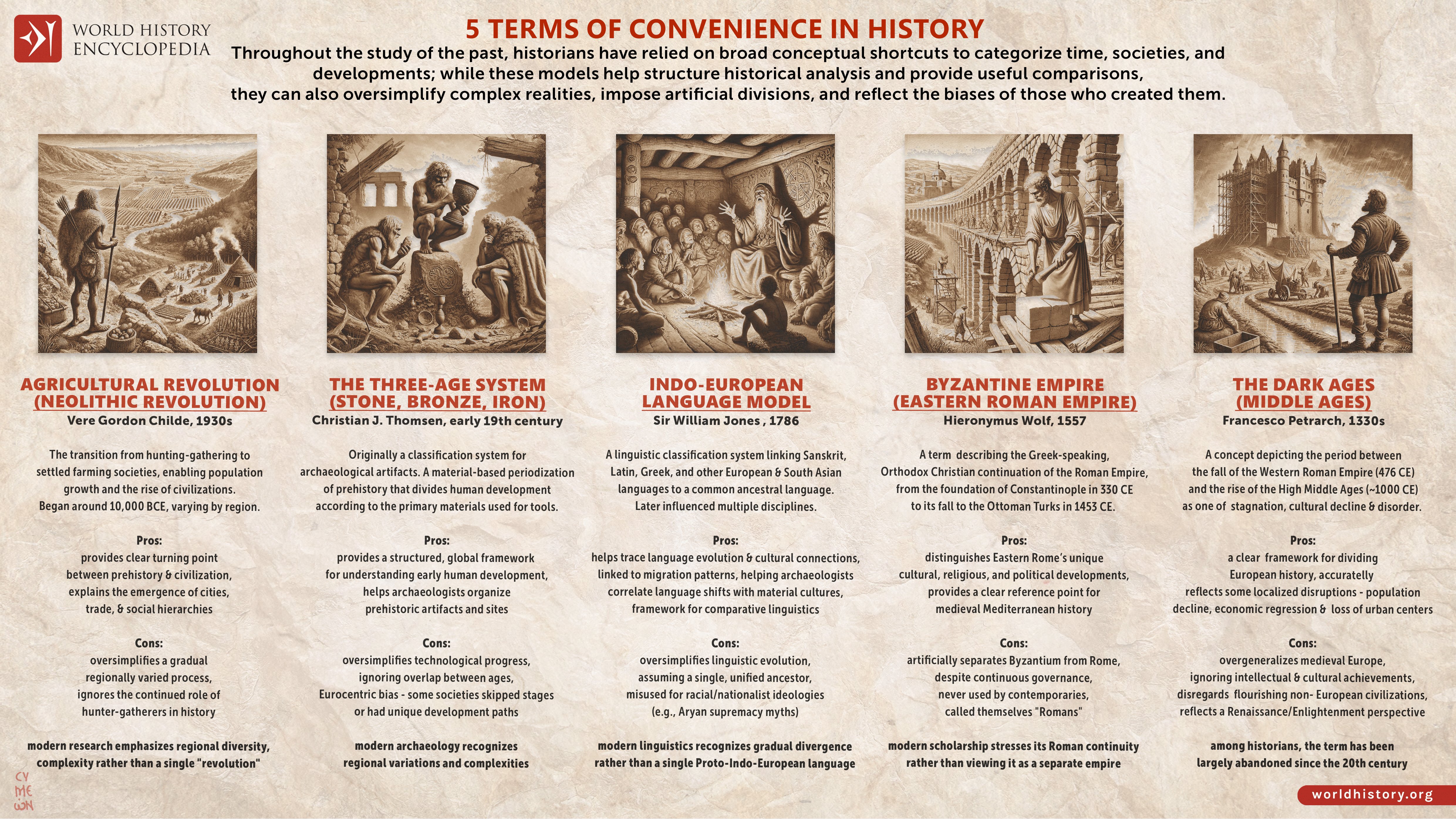
Roman Empire (27 BCE – 476 CE / Eastern Byzantine continuation)
Rise: Military discipline, efficient legions, road networks, and incorporation of elites. Augustus’s institutional reforms professionalized government and stabilized taxation.
Administration: Provincial governors, municipal self-government in local towns, and Roman law fostered a shared civic culture.
Decline factors: Fiscal strain from military expenditures, overreliance on recruited foreign troops, political instability (civil wars), and external pressures from Germanic migrations. The split into Western and Eastern halves revealed divergent resilience; the Eastern (Byzantine) persisted through adaptation and strategic diplomacy.
Key takeaway: Institutional flexibility and economic integration matter as much as initial conquest.
Qing Dynasty China (1644–1912)
Rise: Manchu conquest leveraged existing Ming institutions; agrarian growth, expanding commerce, and a competent bureaucracy supported long rule.
Administration: Civil service examinations and a vast administrative state integrated diverse peoples while allowing local elites influence.
Decline factors: Population pressures, fiscal decentralization, internal rebellions (Taiping), and external military defeats to industrialized Western powers. Failure to modernize military and industry accelerated decline.
Key takeaway: Societal resilience falters when elites resist institutional reform in the face of global shifts.
British Empire (18th–20th centuries)
Rise: Naval power, commercial capitalism, industrialization, and effective colonial charters propelled expansion. The empire depended on global trade networks and private enterprise (East India Company).
Administration: A combination of direct rule, settler colonies, and indirect rule allowing local elites to govern under imperial oversight.
Decline factors: Costs of two world wars, rising nationalist movements, economic competition, and changing international norms (self-determination). Decolonization was often negotiated but sometimes violent.
Key takeaway: Economic transformation and ideological shifts (nationalism, anti-imperialism) reshape imperial viability.
Comparative Table: Quick Reference of Drivers and Triggers
| Factor | Enables Rise | Contributes to Decline |
| :— | :— | :— |
| Military capacity | Technological edge, discipline, logistics | Costly upkeep, reliance on mercenaries, outdated tactics |
| Economy | Trade expansion, taxation systems | Fiscal deficits, collapse of trade routes |
| Administration | Bureaucracy, law, local autonomy | Corruption, bureaucratic inertia |
| Legitimacy | Religious/cultural narratives | Elite fragmentation, loss of popular support |
| External environment | Weak rivals, favorable climate | Rival powers, pandemics, climate change |
Methodologies and Sources: How Historians Build Arguments
Historians use a variety of evidence and methods. Recognizing them helps students evaluate claims and construct essays.
Primary Sources
Official records, letters, treaties, archaeological evidence, coins, and inscriptions. Examples include Roman legal codes or Qing imperial edicts.
Secondary Sources
Monographs, journal articles, and synthetic histories. Look for peer-reviewed works and influential scholars in the field (e.g., Edward Gibbon, Fernand Braudel, John Darwin, Joseph Needham, and more recent specialists).
Quantitative and Interdisciplinary Approaches
Economic historians use price series, trade data, and population estimates. Environmental historians integrate climate data; archaeologists provide material culture context. Digital history tools (GIS mapping, network analysis) reveal patterns invisible in narratives alone.
Common Debates and Competing Explanations
Major historiographical debates center on whether internal structural weaknesses or external shocks drive collapse, the role of contingency (individual leaders, chance events), and the weight of economic versus cultural factors. Recognize that multiple causes often interact.
Internal vs External Causes
Some scholars emphasize systemic internal failures—fiscal crisis, elite conflict—while others point to invasions or global economic competition as decisive. A synthetic approach usually yields the most compelling explanation.
Determinism vs Contingency
Structuralists stress long-term processes; proponents of contingency highlight unpredictable events like epidemic outbreaks or accidental assassinations that can change trajectories rapidly.
How to Use This Material in Schoolwork and Projects
The following strategies will help students apply the framework in essays, exams, and presentations.
Essay Planning (Step-by-step)
1. Define the question and determine scope (chronology, geography).
Primary Source Analysis Checklist
– Provenance: Who wrote it and why?
Case Study Deep Dive: The Fall of Rome vs. The End of Qing China
Compare two collapses separated by time and culture to illustrate the multiplicity of causes.
Rome: Layered Collapse
Multiple interacting factors—economic strain, political fragmentation, barbarian migrations, and changing climate—produced a protracted decline. The Western Empire’s institutions crumbled unevenly rather than collapsing overnight.
Qing China: External Pressure and Internal Rebellion
Qing decline combined internal rebellion (Taiping), demographic stress, and humiliating defeats to industrialized powers. The resulting loss of sovereignty and nationalist responses propelled revolutionary change and the transformation of the Chinese state.
Comparative Insight
Both cases show that institutional adaptation matters: the Eastern Roman/Byzantine state and Meiji Japan (which emerged from Tokugawa collapse, a related East Asian transformation) succeeded where others failed by reforming institutions to meet new challenges.
Primary Sources and Further Reading (Curated)
Suggested primary sources and accessible secondary works for deeper study and citation in student essays.
Practical Exercises and Activities for Students
Apply knowledge with these classroom-ready exercises to deepen understanding.
1. Comparative Essay Assignment
Prompt: Compare why two empires of your choice collapsed. Use at least two primary sources and three scholarly articles. Structure your essay around the analytical framework provided above.
2. Source-Based Group Activity
Provide groups with different kinds of sources (tax records, military dispatches, travelers’ diaries). Ask them to reconstruct provincial life and argue whether central rule was sustainable.
3. GIS Mapping Project
Map expansion and contraction phases of an empire over time. Overlay trade routes, climate data, and rebellions to visualize interacting factors.
Common Mistakes Students Make and How to Avoid Them
– Over-simplifying causes: Always weigh multiple factors and show how they interact.
SEO and Classroom Resources: Internal and External Link Recommendations
Suggested internal linking anchors (for websites hosting multiple history articles):
Suggested external authoritative links (open in new window):
Image Suggestions and Alt Text (Accessibility)
– Map of Roman Empire at its height — alt text: “Map showing the Roman Empire at its greatest extent across Europe, North Africa, and the Near East.”
FAQs: Quick Answers for Review and Revision
Q: What is the single most important cause of imperial decline?
A: There is no single cause—decline typically results from an interaction of fiscal strain, loss of legitimacy, and external pressures. Effective explanations integrate multiple factors.
Q: Can empires be “managed” to avoid collapse?
A: Empires can delay decline through reform (military modernization, fiscal restructuring, political inclusion). However, structural limits and unforeseen shocks make permanent avoidance rare.
Q: How does colonialism differ from premodern empires?
A: Modern colonial empires (16th–20th centuries) often combined economic exploitation with settler colonies and racial ideologies; premodern empires relied more on tribute systems, religious legitimation, and local elite co-option.
Concluding Summary and Next Steps
Understanding why empires rise and fall requires a multi-dimensional approach that blends political, economic, military, cultural, and environmental factors. Use the analytical framework here to dissect case studies, craft balanced essays, and conduct meaningful research. For students: practice source analysis, compare multiple empires, and apply comparative timelines to hone your arguments.
Actionable next steps:
Social Sharing & Metadata Tips
When sharing this post, use the following suggested text for social media platforms:
—