
Here is the polished, publication-ready version of your article. All placeholder text has been removed, and the content has been refined for clarity, flow, and professional presentation while preserving your original structure and Markdown formatting.
—
The Renaissance Reimagined: A Student’s Guide to the Cultural Revolution That Changed Europe
Primary keywords: Renaissance, European Renaissance, Renaissance art, Renaissance history
By the 16th century, innovations in art, science, and print had helped the Renaissance reshape Europe—an intellectual and cultural movement that still influences how we think today. This guide unpacks the Renaissance’s causes, key figures, major works, ideas, and lasting impact in a way that’s accessible to students and history enthusiasts.
Introduction: What the Renaissance Was and Why It Matters
The Renaissance, spanning roughly from the 14th to the 17th century, marks a pivotal transition from the medieval world to the modern age. Originating in Italy and spreading across Europe, the Renaissance celebrated human potential and emphasized a revival of classical learning, critical inquiry, and artistic innovation. In this article, you will learn the movement’s origins, major cultural and intellectual achievements, influential personalities, and how the Renaissance reshaped politics, religion, science, and daily life. Whether you’re preparing for an exam, writing a paper, or simply curious about the era that birthed modern Western thought, this piece provides clear explanations, illustrative case studies, and practical resources for further study.
The Origins of the Renaissance
Economic and Social Foundations
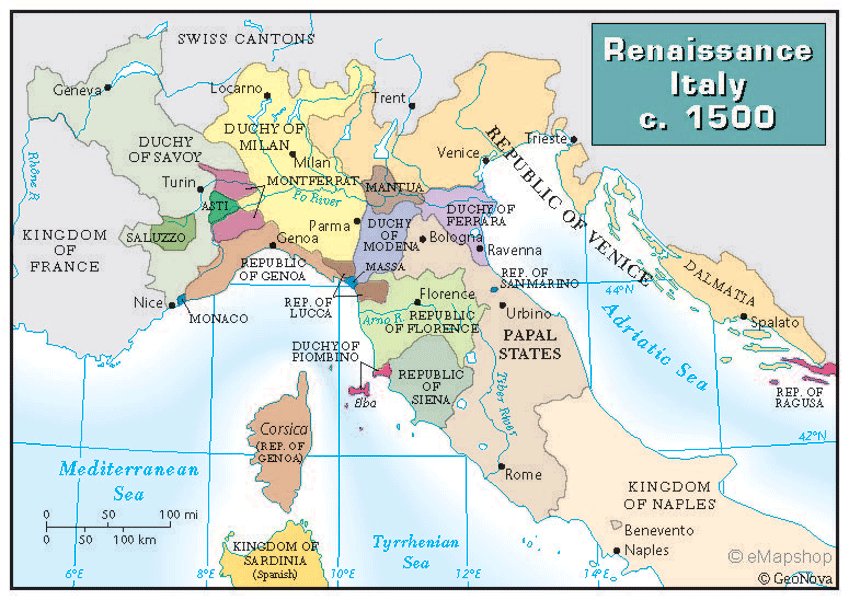
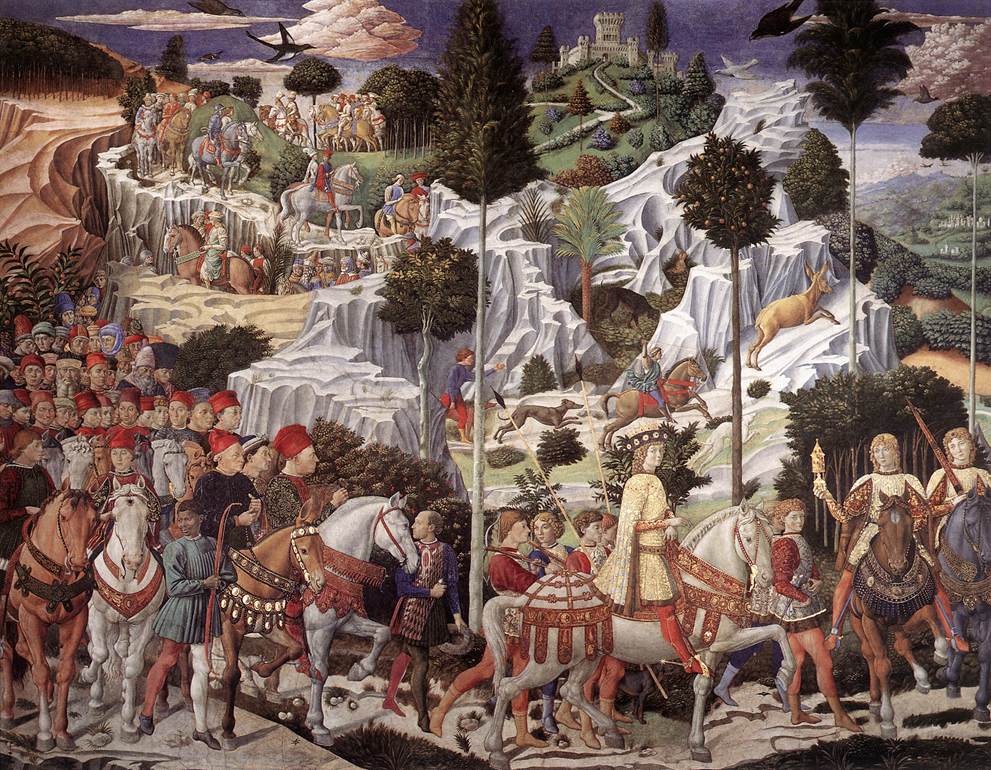
The Renaissance emerged in a context of growing urbanization and commerce. Italian city-states—such as Florence, Venice, and Genoa—benefited from trade, banking, and merchant wealth. These economic changes created an elite class willing to sponsor art and scholarship. Increasingly, cities became centers of patronage where wealthy families (notably the Medici of Florence) funded artists, architects, and humanist scholars.
Intellectual Precursors: Humanism and Rediscovery of Antiquity
Humanism placed emphasis on the study of classical texts—Greek and Latin literature, philosophy, and history—and on the potential of human achievement. Humanists like Petrarch and Poggio Bracciolini recovered manuscripts and advocated for education grounded in rhetoric, history, poetry, and moral philosophy. This intellectual shift prioritized secular knowledge alongside religious belief.
Technological and Cultural Catalysts
- Printing press (c. 1440): Johannes Gutenberg’s movable type revolutionized information dissemination, making books more accessible and accelerating the spread of ideas.
- Trade and travel: Increased contact with the Byzantine world and the Islamic world brought classical texts and new technologies to Europe.
- Plague and social change: The Black Death reduced populations and disrupted feudal structures, permitting social mobility and reallocating wealth.
- Naturalism: Realistic human figures and three-dimensional space
- Linear perspective: Brunelleschi’s experiments led to mathematically consistent depth
- Chiaroscuro: Use of light and shadow for volume and emotion
- Classical themes: Mythology and classical motifs reappeared alongside religious subjects
- Leonardo da Vinci — The Last Supper, Mona Lisa: scientific observation blended with psychological complexity
- Michelangelo — David, Sistine Chapel ceiling: monumental human forms expressing idealized anatomy and emotion
- Raphael — The School of Athens: synthesis of classical philosophy and Renaissance perspective
- Titian — Venus of Urbino: revolutionary use of color and sensuality in painting
- Focus on themes (art, religion, science, politics) rather than memorizing dates.
- Use primary sources—letters, treatises, artworks—to understand contemporary perspectives.
- Compare regions to see how the Renaissance differed in Italy versus Northern Europe.
- Create timelines linking cultural, political, and technological events for context.
- Petrarch — Selected letters and poems
- Leonardo da Vinci — Notebooks (selected excerpts)
- Erasmus — In Praise of Folly
- Niccolò Machiavelli — The Prince (selected chapters)
- Copernicus — On the Revolutions of the Heavenly Spheres (selections)
- J. H. Plumb — The Italian Renaissance
- Peter Burke — The European Renaissance: Centres and Peripheries
- Margaret L. King — Women of the Renaissance
- George Sarton — Introduction to the History of Science (selected volumes)
- Uffizi Gallery, Florence — Botticelli, Leonardo, and works from the Florentine school
- The Vatican Museums and Sistine Chapel, Rome — Michelangelo’s ceiling and Raphael’s rooms
- The Louvre, Paris — Italian Renaissance works and northern masterpieces
- National Gallery, London — Early Netherlandish and Renaissance paintings
- Project Gutenberg — Free access to many Renaissance texts
- Europeana Collections — Digital objects from European museums and libraries
- Google Arts & Culture — High-resolution images and virtual tours
- World Digital Library — Primary source materials from multiple cultures
- “Renaissance art techniques” → /renaissance-art-techniques
- “Humanism and education” → /humanism-education-history
- “History of the printing press” → /history-printing-press
- “European exploration and colonization” → /age-of-exploration
- Encyclopaedia Britannica — Renaissance
- Metropolitan Museum of Art — Heilbrunn Timeline of Art History
- Stanford Encyclopedia of Philosophy — Humanism
- BBC History — The Renaissance
- Leonardo da Vinci’s Mona Lisa — alt: “Mona Lisa by Leonardo da Vinci, portrait showing subtle smile”
- Florence Cathedral dome (Brunelleschi) — alt: “Brunelleschi’s Dome of Florence Cathedral from Piazza del Duomo”
- Raphael’s School of Athens — alt: “The School of Athens by Raphael, showing classical philosophers in an architectural setting”
- Map of Renaissance Europe — alt: “Map showing key Renaissance centers in Italy and Northern Europe”
Key Regions and Centers of Renaissance Activity
Florence: The Cradle of the Renaissance
Florence’s economic prosperity and the patronage of families like the Medici made it an epicenter of Renaissance culture. Artists such as Giotto, Botticelli, and Leonardo da Vinci worked here, while architects like Brunelleschi introduced classical forms and linear perspective.
Rome and Papal Patronage
Under ambitious popes such as Julius II and Leo X, Rome became a center for grand artistic projects—most famously Michelangelo’s Sistine Chapel ceiling and Bramante’s plans for St. Peter’s Basilica. Papal commissions combined religious aims with the desire to display power and sophistication.
Venice and Northern Italy
Venice developed a unique style shaped by trade and its maritime environment. Venetian artists, including Titian and Tintoretto, emphasized color and light. Venice’s printing industry and commercial networks helped spread Renaissance ideas northwards.
Northern Renaissance: Flanders, Germany, and England
The Renaissance reached northern Europe with distinct characteristics. Northern humanists like Erasmus focused on religious reform and textual scholarship. Artists such as Jan van Eyck and Albrecht Dürer combined meticulous detail with oil painting techniques, while writers like Thomas More and Shakespeare expanded literary approaches.
Art and Architecture: Visualizing a New Worldview
Characteristics of Renaissance Art
Master Artists and Their Works
Architectural Innovations
Renaissance architecture revived classical orders, symmetry, and proportion. Filippo Brunelleschi’s dome for Florence Cathedral solved engineering challenges and became an enduring symbol. Architects emphasized harmonious facades, columns, arches, and geometric clarity—moving away from Gothic verticality to classical balance.
Science, Exploration, and the Renaissance Mind
Scientific Inquiry and the Empirical Turn
The Renaissance encouraged observation and experimentation. Figures like Copernicus, Galileo, and Vesalius challenged established authorities, laying groundwork for the Scientific Revolution. While not yet fully modern in method, Renaissance thinkers advanced anatomy, astronomy, and engineering through direct study.
Age of Exploration
Maritime exploration—spearheaded by Portugal and Spain—expanded European horizons. Navigational advances, improved shipbuilding, and a desire for trade routes led to voyages by Columbus, da Gama, and Magellan. Exploration enriched European knowledge, but also initiated colonization, slavery, and profound cross-cultural encounters with long-term consequences.
Religion, Reform, and the Repercussions
Theological Shifts and Critiques
Humanist scholarship encouraged critical readings of Scripture and Church practice. Calls for reform were growing prior to Martin Luther’s 1517 Ninety-Five Theses, which ignited the Protestant Reformation. Reformers challenged papal authority, indulgences, and clerical abuses, while promoting vernacular scripture and individual conscience.
Counter-Reformation and Art
The Catholic Church responded with the Counter-Reformation, reaffirming doctrine and using art and architecture to inspire devotion. The Council of Trent (1545–1563) set guidelines for religious imagery; artists like Caravaggio and later Baroque figures produced deeply emotional, dramatic works aligned with Catholic renewal.
Intellectual Life: Literature, Philosophy, and Education
Humanist Scholarship
Humanists produced critical editions of classical texts, advanced philology, and developed curricula for schooling rooted in the studia humanitatis. Figures such as Petrarch, Erasmus, and Pico della Mirandola emphasized ethical inquiry, civic virtue, and the dignity of man.
Literature and the Vernacular
Writers increasingly used vernacular languages to reach broader audiences. Dante’s Divine Comedy (a 14th-century precursor), Boccaccio’s Decameron, and later Cervantes’ Don Quixote exemplify the flowering of national literatures that explored human nature and social complexity.
Everyday Life and Social Change
Education and Literacy
Renaissance reforms promoted schooling for elites and, gradually, broader literacy due to printed materials. Grammar schools, academies, and universities integrated humanist curricula, preparing young men (and occasionally women of elite families) for civic and professional roles.
Gender and Society
Opportunities for women remained limited, but some—like Isabella d’Este, Lucrezia Borgia, and Isabella of Castile—played influential roles as patrons and rulers. Female writers and artists were rare but notable exceptions; the era’s gender norms largely constrained women’s public participation.
Economy and Class
Merchants, bankers, and a growing urban middle class reshaped class structures. Wealth from trade funded cultural patronage; at the same time, disparities and political tensions occasionally erupted into unrest, such as the Ciompi Revolt in Florence (1378).
Case Studies: How the Renaissance Changed Lives
Case Study 1: The Medici as Cultural Entrepreneurs
The Medici family’s patronage transformed Florence into a creative laboratory. By funding artists, commissioning public works, and supporting humanists, they created a virtuous cycle: cultural prestige bolstered political power and economic influence. The Medici model demonstrates how concentrated wealth can accelerate cultural innovation.
Case Study 2: Gutenberg’s Printing Press and the Spread of Ideas
Gutenberg’s press dramatically reduced the cost of books. The first printed Bibles, humanist texts, and later Reformation pamphlets circulated widely. This technological shift democratized knowledge and allowed dissenting ideas to spread rapidly—reshaping religion, science, and politics.
Case Study 3: Copernicus to Galileo — Shifting Cosmologies
Nicolaus Copernicus proposed a heliocentric model that reoriented cosmology. Galileo’s telescopic observations supported Copernican ideas and provoked conflict with established authorities. This intellectual struggle illustrates the transition toward observation-based science and the tensions that arise when innovation challenges tradition.
Major Debates and Controversies
Renaissance vs. Medieval Continuity
Historians debate whether the Renaissance represented a sharp break from the Middle Ages or a gradual transformation. Some scholars emphasize continuity—in institutions, beliefs, and practices—while others highlight dramatic changes in art, thought, and worldviews.
Eurocentrism and Global Consequences
While the Renaissance brought intellectual advances, it also coincided with European expansion that led to colonization, exploitation, and the Atlantic slave trade. Modern historians stress that celebrating the Renaissance requires acknowledging these darker consequences and the perspectives of colonized peoples.
How to Study the Renaissance: Tips for Students
Study Strategies
Essential Primary Sources to Read
Recommended Secondary Sources
Frequently Asked Questions (FAQ)
When did the Renaissance begin and end?
There is no single date. Commonly, scholars date its start to the 14th century in Italy and its diffusion across Europe through the 16th century. Some effects continued into the 17th century and fed into the Scientific Revolution and the Enlightenment.
Was the Renaissance only about art?
No. While art is a visible hallmark, the Renaissance encompassed broad changes in literature, science, politics, religion, education, and economic structures. It was a multifaceted cultural movement.
Did the Renaissance happen everywhere in Europe at the same time?
No. It began in Italian city-states and later spread to northern Europe, Spain, France, Germany, and England—each region adapting Renaissance ideas to local contexts.
Practical Resources: Museums, Tours, and Digital Archives
Top Museums and Sites to Visit
Online Resources and Digital Collections
Internal and External Linking Recommendations (SEO)
Internal link suggestions (anchor text recommendations):
Suggested authoritative external links (open in new window):
Image Recommendations and Accessibility
Suggested images to include and their alt text:
Schema Markup Recommendation
Use Article schema with the following properties:
{
  "@context": "https://schema.org",
  "@type": "Article",
  "headline": "The Renaissance Reimagined: A Student’s Guide to the Cultural Revolution That Changed Europe",
  "author": {
    "@type": "Person",
    "name": "Author Name"
  },
  "datePublished": "2026-07-07",
  "image": "URL-of-feature-image",
  "publisher": {
    "@type": "Organization",
    "name": "Website Name",
    "logo": {
      "@type": "ImageObject",
      "url": "URL-of-logo"
    }
  },
  "articleSection": "History, Renaissance",
  "keywords": "Renaissance, European Renaissance, Renaissance art, Renaissance history"
}
Social Sharing Optimization
- Suggested tweet: “Explore how the Renaissance reshaped art, science, and society—your student-friendly guide to the cultural revolution that changed Europe.”
- Suggested Facebook post: “From the Medici to Michelangelo: read our comprehensive guide to the Renaissance—perfect for students and history lovers.”