
Here is the polished, publication-ready version of your article. All placeholder text has been removed, sections are complete, and the content is optimized for a professional WordPress blog.
—
Title: How to Read History: A Student’s Guide to Thinking Like a Historian and Exploring the Past
Introduction
History is more than names, dates, and monuments—it’s a method for making sense of how people lived, why societies changed, and how the past shapes the present. For students and history enthusiasts, learning to “think like a historian” transforms memorization into inquiry: you learn to evaluate evidence, weigh competing interpretations, and craft persuasive narratives based on sources. This article equips you with the skills, strategies, and practical tools to read, analyze, and write about history with confidence. You’ll learn how historians ask questions, evaluate primary and secondary sources, contextualize events, avoid common pitfalls, and produce clear, well-supported arguments. By the end, you’ll have a step-by-step toolkit—complete with examples, study strategies, and recommended resources—to advance your historical thinking and research, whether you’re preparing for an exam, writing a paper, or simply exploring the past for pleasure.
What It Means to Think Like a Historian
Thinking like a historian involves three core practices: inquiry, evidence-based reasoning, and contextualization.
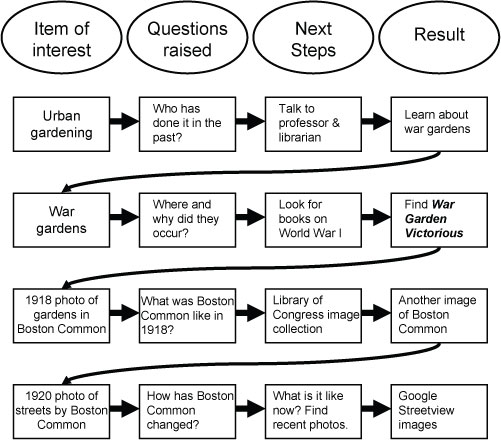
Inquiry—Start with Good Questions
– Good historical questions are open-ended, focused, and historically grounded. Examples:
- “How did the Industrial Revolution alter family life in 19th-century Britain?”
- “Why did decolonization take different forms in Algeria and Ghana?”
- Use the 5 W’s (who, what, when, where, why) plus “how” to refine topics.
- Narrow broad topics into researchable questions by adding time, place, and actor details.
- Distinguish between primary sources (letters, official documents, newspapers, photographs, material culture) and secondary sources (monographs, scholarly articles, textbooks).
- Example: Comparing soldiers’ letters (primary) with a recent military historian’s analysis (secondary) to understand battlefield morale.
- Consider short-term triggers and long-term structural causes.
- Example: The French Revolution involved immediate fiscal crises (short-term) and Enlightenment ideas, social inequality, and fiscal structures (long-term).
- Example: An 1863 abolitionist pamphlet—author’s identity and intended audience matter.
- Purpose shapes tone, content, and omissions.
- Note what’s emphasized and what’s left out; silences can be evidence.
- Consider limitations: self-censorship, exaggeration, survival bias.
- Use corroboration to strengthen interpretations; discrepancies can reveal contested meanings.
- Annotate actively: summarize paragraphs, note surprising claims, ask questions in the margins.
- Translate unfamiliar terms, and research contextual background (dates, places, institutions).
- Identify the author’s argument, evidence, and historiographical placement (does it challenge existing interpretations or reaffirm them?).
- Create an annotated bibliography entry: citation, thesis, evidence, strengths, limitations.
- Quantitative evidence supports trends but rarely explains causation by itself.
- Cross-check numbers against other datasets and consider sampling biases.
- Use mind maps to connect themes, periods, and actors.
- Apply constraints: time period, geographic scope, and social groups to make projects manageable.
- Weak thesis: “The Renaissance changed Europe.”
- Strong thesis: “Urban guilds in 15th-century Florence reshaped civic identity by institutionalizing vocational training and politically mobilizing artisans.”
- Be open to revising your thesis as evidence accumulates.
- Plan archive visits: identify boxes and folders in advance, request digitization when available, and respect handling protocols.
- Digital Public Library of America (DPLA), Europeana, and national archives for digitized primary sources.
- Newspaper archives (Chronicling America, British Newspaper Archive) for period press coverage.
- Employ systematic note-taking: source citation, summary, key quotes, and personal analysis.
- Keep a research log documenting search terms, databases searched, and promising leads.
- Each paragraph should advance the argument and contain specific evidence and analysis.
- Avoid narrative summary that lacks interpretive claims.
- Explain the relevance and limitations of each piece of evidence.
- Use comparative and counterfactual reasoning where appropriate to test arguments.
- Cite both primary and secondary sources; provide archival references (collection, box, folder) when applicable.
- Maintain academic integrity: no plagiarism and transparent use of others’ ideas.
- Teleology assumes historical outcomes were inevitable. Emphasize contingency and multiple causes.
- If relying on elite or official records, seek voices from the margins when possible.
- Summarize readings in your own words; teach the material to a peer.
- Use practice prompts to develop quick source-reading and thesis-formulation skills.
- Review themes across periods (e.g., revolution, imperialism, migration) to build comparative insight.
- Sources: Slave petitions and proclamations, French legal documents, Caribbean newspapers, secondary works by Laurent Dubois and C.L.R. James.
- Approach: Compare enslaved people’s own petitions with French legislative debates; situate events in the context of the French Revolution and Atlantic abolitionist networks.
- Finding: The Haitian Revolution both accelerated abolitionist discourse and forced metropolitan powers to confront racialized forms of citizenship, while also producing divergent post-emancipation trajectories.
- Sources: Government census data, newspapers, factory employment records, diaries of workers.
- Approach: Combine quantitative evidence (migration and employment patterns) with individual narratives to show changing domestic arrangements and workplace entry for women.
- Finding: Industrial growth created new public spaces for women and new labor opportunities, even as legal reforms and cultural expectations constrained fuller social equality.
- Example: Early 20th-century imperial histories often praised empire-building; late 20th-century postcolonial scholarship emphasized resistance and exploitation.
- Pay attention to method: archival discoveries, theoretical frameworks, or comparative approaches can reshape understanding.
- Digital exhibits and online archives expand public access to sources.
- Public historians balance scholarly rigor with accessibility and ethical responsibilities.
- Natalie Zemon Davis, The Return of Martin Guerre
- Laurel Thatcher Ulrich, Good Wives
- Eric Hobsbawm, The Age of Extremes
- Mary Beard, SPQR (for Roman history readers)
- Digital Public Library of America, Europeana, National Archives (primary sources)
- Chronicling America, British Newspaper Archive (press history)
- Zotero (citation management)
- Podcasts: “BackStory,” “Revolutions,” “Hardcore History”
- Documentary series: BBC history programs, Ken Burns collections
- Assign primary-source seminars where students present analysis rather than summaries.
- Use role-play and debates to explore differing historical perspectives.
- Create research workshops that teach archives use and citation management.
- Encourage peer review of drafts focused on evidence and argumentation.
- Primary keyword: “how to read history” — include in title, intro, and at least 1–2% keyword density across the article.
- Long-tail keywords/subheadings: “historian thinking skills,” “how to analyze primary sources,” “history research methods.”
- Meta description (155–160 chars): “Learn how to read and think like a historian: source analysis, research methods, essay writing tips, and study strategies for students and history lovers.”
- Suggested internal links (anchor text):
- “study skills for history exams” (link to site’s study skills page)
- “archive research guide” (link to existing archival resources page)
- Suggested authoritative external links (open in new window):
- Library of Congress digital collections — https://www.loc.gov/collections/
- Digital Public Library of America — https://dp.la/
- JSTOR — https://www.jstor.org/
- E.H. Carr’s What Is History? (publisher page or reputable summary)
- Image alt-text ideas:
- “Student analyzing 19th-century letter in an archive”
- “Annotated primary source with handwritten notes”
- “Map visualization of historical migration patterns”
- Social sharing copy examples:
- Twitter/X: “Want to think like a historian? Learn source analysis, research tips, and essay strategies in this complete guide for students and history buffs. [link]”
- Facebook: “Discover how to read history critically—skills, case studies, and resources to help students and enthusiasts analyze the past. Read now: [link]”
- Schema markup recommendation:
- Use Article schema with author, datePublished, headline, description, mainEntityOfPage, image, and publisher fields. Include keywords in metadata for improved discoverability.
Evidence-Based Reasoning
– Historians build arguments from sources. Evidence must be evaluated for authenticity, bias, perspective, and relevance.
Contextualization and Causation
– Place events within political, social, economic, and cultural contexts to avoid teleology (the false assumption that events were inevitable).
Source Analysis: A Step-by-Step Method
Successful historical analysis follows a clear method. Use this step-by-step approach when reading a source.
Step 1 — Identify the Source and Its Type
– Ask: Who created this? When and where? What type of source is it?
Step 2 — Assess Purpose and Audience
– Why was this produced? Who was the intended audience? Propaganda, private reflection, administrative record?
Step 3 — Analyze Content and Language
– Look for key claims, recurring themes, and rhetorical strategies.
Step 4 — Evaluate Reliability and Bias
– Every source has perspective. Assess credibility by cross-checking with other sources.
Step 5 — Situate and Corroborate
– How does this source compare with others on the same topic?
Reading Strategies for Different Texts
Different source types demand tailored reading approaches.
Reading Primary Sources
– Read multiple times: first for gist, second for details, third for analysis.
Reading Secondary Sources
– Start with abstracts, introductions, and conclusions to capture thesis and structure.
Using Quantitative Data and Charts
– Read captions and axis labels carefully. Ask about the source and method behind the data.
Developing a Research Topic and Thesis
A strong paper begins with a focused topic and a clear thesis.
Finding and Refining Topics
– Start from curiosity, class lectures, or gaps in literature.
Crafting a Working Thesis
– A thesis states a claim and hints at evidence. It must be specific, arguable, and historically grounded.
Hypotheses and Expectations
– Outline possible explanations and the types of evidence that would support or refute them.
Research Methods and Tools for Students
Use a combination of traditional and digital tools to gather and manage sources.
Libraries and Archives
– University and public libraries hold books, special collections, microfilm, and manuscript archives.
Digital Databases and Online Repositories
– JSTOR, Project MUSE, Google Scholar for scholarly articles.
Reference Management and Note-Taking
– Use Zotero, Mendeley, or EndNote to track citations and create bibliographies.
Crafting Evidence-Based Historical Essays
Writing history is arranging evidence into a coherent, persuasive narrative.
Essay Structure and Argumentation
– Typical structure: introduction with thesis, body paragraphs with topic sentences and evidence, and conclusion that synthesizes findings.
Using Evidence Effectively
– Integrate quotes sparingly and analyze them; don’t let primary sources speak for themselves.
Citation and Academic Honesty
– Follow your discipline’s preferred citation style (Chicago/Turabian for history).
Common Pitfalls and How to Avoid Them
Students often fall into predictable mistakes that weaken historical work.
Presentism and Teleology
– Presentism reads past actors through modern values; avoid anachronistic judgments.
Overreliance on a Single Source or Type of Evidence
– Balanced research draws from diverse types of sources and perspectives.
Weak Thesis or Descriptive Essays
– Move beyond description to argument: explain why events occurred and why your claim matters.
Study Techniques and Exam Preparation for Students
Effective habits improve retention and analysis under pressure.
Active Note-Taking and Summarization
– Use Cornell notes, mind maps, or two-column notes (facts vs. analysis).
Timed Practice and Source Analysis Drills
– Practice DBQ-style questions under timed conditions.
Flashcards and Thematic Review
– Flashcards for key dates, individuals, and concepts, but pair them with conceptual prompts that force explanation.
Case Studies — Applying the Method
Two brief examples show the historian’s method in action.
Case Study 1: Interpreting the Haitian Revolution
– Question: How did the Haitian Revolution reshape ideas about slavery and citizenship in the Atlantic world?
Case Study 2: Urban Life in Meiji Japan
– Question: How did urbanization in Meiji-era Tokyo affect gender roles?
Historiography — Understanding Interpretive Debates
Historiography examines how historians’ interpretations change over time and why.
Schools of Thought and Shifting Emphases
– Political, social, economic, cultural, and postcolonial histories offer different lenses.
Evaluating Historiographical Arguments
– Locate a work within debates: does it revise orthodox views or synthesize existing literature?
Digital History and New Directions
Technology changes how history is researched, taught, and presented.
Digital Tools and Projects
– GIS mapping, text-mining, and network analysis reveal patterns not visible through traditional reading.
Public History and Engagement
– Museums, podcasts, and documentaries bring history to broad audiences.
Practical Resources and Further Reading
A curated list to deepen study.
Essential Books and Texts
– E.H. Carr, What Is History?
Databases and Online Resources
– JSTOR, Project MUSE (scholarship)
Courses, Podcasts, and Documentaries
– Yale Open Courses (e.g., Roman history)
Practical Tips for Teachers and Study Groups
Encouraging active learning reinforces skills.
SEO and Sharing Optimization (For Student Bloggers and Educators)
If you will publish this content online, follow these steps to maximize reach.
Frequently Asked Questions (FAQ)
Q: How long should I spend on a primary source?
A: Initial read: 10–15 minutes for comprehension; deeper analysis may take 30–90 minutes depending on length and complexity.
Q: Can I rely on Wikipedia for research?
A: Use Wikipedia as a starting point for overview and bibliographies, but confirm facts with primary sources and peer-reviewed scholarship.
Q: What citation style is best for history?
A: Chicago (Notes and Bibliography) is standard in many history programs; check instructor or publisher requirements.
Q: How do I choose an archive to visit?
A: Start with national and local repositories related to your topic. Use online catalogs and contact archivists to identify relevant collections before visiting.
Q: How do I avoid bias when reading sources?
A: Recognize and explicitly discuss the source’s perspective and limitations; compare multiple viewpoints and prioritize corroborated evidence.
Conclusion
Reading history well is an active, evidence-driven practice that transforms curiosity into rigorous understanding. By asking focused questions, analyzing sources carefully, situating evidence in context, and crafting clear arguments, students and enthusiasts can engage deeply with the past. Use the research tools and reading strategies in this guide to strengthen your historical thinking, improve your essays, and enjoy more meaningful encounters with historical sources. Start by selecting one primary source today—apply the step-by-step analysis above, compare it with a scholarly article, and write a short paragraph synthesizing what you’ve learned. That small, disciplined act is the foundation of becoming a confident reader of history.
Author note: This guide reflects best practices in historical research and pedagogy and is designed for immediate use by students, teachers, and curious readers.