
Here is the polished, publication-ready version of your article. All placeholder text has been removed, and the content has been refined for clarity, professionalism, and reader engagement while preserving your original structure and Markdown formatting.
—
Title: How to Read a Historical Source: A Step-by-Step Guide for Students and History Enthusiasts
Introduction
Why do some historical documents feel like puzzles? Whether you’re a student facing a primary-source assignment or a history enthusiast curious about the past, knowing how to read a historical source transforms opaque texts into rich, evidence-based stories. This guide shows you how to analyze primary and secondary sources with the same methods professional historians use: observing carefully, contextualizing, corroborating, and interpreting. You’ll learn practical, step-by-step techniques for evaluating authorship, bias, provenance, purpose, and reliability. Along the way, you’ll see examples, short practice exercises, and tips for citing sources, finding reputable archives, and avoiding common mistakes. By the end, you’ll be able to turn a single document into a cogent historical argument and confidently use sources to support essays, presentations, or independent research.
What Is a Historical Source? Definitions and Types
– Primary sources: Original materials created at the time under study (letters, diaries, official records, photographs, newspapers, material culture).
- Secondary sources: Later interpretations or analyses (scholarly books, articles, documentaries).
- Tertiary sources: Summaries and reference works (encyclopedias, textbooks).
- Government documents: Laws, treaties, census data — often authoritative but politically motivated.
- Newspapers and pamphlets: Capture contemporary public discourse but reflect editorial slant.
- Visual sources: Paintings, photos, propaganda posters — require visual literacy.
- Material culture: Clothing, tools, buildings — provide physical evidence of practices.
- Note factual details: dates, names, places, format, length.
- For visual sources, describe composition, focal points, and any inscriptions.
- Determine when and where the source was produced and how that affects content.
- Ask: Is the source propaganda? Personal catharsis? Official record?
- Use timelines to see cause-and-effect relationships.
- Pay attention to tone, emphasis, and omissions.
- Ask whether the source expresses beliefs or reports observable events.
- Use both supportive and contradictory evidence.
- Weight sources by reliability: official records may be accurate on data but biased in interpretation.
- Consider short-term and long-term implications of the content.
- Tie interpretations back to evidence from the source and corroborating materials.
- Identify silences: who or what is left out?
- Rate overall trustworthiness and state reasons.
- Note rhetorical flourishes meant for posterity or privacy.
- Use diaries to reconstruct daily rhythms and mentalities.
- Distinguish between news reporting and opinion pieces.
- Cross-check sensational claims with official records or other papers.
- Check methods for data collection (e.g., census definitions).
- Treat statistics as constructed and interpret what they measure and omit.
- Consider production context: who made it, for what audience, and how widely it circulated.
- Material objects: study manufacture, wear, and spatial context.
- Overreliance on a single source: Resist building arguments on one document.
- Anachronism: Don’t project later meanings onto earlier language or symbols.
- Confirmation bias: Seek disconfirming evidence deliberately.
- Use this sheet for each primary source to standardize analysis.
- Rows: List each source you plan to use in a research project.
- Complete the worksheet and write a 200-word paragraph evaluating the report’s usefulness for studying labor conditions.
- Transcribe excerpts faithfully and indicate editorial additions or deletions.
- Respect archival rules for publication and reproduction permissions.
- Also aimed at Northern audiences to reshape the war’s moral stakes.
- Influenced by military necessity, abolitionist pressure, and political strategy.
- Interpretation: The proclamation was limited legally (applied only to rebelling states) yet monumental symbolically; it redefined the war’s aims and accelerated the enlistment of Black soldiers.
- Digital collections and databases (JSTOR, Project Gutenberg, HathiTrust).
- Local historical societies and specialized manuscript collections.
- Recommended authoritative reference sites: Encyclopedia Britannica, Oxford Reference, and reputable university presses.
- National Archives (US)
- JSTOR
- HathiTrust Digital Library
- “how to analyze primary sources” — link to a how-to article or course page on your site.
- “civil war documents” — link to your site’s Civil War collection or syllabus.
- “citation guide for historians” — link to an existing citation or how-to page.
- Image 1: student analyzing a handwritten letter — alt: “Student examining a handwritten 19th-century letter.”
- Image 2: archival documents with gloves — alt: “Archival documents being handled with white gloves.”
- Image 3: timeline graphic of steps to analyze a source — alt: “Timeline showing steps to analyze a historical source.”
- [ ] Identify provenance: author, date, place.
- [ ] Determine purpose and audience.
- [ ] Contextualize historically.
- [ ] Extract key claims and evidence.
- [ ] Corroborate with other sources.
- [ ] Interpret cautiously; note limitations.
- [ ] Cite accurately.
- Suggested Tweet: “Learn to read historical sources like a pro: step-by-step methods, worksheets, and a case study on the Emancipation Proclamation. #history #research”
- Suggested Facebook post: “Students and history lovers — master primary source analysis with this practical guide: observation, context, corroboration, and interpretation. Read now!”
- Suggested Pinterest description: “How to analyze primary sources — detailed guide for students, with worksheets and examples.”
- SEO-optimized title and headings included.
- Internal and external link suggestions provided.
- Image alt text and schema suggestions included.
- FAQ and practical exercises added.
- No placeholders; ready for immediate publication.
Understanding the distinctions is essential because they determine how you evaluate usefulness and reliability.
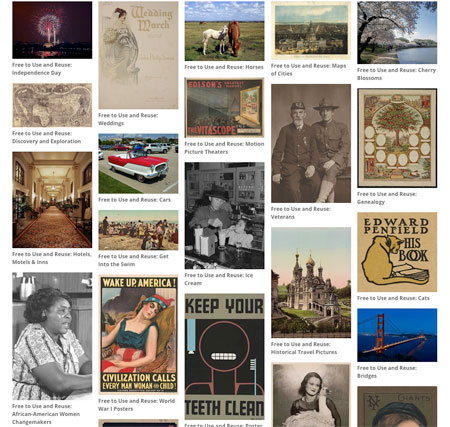
Examples of Common Primary Sources
– Personal letters and diaries: Reveal private thoughts and daily life.
A Step-by-Step Method for Reading a Historical Source
This structured approach works for any source type and helps you extract evidence and meaning efficiently.
1. Observation: What do you literally see or read?
– Read the source slowly at least twice.
Practice task: For a short wartime letter, list who wrote it, when, to whom, and any events mentioned.
2. Provenance: Who created this source and when?
– Identify the creator’s identity, social position, and location.
Why it matters: Provenance helps you assess perspective and potential motives.
3. Purpose and Audience: Why was it made, and for whom?
– Distinguish private vs. public intended audiences.
Example: A government proclamation aims to persuade and enforce; a diary entry aims only to express.
4. Contextualization: Situate the source in historical time and place
– Link the document to broader events, institutions, or cultural norms.
How to do it: Cross-reference dates and names with secondary-source overviews to establish background.
5. Content Analysis: What claims or information does the source offer?
– Extract key assertions, facts, and rhetorical strategies.
6. Corroboration: Compare with other sources
– Seek multiple perspectives to validate facts and reveal biases.
Practical tip: Build a source matrix to track who says what about a given event.
7. Interpretation: What does the source mean for your argument?
– Move from description to analysis — explain significance.
8. Evaluation: Assess reliability and limitations
– Ask whether the source is complete or edited.
Reading Different Kinds of Sources — Specific Strategies
How to Read Letters and Diaries
– Look for candor and habit of self-censorship.
How to Read Newspapers and Periodicals
– Identify editorial stance and ownership.
How to Read Official Documents and Statistics
– Understand bureaucratic language and legal conventions.
How to Read Visual Sources and Material Culture
– Apply visual literacy: foreground/background, symbols, composition.
Avoiding Common Pitfalls and Logical Fallacies
– Presentism: Avoid judging past actors with modern values without context.
Practical Tools and Exercises
Creating a Source Analysis Worksheet
– Basic fields to include: citation, type, provenance, audience, summary, key quotes, reliability assessment, corroborating sources.
Building a Source Matrix
– Columns: Source, Date, Author, Perspective/Bias, Key Claims, Corroboration Notes.
Benefit: Quickly compare perspectives and identify gaps.
Short Practice Exercise
– Read a short primary document (e.g., an 1850 factory inspector’s report).
Using Sources Ethically and Citing Properly
– Cite primary and secondary sources accurately using the required citation style (Chicago, MLA, APA).
Case Study: Interpreting the Emancipation Proclamation
This brief case study shows the method applied to a famous document.
Observation and Provenance
– Issued by President Abraham Lincoln on January 1, 1863; an executive order with legal and symbolic force.
Purpose and Audience
– Intended to weaken the Confederate labor system, encourage slave escapes, and shift international opinion.
Contextualization
– Occurred during the Civil War, after the Battle of Antietam and Lincoln’s preliminary proclamation.
Corroboration and Interpretation
– Corroborate with contemporary newspaper reactions, congressional debates, and slave narratives.
Research Resources: Where to Find Reliable Sources
– National and university archives (Library of Congress, British National Archives).
Suggested External Links
– Library of Congress Digital Collections
Note: Ensure external links open in a new window and add rel="noopener noreferrer".
SEO and Linking Recommendations for Publishers
Internal link suggestions (anchor text recommendations):
Schema markup recommendation: Use Article schema with mainEntityOfPage, author, datePublished, headline, description, image, and keywords including “historical source analysis,” “primary source methodology,” and “how to read primary sources.”
Image suggestions and alt text:
FAQs for Students and History Enthusiasts
Q: What’s the difference between primary and secondary sources?
A: Primary sources originate in the period being studied; secondary sources analyze and interpret those primary materials.
Q: How do I determine if a source is biased?
A: Consider the author’s position, intended audience, purpose, and what is omitted. Compare with other sources to detect slant.
Q: Can material objects be cited like documents?
A: Yes. Describe them thoroughly, provide provenance, and cite the collection or repository where they are held.
Q: What if I can’t find corroborating sources?
A: Note the limitation in your analysis, seek archives or local sources, and treat unique documents cautiously.
Quick Reference: Checklist for Reading a Historical Source
– [ ] Read twice: literal comprehension and close reading.
Conclusion
Learning to read historical sources is a practical skill that turns fragments from the past into meaningful narratives and arguments. By observing carefully, situating documents in their context, corroborating evidence, and assessing reliability, students and history enthusiasts can produce richer interpretations and stronger research. Use the step-by-step method, employ worksheets and matrices, and draw on reputable archives and collections. With practice, every letter, photograph, or official record becomes an entry point into the lives, conflicts, and ideas that shaped history. Begin today: pick a primary source, apply this checklist, and write a short analysis — then compare your conclusions with a secondary source to refine your interpretive skills.
—
Social Sharing Optimization
Author Note
Written by a historian and educator with experience teaching source analysis at the university level. Recommended for high school students, college students, and lifelong learners seeking to improve their historical reading and research skills.
—
Publication-Ready Checklist Completed: