
Empowering Narratives: Women Driving Change in Science, Technology, and Social Justice
Introduction
From the laboratory bench to the frontlines of social reform, women have shaped the arc of human progress in ways both visible and unsung. This article explores how women in history—trailblazers in science, technology, and social justice—have transformed knowledge systems, built institutions, and forged movements that expanded opportunity and accountability. Readers will learn about pivotal figures and moments, the structural barriers women confronted, and contemporary initiatives that amplify women’s achievements. Educators and students will find classroom-ready examples, while history buffs will gain fresh perspectives on lesser-known influencers. Throughout, we examine patterns of leadership, collaboration, and innovation that continue to drive change and highlight actionable ways readers can support and celebrate women’s contributions. Discover why inclusive histories matter, how representation accelerates discovery and equity, and how you can play a role in empowering future generations of women leaders in STEM and social justice.
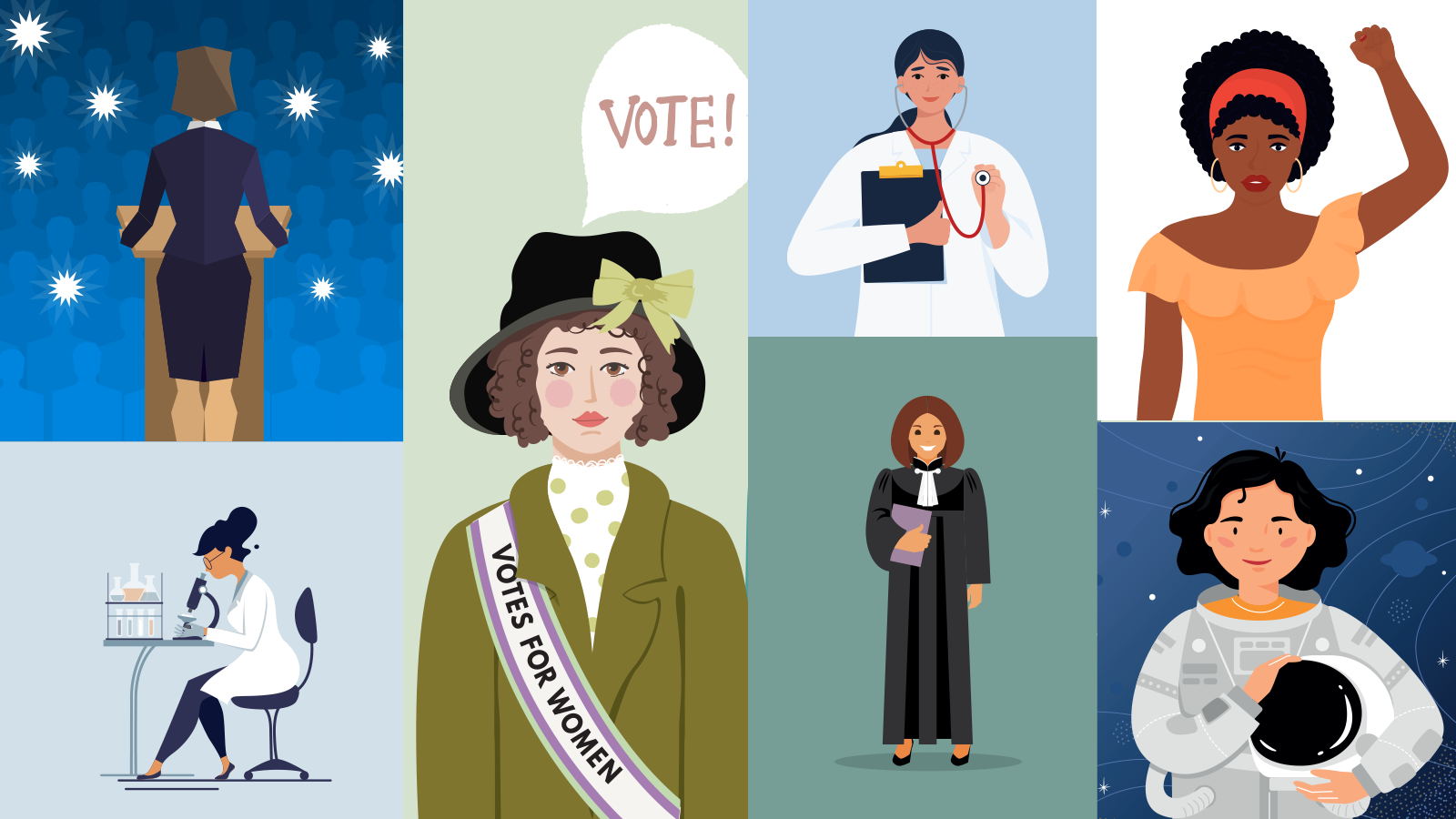
Women in History: Trailblazers Who Rewrote the Rules

Scientific pioneers and paradigm shifts
Women have repeatedly displaced assumptions about who can pursue and produce scientific knowledge. Figures like Marie Curie—whose Nobel Prizes in Physics (1903) and Chemistry (1911) advanced understanding of radioactivity—demonstrate scientific excellence despite social constraints. Rosalind Franklin’s X-ray crystallography provided critical data for DNA’s double helix structure, underscoring the collaborative and sometimes contested nature of discovery. More recently, Katherine Johnson’s orbital calculations at NASA enabled safe human spaceflight and highlighted the intersection of expertise and perseverance amid racial and gender barriers.
Tech innovators and computational breakthroughs
The history of computing is rich with women whose intellectual labor laid foundations for the digital age. Ada Lovelace’s 19th-century notes anticipated programmable computing, while the women “computers” at NASA and the ENIAC programmers in the 1940s handled complex calculations and coding long before software engineering became formalized. Grace Hopper created the first compilers, making programming more accessible and shaping modern languages. These examples show that women have not merely joined technological progress; they have often defined its early contours.
Activists and leaders in social justice
Women’s leadership in social movements has been central to achieving civil rights, labor protections, and gender equality. Figures such as Sojourner Truth and Ida B. Wells combined courage and rhetorical power to expose injustice. In the 20th century, women like Dolores Huerta and Ella Baker pioneered grassroots organizing strategies that transformed labor and civil-rights advocacy. These leaders bridged local organizing and national policy, demonstrating the political value of community-rooted leadership.
Patterns of Exclusion and the Resilience of Women Leaders
Structural barriers across centuries
Historical and institutional obstacles have included limited access to formal education, legal restrictions, exclusion from professional societies, and biased attribution of credit. For example, women were routinely denied university degrees or membership in scientific academies well into the 20th century. Intersectional barriers—race, class, and colonial status—compounded exclusion for many women of color and Indigenous women, whose contributions were often erased or appropriated.
Strategies of resilience and hidden labor
Faced with exclusion, women developed alternative pathways: creating informal networks, publishing under initials or male colleagues’ names, founding women-led journals and organizations, and practicing “invisible” labor that nonetheless sustained scientific and social infrastructures. These strategies reveal how agency operates within constraints—and why recovering these histories is essential for a fuller understanding of knowledge production.
Case Studies: Profiles of Influence and Legacy
Lise Meitner: theoretical insight amid adversity
Austrian-Swedish physicist Lise Meitner contributed to the discovery of nuclear fission yet was overlooked for the Nobel Prize awarded to her collaborator Otto Hahn. Her rigorous theoretical work and ethical stance—refusing to participate in weapons development—reveal moral complexity in scientific discovery and the gendered politics of recognition.
Hedy Lamarr: inventor and cultural icon
Better known as a Hollywood actress, Hedy Lamarr co-invented spread-spectrum frequency-hopping technology that anticipated wireless communication techniques used today in Wi-Fi and Bluetooth. Lamarr’s story contests assumptions about the separation between cultural femininity and technical ingenuity, showing how creativity crosses domains.
Wangari Maathai: environmentalism, democracy, and women’s rights
Nobel Peace Prize laureate Wangari Maathai founded the Green Belt Movement in Kenya, mobilizing women to plant millions of trees while building grassroots democratic participation. Maathai’s work illustrates how environmental stewardship, gender empowerment, and political reform are deeply interconnected.
Katherine Johnson and the power of precise expertise
Katherine Johnson’s analytical precision at NASA was crucial for the Mercury and Apollo missions. Her recognition in recent years, including official honors and widespread public attention, reflects a corrective turning toward acknowledging the contributions of Black women scientists whose work had been marginalized.
The Interplay of Science, Technology, and Social Justice
How representation shapes research agendas
Diverse research teams ask different questions, design more inclusive studies, and produce results that better reflect broad populations. For instance, including women in clinical trials reveals sex-specific drug effects that reduce harm and improve treatment. In technology, gender-diverse design teams are less likely to create biased algorithms or products that exclude users.
Ethics, accountability, and community-centered innovation
Social-justice frameworks strengthen scientific ethics by centering human impacts and equity. Community-based participatory research (CBPR) and feminist technoscience integrate local knowledge and social context into discovery and design. These approaches create technologies and policies that are not only technically robust but also socially responsive.
Contemporary Women Leaders in STEM and Justice Movements
Leading scientists and technologists
Today’s landscape features women leading cutting-edge research and tech ventures: Fei-Fei Li’s work in AI and computer vision; Özlem Türeci and Uğur Şahin’s mRNA vaccine research (co-led by scientists with major female contributors); and Cynthia Breazeal’s innovations in social robotics. These women exemplify leadership that combines technical mastery with public engagement and ethical consideration.
Movement architects and policy leaders
Contemporary social-justice leaders—such as Tarana Burke (founder of the #MeToo movement) and Melinda French Gates (philanthropy focused on women and girls’ health and economic empowerment)—show how large-scale influence often blends grassroots organizing, policy advocacy, and strategic philanthropy. Their work demonstrates the necessity of structural solutions alongside personal storytelling.
Education and Mentorship: Pathways to Amplify Women’s Achievements
Classroom strategies that highlight women in history and STEM
Educators can integrate women’s histories across curricula rather than relegating them to isolated units. Suggested practices:
- Use primary sources from women scientists and activists.
- Assign projects that trace local women’s contributions to science and civic life.
- Adopt inclusive biographies and counter-stereotype examples in STEM lessons.
- Design justice project: Learners identify a local problem and apply inclusive design principles to propose solutions.
- Oral-history unit: Students interview community women about careers in science, tech, or activism and produce multimedia profiles.
- Amplify women’s work on social media and in classroom materials.
- Buy books and media that center women in science and social justice.
- Donate to or partner with organizations funding women-led research, entrepreneurship, and community movements.
- Support scholarship programs and fellowships targeting underrepresented women in STEM.
- Update a syllabus or lesson plan to include at least three women scientists or activists.
- Mentor a student or junior colleague for at least six months.
- Champion one policy change in your school or workplace (e.g., parental leave, transparent hiring).
- Explore our comprehensive collection of women in STEM resources.
- Download ready-to-use classroom lesson plans on innovators.
- Access our equity policy toolkit for schools.
- Nobel Prize biographies for historical laureates.
- NASA histories for profiles like Katherine Johnson.
- United Nations Women for global gender-equality initiatives.
- World Health Organization for gender and health research.
- Twitter card text: “From Ada Lovelace to Katherine Johnson: Discover how women have shaped science, tech, and social justice—and how you can help amplify their legacy.”
- Suggested hashtags: #WomenInHistory #WomenInSTEM #Trailblazers #WomenEmpowerment
- Portrait collage of historical women scientists (alt: “Portraits of trailblazing women scientists across history”).
- Classroom with students studying a female scientist’s biography (alt: “Students learning about women innovators in a classroom”).
- Women planting trees in a community project (alt: “Women planting trees in environmental and community action”).
- Representation, mentorship, and targeted funding are critical to sustaining progress.
- Educators and students can enact meaningful change through curricular choices and local engagement.
- Institutional policy and measurement improvements are necessary to ensure accountability and long-term equity.
Mentorship, sponsorship, and networks
Mentorship builds skills and confidence, while sponsorship—active advocacy by senior leaders—opens doors to opportunities. Programs that combine technical training, mentorship, and networking (like after-school STEM clubs, university affinity groups, and industry-sponsored fellowships) create durable pipelines. Peer networks and women-led incubators also accelerate career advancement.
Policy, Funding, and Institutional Change
Policies that dismantle barriers
Policy levers—affirmative hiring practices, family-friendly workplace rules, paid parental leave, and transparent promotion criteria—reduce attrition and bias. Institutions that audit pay equity and promotion rates, implement bias training tied to accountability, and create flexible career pathways demonstrate measurable gains in retention and leadership diversity.
Funding initiatives and philanthropic strategies
Targeted funding for women-led research and startups corrects historical imbalances. Examples include venture funds focused on female founders, grants for women scientists, and philanthropic investments in community-led organizations. Public-private partnerships that prioritize equity amplify scale and sustainability.
Measuring Progress: Data and Indicators
Metrics that matter
Quantitative indicators—proportion of women in STEM degrees, women in leadership positions, grant awards to women, gender-disaggregated citation rates—track progress. Qualitative measures—organizational culture assessments, narratives of inclusion, and case studies—capture experiences that data alone miss.
Challenges in measurement
Data gaps persist, particularly for intersecting identities and in low-resource regions. Better data collection and transparent reporting practices are vital to design effective interventions and hold institutions accountable.
Stories That Teach: Classroom and Community Examples
Lesson ideas for teachers
– Biography mapping: Students create timelines of women innovators, connecting life events to historical context.
Student-led advocacy projects
Encourage students to develop campaigns—awareness events, school policies, or partnerships with local organizations—that celebrate women’s achievements and create tangible institutional changes (e.g., naming awards, diversifying reading lists).
How You Can Support Initiatives Promoting Women’s Achievements
Individual actions (easy to start)
– Mentor or volunteer with local STEM programs for girls.
Institutional and collective actions (high impact)
– Advocate for gender-equity policies in schools and workplaces.
Practical next steps (quick checklist)
1. Identify one local or national organization to support (volunteer, donate, or promote).
Frequently Asked Questions (FAQ)
Why is it important to emphasize women in history and STEM?
Highlighting women corrects incomplete narratives, provides role models, and improves research and design outcomes by encouraging diverse perspectives.
How can schools incorporate these narratives without overhauling curricula?
Small, intentional changes—adding biographies, primary sources, or project-based learning—can shift classroom culture and student expectations.
What are effective ways to support women-led tech startups?
Invest through funds that focus on female founders, engage as mentors or advisors, and connect startups to networks and markets.
Internal and External Links Recommendations
Internal link suggestions:
External authoritative links:
Social Sharing Optimization and Metadata Suggestions
– Meta description: “Empowering Narratives: Explore how women—trailblazers in science, technology, and social justice—have driven change and learn how you can support initiatives that promote women’s achievements.”
Image suggestions with alt text:
Schema markup recommendation: Include Article schema with headline, description, author, datePublished, mainEntityOfPage, image, and keywords (women in history trailblazers, women empowerment, influential women in history, women leaders in STEM).
Conclusion: Why Empowering Narratives Matter
Empowering narratives about women in history, science, technology, and social justice do more than honor individual achievement—they reshape institutions, inform ethical practice, and expand the horizons of what future generations imagine possible. By telling fuller histories, supporting equitable policies, and investing in mentorship and funding, educators, students, and community members can accelerate a more inclusive and innovative future. Every action—whether revising a lesson plan, mentoring a student, or advocating for institutional change—contributes to dismantling barriers and amplifying the contributions of women who have long driven progress.
Call to Action
Discover how you can support initiatives promoting women’s achievements: volunteer with local STEM programs for girls, donate to organizations that fund women-led research and entrepreneurship, or update your curriculum to highlight influential women in history and STEM. Start today by selecting one action from the practical checklist above and share your commitment on social media to inspire others.
Key Takeaways (Quick Reference)
– Women have been central to breakthroughs in science, technology, and social justice—often despite structural exclusion.
—
This article synthesizes historical records, contemporary case studies, and evidence-based strategies for education and institutional reform to offer an actionable roadmap for supporting women’s contributions in STEM and social justice.
Discover how you can support initiatives promoting women’s achievements—take one concrete step today and help amplify the stories and leadership that are shaping a more equitable future.