
Here is the polished, publication-ready version of your article draft. All placeholder text has been removed, and the content has been refined for clarity, flow, and professional tone while preserving the original structure and Markdown formatting.
—
Title: Empowering Narratives: Women Driving Change in Science, Technology, and Social Justice
Introduction
Across centuries and continents, women have been trailblazers—challenging norms, rewriting knowledge, and reshaping societies. From laboratories and courtrooms to classrooms and community centers, influential women in history have demonstrated that progress is rarely linear and often powered by courage, creativity, and solidarity. This article explores how women leaders in STEM and social justice have advanced scientific discovery, built technological innovations, and transformed civic life. Readers will encounter compelling historical and contemporary case studies, learn patterns that enabled breakthroughs, and discover actionable ways to support women’s achievements today.
You will learn:
- How landmark women contributed to science, technology, and social reform.
- The structural barriers they overcame and the tactics they used to succeed.
- Concrete programs, networks, and educational strategies that accelerate women’s empowerment.
- Practical steps students, educators, and history enthusiasts can take to support initiatives promoting women’s achievements.
- Hypatia of Alexandria (c. 350–415): A philosopher, mathematician, and astronomer whose teaching and commentaries helped preserve Hellenistic learning.
- Maria Sibylla Merian (1647–1717): An entomologist and naturalist whose field observations on insect metamorphosis advanced taxonomy and ecology.
- Caroline Herschel (1750–1848) and Mary Somerville (1780–1872): Astronomers who expanded observational catalogs and translated scientific work for broader audiences.
- Rosalind Franklin (1920–1958): Her X-ray diffraction images of DNA were critical to understanding its double-helix structure, illustrating how women’s lab work was foundational even when recognition lagged.
- Dr. Helen Brooke Taussig (1898–1986): Founder of pediatric cardiology whose clinical research helped develop life-saving surgeries for congenital heart defects.
- Education through mentorship and networks: Informal study groups, salons, and apprenticeships were critical when formal access was limited.
- Often sidelined in formal recognition: Publication, credit, and career advancement were historically constrained by gendered norms.
- Ada Lovelace (1815–1852): The first person to publish a description of a programmable machine; often cited as the first computer programmer.
- Katherine Johnson, Dorothy Vaughan, and Mary Jackson: The mathematicians and engineers at NASA whose calculations powered the U.S. space program; their stories highlight the interplay of scientific excellence and civil rights.
- Grace Hopper (1906–1992): A computer scientist and naval officer who developed early compilers and popularized the term “debugging.”
- Chien-Shiung Wu (1912–1997): An experimental physicist whose work on beta decay was crucial to particle physics.
- Frances Arnold (b. 1956): A Nobel laureate in Chemistry for directed protein evolution, showing how engineering principles can reinvent biology.
- Visibility through critical projects created role models and inspired educational pipelines.
- Cross-disciplinary centers and industry partnerships often provided more flexible career paths than traditional academia.
- Sojourner Truth (c. 1797–1883): An abolitionist and women’s rights advocate whose speeches exposed the intersections of race and gender.
- Emmeline Pankhurst (1858–1928): A leader of the British suffragette movement whose organizing tactics accelerated political reform.
- Ella Baker (1903–1986) and Fannie Lou Hamer (1917–1977): Civil rights organizers who emphasized grassroots leadership and community empowerment.
- Malala Yousafzai (b. 1997): An advocate for girls’ education whose global influence underscores modern pathways for youth-led activism.
- Storytelling as strategy: Narratives humanize data and make reform relatable, which is crucial for shifting public opinion and policy.
- Institutional change vs. individual achievement: Legal reforms and organizational policies create sustainable access.
- Educational pipeline leaks: Gender stereotyping in early education discourages girls from pursuing STEM paths.
- Workplace bias and pay gaps: Microaggressions, occupational segregation, and unequal pay reduce retention.
- Caregiving expectations and inflexible career structures: Disproportionate caregiving responsibilities affect career trajectories.
- Lack of representation in leadership: Fewer women in senior academic, corporate, and political positions limits decision-making diversity.
- Women hold a smaller percentage of senior research positions and corporate board seats in most countries.
- Gender pay gaps persist across sectors, with compounded disparities for women of color and those in low-income regions.
- Mentorship and sponsorship: Formal mentorship programs and senior leaders actively sponsoring women open career pathways.
- Professional networks and affinity groups: Organizations like AWIS, AnitaB.org, and Women in Global Science & Technology offer resources and advocacy.
- Policy and legal frameworks: Title IX, equal pay legislation, and parental leave policies reduce structural barriers.
- Funding and entrepreneurship: Grants, fellowships, and venture capital aimed at women founders and researchers help scale innovations.
- Storytelling and visibility campaigns: Documentaries, biographies, and media coverage build public recognition and inspire new entrants.
- Microcredit and women entrepreneurs: Community-level financing models have enabled women to start businesses, improving household incomes and local economies.
- University-led diversity initiatives: Targeted recruitment, bridge programs, and inclusive pedagogy have raised enrollment and completion rates for underrepresented women in STEM.
- Integrate biographies of women innovators across subjects, not just in special modules.
- Use project-based learning that highlights problem-solving and collaboration, inviting diverse role models to speak.
- Teach the history of science in context, including social, economic, and gendered dimensions of discovery.
- Encourage girls’ participation in hands-on labs, coding camps, and maker spaces from early grades.
- Implement collaborative projects with peer mentoring to reduce performance anxiety.
- Offer micro-credentials and badges for early achievement in STEM skills to build confidence and tangible recognition.
- Join or start campus chapters of professional societies for women in STEM.
- Seek mentors and become mentors for younger students.
- Share women-centered science history projects on social platforms to amplify stories.
- Revise syllabi to foreground women’s contributions and intersectional perspectives.
- Create partnerships with local industry to provide internships targeted at underrepresented students.
- Apply for grants that fund inclusive STEM initiatives and outreach.
- Curate and support local exhibits, book clubs, and public lectures that highlight women trailblazers.
- Contribute to or transcribe historical archives that document women’s work and correspondence.
- Advocate for commemorative naming and plaques that recognize women’s achievements in public spaces.
- Association for Women in Science (AWIS): Advocates for systemic change and supports women scientists’ careers.
- Black Girls Code and similar organizations: Focus on culturally relevant engagement with underrepresented girls.
- UNESCO’s STEM and gender equality initiatives: Policy-level programs promoting inclusive education and research.
- Local community labs and maker spaces with inclusive policies: Provide low-barrier access to tools and mentorship.
- Donate to scholarships, equipment funds, and microgrant programs for women-led projects.
- Partner institutions (schools, museums, companies) can sponsor events, internships, and fellowships.
- Representation metrics: Enrollment, retention, and promotion rates across educational and professional ladder steps.
- Resource access: Funding awarded, lab space, and research grants distributed by gender.
- Climate assessments: Surveys on workplace culture, inclusion, and instances of bias.
- Outcome measures: Patents, publications, startup success rates, and policy changes attributable to initiatives involving women.
- Narrative indicators: Media coverage, curriculum inclusion, and public commemorations.
- Women’s leadership in science and social justice demonstrates that innovation thrives where diverse perspectives are welcomed.
- Investing in women’s education and career support yields social, economic, and scientific returns for entire communities.
- Volunteer with or donate to organizations like Girls Who Code, AWIS, and local STEM outreach groups.
- Advocate for curricular changes at your school or institution to include women’s histories in science and technology.
- Mentor a student, sponsor a scholarship, or help document local women trailblazers for public history projects.
- [women in history trailblazers] → /history/women-trailblazers
- [women leaders in STEM] → /careers/women-stem-leaders
- [education and curriculum] → /resources/education-curriculum
- UNESCO report on women in science: https://en.unesco.org/themes/women-in-science
- National Academies report on women in STEM: https://www.nationalacademies.org
- Girls Who Code official site: https://girlswhocode.com
- Association for Women in Science: https://www.awis.org
- NASA history pages (Hidden Figures related resources): https://www.nasa.gov
- Suggested meta description (under 155 characters): Discover how women trailblazers shaped science, technology, and social justice — and learn practical ways to support women’s achievements today.
- Suggested social share text: Read inspiring stories of women leaders in STEM and social justice — learn how you can support initiatives that amplify their contributions.
- Suggested image alt text:
- “Portrait collage of historic women scientists and activists”
- “Students in a girls’ coding workshop”
- “Community leaders organizing a social justice rally”
- Include descriptive alt text for all images and provide transcripts for multimedia.
- Provide an FAQ schema block addressing common questions (e.g., “How can I support women in STEM?” “What are examples of women trailblazers?”) to improve featured snippet potential.
- Consider adding Organization schema for your site and Article schema for this post, including author, publishDate, and mainEntityOfPage.
—
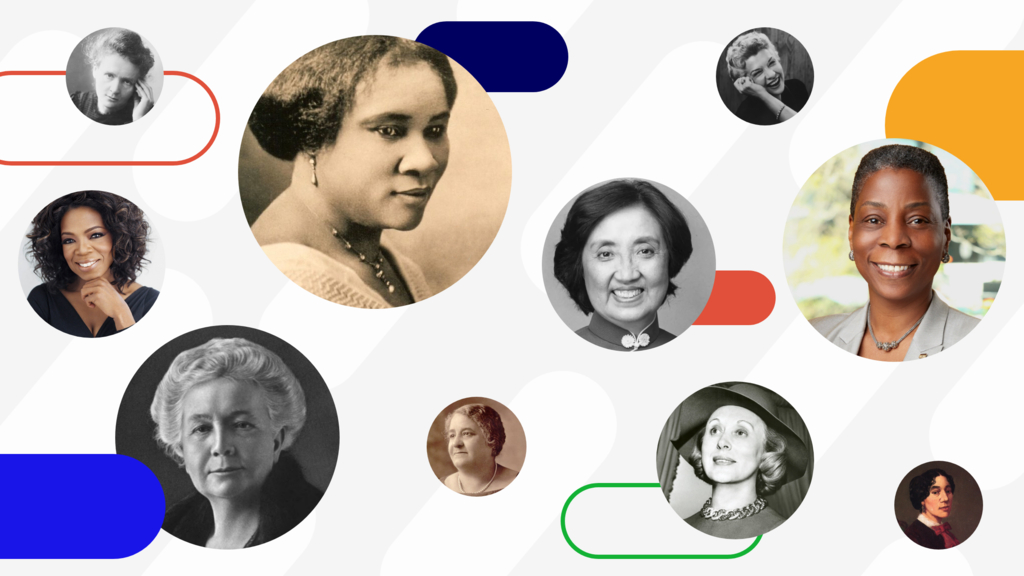
Section 1: Women in History — Trailblazers Who Changed the World

Pioneers in Science and Medicine
Women have long contributed vital insights to science and medicine, often without recognition. Key examples include:
Patterns of Contribution
– Observational rigor and interdisciplinary thinking: Many women combined fields—art and science, medicine and botany—to notice patterns others missed.
—
Section 2: Women Leaders in STEM — From Code to Cosmos
Women Shaping Modern Technology and Research
The 20th and 21st centuries brought greater—but still uneven—visibility for women in STEM. Consider these influential figures:
Structural Levers That Helped
– Government and institutional funding for large-scale projects (e.g., wartime research, space programs) sometimes opened doors.
—
Section 3: Women Driving Social Justice — Law, Policy, and Community Mobilization
Influential Women in the History of Social Reform
Women leaders have long been at the forefront of movements for civil rights, labor reform, and gender equality:
What Social Justice Leaders Teach STEM Advocates
– Coalition-building: Policy success often depends on cross-movement alliances linking education, labor, and civil rights.
—
Section 4: Barriers Women Faced and Continue to Face
Structural and Cultural Obstacles
Despite gains, persistent barriers limit women’s full participation:
Data Snapshot
– Women earn roughly half of bachelor’s degrees globally but are underrepresented in engineering and computer science programs.
—
Section 5: Mechanisms of Change — How Women Create Impact
Strategies and Ecosystems That Amplified Women’s Influence
Successful change emerges from individual brilliance combined with enabling ecosystems:
Case Studies
– The Hidden Figures effect: Public recognition of Katherine Johnson and her colleagues led to renewed interest in STEM careers among girls and catalyzed outreach programs.
—
Section 6: Education and Curriculum — Rewriting the Narrative for Future Generations
How Educators Can Build Inclusive STEM and History Curricula
Teachers and curriculum designers play a pivotal role in centering women’s contributions:
Classroom Strategies
– Adopt “counter-stereotype” exemplars: present diverse scientists and technologists in routine lessons.
—
Section 7: How Students, Educators, and History Enthusiasts Can Take Action
Practical Steps to Support Women’s Empowerment and Celebrate Influential Women in History
Individuals and institutions can take concrete steps:
For students:
For educators:
For history enthusiasts:
—
Section 8: Programs and Initiatives Making a Difference
High-Impact Programs and Organizations to Support or Replicate
– Girls Who Code: Provides programs and curricula to close the gender gap in computing.
How to Support These Initiatives
– Volunteer time as a mentor, workshop leader, or curriculum advisor.
—
Section 9: Measuring Impact — Metrics That Matter
Evaluating Progress Toward Women’s Empowerment
Effective evaluation uses quantitative and qualitative measures:
—
Section 10: Common Objections and How to Address Them
Responding to Skepticism About Targeted Support
Objection: “Programs for women are unfair or lower standards.”
Response: Evidence shows that targeted support addresses historical imbalances and improves overall talent pipelines without lowering standards; mentorship and resources raise performance and retention.
Objection: “Meritocracy will solve representation over time.”
Response: Meritocracy assumes equal starting points; without structural interventions, bias and unequal access perpetuate disparities.
Objection: “We lack resources for dedicated programs.”
Response: Scalable, low-cost interventions—mentorship platforms, curriculum changes, volunteer-led workshops—can have outsized impacts and attract funding when aligned with measurable outcomes.
—
Section 11: Inspiring Takeaways
Key Insights to Remember
– “Recognition of contribution is as vital as the contribution itself.” — A reminder that credit and visibility fuel future progress.
—
Conclusion
Empowering narratives of women driving change in science, technology, and social justice remind us that breakthroughs are products of talent, tenacity, and the ecosystems that nurture them. From unsung laboratory pioneers to headline-making activists, influential women in history illuminate how perseverance combined with structural support transforms societies. For students, educators, and history enthusiasts, the mandate is clear: celebrate these stories, challenge the barriers that remain, and build systems that allow every capable mind to contribute. By integrating women’s achievements into curricula, supporting targeted initiatives, and amplifying role models, we create pipelines for discovery and justice.
Call to Action
Discover how you can support initiatives promoting women’s achievements:
—
Internal and External Link Recommendations
Internal link suggestions (anchor text recommendations):
External authoritative links to cite and recommend:
—
SEO & Sharing Optimization
– Primary keywords used: women in history trailblazers; women empowerment; influential women in history; women leaders in STEM (integrated naturally throughout).
—
Accessibility and Schema Recommendations
– Use H1 for the title and H2/H3 hierarchy as structured.
—
FAQ
Q: What are the most effective ways to support women in STEM?
A: Mentor and sponsor women, fund scholarships and research, advocate for inclusive policies, and highlight women’s contributions in curricula and media.
Q: Why emphasize historical examples?
A: Stories of influential women in history provide role models, correct erasure, and reveal structural patterns that inform modern interventions.
Q: Can small-scale efforts make a difference?
A: Yes. Local mentorship, classroom changes, and community outreach often yield measurable increases in participation and retention.
—
Final Note
The arc of history bends toward greater inclusion when communities prioritize recognition, remove barriers, and invest in talent. By amplifying empowering narratives of women who have driven change in science, technology, and social justice, we equip the next generation to imagine and build a more equitable future.
Discover opportunities near you and support initiatives promoting women’s achievements—volunteer, donate, mentor, and teach these powerful stories.