
Challenging History: Unearthing Provocative and Controversial Archaeological Finds
For centuries, established historical narratives have provided a foundational understanding of human civilization. Yet beneath the surface of accepted timelines and theories lies a fascinating and often contentious world of archaeological discoveries that constantly challenges what we thought we knew. These “forbidden archaeology” finds—sometimes called Out-of-Place Artifacts (OOPArts) or evidence of suppressed history—ignite passionate debates, captivate the imagination of history buffs, and fuel discussions among conspiracy theory enthusiasts, forcing us to ask: could our past be far more complex and mysterious than we currently acknowledge?
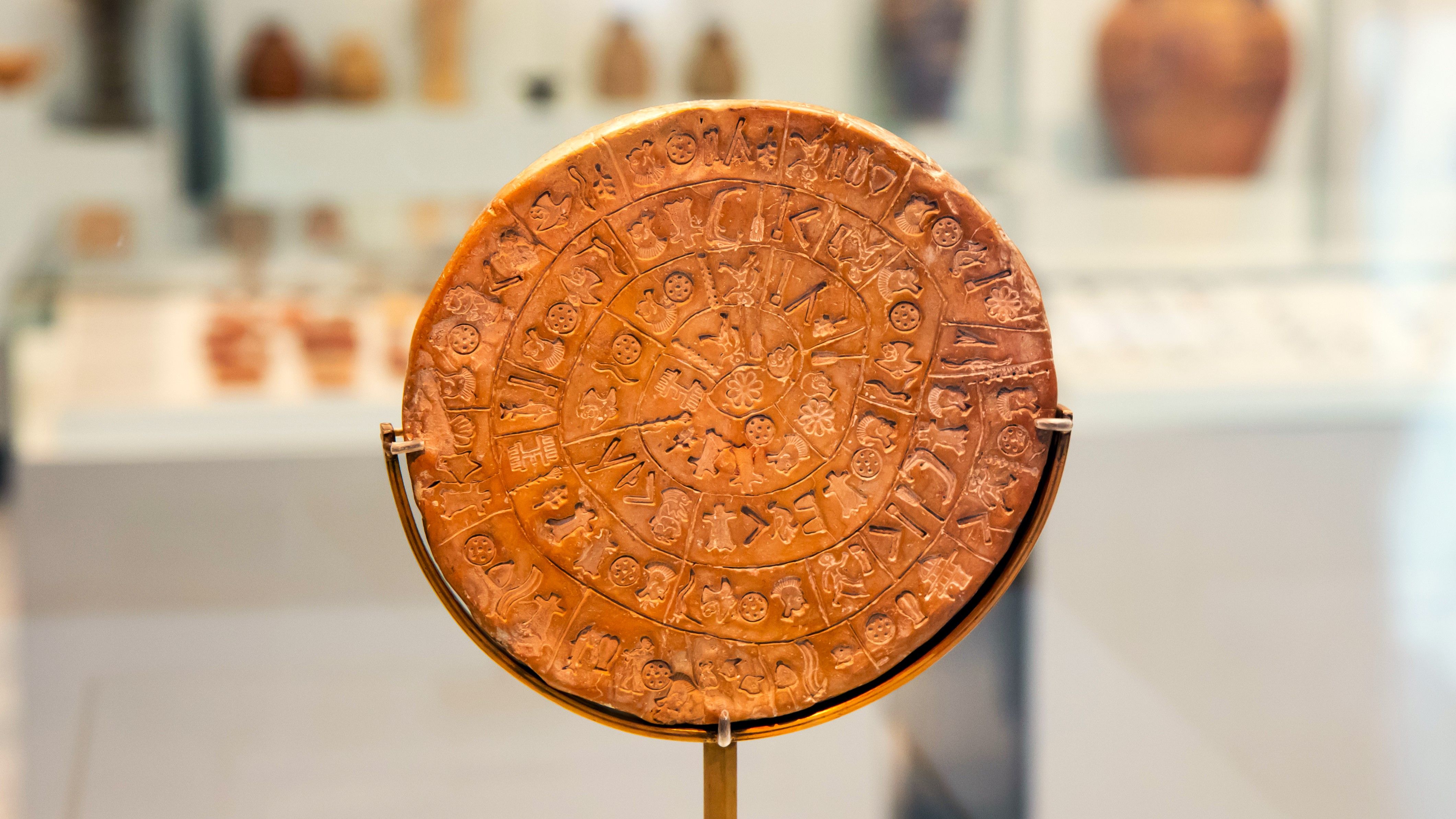
The Allure of the Anomaly: Why “Forbidden Archaeology” Captivates Us
There is an undeniable human fascination with the unexplained—with anything that does not quite fit the tidy boxes we create for understanding the world. This is especially true in archaeology, where every dig has the potential to unearth something truly revolutionary. “Forbidden archaeology” is not a formal scientific discipline; rather, it is a term often used by proponents to describe artifacts, sites, or interpretations that seem to defy conventional historical and scientific understanding. These discoveries often suggest advanced ancient technologies, unknown civilizations, or timelines that stretch far beyond accepted chronologies, prompting us to question the very foundations of our historical knowledge.
The appeal lies in the idea that history might be more exciting, more enigmatic, and less linear than textbooks suggest. It taps into a desire to uncover hidden truths and to believe that ancient peoples possessed knowledge or capabilities we have underestimated. While mainstream archaeology often approaches these anomalies with skepticism, demanding rigorous evidence and peer review, the public imagination frequently embraces them as tantalizing glimpses into a forgotten past.

Out-of-Place Artifacts (OOPArt): A Challenge to Chronology?
Out-of-Place Artifacts, or OOPArts, are perhaps the most direct challenge to established historical timelines. These are objects that, based on their supposed age or technological sophistication, simply should not exist for the historical period in which they were found. They spark intense debate, with some seeing them as proof of lost knowledge or unknown civilizations, while others attribute them to misidentification, natural phenomena, or outright hoaxes.

The Klerksdorp Spheres: Natural Wonders or Ancient Craft?
Discovered in South Africa, the Klerksdorp Spheres are small, metallic objects, typically a few centimeters in diameter, often featuring three parallel grooves around their equator. What makes them controversial is their age—they were found in pyrophyllite deposits estimated to be around 2.8 billion years old. Proponents of “forbidden archaeology” suggest these perfectly shaped, grooved spheres are impossible natural formations and must be artificial, implying an advanced civilization existed billions of years ago.
However, geologists largely classify them as concretions, naturally formed geological structures. Concretions can take on incredibly symmetrical shapes and even exhibit internal layering or grooves due to mineral crystallization and geological processes. While their precise formation mechanism remains a subject of geological study, the scientific consensus points to a natural origin, despite their uncanny resemblance to crafted objects.

The Antikythera Mechanism: A Glimpse of Advanced Ancient Tech?
Perhaps one of the most remarkable and genuinely puzzling OOPArts, the Antikythera Mechanism was recovered from a shipwreck off the coast of the Greek island of Antikythera in 1901. Dating back to the 2nd century BCE, this complex device is an intricate assembly of bronze gears and dials, resembling a sophisticated mechanical computer. It was designed to predict astronomical positions and eclipses decades in advance, track the cycles of the moon, and even calculate the dates of ancient Olympic Games.
The Antikythera Mechanism utterly redefined our understanding of ancient Greek technological capabilities. Before its discovery, such complex gearing and precision engineering were not thought to exist until more than a thousand years later. While it is no longer considered “forbidden” in the sense of being suppressed, it remains a profound mystery how such advanced knowledge was developed and then seemingly lost for centuries. It serves as a powerful reminder that history often holds surprises and that ancient civilizations were far more sophisticated than we sometimes assume. It is also a testament to ancient Greek ingenuity and engineering.

The Baghdad Battery: An Electro-Chemical Enigma?
Unearthed near Baghdad in 1936, the “Baghdad Battery” consists of a clay jar containing a copper cylinder that encloses an iron rod. Discovered alongside other artifacts dating to the Parthian era (around 250 BCE to 224 CE), its design led some researchers to propose that it was an ancient electrical battery, capable of producing a small voltage if filled with an electrolyte such as grape juice or vinegar. This theory suggests that ancient Mesopotamians might have understood and utilized electrochemistry for purposes such as electroplating or even rudimentary therapy.
Mainstream archaeologists and scientists are largely skeptical. While experiments have shown it could produce electricity, there is no conclusive archaeological evidence of its actual use as a battery. Critics argue it was more likely a storage vessel for scrolls, a ritual object, or simply an accidental arrangement of materials. The lack of associated wires, electrical tools, or texts describing its use leaves its true purpose shrouded in captivating speculation.
The Acambaro Figures: Dinosaurs and Humans Together?
Among the most truly controversial and widely debunked OOPArts are the Acambaro Figures, thousands of ceramic figurines discovered in Acámbaro, Guanajuato, Mexico, starting in 1944. These figurines depict a bizarre menagerie of animals, including what appear to be dinosaurs such as tyrannosaurs, stegosaurs, and brontosaurs, alongside humans. Their presence has been championed by some as undeniable proof that humans and dinosaurs coexisted, directly contradicting the established paleontological timeline.
However, extensive scientific analysis has largely dismissed the figures as modern hoaxes. Radiocarbon dating of the ceramic material and associated soil has consistently placed their creation in the 20th century, not thousands of years ago. Furthermore, the figures display anatomical inaccuracies inconsistent with real dinosaurs, suggesting they were imaginative creations rather than accurate depictions from life. Despite the scientific consensus, the Acambaro Figures continue to fuel debates among those who believe in a different version of Earth’s ancient past.
Giants, Lost Civilizations, and Pre-Columbian Contacts: Re-evaluating the Past
Beyond individual artifacts, entire categories of archaeological claims challenge our understanding of ancient human capabilities, population movements, and the very timeline of civilization.
Giant Skeletons: Myth, Hoax, or Suppressed Evidence?
Tales of giants are pervasive in cultures worldwide, from biblical narratives to Native American legends. In the 19th and early 20th centuries, numerous newspaper reports surfaced in the United States claiming the discovery of unusually large human skeletons, often measuring 7 to 12 feet tall. These finds were frequently attributed to ancient mound builders and fueled theories of a forgotten race of giants. Proponents of “suppressed history” often argue that these discoveries were systematically covered up or confiscated by institutions such as the Smithsonian, which allegedly sought to maintain established narratives.
While the allure of giants is strong, archaeological records simply do not support the existence of a widespread race of human giants. Most reported discoveries have been debunked as hoaxes, misidentified animal bones (such as mastodon femurs), or simply exaggerated claims. The Smithsonian Institution, for its part, has publicly addressed these claims, stating that while it collects and studies human remains, there is no evidence of a conspiracy to suppress giant skeletons. The persistence of these stories, however, speaks to a deep human desire to believe in a more wondrous and mysterious past.
Gobekli Tepe: Rewriting the Dawn of Civilization?
Not all challenging archaeology is “forbidden” or debunked. Some discoveries genuinely force mainstream science to reconsider its timelines. Gobekli Tepe, located in southeastern Turkey, is one such site. Discovered in 1994 and dating back to around 9600 BCE, it consists of massive, intricately carved stone pillars arranged in circular enclosures. What makes it revolutionary is its age—it predates Stonehenge by roughly 6,000 years and the invention of agriculture and settled life by thousands of years.
Before Gobekli Tepe, it was widely believed that complex, monumental architecture and organized religion only emerged after the development of settled agricultural societies. Gobekli Tepe challenges this, suggesting that sophisticated ritual centers and large-scale communal efforts might have preceded agriculture, potentially even driving its development. It is a testament to how ongoing archaeological research can genuinely rewrite the story of human civilization, proving that our understanding of the past is always evolving.
Bosnian Pyramids: Natural Formations or Ancient Megastructures?
In 2005, Dr. Semir Osmanagić declared that a cluster of hills near Visoko, Bosnia, were not natural formations but ancient pyramids, specifically the “Pyramid of the Sun,” the “Pyramid of the Moon,” and the “Pyramid of the Dragon.” He claimed these structures were built by an unknown civilization thousands of years ago, potentially predating even the Egyptian pyramids, and possessed advanced engineering and energy properties. These claims sparked immense public interest and drew thousands of visitors.
However, the vast majority of geologists and archaeologists have overwhelmingly dismissed these claims. Scientific investigations have concluded that the “pyramids” are natural geological formations, specifically flat-topped hills known as pyramidal hornfels. The “paving stones” and “concrete blocks” claimed by Osmanagić have been identified as natural geological layers and breccia. Despite the scientific consensus, the site continues to attract proponents who believe in its artificial origins, making it a prime example of a highly controversial archaeological claim that remains outside the scientific mainstream.
Transoceanic Contacts: Did Others Reach the Americas Before Columbus?
The traditional narrative holds that Christopher Columbus “discovered” the Americas in 1492. However, archaeological and historical evidence increasingly suggests a more complex story of pre-Columbian transoceanic contacts. The most well-established example is the Viking settlement at L’Anse aux Meadows in Newfoundland, Canada, conclusively dated to around 1000 CE, proving Norse exploration of North America centuries before Columbus.
Beyond the Vikings, evidence for other pre-Columbian contacts remains more speculative but continues to be debated. Theories include Polynesian voyagers reaching South America, supported by similarities in sweet potato genetics, or even ancient Chinese expeditions. While direct archaeological evidence for these theories is often scarce or ambiguous, the growing body of research challenges the idea of the Americas as an isolated continent before 1492, suggesting a more interconnected ancient world. This area of study is less “forbidden” and more “evolving,” as new evidence is constantly scrutinized and discussed within academic circles.
The Gatekeepers of History: Why Are Some Finds “Suppressed” or Debunked?
The idea of “suppressed history” often conjures images of shadowy figures hiding truth from the public. While it is true that new evidence can challenge established paradigms, the scientific process itself acts as a rigorous gatekeeper—not always out of malice, but out of a commitment to verifiable truth. When claims of “forbidden archaeology” are made, mainstream science demands a high bar of evidence.
Archaeology is a meticulous discipline that relies on context, stratigraphy, dating methods, and peer review. A single “out-of-place” object, without clear provenance or corroborating evidence, is often met with skepticism because it could be a modern intrusion, a misidentification, or a hoax. Scientists are trained to be cautious, to replicate findings, and to critically analyze data. When a theory contradicts a vast body of existing evidence, the burden of proof for the new theory becomes exceptionally high.
Reasons for skepticism include:
- Lack of verifiable context: An artifact found without proper archaeological excavation loses much of its scientific value.
- Hoaxes and misinterpretations: Throughout history, hoaxes have been common, and genuine artifacts can be misinterpreted.
- Confirmation bias: People tend to seek out and interpret information in a way that confirms their existing beliefs.
- Scientific conservatism: While sometimes frustrating, a certain degree of conservatism is necessary in science to prevent rapid shifts based on flimsy evidence. New ideas must withstand intense scrutiny.
While proponents of “forbidden archaeology” may feel their discoveries are unfairly dismissed, mainstream scientists argue they are simply applying established methods of critical inquiry to ensure the integrity of historical understanding.
The Fine Line Between Mystery and Misinformation
The captivating world of challenging archaeology exists on a spectrum. On one end are truly revolutionary discoveries such as Gobekli Tepe, which genuinely force a re-evaluation of our past through rigorous scientific methods. On the other end are claims such as the Acambaro Figures or the Bosnian Pyramids, which, despite popular appeal, lack credible scientific support and are largely considered misinformation by experts.
For history buffs and enthusiasts, navigating this landscape requires a keen eye and critical thinking. It means embracing the possibility of unknown histories while also understanding the scientific process and the standards of evidence. The desire for a more exciting past is understandable, but it is crucial to distinguish between genuine archaeological debate and unsubstantiated claims. Always question the source, consider alternative explanations, and look for widespread acceptance within the scientific community, not just a few vocal proponents.
The past is not a static story; it is a dynamic puzzle, constantly being pieced together with new evidence and interpretations. The truly fascinating aspect of archaeology is its potential to surprise us and to reveal complexities we never imagined.
Join the Debate
The world of archaeology is far from settled. From the enigmatic Antikythera Mechanism to the profound implications of Gobekli Tepe, and the ongoing debates surrounding OOPArts and lost civilizations, our understanding of history is continually being shaped, challenged, and rewritten. These provocative and controversial finds remind us that the human story is vast, full of mysteries, and ripe for further exploration. What do you believe these challenging discoveries tell us about our past? Join the debate in our community forum and share your insights!