
Challenging History: Unearthing Provocative and Controversial Archaeological Finds
The story of humanity is often presented as a neat, linear progression, but beneath the surface of accepted narratives lie whispers of a different past—one filled with advanced forgotten civilizations, inexplicable technologies, and discoveries that challenge everything we thought we knew. For history buffs and those intrigued by the road less traveled, “forbidden archaeology” offers a thrilling glimpse into a world where ancient secrets might still be suppressed or simply misunderstood, sparking endless debate among scholars and enthusiasts alike. This article delves into some of the most provocative and controversial archaeological finds, exploring why they stir such passion and what they might truly reveal about our shared history.

What Makes an Archaeological Find “Controversial”?
An archaeological discovery becomes controversial when it clashes with established historical timelines, defies conventional understanding of ancient technologies, or suggests the existence of unknown civilizations. Sometimes, the controversy stems from the interpretation of artifacts, where a lack of definitive evidence allows for multiple, often conflicting, theories. These finds frequently attract a dedicated following who believe they represent “suppressed history,” while mainstream archaeologists often demand more rigorous proof before rewriting textbooks. The tension between compelling anomalies and scientific skepticism fuels a captivating debate about the true origins and capabilities of ancient peoples.

Echoes of Advanced Ancient Civilizations: Out-of-Place Artifacts (OOPArt)
One of the most exciting categories of controversial finds are “Out-of-Place Artifacts” (OOPArt)—objects discovered in contexts that challenge conventional historical chronology, suggesting a level of technological or scientific sophistication far beyond what is attributed to their supposed era. These are the relics that make us question how much we truly understand about ancient ingenuity.

The Antikythera Mechanism: A Glimpse of Lost Technology?
Discovered in a shipwreck off the coast of Greece in 1901, the Antikythera Mechanism is often hailed as the world’s first analog computer. This intricate device, dating back to the 2nd century BCE, features dozens of bronze gears and dials, designed to predict astronomical positions and eclipses with astonishing accuracy. Its complexity is so far beyond anything else known from its period that it baffled researchers for decades. While now largely accepted by mainstream archaeology as a testament to Hellenistic Greek genius, its existence still raises profound questions: How was such advanced knowledge lost? Were there other similar devices that simply didn’t survive? The mechanism is a powerful reminder that ancient civilizations harbored incredible scientific prowess that we are only just beginning to fully appreciate. You can explore more about this marvel in Smithsonian Magazine.

The Baghdad Battery: An Ancient Power Source?
Unearthed in Iraq in 1936, the Baghdad Battery consists of a clay jar, a copper cylinder, and an iron rod. Dated to the Parthian era (around 250 BCE to 250 CE), its resemblance to a galvanic cell has led some to speculate that it was an ancient battery capable of generating electricity. If true, this would mean the ancients possessed knowledge of electrochemical principles thousands of years before their “official” discovery. While experiments have shown that a weak electrical current can be produced using acidic liquids, mainstream archaeologists largely interpret the objects as storage vessels for sacred scrolls or components of an electroplating process, rather than a standalone power source. The debate continues to spark curiosity about the practical applications of ancient science.
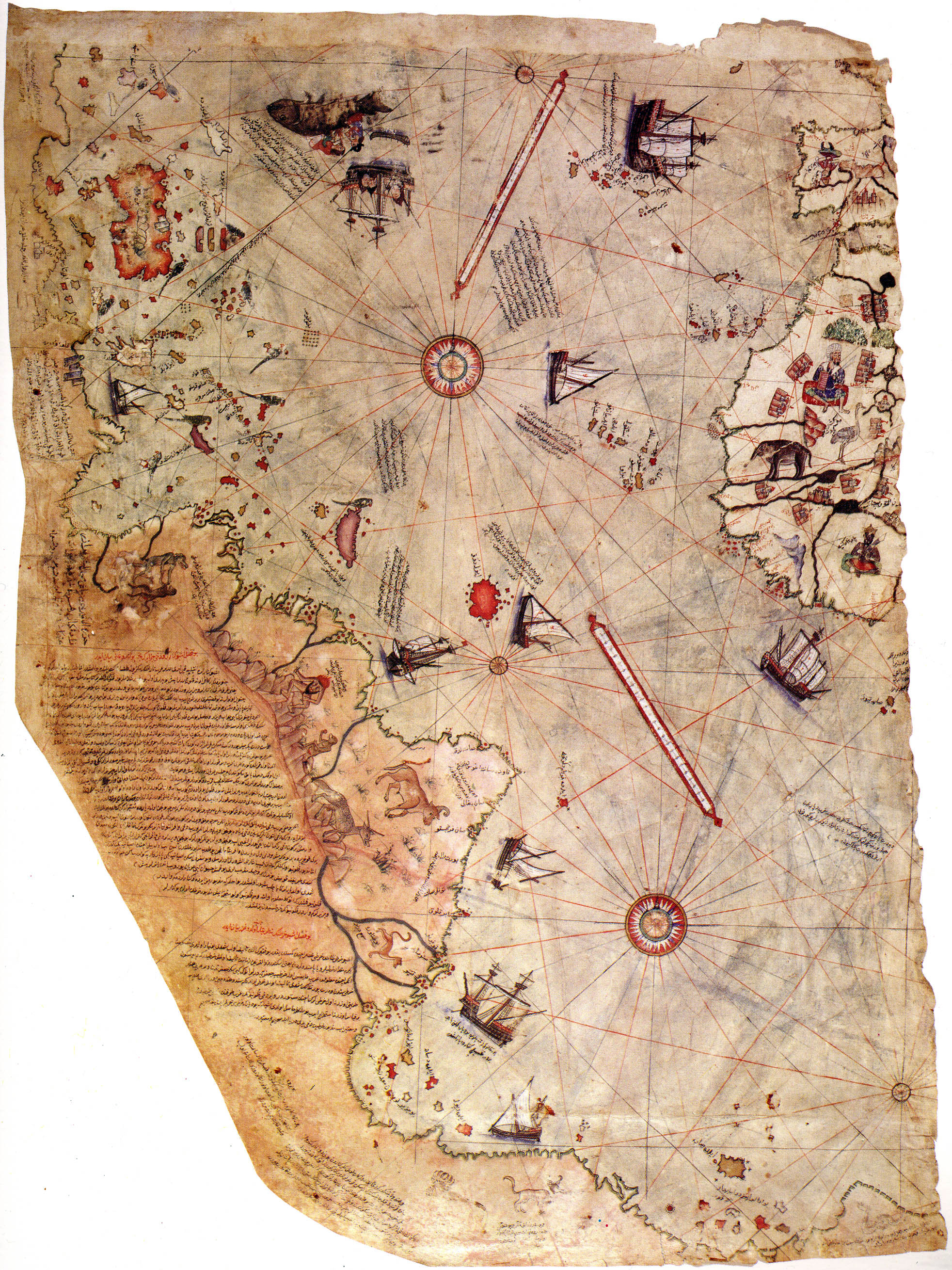
The Piri Reis Map: Evidence of Pre-Columbian Exploration?
The Piri Reis Map, compiled in 1513 by the Ottoman admiral Piri Reis, is a fragment of a larger world map that depicts the western coast of Africa, the eastern coast of South America, and, most controversially, what appears to be the coastline of Antarctica without ice. The map’s accuracy, particularly regarding features of the Americas that were supposedly unknown at the time, and the depiction of Antarctica centuries before its “discovery” in 1820, has led to theories of pre-Columbian contact and even knowledge derived from advanced ancient civilizations. While some scholars argue the Antarctic section is simply a misidentified South American coast or a speculative drawing, others point to the map as compelling evidence of a lost global cartographic tradition, challenging our understanding of early exploration.
Giants, Lost Continents, and Unknown Humans: Suppressed Discoveries?
Beyond singular artifacts, some controversial finds suggest entirely different narratives about human history, hinting at lost races, sunken cities, or unknown branches of humanity. These are the stories that truly capture the imagination of those who believe in a “suppressed history.”
The Myth of the Nephilim and Giant Skeletons
Tales of giants appear in numerous ancient texts, from the biblical Nephilim to legends in various cultures worldwide. This widespread mythology has fueled persistent claims of enormous human skeletons being discovered, only to be subsequently “hidden” or “destroyed” by mainstream institutions. While there have been archaeological findings of unusually tall individuals throughout history, and some human species like Gigantopithecus were indeed massive, no scientifically verified evidence of human skeletons matching the scale of mythical giants has ever emerged. Despite the lack of concrete proof, the idea of a race of ancient giants continues to resonate, often intertwined with theories of unknown human species or even extraterrestrial intervention.
Atlantis and Other Sunken Cities: Fact or Fiction?
The legend of Atlantis, first recounted by Plato, describes an advanced island civilization that sank beneath the waves. This powerful myth has inspired countless quests for lost continents, and while no definitive Atlantis has ever been found, the discovery of genuine underwater archaeological sites adds fuel to the fire. Take, for example, the submerged city of Pavlopetri off the coast of Greece, a well-preserved Bronze Age settlement, or the controversial “Bimini Road” formation in the Bahamas, which some claim is a remnant of an ancient harbor wall, while others argue it’s a natural geological feature. These real underwater discoveries highlight the potential for vast portions of human history to lie hidden beneath the sea, constantly tempting us with the possibility of a lost advanced civilization. Learn more about the search for such places in our article “The Search for Atlantis: Fact, Fiction, and Underwater Archaeology.”
Denisovans and the Expanding Human Story
While many “suppressed history” theories focus on human origins, it’s important to note that mainstream archaeology does routinely uncover new branches of the human family tree. The discovery of Denisovans, an extinct species of archaic humans identified through DNA analysis from a finger bone found in a Siberian cave, is a prime example. This finding, alongside new insights into Neanderthals and Homo naledi, demonstrates that the story of human evolution is far more complex and diverse than previously imagined. These discoveries, though accepted by the scientific community, illustrate how our understanding of ancient humanity is constantly evolving, sometimes in ways that are just as surprising as the more speculative theories.
Rewriting Prehistory: Uncomfortable Timelines and Forbidden Knowledge
Some archaeological sites challenge not just the capabilities of ancient peoples, but the very timeline of civilization itself, suggesting that complex societies arose far earlier than conventionally believed.
Göbekli Tepe: The Temple that Rewrote Civilization’s Dawn
Located in southeastern Turkey, Göbekli Tepe is a monumental archaeological site that has profoundly reshaped our understanding of early human history. Dating back to at least 9,500 BCE—thousands of years before Stonehenge or the Great Pyramids—it consists of massive carved stone pillars arranged in circles, adorned with intricate animal reliefs. What makes Göbekli Tepe truly revolutionary is that it predates the invention of agriculture, challenging the long-held belief that complex, settled societies and monumental architecture only emerged after the development of farming. This site suggests that organized religion or ritual may have been the catalyst for human settlement and the dawn of civilization, forcing archaeologists to reconsider the entire narrative of prehistory. It’s a testament to how new discoveries can genuinely challenge and rewrite established paradigms. Understanding archaeological dating methods, such as carbon-14 and beyond, is crucial for these insights. For a deeper dive, see our article “Understanding Archaeological Dating Methods: Carbon-14 and Beyond.”
The Bosnian Pyramids: A Modern Hoax or Ancient Wonder?
In the Visoko Valley of Bosnia, a series of hills have been proclaimed by some, most notably Semir Osmanagić, as ancient pyramids built by an unknown civilization tens of thousands of years ago. Proponents point to geometric shapes, alleged concrete blocks, and underground tunnels as evidence of artificial construction. This claim has generated immense excitement among those seeking “forbidden archaeology.” However, the vast majority of geologists and archaeologists have thoroughly debunked these claims, identifying the formations as natural geological structures (known as flatirons) and the “concrete” as natural conglomerate rock. The controversy highlights the tension between fervent belief and scientific scrutiny, demonstrating how the allure of ancient wonders can sometimes overshadow empirical evidence.
Megalithic Structures and Their “Impossible” Construction
Across the globe, from the massive, precisely cut stones of Puma Punku in Bolivia to the colossal