
Challenging History: Unearthing Provocative and Controversial Archaeological Finds
History, as we know it, often feels like a settled narrative—a neatly bound collection of facts and timelines. But what if the past is far more dynamic, filled with secrets and stories that defy our current understanding? Across the globe, archaeologists, independent researchers, and curious minds have stumbled upon controversial discoveries that seem to whisper of a different history: one that challenges established timelines, pushes the boundaries of ancient human capabilities, and sometimes hints at what some call forbidden archaeology. These finds ignite fierce debates, leading some to claim suppressed history while others argue for debunked theories. Get ready to delve into the fascinating, often infuriating world where the soil gives up its most provocative secrets.
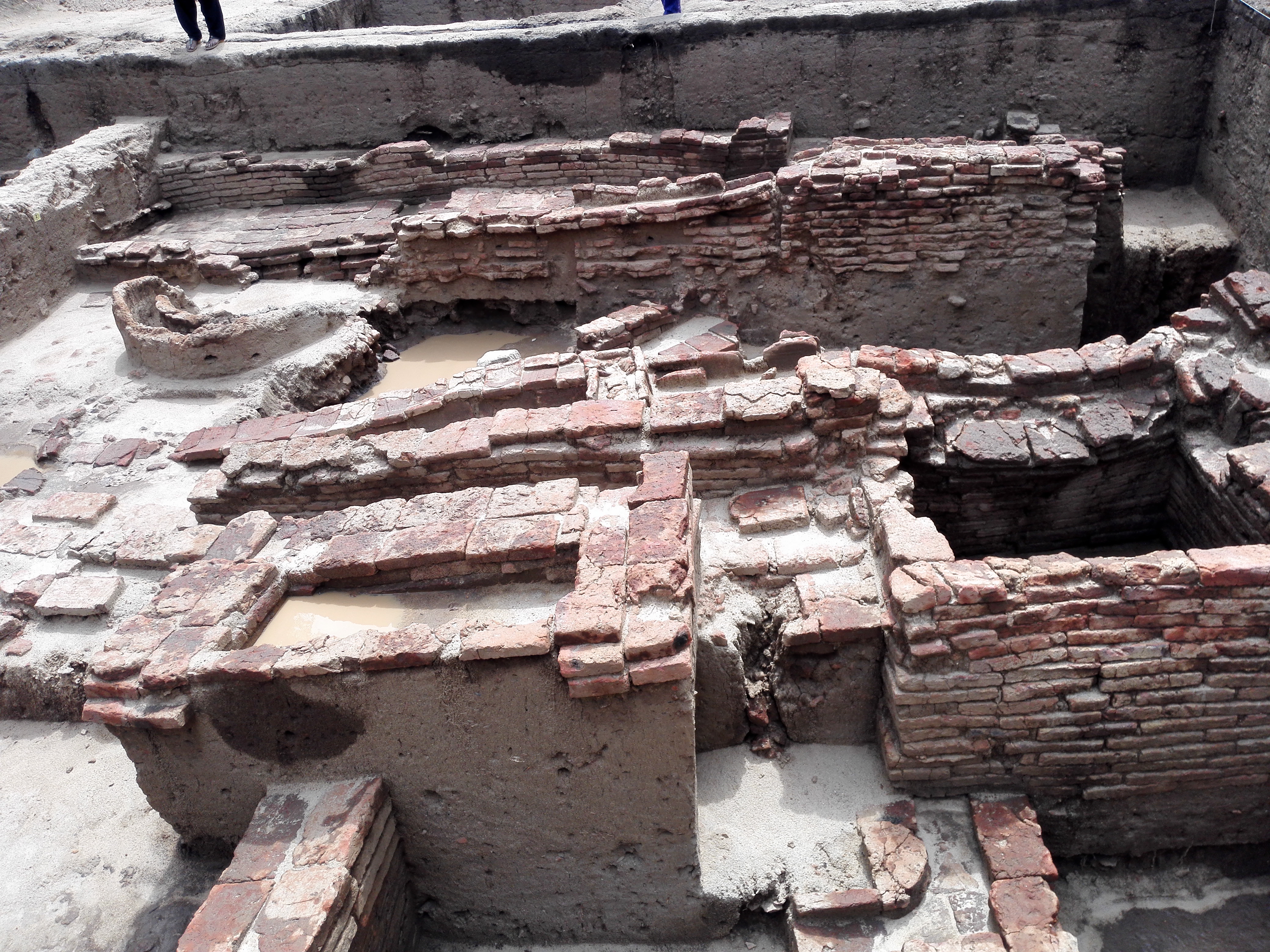
When the Dirt Speaks Volumes: Why Some Discoveries Spark Outrage
The very act of unearthing the past is supposed to illuminate our origins, yet some archaeological finds do not just add new chapters to our history books; they threaten to rewrite them entirely. The outrage and controversy surrounding these discoveries often stem from their potential to dismantle long-held academic paradigms. Imagine a find that suggests sophisticated technology existed thousands of years before it was thought possible, or evidence of human presence in places and times that defy our evolutionary maps. Such revelations are not just fascinating; they can be profoundly unsettling, challenging the very foundations of our understanding of human civilization and development. This is where the concept of “forbidden archaeology” often takes root—not necessarily because evidence is actively hidden, but because it is hard for the mainstream to reconcile with existing frameworks.

The “Forbidden” Artifacts: Challenging Conventional Timelines
Some artifacts seem to materialize from the wrong era, sporting designs or materials that should not exist according to our established historical records. These “out-of-place artifacts” (OOPArts) are a persistent puzzle, often explained away by mainstream science but fiercely championed by those who believe they represent a lost chapter of human ingenuity.

Out-of-Place Artifacts (OOPArt): A Persistent Puzzle
OOPArts are objects discovered in archaeological contexts that contradict the conventional understanding of their historical period. They challenge the linear progression of technology and human development, forcing us to question what we truly know about ancient civilizations. While many OOPArts have prosaic explanations, a few continue to baffle or inspire alternative interpretations.

The Klerksdorp Spheres: A Precambrian Mystery?
Deep within a pyrophyllite mine near Klerksdorp, South Africa, miners have unearthed hundreds of metallic spheres, some etched with three parallel grooves around their equator. What makes them truly astounding is their age: the rock they were found in dates back approximately 2.8 billion years. Mainstream geologists generally categorize these as natural concretions formed through geological processes, where minerals gradually accumulate around a central core. However, their remarkably precise spherical shape and the distinct grooves lead some to speculate they are artificial, hinting at unimaginable ancient intelligence or processes we do not yet understand. If truly artificial, these spheres would push back the timeline of intelligent life on Earth by billions of years, making them a prime example of “forbidden archaeology.”

The Antikythera Mechanism: A Glimpse of Advanced Ancient Tech
Discovered in a Roman shipwreck off the coast of Antikythera, Greece, in 1901, the Antikythera Mechanism is often hailed as the world’s first analog computer. Dating back to the 2nd century BCE, this intricate bronze device, composed of dozens of meshing gears, was designed to predict astronomical positions and eclipses decades in advance. Its complexity and precision were utterly unprecedented for its time, far exceeding anything known from ancient Greek or Roman technology. For decades, its existence challenged the notion of what ancient civilizations were capable of, prompting scholars to re-evaluate the technological sophistication of the Hellenistic period. While not “forbidden” in the sense of being suppressed, it remains a controversial discovery because it forced a significant re-evaluation of ancient technological capabilities, demonstrating a level of mechanical engineering not seen again until the European Renaissance.
Giants, Lost Continents, and Unknown Civilizations: Echoes of Myth and Legend
Many ancient myths speak of lost lands, colossal beings, or civilizations that vanished without a trace. While often dismissed as mere folklore, some archaeological claims seem to resonate with these legendary narratives, fueling speculation about suppressed history and alternative versions of the past.
The Bosnian Pyramids: A Mountain of Debate
In Visoko, Bosnia, amateur archaeologist Semir Osmanagić claims to have discovered a complex of ancient pyramids, including the “Pyramid of the Sun,” which he asserts is the largest and oldest pyramid in the world, dating back over 12,000 years. This claim has been met with widespread skepticism and outright rejection from the vast majority of professional archaeologists and geologists, who maintain that the “pyramids” are natural geological formations known as flat-topped hills or “pyramid-shaped” mountains. Despite the scientific consensus labeling these as debunked theories, the site attracts thousands of visitors annually and remains a powerful symbol for those who believe in a hidden, more ancient history of Europe. It perfectly encapsulates the tension between official archaeology and “forbidden archaeology” proponents.
Yonaguni Monument: Japan’s Submerged Enigma
Off the coast of Yonaguni Island, Japan, lies a colossal submerged rock formation that some believe is the remains of an ancient city or monument, potentially dating back over 10,000 years. Its remarkably geometric features—flat terraces, sharp angles, and straight walls—lead proponents to argue it is an artificial structure, perhaps a Japanese Atlantis. Mainstream geologists, however, largely attribute the formation to natural seismic activity and erosion, pointing to similar geological formations elsewhere. The debate over whether the Yonaguni Monument is a natural wonder or a testament to a lost civilization continues to rage, making it one of the most intriguing controversial discoveries of our time.
The Piri Reis Map: Ancient Knowledge or Coincidence?
Compiled in 1513 by the Ottoman admiral and cartographer Piri Reis, this world map depicts parts of the western coast of Africa, the eastern coast of South America, and, most controversially, what appears to be the coastline of Antarctica—a continent not officially discovered until 1820. Even more perplexing, the Antarctic portion of the map shows a landmass without ice, suggesting it was mapped during a period thousands of years ago when the continent was ice-free. While some scholars argue the map’s “Antarctica” is simply a misinterpretation of South American coastlines or a speculative drawing, others contend it points to an unknown ancient civilization with advanced cartographic knowledge, implying a suppressed history of global exploration long before conventional timelines suggest.
The Human Story Rewritten: Challenging Our Origins
Sometimes, archaeological finds do not just challenge timelines; they fundamentally alter our understanding of human ingenuity, social structures, and the very dawn of civilization. These discoveries, even when accepted by the mainstream, can be profoundly controversial in their implications.
Göbekli Tepe: The Dawn of Civilization, Redefined
Located in southeastern Turkey, Göbekli Tepe is a monumental archaeological site that has profoundly reshaped our understanding of early human history. Dating back over 11,000 years, to a time when humanity was still largely hunter-gatherer, this site features massive, intricately carved stone pillars arranged in circular enclosures. Its construction predates the invention of agriculture, pottery, and metallurgy, shattering the long-held belief that complex societies and monumental architecture only emerged after the development of settled farming communities. Göbekli Tepe demonstrates that sophisticated ritualistic centers could precede agriculture, suggesting that spiritual or social needs, rather than purely economic ones, might have been the catalyst for human settlement and the rise of civilization. This is not “forbidden archaeology,” but it is a controversial discovery that forced mainstream archaeologists to completely rethink the timeline and drivers of civilization. To learn more about the methods used to uncover such ancient sites, explore resources on Archaeological Methods.
The Power of Paradigm: Why Mainstream Archaeology Resists Change
It is easy to assume that science always embraces new evidence, but the reality is more complex. Scientific paradigms—the prevailing theories and frameworks—are powerful. They provide a stable structure for understanding the world, and challenging them requires overwhelming evidence and often a significant shift in thinking. This resistance is not necessarily a conspiracy to create “suppressed history”; it is often a natural function of the scientific method, which demands rigorous proof and reproducibility.
When a discovery clashes dramatically with established knowledge, it faces intense scrutiny. Claims of “forbidden archaeology” often arise because alternative interpretations are dismissed or struggle to gain traction against well-entrenched theories. Sometimes, this dismissal is justified, as many alternative theories lack robust evidence and rely on speculation. Other times, however, it is a reminder that even science can be slow to adapt, and what is considered a debunked theory today might, with new evidence, be re-examined tomorrow.
Navigating the Narrative: Separating Fact from Fiction (and Speculation)
For history buffs and conspiracy theory