
The Enigma of the Phaistos Disc: Unraveling an Ancient Minoan Mystery
The allure of ancient history often lies not in what we fully comprehend, but in the profound mysteries that continue to elude us. Imagine an artifact, unearthed from the ruins of a magnificent Bronze Age palace, bearing a script unlike any other, its meaning lost to the sands of time. This is the enduring saga of the Phaistos Disc, a small, circular clay object that has captivated archaeologists, linguists, and enthusiasts of the ancient world for over a century. Discovered on the sun-drenched island of Crete, a cradle of early European civilization, this enigmatic relic stands as a testament to the sophistication of the Minoans and a persistent challenge to modern scholarship.
Our journey into this archaeological mystery will delve deep into its origins, the context of its discovery, and the meticulous details of its unique pictographic script. We will navigate the fascinating, yet often frustrating, attempts at decipherment, carefully distinguishing between verifiable historical evidence and the myriad speculative theories that have emerged over decades. From the moment of its unearthing in 1908, the Phaistos Disc has posed fundamental questions about ancient communication, cultural exchange, and the limits of our understanding of forgotten history. Prepare to explore one of the most compelling and well-documented archaeological mysteries, where every symbol holds a silent story waiting to be unlocked.

The Discovery: A Glimpse into Minoan Crete’s Ancient Past
The story of the Phaistos Disc begins in a place steeped in mythology and archaeological wonder: the island of Crete. This large island in the Aegean Sea was home to the Minoan civilization, a sophisticated Bronze Age culture that flourished from approximately 2700 to 1450 BCE. Renowned for its grand palaces, vibrant frescoes, advanced maritime trade, and unique writing systems, the Minoans left behind a rich legacy that continues to fascinate scholars. Their society, often described as peaceful and prosperous, eventually faced a mysterious decline, adding another layer to the island’s many historical mysteries.

Unearthing a Unique Artifact at Phaistos Palace
The fateful discovery occurred on July 3, 1908, during excavations at the Minoan palace site of Phaistos in south-central Crete. The Italian archaeologist Luigi Pernier, leading a team from the Italian Archaeological School at Athens, uncovered the disc in a basement storeroom, specifically in room 8 of the palace’s northeast quarter. This particular room was part of a larger complex that had been destroyed by an earthquake and subsequent fire, preserving many artifacts within its collapsed walls. The context of its discovery, within a secure archaeological stratum, immediately lent credibility to its authenticity.
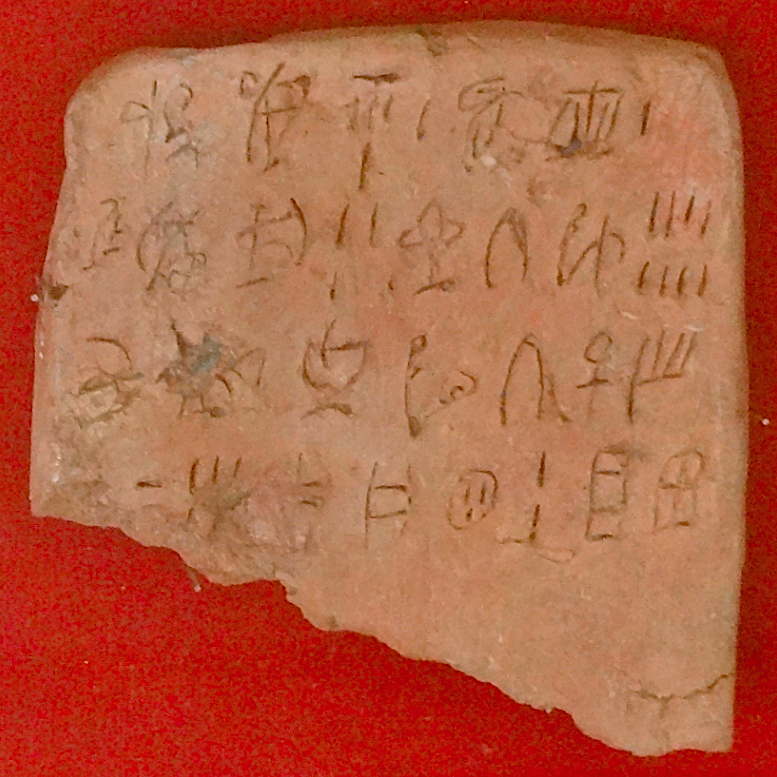
The disc was found alongside a Linear A tablet, another undeciphered Minoan script, and pottery dating to the Middle Minoan IIB period, roughly 1850–1600 BCE. This precise dating is crucial, as it places the disc firmly within the flourishing period of Minoan civilization, predating the later Mycenaean presence on the island. The careful documentation of its find spot and associated artifacts provides invaluable archaeological context, anchoring the disc in a specific moment of ancient history.
Archaeological Context: The Minoan Civilization and Its Scripts
The Minoan civilization, named after the mythical King Minos, was a thalassocracy, a maritime power that dominated the Aegean. Their impressive palaces at Knossos, Phaistos, Malia, and Zakros served as administrative, economic, and religious centers. These sites have yielded a wealth of information about Minoan life, art, and religion, but their writing systems remain a significant challenge.
Before the Phaistos Disc, archaeologists knew of two primary Minoan scripts: Cretan Hieroglyphic and Linear A. Cretan Hieroglyphic, used primarily for administrative purposes, is largely undeciphered. Linear A, a more advanced syllabic script, is also undeciphered, though its relationship to the later Linear B script—which records an early form of Greek—has been a subject of intense academic debate. The Phaistos Disc introduced a third, entirely unique, and even more perplexing form of writing, deepening the archaeological mysteries surrounding Minoan communication.

The Disc Itself: An Object of Intrigue and Ancient Craftsmanship
The Phaistos Disc is not merely an ancient artifact; it is a meticulously crafted object, imbued with a unique form of communication. Its physical attributes and the method of its inscription immediately set it apart from other contemporary artifacts. Understanding these details is critical to appreciating the depth of its mystery.
Physical Characteristics and Production
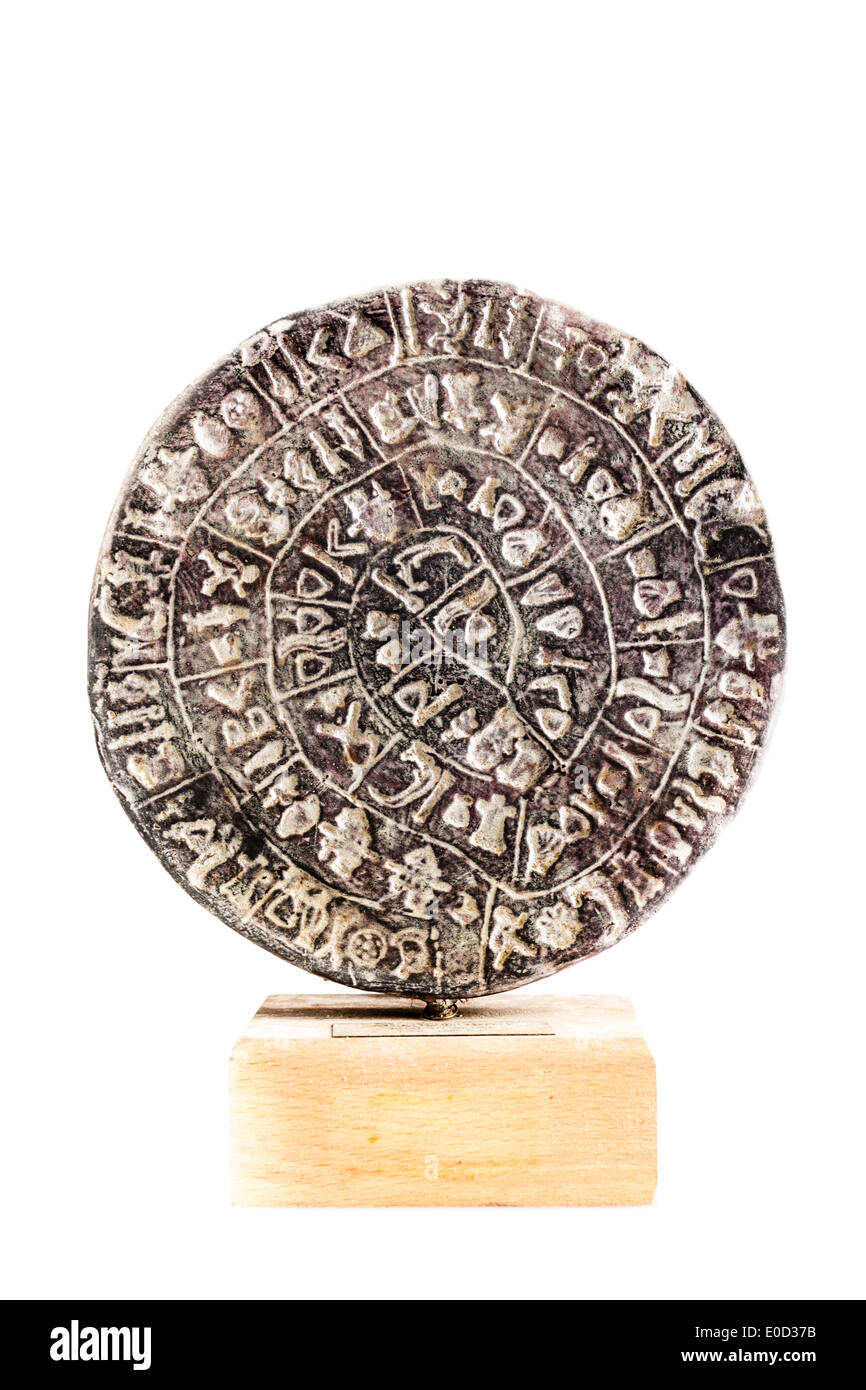
The disc is made of fired clay, a reddish-yellow terracotta, and is almost perfectly circular, with a diameter of approximately 15 centimeters (about 6 inches) and a thickness of about 1 centimeter (0.4 inches). Both sides of the disc are covered with a series of stamped symbols arranged in a continuous spiral, starting from the rim and winding toward the center. This spiral arrangement suggests a reading direction, though which end is the beginning remains a point of contention among scholars.
What truly distinguishes the Phaistos Disc is its method of inscription. Unlike other ancient texts, which were typically incised or carved into clay tablets, the symbols on the Phaistos Disc were stamped into the wet clay using individual seals or “types.” This makes it one of the earliest known examples of movable type printing, centuries before Gutenberg. This revolutionary technique implies a standardized system of symbol production and possibly even mass reproduction, though only one disc has ever been found. The precision and uniformity of the symbols attest to a sophisticated level of craftsmanship and an organized system of writing.
The Unique Pictographic Script
The disc contains a total of 241 signs, distributed across 61 groups, or “words,” separated by vertical lines. These signs are derived from a repertoire of 45 distinct symbols. Each symbol is a small, detailed pictograph depicting recognizable objects: human figures (a walking man, a child’s head), animals (a bird, a cat, a fish), plants (a lily, a crocus), tools (a shield, a saw), and abstract geometric shapes. The vivid nature of these symbols has fueled endless speculation about their meaning and the message they convey.
The uniqueness of this script is paramount. It bears no clear resemblance to any other known Minoan script, such as Linear A or Cretan Hieroglyphic, nor to any other writing system from the ancient Near East or Aegean. This isolation is a major hurdle for decipherment, as there are no known cognates or bilingual texts to provide a Rosetta Stone. The absence of other examples of this script—apart from a single axe head from Arkalochori that bears a few similar symbols—further deepens the mystery and the challenge for archaeologists and linguists.
The Core Mystery: An Undeciphered Language
For over a century, the Phaistos Disc has resisted all attempts at decipherment, standing as one of the most iconic unresolved questions in archaeology. Its unique nature and isolated status make it an extraordinary linguistic puzzle, drawing in scholars and amateur enthusiasts alike.
Attempts at Decipherment: A Century of Theories
Since its discovery, countless individuals have attempted to crack the code of the Phaistos Disc. These attempts have ranged from rigorous academic analyses to highly speculative interpretations. Researchers have proposed that the disc represents various languages, including ancient Greek, Luwian, Semitic, Indo-European, and even a unique Minoan language. Some have suggested it is a syllabary, an alphabet, or even a logographic system where each symbol represents a word or concept.
Many decipherment attempts focus on identifying recurrent patterns in the symbol sequences, looking for prefixes, suffixes, or grammatical structures. Others try to match the pictographs to known objects or concepts from Minoan culture, hoping to infer meaning. However, without a larger corpus of texts written in the same script, or a bilingual inscription, any proposed decipherment remains largely unprovable and lacks widespread scholarly consensus. The lack of a “Rosetta Stone” for the Phaistos Disc is its greatest barrier.
Why Is It So Difficult to Translate?
Several factors contribute to the disc’s impenetrable nature:
Small Corpus: The most significant challenge is that the Phaistos Disc is a hapax legomenon*—a unique occurrence. There is only one known example of this specific script and its symbols. Deciphering a language typically requires a substantial body of texts to identify recurring patterns, grammatical structures, and a sufficient vocabulary.
- Lack of Parallels: As discussed, the script does not clearly relate to any other known ancient writing system. This lack of comparative material means there are no existing “keys” or shared linguistic roots to leverage.
- Short Length: Despite its visual complexity, the total amount of text on the disc is relatively short (241 signs). This limited data makes it incredibly difficult to perform statistical analyses or identify sufficient linguistic patterns to confidently assign phonetic values or meanings to the symbols.
- Unknown Language: Even if the phonetic values of the symbols could be determined, the underlying language itself remains unknown. Is it a lost Minoan dialect? An imported language? Without knowing the language, even a successful phonetic transcription might still leave the meaning obscure.
Due to these formidable obstacles, most