
Cracking Ancient Enigmas: Exploring Mysteries and Lost Knowledge from the Past
Have you ever gazed at an ancient ruin, a weathered artifact, or a cryptic symbol and felt an irresistible pull into the unknown? What secrets lie buried beneath layers of sand, forgotten in the annals of time, or encoded in languages we can no longer comprehend? Humanity’s past is not just a collection of recorded events; it’s a vast tapestry woven with threads of ancient mysteries, lost knowledge, and enigmatic artifacts that continue to baffle and intrigue us. From advanced civilizations whose wisdom vanished without a trace to monumental structures built with impossible precision, the echoes of yesterday whisper tales of unsolved puzzles that challenge our understanding of history and human potential.
Join us on a captivating journey as we delve into some of the most profound and enduring enigmas left behind by our ancestors. We’ll explore the fascinating artifacts that defy explanation, the forgotten sciences that hint at sophisticated understanding, and the baffling architectural wonders that stand as silent testaments to ingenuity far beyond what we often credit to ancient peoples. Prepare to question what you thought you knew, to ponder the possibilities of lost technologies, and to marvel at the sheer scope of the unsolved puzzles that still await their revelation. As we explore these captivating relics and narratives, you’ll discover why the quest to crack these ancient enigmas is more than just a historical pursuit—it’s a journey into the very essence of human curiosity and our insatiable desire to understand where we come from.

The Irresistible Allure of Ancient Mysteries and Unsolved Puzzles
Why do ancient mysteries hold such a profound grip on our collective imagination? Perhaps it’s the thrill of the chase, the tantalizing possibility that hidden truths could reshape our perception of history. Or maybe it’s the humbling realization that despite all our technological advancements, there are still unsolved puzzles from millennia ago that we cannot fully decipher. These enigmas remind us that the past is not a closed book but an open-ended question, inviting us to look closer, think deeper, and challenge conventional narratives.
Consider the sheer scale of time involved. Civilizations rose and fell, leaving behind fragments of their existence. Sometimes these fragments are clear, like the grand temples of Egypt or the intricate mosaics of Rome. But often, they are perplexing: a calendar more accurate than any other for centuries, a map depicting continents not yet “discovered,” or a device whose complexity rivals modern machinery. These discrepancies spark a vital inquiry: What did they know that we have forgotten? This question fuels the passion of historians, archaeologists, and amateur enthusiasts alike, drawing them into the captivating world of ancient riddles.

Unraveling Enigmatic Artifacts: Whispers from Forgotten Worlds
The world is littered with enigmatic artifacts that defy easy categorization or explanation. These objects, often unearthed from ancient sites, present unsolved puzzles that challenge our assumptions about the technological capabilities and scientific understanding of early civilizations. Each artifact is a tangible piece of lost knowledge, waiting for us to unlock its secrets.

The Antikythera Mechanism: An Astronomical Computer
Discovered in a shipwreck off the coast of the Greek island of Antikythera in 1901, this corroded bronze device initially appeared to be a mere rock. However, careful cleaning revealed an intricate system of gears and dials, astonishingly complex for its estimated creation date between 200 and 100 BCE. Often dubbed the “world’s first analog computer,” the Antikythera Mechanism was designed to predict astronomical positions and eclipses decades in advance. Its sophistication suggests a level of mechanical engineering and astronomical knowledge far beyond what was previously attributed to the ancient Greeks.
Key takeaway: The Antikythera Mechanism is a testament to the lost knowledge of ancient Greek engineers, hinting at a technological lineage that was seemingly interrupted and only resurfaced much later in history. Its purpose and the depth of its creators’ understanding continue to be a source of intense study and wonder.
The Voynich Manuscript: An Unreadable Tome
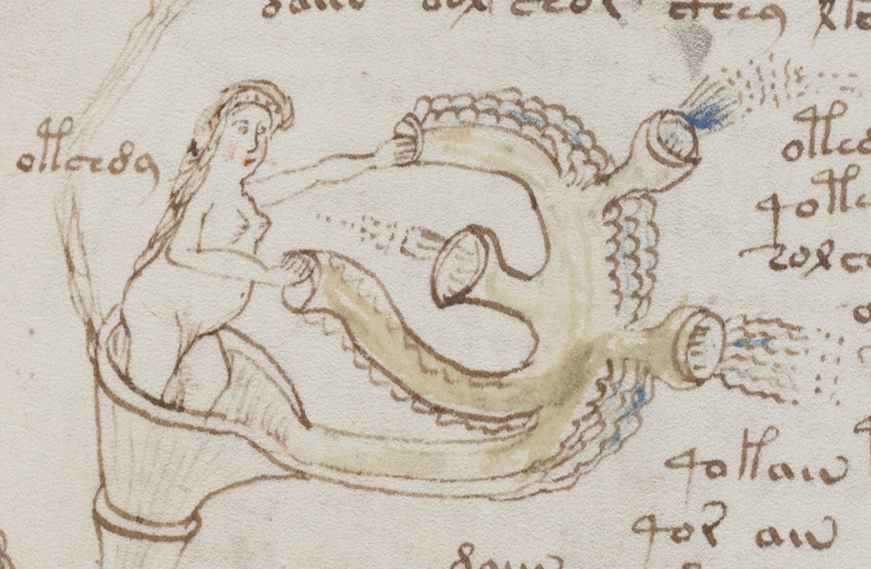
Among the most famous unsolved puzzles is the Voynich Manuscript, a medieval codex filled with strange illustrations and an entirely unknown writing system. Discovered in 1912 by Polish book dealer Wilfrid Voynich, this 240-page book has resisted all attempts at decipherment. Its bizarre botanical drawings depict plants that don’t exist, while astronomical charts show unique celestial configurations. Linguists, cryptographers, and historians have poured over its pages for over a century, yet its language remains an enigma, leading to theories ranging from a lost ancient tongue to an elaborate hoax or even an alien script.
The manuscript’s persistent inscrutability makes it a prime example of an enigmatic artifact that holds potential lost knowledge, though what kind of knowledge is anyone’s guess. Perhaps it’s a forgotten medical text, a philosophical treatise, or even a detailed record of a vanished world.

The Dendera Light: Ancient Egyptian Technology?
Carved into a crypt wall within the Hathor temple at Dendera, Egypt, are reliefs that have sparked considerable debate. These depictions show figures holding large, bulb-like objects, often interpreted by some as resembling giant light bulbs powered by a serpent-like filament. While mainstream Egyptologists explain these as symbolic representations related to Egyptian mythology and the Djed pillar, proponents of “ancient advanced technology” theories suggest they depict actual ancient electrical devices. This interpretation, though highly contentious, highlights how enigmatic artifacts can challenge established historical narratives and ignite passionate discussions about lost knowledge.
Lost Knowledge of Ancient Civilizations: Echoes of Forgotten Wisdom
Beyond individual artifacts, entire bodies of lost knowledge from ancient civilizations remain elusive. These include advanced sciences, forgotten philosophies, and even the locations of entire cities that once thrived with sophisticated understanding.
Advanced Ancient Technologies and Sciences
Many ancient mysteries revolve around the seemingly advanced technological capabilities of early peoples. How did the Egyptians cut and move colossal stones for the pyramids? How did the Maya develop such precise astronomical calendars? And what about the Baghdad Battery, an artifact found in Khujut Rabou, Iraq, which some believe could have been an ancient electrical cell? While its true purpose is debated, the possibility that ancient civilizations possessed a rudimentary understanding of electricity adds another layer to the enigma of lost knowledge.
Consider this: If some of these technologies existed, why did they disappear? Was it catastrophic events, the suppression of knowledge, or simply the natural ebb and flow of human innovation? The answers remain part of the grand unsolved puzzles of history.
The Myth of Atlantis: A Lost City of Wisdom
Plato’s account of Atlantis, a powerful and technologically advanced island civilization that sank beneath the waves in a single day and night, remains one of the most enduring ancient mysteries. While often dismissed as a philosophical allegory, the idea of a highly advanced society whose lost knowledge was swallowed by the ocean continues to captivate. Could there be a grain of truth in the myth? The search for Atlantis continues to inspire expeditions and fuel speculation about lost continents and forgotten civilizations.
The Submerged City of Dwarka: India’s Atlantis?
Off the coast of Gujarat, India, lies the submerged city of Dwarka, believed by many to be the ancient kingdom of Lord Krishna, mentioned in Hindu scriptures. Archaeological findings, including city walls, pottery, and anchors, suggest a large ancient settlement now underwater. While its connection to the mythical Dwarka is still debated, the site offers compelling evidence of a sophisticated coastal civilization lost to the sea, reminding us that lost knowledge isn’t always about technology but also about entire cultural histories.
The Great Builders: Architectural Puzzles That Defy Explanation
Some of the most awe-inspiring ancient mysteries are etched in stone. Massive structures around the globe stand as silent witnesses to construction techniques and astronomical alignments that leave modern engineers scratching their heads.
The Pyramids of Giza: Precision Beyond Belief
The Great Pyramid of Giza, a marvel of ancient engineering, continues to be one of the most prominent unsolved puzzles. How were these colossal blocks, some weighing many tons, transported and precisely placed with such accuracy? The alignment of the pyramids with cardinal directions and specific celestial bodies points to a profound understanding of astronomy and geometry. While theories range from elaborate ramp systems to more speculative notions of lost knowledge or even extraterrestrial assistance, the sheer scale and precision of these structures remain a testament to unknown methods.
Stonehenge: An Astronomical Observatory?
In the English countryside, the megalithic monument of Stonehenge stands as another profound enigmatic artifact. Built thousands of years ago, its massive Sarsen stones and bluestones were transported over vast distances and erected in precise formations. Its alignment with the solstices and equinoxes strongly suggests its use as a sophisticated astronomical calendar or observatory. But how did Neolithic people, without modern tools, achieve such engineering feats? The purpose, construction methods, and the culture that created it are still among the most compelling ancient mysteries.
Puma Punku: Impossible Precision in Stone
High in the Bolivian Andes, the ruins of Puma Punku present some of the most perplexing unsolved puzzles in ancient architecture. The site features incredibly precisely cut andesite and diorite blocks, some with intricate, almost machine-like interlocking cuts and drill holes. These stones are so hard that modern tools struggle to replicate the precision seen in the ruins. The question of how the Tiwanaku culture, without the wheel or known metal tools capable of such work, achieved this level of craftsmanship, points to a significant amount of lost knowledge in stone masonry and engineering.
Mysterious Writings and Unbreakable Codes: Languages of the Lost
Language is the vessel of knowledge, and when a language is lost, so too is much of the wisdom it carried. Many ancient mysteries are encapsulated in undeciphered scripts and texts, offering tantalizing glimpses into the minds of ancient peoples.
Linear A and the Phaistos Disc: Minoan Enigmas
While Linear B, the script of the Mycenaean Greeks, was famously deciphered, its predecessor, Linear A, used by the Minoan civilization of Crete, remains stubbornly unreadable. This script, found on tablets and other artifacts, holds the potential key to understanding the sophisticated and enigmatic Minoan culture. Similarly, the Phaistos Disc, a unique clay disc covered in hieroglyphic-like symbols arranged in a spiral, is another baffling enigmatic artifact. Its purpose and the meaning of its symbols are completely unknown, making