
Unveiling Hidden Empires: Modern Archaeology’s Astonishing Discoveries of Ancient Civilizations
Imagine a world where entire cities, vibrant cultures, and powerful kingdoms simply vanish, swallowed by the earth, reclaimed by jungles, or buried beneath shifting sands. For centuries, these lost worlds existed only in legend, whispered tales, or faded historical accounts, tantalizing us with the promise of unseen grandeur. But what if those legends were real? What if, beneath our very feet, magnificent ancient civilizations lay waiting to be rediscovered? Thanks to the relentless curiosity and groundbreaking innovation of modern archaeology, this isn’t just a fantasy – it’s a thrilling reality unfolding before our eyes.
Modern archaeology is no longer just about dusty digs and painstaking manual excavation, though those elements remain vital. Today, it’s a high-tech adventure, employing advanced tools and interdisciplinary approaches to pierce through centuries of concealment. We’re talking about satellites peering through dense canopies, lasers mapping lost cities, and geophysical surveys revealing foundations hidden deep underground. These revolutionary archaeological discoveries are not only confirming ancient myths but are also rewriting our understanding of human history, culture, and technological prowess. Join us as we journey into the heart of these hidden empires, exploring the captivating ways modern archaeology is bringing the past back to life and revealing the astonishing secrets of ancient civilizations that once dominated their worlds.

The Lure of the Unknown: Why Ancient Civilizations Remain Hidden
The idea of lost cities and forgotten empires holds a powerful grip on our imagination. From the mythical Atlantis to the legendary El Dorado, humanity has always been captivated by the thought of what lies just beyond the veil of the known. But why do some ancient civilizations become so thoroughly lost that they vanish from memory, only to be rediscovered millennia later? The reasons are as diverse and complex as the civilizations themselves.
One primary culprit is the sheer power of nature. Earthquakes, volcanic eruptions, tsunamis, and shifting river courses have buried countless settlements, sometimes instantly, preserving them like time capsules. Think of Pompeii, famously entombed by Mount Vesuvius, or the numerous coastal cities swallowed by rising sea levels. Dense vegetation, particularly in tropical regions, can also quickly reclaim abandoned sites, transforming bustling urban centers into indistinguishable mounds under a thick jungle canopy. The Amazon rainforest, for instance, has long been suspected of harboring vast, undiscovered networks of settlements.
Beyond natural forces, human factors play a significant role. Empires rise and fall, populations migrate, and sometimes, a civilization simply fades away due to environmental degradation, disease, or conflict. Successor cultures might build over old sites, erasing the physical evidence of their predecessors, or intentionally dismantle structures to reuse materials. A lack of written records, or the loss of those records over time, can also contribute to a civilization’s disappearance from historical consciousness. Without a narrative thread, these hidden empires become ghosts in the historical record, waiting for modern archaeology to unearth their stories.

Beyond the Shovel: Modern Archaeology’s Technological Arsenal
The image of an archaeologist meticulously brushing away dirt from a pottery shard is still very much a part of the profession, but it tells only half the story. Today’s archaeologists are also adept at wielding an impressive array of cutting-edge technologies that allow them to “see” beneath the surface, through dense foliage, and even under oceans, revolutionizing the search for ancient civilizations. These tools are the keys to unlocking many hidden empires.
One of the most transformative technologies is LiDAR (Light Detection and Ranging). Mounted on aircraft or drones, LiDAR systems fire millions of laser pulses at the ground. These pulses penetrate dense forest canopies, reflecting off the actual ground surface, allowing scientists to strip away vegetation digitally and create incredibly detailed 3D maps of the terrain below. This technique has been instrumental in revealing vast, previously unknown urban landscapes in places like the Maya lowlands, showing networks of cities, roads, and agricultural systems far more extensive than previously imagined. It’s like giving archaeologists X-ray vision for entire jungles.
Satellite imagery and aerial photography also play a crucial role. High-resolution images from space can reveal subtle changes in vegetation or soil color that indicate buried structures, ancient irrigation systems, or old road networks. Even faint crop marks, visible only from above, can hint at the presence of long-lost walls or ditches beneath farmers’ fields. Coupled with historical maps and local folklore, these images provide invaluable clues for targeted ground surveys.
On the ground, geophysical surveys offer another layer of insight. Techniques like ground-penetrating radar (GPR), magnetometry, and electrical resistivity provide non-invasive ways to detect subsurface features without disturbing the site. GPR uses radar pulses to create profiles of the ground, revealing walls, foundations, and even grave sites. Magnetometry measures variations in the Earth’s magnetic field caused by buried features like kilns or hearths, while resistivity surveys detect changes in electrical resistance, often indicating the presence of stone walls or compacted pathways. These methods are like conducting a non-surgical biopsy of the earth, providing a detailed understanding of what lies beneath before a single shovel enters the soil.
Furthermore, underwater archaeology has opened up an entirely new frontier. Sonar mapping, remotely operated vehicles (ROVs), and advanced diving equipment allow researchers to explore submerged landscapes, revealing ancient ports, shipwrecks, and even entire cities swallowed by the sea. The discovery of ancient cities off the coast of Alexandria, Egypt, or the submerged structures near Cuba, are testament to the incredible potential of this specialized field.
The integration of Artificial Intelligence (AI) and machine learning is also beginning to transform the field. AI algorithms can analyze vast datasets from LiDAR, satellite imagery, and geophysical surveys, identifying patterns and anomalies that human eyes might miss. This accelerates the process of identifying potential sites and prioritizing areas for further investigation, making the search for archaeological discoveries more efficient than ever before. These sophisticated tools are not just aids; they are fundamental game-changers, enabling us to uncover hidden empires on an unprecedented scale.

Unearthing Giants: Case Studies of Recently Discovered Empires
The application of these modern techniques has led to truly breathtaking archaeological discoveries, bringing several hidden empires and significant ancient settlements back into the light. These finds are not just isolated ruins; they represent entire complex societies that once thrived, leaving indelible marks on the landscape and shaping human history in profound ways.
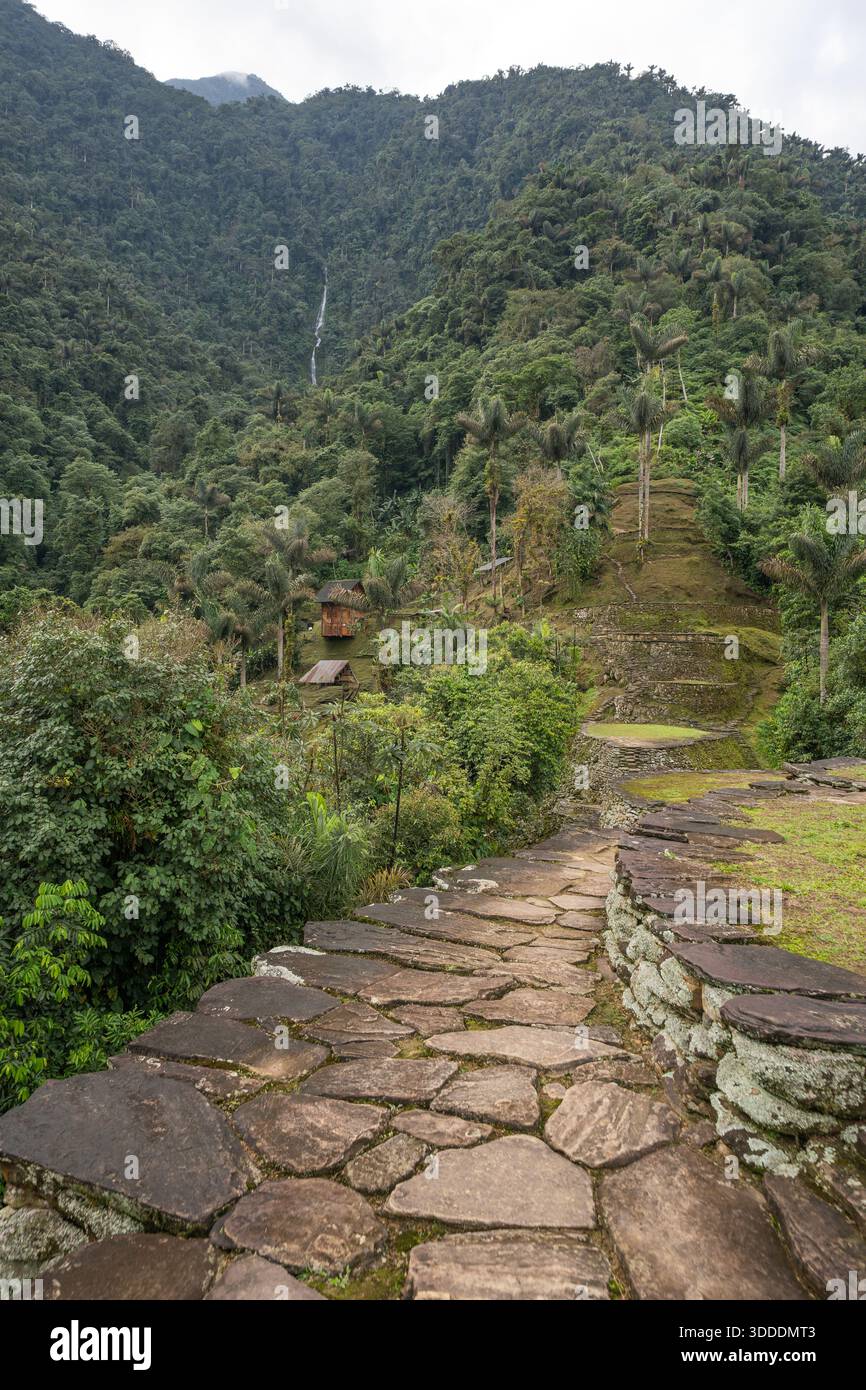
The Lost City of Teyuna (Ciudad Perdida), Colombia
Deep within the Sierra Nevada de Santa Marta mountains of Colombia lies Teyuna, famously known today as Ciudad Perdida or “The Lost City.” While technically rediscovered by huaqueros (looters) in the 1970s, it’s modern archaeology that has truly begun to unveil the complexity and grandeur of this ancient Tairona civilization metropolis. Unlike the more famous Machu Picchu, Teyuna was built around 800 CE, predating it by about 650 years.
Its rediscovery involved following leads from illicit excavations, but subsequent archaeological work has transformed our understanding. LiDAR and extensive mapping have revealed a network of 169 stone terraces, intricate tiled roads, and numerous small plazas carved into the mountainside, connected by a staggering 1,200 steps. The city was home to an estimated 2,000 to 8,000 people at its peak, showcasing advanced engineering and a sophisticated understanding of their mountainous environment. The Tairona people, ancestors of the modern Kogi, Arhuaco, and Wiwa indigenous groups, cultivated crops on terraced fields and developed extensive trade networks. The ongoing work at Teyuna, often in collaboration with indigenous communities, highlights how modern archaeology goes beyond mere excavation to reconstruct the social, economic, and spiritual life of a long-lost culture.

Ubar, The Lost City of the Sands, Oman
For centuries, legends spoke of Ubar, a prosperous ancient city in the deserts of Oman, known as the “Atlantis of the Sands.” It was described as a magnificent trading hub on the ancient frankincense route, but its precise location remained a mystery. In the early 1990s, a team of archaeologists, led by Nicholas Clapp, finally pinpointed its location, a discovery that perfectly illustrates the power of combining historical texts with modern archaeology.
The search for Ubar was driven by ancient maps, satellite imagery, and ground-penetrating radar. Satellite photos from NASA, taken by the Space Shuttle Challenger, revealed ancient camel tracks converging on a specific area in the remote Dhofar region. Ground surveys then used GPR to detect buried structures. What they found was a large, octagonal fortress with towering walls, built atop a massive limestone cavern. The city’s eventual downfall was dramatic: the cavern beneath it collapsed, swallowing much of Ubar into a sinkhole, likely due to excessive water extraction for its flourishing trade. The discovery of Ubar not only confirmed an ancient legend but also provided invaluable insights into the frankincense trade and the sophisticated societies that thrived in harsh desert environments, revealing a true hidden empire of commerce.
The Extensive Maya Network Revealed by LiDAR, Guatemala
While the Maya civilization was never truly “hidden,” the true scale and interconnectedness of their urban centers were. For decades, archaeologists battled dense jungles to map individual sites like Tikal and El Mirador. However, in 2018, a groundbreaking LiDAR survey by the Pacunam LiDAR Initiative in Guatemala unveiled a monumental discovery: over 60,000 previously unknown Maya structures, including houses, defensive fortifications, massive causeways, and intricate irrigation systems, spread across an area of 2,100 square kilometers.
This revelation completely reshaped our understanding of the Maya. Instead of scattered city-states, the LiDAR data revealed a vast, interconnected megalopolis that supported a population far larger than previously estimated – potentially tens of millions. The discovery suggested a level of agricultural intensity and social organization comparable to complex societies in other parts of the world, challenging previous notions of how civilization developed in the Mesoamerican lowlands. It demonstrated that even seemingly well-known ancient civilizations can still harbor hidden empires of information, waiting for modern archaeology to shed light on their true complexity.
The Kingdom of Sak Tz’i, Mexico
In a significant archaeological discovery in 2020, researchers identified the long-lost capital of the ancient Maya kingdom of Sak Tz’i, or “White Dog,” in the jungle of Chiapas, Mexico. While references to Sak Tz’i appeared in Maya hieroglyphs at other sites, its physical location remained elusive for decades.
Using a combination of traditional survey methods, local knowledge, and an understanding of Maya political geography, archaeologists finally located Lacanjá Tzeltal, a site that had been known to locals but not fully recognized by the archaeological community as the kingdom’s capital. The site features a ceremonial center, residential areas, and a ball court, along with carved monuments depicting rulers and historical events. The discovery of Sak Tz’i is crucial because it helps to fill in the political map of the Classic Maya period, showing how this kingdom interacted with its more powerful neighbors and offering new insights into regional conflicts and alliances. It reminds us that even within well-studied regions, hidden empires of smaller, yet significant, kingdoms are still waiting to be identified and understood.
Piecing Together the Past: Interpreting New Discoveries
Unearthing a lost city or a forgotten kingdom is only the first step. The real work of modern archaeology begins with interpreting these archaeological discoveries to reconstruct the lives, beliefs, and societal structures of ancient civilizations. This isn’t just about cataloging artifacts; it’s about weaving a narrative from fragments, often across vast spans of time and cultural differences.
Archaeologists employ a multidisciplinary approach, drawing on expertise from various fields. Material culture analysis is fundamental, where every artifact – from pottery shards and tools to jewelry and human remains – tells a story. The style of pottery can indicate trade networks, the wear on tools can reveal daily activities, and the composition of metals can pinpoint resource origins.
Environmental archaeology helps us understand how ancient peoples interacted with their surroundings. Pollen analysis can reconstruct ancient diets and agricultural practices, while studies of animal bones reveal hunting habits and domestication. This contextual information is vital for understanding why certain settlements flourished or declined, providing clues to the environmental challenges and adaptations of hidden empires.
Furthermore, epigraphy and linguistic analysis are crucial when deciphering ancient texts, as seen with the Maya hieroglyphs. These written records provide direct insights into political history, religious beliefs, and daily life, offering a voice to those who lived millennia ago. When written records are absent, comparative archaeology allows researchers to draw parallels with known contemporary or similar cultures to infer possible social structures or practices.
The interpretation process is also deeply informed by indigenous knowledge. Collaborating with local communities and descendant populations can provide invaluable insights into traditional land use, oral histories, and cultural meanings that might otherwise be lost. This respectful integration of diverse perspectives enriches our understanding and ensures that the stories of ancient civilizations are told with authenticity and depth.
The Ethical Imperative: Responsible Archaeology in the Modern Age
The excitement of uncovering hidden empires comes with significant responsibilities. Modern archaeology operates under a strong ethical framework, recognizing that these archaeological discoveries are not just scientific data but also cultural heritage.
One of the most pressing concerns is preservation. Once a site is disturbed, it can never be returned to its original state. Therefore, careful planning, meticulous documentation, and judicious excavation are paramount. The goal is often to excavate only what is necessary to answer specific research questions, leaving much of a site intact for future generations and future technologies.
Combating looting and illicit antiquities trade is another critical ethical challenge. The demand for ancient artifacts fuels a destructive black market that strips sites of their context and robs cultures of their heritage. Archaeologists often work with law enforcement and international organizations to protect sites and repatriate stolen artifacts.
Moreover, respect for indigenous rights and cultural sensitivities is non-negotiable. Many ancient civilizations are direct ancestors of today’s indigenous communities, who hold deep spiritual and historical connections to these sites. Responsible archaeology involves engaging these communities, seeking their input, and ensuring that discoveries are handled in a way that respects their traditions and sovereignty. This can include anything from involving community members in excavations to ensuring that human remains are treated with appropriate reverence and, if necessary, reinterred.
Finally, sustainable tourism is an important consideration. Once a site is unveiled, it often attracts visitors. Managing tourism responsibly helps to fund conservation efforts, educate the public, and provide economic benefits to local communities, all while minimizing the impact on fragile historical sites. The ethical imperative ensures that the pursuit of knowledge about hidden empires is balanced with the duty to protect and respect the past for all.
The Future of Discovery: What Else Lies Beneath?
The journey into the past is far from over. If anything, modern archaeology is just beginning to scratch the surface of what lies beneath. The integration of advanced technologies, combined with dedicated fieldwork and interdisciplinary collaboration, promises a future filled with even more astonishing archaeological discoveries.
Vast regions of the world remain largely unexplored by intensive archaeological surveys. The Amazon rainforest, for example, is still considered a giant green enigma, with LiDAR surveys continually revealing evidence of extensive, complex societies and massive earthworks that challenge long-held beliefs about its ancient inhabitants. Similarly, large parts of Africa, Asia, and Oceania likely harbor countless hidden empires waiting for the right technology and research teams to uncover them.
The continued development of AI and machine learning will undoubtedly accelerate the pace of discovery. Imagine AI systems sifting through decades of satellite imagery, identifying subtle patterns indicative of human activity, or analyzing vast amounts of geological data to predict likely locations of ancient settlements. Robotic exploration, particularly in underwater environments, will allow access to sites previously unreachable, opening up new frontiers for submerged cities and shipwrecks.
Furthermore, a growing emphasis on community archaeology and citizen science means that more people are becoming involved in the discovery process, bringing local knowledge and enthusiasm to projects. This collaborative approach not only enriches the research but also fosters a deeper connection between the public and their shared heritage.
The allure of ancient civilizations is timeless, and the quest to understand our collective past is an unending endeavor. Every new discovery of a hidden empire not only adds a new chapter to the human story but also challenges us to reconsider what we thought we knew. The excitement lies in knowing that somewhere out there, beneath the earth, under the waves, or hidden by dense foliage, countless more secrets are waiting to be unveiled.
Conclusion: The Enduring Legacy of Lost Worlds
The story of human civilization is a tapestry woven with countless threads, many of which have been lost to time, buried by nature, or simply forgotten. Yet, thanks to the ingenuity and dedication of modern archaeology, these lost threads are being meticulously rediscovered and rewoven. From the intricate terraces of Teyuna to the desert fortress of Ubar and the sprawling Maya networks revealed by LiDAR, archaeological discoveries are continually reshaping our understanding of ancient civilizations and the incredible ingenuity of our ancestors.
These hidden empires remind us that history is not a static collection of facts, but a dynamic, ever-evolving narrative. Each newly unearthed city, every deciphered inscription, and every artifact recovered adds depth and nuance to our shared human story, challenging assumptions and sparking new questions. The work of archaeologists today is not just about finding old things; it’s about bringing forgotten worlds back to life, giving a voice to those who built and lived in these magnificent, long-lost places.
The quest for these ancient wonders continues, driven by curiosity and empowered by technology. What other secrets lie beneath the surface, waiting for the perfect moment to emerge? The thrill of discovery is an enduring human trait, and in the realm of modern archaeology, that thrill is more alive than ever.
Ready to journey through time and witness the grandeur of these rediscovered worlds? Explore hidden empires with our interactive timeline and delve deeper into the fascinating stories of ancient civilizations brought back to light by modern archaeological marvels.
—
Image Alt Text Suggestions:
- Introduction Image: Aerial view of a dense jungle with subtle indications of ancient structures beneath the canopy, perhaps a stylized LiDAR image.
alt="Aerial view of a dense, green jungle, with faint, geometric patterns visible beneath the foliage, suggesting a hidden ancient city discovered by LiDAR." - LiDAR Technology Image: A graphic or photo showing a plane with LiDAR scanning a jungle, illustrating the laser penetration and 3D mapping process.
alt="Diagram showing an airplane emitting laser beams through a dense jungle canopy, mapping the terrain below to reveal hidden ancient structures." - Ciudad Perdida Image: A panoramic shot of Ciudad Perdida’s stone terraces and steps amidst lush green mountains.
alt="Panoramic view of Ciudad Perdida (The Lost City) in Colombia, showcasing ancient stone terraces and staircases carved into a verdant mountain slope." - Ubar Discovery Image: Satellite image showing ancient tracks converging in a desert, or an artist’s rendition of Ubar’s fortress.
alt="Satellite image of the Dhofar desert showing ancient camel tracks converging towards a specific archaeological site, illustrating the discovery of Ubar." - Maya LiDAR Map Image: A vibrant, color-coded LiDAR map of the Maya lowlands, highlighting vast networks of structures.
alt="Detailed, color-coded LiDAR map of the Maya lowlands, revealing extensive networks of ancient cities, roads, and agricultural systems hidden beneath the jungle." - Archaeologist at Work Image: An archaeologist carefully examining an artifact or an excavation site, perhaps with a drone in the background.
alt="An archaeologist carefully excavating a historical site, using small tools, with modern surveying equipment like a drone visible in the background." - “Maya lowlands”: Link to an article about the Classic Maya Civilization or specific Maya cities like Tikal or El Mirador.
- “Frankincense route”: Link to an article detailing ancient trade routes or the history of frankincense.
- “Pre-Columbian”: Link to an article about pre-Columbian cultures of South America.
- “Mesoamerican lowlands”: Link to an article providing an overview of Mesoamerican civilizations.
- “Ancient Roman settlements”: (If mentioned, or a general article about Roman archaeology).
- “Archaeological methods”: Link to an article explaining various archaeological techniques in more detail.
- “LiDAR (Light Detection and Ranging)”: Link to a scientific explanation of LiDAR from a university or NASA.
- “Pacunam LiDAR Initiative”: Link to the official website or a reputable news article about their Maya LiDAR discoveries.
- “Smithsonian Magazine” / “National Geographic”: For articles on specific discoveries like Ubar or Ciudad Perdida.
- “UNESCO”: For information on heritage preservation and ethical archaeology.
Internal Link Suggestions:
External Link Suggestions:
Schema Markup Recommendations (JSON-LD):
json
{
  "@context": "https://schema.org",
  "@type": "Article",
  "mainEntityOfPage": {
    "@type": "WebPage",
    "@id": "https://www.example.com/unveiling-hidden-empires-modern-archaeology-discoveries"
  },
  "headline": "Unveiling Hidden Empires: Modern Archaeology's Astonishing Discoveries of Ancient Civilizations",
  "description": "Explore how modern archaeology, with cutting-edge technology like LiDAR and satellite imagery, is revealing hidden empires and rewriting the history of ancient civilizations, from the Lost City of Teyuna to the vast Maya networks.",
  "image": [
    "https://www.example.com/images/hidden-empires-hero.jpg",
    "https://www.example.com/images/lidar-technology.jpg",
    "https://www.example.com/images/ciudad-perdida-overview.jpg"
  ],
  "author": {
    "@type": "Person",
    "name": "Your Name/Website Name"
  },
  "publisher": {
    "@type": "Organization",
    "name": "Your Website Name",
    "logo": {
      "@type": "ImageObject",
      "url": "https://www.example.com/logo.png"
    }
  },
  "datePublished": "2023-10-27",
  "dateModified": "2023-10-27",
  "keywords": "hidden empires, archaeological discoveries, ancient civilizations, modern archaeology, lost cities, LiDAR, satellite archaeology, geophysical survey, underwater archaeology, pre-Columbian, Mesoamerican, ancient cultures, historical sites, heritage preservation, cultural legacy"
}