
Challenging History: Unearthing Provocative and Controversial Archaeological Finds
Have you ever looked at a historical timeline and felt a nagging sensation that something just doesn’t quite add up? Perhaps a discovery seems too advanced for its supposed era, or an ancient map hints at knowledge our ancestors shouldn’t have possessed. You’re not alone. For centuries, archaeologists, historians, and enthusiasts alike have grappled with finds that defy easy categorization, pushing the boundaries of what we thought we knew about human civilization. These aren’t just curiosities; they are the seeds of “forbidden archaeology,” leading to “controversial discoveries” that often spark intense debates and, at times, claims of “suppressed history.”
In this article, we embark on a journey into the shadowy corners of the past, exploring some of the most provocative and perplexing archaeological finds that challenge our conventional understanding of history. We’ll delve into sites and artifacts that mainstream academia has dismissed or that continue to fuel speculation about advanced ancient civilizations, lost technologies, and narratives that refuse to fit neatly into textbooks. Prepare to have your perceptions stretched as we examine the evidence, the controversies, and the tantalizing possibility that the story of humanity is far more complex and intriguing than we’ve been led to believe.
:focal(700x527:701x528)/https://tf-cmsv2-smithsonianmag-media.s3.amazonaws.com/filer_public/9e/57/9e57aeb6-68b0-4b1a-94fa-0a5bb21c8054/fascinating-finds-2024.jpg)
The Allure of the Anomalous: Why We Question Conventional Narratives
There’s something inherently captivating about a mystery, especially when it concerns our origins. The idea that significant parts of our past might be missing, misunderstood, or even deliberately obscured appeals to a primal curiosity within us. This fascination gives rise to the concept of “forbidden archaeology.”

Defining “Forbidden Archaeology” and “Suppressed History”
At its heart, “forbidden archaeology” refers to archaeological evidence that contradicts the established scientific view of human evolution and civilization. It often involves “out-of-place artifacts” (OOPArts)—objects found in contexts that suggest a far greater age or a level of technological sophistication not attributed to the period. Such finds fuel the notion of “suppressed history,” in which proponents argue that mainstream academic institutions either ignore, dismiss, or actively conceal evidence that doesn’t fit the prevailing paradigm. The reasons cited range from academic inertia to a deliberate conspiracy to maintain a particular historical narrative.
It’s crucial to understand that while many of these “controversial discoveries” are genuinely challenging, they often undergo rigorous scientific scrutiny. Some claims are ultimately “debunked theories,” while others lead to a re-evaluation of established timelines. The tension between challenging new evidence and established understanding is where the most exciting intellectual battles are fought.

The Role of Skepticism and Open-Mindedness
Engaging with these topics requires a delicate balance of skepticism and open-mindedness. On one hand, critical thinking demands that extraordinary claims require extraordinary evidence. We must question sources, methodologies, and potential biases. On the other hand, history itself is a process of continuous discovery and revision. What was once considered a radical idea—like continental drift or the true age of the Earth—eventually became accepted science. The key is to examine the evidence, understand the arguments from all sides, and form your own informed conclusions rather than simply accepting or rejecting claims outright.
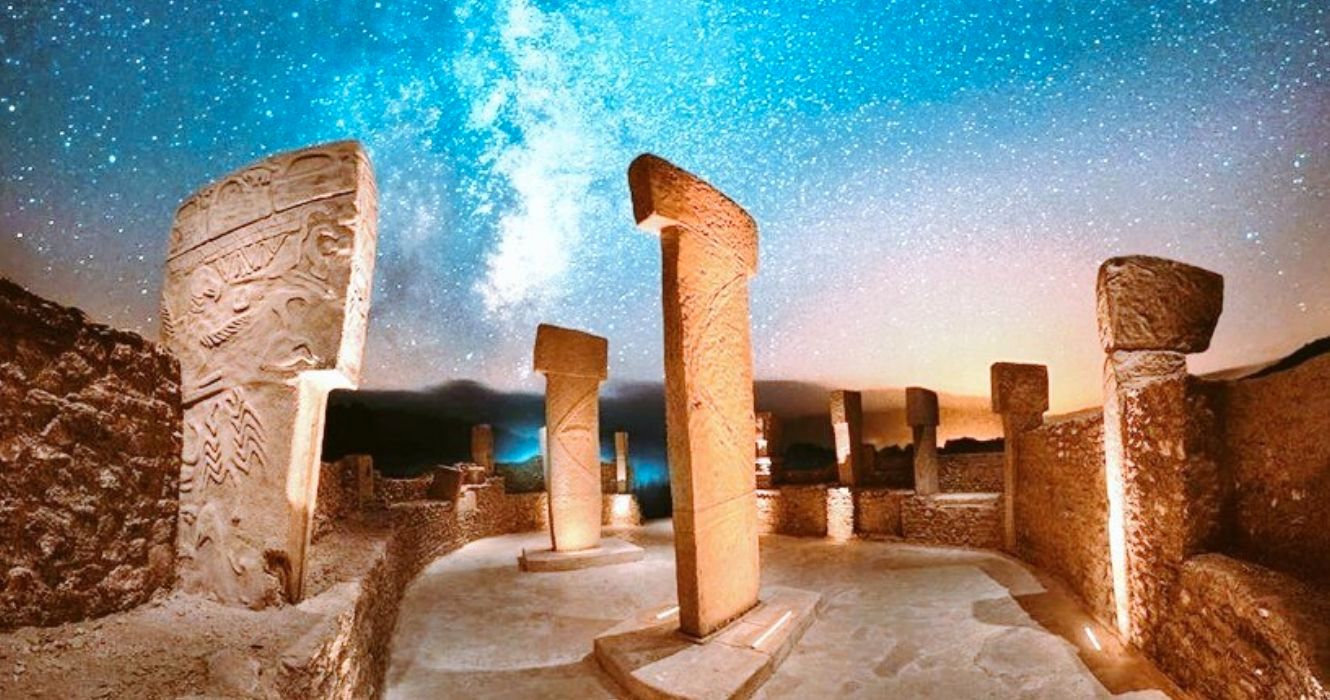
Göbekli Tepe: Rewriting the Dawn of Civilization
Imagine a monumental complex of massive, intricately carved stone pillars arranged in circles, dating back over 11,000 years. Now, imagine this structure was built by hunter-gatherers, long before the advent of agriculture, settled communities, or even pottery. This isn’t a fantasy; it’s Göbekli Tepe in southeastern Turkey, a site that has utterly revolutionized our understanding of early human history.
Discovered in the mid-1990s and excavated by Klaus Schmidt, Göbekli Tepe predates Stonehenge by 6,000 years and the Egyptian pyramids by 7,000 years. Its sophisticated architecture suggests a complex society capable of organizing massive communal efforts, religious rituals, and artistic expression—attributes previously associated only with settled, agricultural communities. The site consists of multiple circular enclosures, each featuring T-shaped megaliths weighing up to 20 tons, adorned with exquisite carvings of animals such as lions, boars, foxes, snakes, and scorpions.
The implications are profound. For decades, the prevailing theory held that agriculture led to settled communities, which then led to the development of complex societies, monumental architecture, and organized religion. Göbekli Tepe turns this narrative on its head, suggesting that complex social organization and monumental construction might have preceded agriculture—perhaps even inspiring its development as a way to sustain larger populations gathered for religious or ceremonial purposes.
“Göbekli Tepe forces us to reconsider the entire narrative of human civilization.” It challenges the very foundation of our historical timelines, demonstrating that our ancestors were far more capable and organized than previously imagined. While Göbekli Tepe is now widely accepted by mainstream archaeology, its initial discovery was so revolutionary that it pushed the boundaries of what was considered possible—making it a truly “controversial discovery” in its implications, if not its existence.
For further reading on this incredible site, explore the history of early human civilizations and the impact of Göbekli Tepe on archaeological thought.

The Antikythera Mechanism: A Glimpse into Ancient High-Tech
From the vast plains of ancient Anatolia, we journey to the depths of the Aegean Sea, where in 1901 sponge divers stumbled upon a shipwreck near the island of Antikythera. Among the classical Greek statues and pottery, they found a corroded lump of bronze and wood that would puzzle scientists for decades: the Antikythera Mechanism.
This is far more than an old clock; it’s an astoundingly complex analog computer and a marvel of ancient engineering. Dating back to around 150–100 BCE, the device consists of at least 30 intricately meshing bronze gears, precisely engineered and housed within a wooden case. It was designed to predict astronomical positions and eclipses for calendrical and astrological purposes, tracking the movements of the sun, moon, and possibly all five known planets while also accounting for the irregular orbit of the moon.
The level of sophistication in the Antikythera Mechanism is breathtaking. Its differential gearing system, for example, was not thought to have been invented until the 14th century CE. For many, it represents an “out-of-place artifact,” implying a technological leap far beyond what historians believed the ancient Greeks were capable of. While there’s no “suppressed history” here—the mechanism is celebrated as a testament to Greek ingenuity—its isolated existence raises questions. Was it a unique invention, a singular genius’s creation lost to time, or were there other such devices that simply haven’t survived?
“The Antikythera Mechanism is a stark reminder that ancient civilizations harbored technological secrets we are only just beginning to comprehend.” It stands as a powerful counterargument to the idea of a linear, uninterrupted progression of technology, suggesting that periods of advanced knowledge could emerge and then seemingly disappear for centuries. It’s a “controversial discovery” not because its authenticity is debated, but because it forces us to recalibrate our understanding of ancient intellectual prowess.
To explore the detailed workings of this ancient computer, consider visiting the official Antikythera Mechanism Research Project website.
The Piri Reis Map: Arctic Secrets and Suppressed Knowledge?
Our next stop takes us to the early 16th century and the enigmatic Piri Reis Map. This Ottoman admiral and cartographer compiled a world map in 1513, drawing upon numerous older source maps, some of which he claimed dated back to Alexander the Great’s era. The map depicts parts of the western coast of Africa, the eastern coast of South America, and, most controversially, a portion of a landmass that strikingly resembles the coastline of Antarctica, free of ice.
The Piri Reis Map has become a cornerstone of “forbidden archaeology” and “suppressed history” narratives for several reasons:
- Antarctica’s Appearance: Mainstream history states that Antarctica wasn’t officially discovered until 1820. Furthermore, the map allegedly shows its coastline without ice, implying knowledge of the continent’s topography during a period when it would have been ice-free—potentially thousands of years ago. How could a 16th-century map show this?
- Accuracy and Source Maps: Piri Reis himself stated that he used ancient maps as sources. Proponents argue that these ancient maps must have come from a highly advanced, lost civilization with sophisticated navigational and cartographical skills capable of mapping the globe from an aerial perspective.
- Geographic Distortions: While some parts of the map are remarkably accurate for its time, others contain significant distortions, particularly in the Americas. This inconsistency fuels both skepticism and theories of fragmented ancient knowledge.
Mainstream historians and cartographers largely consider the “Antarctica” segment to be a misinterpretation of the South American coastline, possibly extended southward, or a mythical landmass. They argue that the distortions are typical of early cartography and that the “ice-free” appearance is coincidental or based on speculation rather than actual knowledge. However, the exact origin and nature of Piri Reis’s ancient source maps remain a subject of intense speculation—a truly “controversial discovery.”
“The Piri Reis Map continues to ignite debates about lost civilizations and ancient global knowledge.” Is it merely a cartographical curiosity or a tantalizing clue to a “suppressed history” of advanced prehistoric navigators? While many of its more extreme interpretations have been “debunked theories,” the map undeniably provokes thought about the depth of ancient understanding.
Delve deeper into the mysteries of ancient cartography and the various interpretations of the Piri Reis Map to form your own conclusions.
Other Enigmas: From Underwater Structures to Bosnian Pyramids
The world is dotted with other sites and artifacts that continue to stir debate and fuel the flames of “forbidden archaeology.”
The Yonaguni Monument: Natural Formation or Lost City?
Off the coast of Yonaguni Island in Japan lies a massive underwater rock formation that looks uncannily like a stepped pyramid or ancient city. Discovered in 1986, the Yonaguni Monument features sharp angles, straight edges, terraces, and even what appear to be carved stairs and figures. Proponents argue that it’s a remnant of a lost civilization, submerged by rising sea levels thousands of years ago. Geologists, however, largely contend that these features are natural geological formations shaped by tectonic activity, erosion, and currents. The debate rages on, with divers and researchers continuing to explore its depths.
The Bosnian Pyramids: A Modern Archaeological Battleground
In the heart of Bosnia, local researcher Semir Osmanagić claims that several hills are, in fact, ancient pyramids built by an unknown civilization thousands of years ago. He points to their geometric shapes, the orientation of one “pyramid” to the cardinal directions, and alleged tunnels and carved stones. This “controversial discovery” has drawn both fervent supporters and widespread condemnation from the international archaeological community, which largely dismisses the claims as pseudoscientific, asserting that the hills are natural formations. This case exemplifies the sharp divide between alternative archaeology and established academia, with accusations of “suppressed history” often flying from both sides.
Many other “out-of-place artifacts” have emerged over the years, from the Coso Artifact (a spark plug encased in what looked like ancient rock) to the Baghdad Battery (whose purpose as an ancient battery is still debated). While many of these specific claims have been “debunked theories” after careful examination, they contribute to the broader narrative of challenging established history and keep the spirit of inquiry alive.
Navigating the Debate: Critical Thinking in Archaeology
The realm of “forbidden archaeology” and “controversial discoveries” is often a minefield of passionate arguments, conflicting evidence, and deeply entrenched beliefs. For history buffs and conspiracy theory enthusiasts alike, it’s a fascinating space, but one that requires careful navigation.
The importance of evidence and peer review cannot be overstated. Mainstream archaeology, while sometimes perceived as rigid, operates on principles of verifiable evidence, repeatable experiments (where applicable), and peer-reviewed analysis. This process, though slow, is designed to build a robust and reliable understanding of the past. When theories are “debunked,” it’s often because they lack sufficient, consistent evidence or because alternative, simpler explanations fit the existing data better.
However, it’s also true that academic consensus can be slow to shift, and groundbreaking discoveries sometimes face initial resistance. The challenge lies in discerning genuine anomalies that warrant further investigation from speculative claims that lack substantial support. “True historical understanding thrives on rigorous inquiry, not blind acceptance or outright dismissal.” The line between academic rigor and dogmatism can indeed be fine, and a healthy dose of skepticism—applied to both conventional and unconventional theories—is always beneficial.
Conclusion: The Unfolding Story of Humanity
From the mind-bending complexity of Göbekli Tepe to the technological marvel of the Antikythera Mechanism and the geographical enigma of the Piri Reis Map, the past is replete with “controversial discoveries” that defy easy explanation. These sites and artifacts force us to confront the possibility that our understanding of history, while constantly evolving, may still be incomplete. They challenge established timelines, hint at forgotten knowledge, and keep alive the exhilarating prospect of “suppressed history” waiting to be unearthed.
Whether you lean toward mainstream explanations or find yourself captivated by the allure of “forbidden archaeology,” one thing is clear: the story of humanity is far from fully told. Every new excavation, every re-analysis of an ancient artifact, has the potential to shift our perspectives and rewrite entire chapters of our shared past. The debate is ongoing, the mysteries are plentiful, and the pursuit of knowledge continues to push the boundaries of what we thought was possible.
Which of these “controversial discoveries” do you find most compelling? Do you believe in “suppressed history,” or are these merely “debunked theories” that refuse to die? The conversation is just beginning.
Join the debate in our community forum and share your thoughts on these fascinating archaeological enigmas!