
Hidden Empires: Unveiling Forgotten Civilizations Through Modern Archaeology
Imagine walking through a dense rainforest and hearing only birdsong, the rustle of leaves, and the distant rush of a river. Beneath your feet, swallowed by centuries of roots and soil, lies a sprawling city—temples, palaces, markets, and homes—waiting to be rediscovered. For history enthusiasts and archaeology buffs, this is not fantasy. It is the thrilling reality of modern archaeology. Across the globe, researchers are using cutting-edge technology to peel back the earth and reveal hidden empires that once dominated trade, science, art, and war.
In 2018, a single airborne laser scan over northern Guatemala exposed more than 60,000 previously unknown Maya structures, including highways, defensive walls, and agricultural terraces. That colossal find rewrote textbooks and proved that many lost civilizations were far larger, more complex, and more interconnected than we ever imagined. From the cloud forests of Peru to the highlands of Ethiopia, archaeological discoveries are challenging old assumptions and giving voice to people who were erased by conquest, climate, or time.
So, how do archaeologists find entire cities without ever lifting a shovel? What forgotten kingdoms have recently emerged from the shadows? And why should we care about societies that vanished hundreds or thousands of years ago? In this article, we will journey through some of the most breathtaking finds in modern archaeology, explore the technology making it all possible, and discover why ancient civilizations still shape our world today. Get ready to step into the past—and see it with new eyes.

The Allure of the Invisible: Why Hidden Empires Capture Our Imagination
There is something profoundly human about searching for what has been lost. The legend of Atlantis, the mystery of El Dorado, the vanished colony of Roanoke—these stories persist because they speak to our deepest curiosity. What happened to the people before us? How did they live, love, fight, and fail?
For centuries, many so-called lost civilizations were dismissed as myths. Troy was considered a Homeric fantasy until Heinrich Schliemann’s controversial excavations in the 1870s revealed a real Bronze Age city in northwestern Turkey. The ancient Maya were thought to have lived in small, scattered villages until recent surveys uncovered a vast network of urban centers linked by raised causeways. These hidden empires are not hidden because they were small or unimportant; they are hidden because nature, time, and sometimes deliberate destruction buried their traces.
But modern archaeology has transformed the hunt. Instead of relying on luck, intuition, or the destructive digging of the past, researchers now combine satellite data, ground-penetrating radar, and artificial intelligence to map what lies beneath the surface with astonishing precision. This shift has opened a new golden age of discovery. As archaeologist Sarah Parcak, a pioneer in satellite archaeology, puts it, “We are only just beginning to realize how much of our shared human story is still waiting under the ground.”

Technology as a Time Machine: How Modern Archaeology Redefines Discovery
The most exciting archaeological discoveries of the last decade did not come from shovels alone. They came from sensors, algorithms, and satellites. Here are the key technologies that are rewriting history:
- LiDAR (Light Detection and Ranging): Mounted on drones or aircraft, LiDAR fires millions of laser pulses at the ground and measures how long they take to bounce back. By filtering out vegetation, it creates a precise 3D map of the terrain below, revealing structures hidden under thick jungle canopy.
- Ground-penetrating radar (GPR): This tool sends radar waves into the earth to detect buried walls, tombs, and even empty spaces. It is especially useful in deserts and urban areas where digging is difficult.
- Satellite imagery: High-resolution satellite photos can expose subtle changes in soil color, crop growth, and surface temperature that indicate buried ruins. Sarah Parcak used this method to locate thousands of potential ancient sites in Egypt.
- Magnetometry: By measuring tiny variations in the Earth’s magnetic field, archaeologists can find fired clay, iron artifacts, and old hearths without disturbing the ground.
- Photogrammetry and 3D modeling: Thousands of overlapping photographs are stitched together to create interactive digital models of excavation sites, allowing researchers and the public to explore ruins remotely.
These tools have turned archaeology from a purely destructive science into a largely non-invasive one. Instead of digging blindly, teams can target specific anomalies and preserve the surrounding context. The result is a richer, more accurate picture of ancient civilizations—and a lot more discoveries.

Case Studies: Lost Civilizations That Emerged from the Earth
The best way to understand the power of modern archaeology is to look at the places where it has revealed entire hidden empires. The following examples are just a glimpse of a rapidly expanding map of the ancient world.

The Maya’s Hidden Megalopolis: More Than a Jungle Empire
For decades, scholars believed the Maya lowlands of Central America were sparsely populated, with small city-states separated by vast tracts of untouched forest. That view collapsed in 2018 when a team using LiDAR surveyed over 2,100 square kilometers of Guatemala’s Petén region. The scans revealed more than 60,000 structures, including houses, palaces, ceremonial platforms, elevated highways, and complex irrigation systems.
This discovery showed that the Maya had engineered a sprawling, interconnected civilization of roughly 10–15 million people at its peak. The landscape was not a pristine wilderness but a heavily modified agricultural network designed to feed a massive population. The archaeological discoveries also revealed defensive walls and fortifications, suggesting that warfare and political rivalries were far more common than previously believed.
This hidden metropolis is now reshaping how historians understand urbanism, sustainability, and the eventual Maya collapse. Rather than a sudden, mysterious disappearance, the evidence points to a slow unraveling driven by climate change, overpopulation, and political instability—a story that feels disturbingly relevant today.
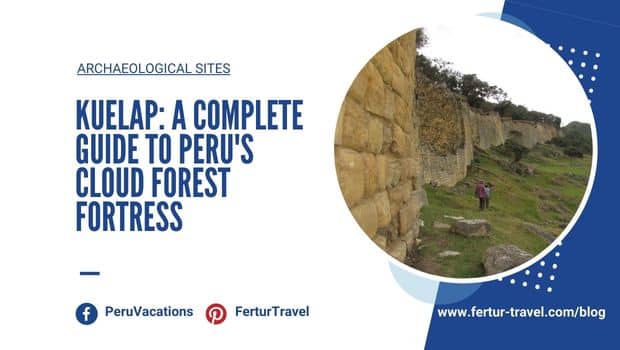
The Cloud Warriors of Peru: Chachapoya and the Kuelap Citadel
High in the cloud forests of northern Peru, the Chachapoya civilization built stone cities on mountain ridges between 800 and 1470 CE. Known as the “Warriors of the Clouds,” they were conquered by the Inca shortly before the Spanish arrived. For centuries, their massive circular structures lay hidden under moss and mist.
Recent LiDAR surveys and field expeditions have uncovered extensive networks of roads, agricultural terraces, and fortified settlements, including the monumental citadel of Kuelap. With walls up to 20 meters high and hundreds of circular homes, Kuelap rivals Machu Picchu in scale—yet it receives a fraction of the visitors. Modern archaeology is now revealing that the Chachapoya were not a single unified kingdom but a confederation of powerful regional lords who resisted Inca expansion fiercely.
The discovery of burial sites high on cliff faces, with painted sarcophagi and intricate textiles, has also deepened our understanding of their beliefs about death and the afterlife. These finds highlight how much remains unknown about South America’s lost civilizations outside the famous Inca and Maya.
The Kingdom of Aksum: Africa’s Forgotten Giant
Mention ancient Africa, and Egypt usually dominates the conversation. But in the highlands of Ethiopia and Eritrea, the Kingdom of Aksum emerged around 100 CE as one of the ancient world’s great powers. It controlled Red Sea trade routes, minted its own currency, and was among the first major empires to adopt Christianity. Aksum also built towering stone obelisks, some over 30 meters tall, that remain some of the largest single pieces of stone ever quarried and erected by humans.
Despite its importance, Aksum has long been overshadowed by Rome, Persia, and China. However, recent excavations using magnetometry and satellite imagery have revealed sprawling palace complexes, underground tombs, and evidence of a sophisticated water management system. These archaeological discoveries confirm that Aksum was a cosmopolitan hub connecting Africa, Arabia, India, and the Mediterranean—a true hidden empire that shaped global trade for centuries.
One of the most tantalizing leads is the search for the lost city of the Queen of Sheba, whose legendary kingdom may have been linked to Aksum’s predecessor civilization. While no definitive proof has emerged, the ongoing work is drawing global attention to Africa’s overlooked ancient past.
The Indus Valley Civilization: A Script Still Silent
More than 5,000 years ago, the Indus Valley Civilization flourished across modern Pakistan and northwest India. It built some of the world’s first planned cities, complete with advanced drainage systems, standardized weights, and public baths. Mohenjo-daro and Harappa were metropolises of remarkable sophistication—yet their script remains undeciphered, and their political structure remains a mystery. Unlike Egypt or Mesopotamia, no royal tombs or propaganda monuments have been found.
Modern technology is slowly cracking the case. Drones and satellite analysis have identified hundreds of smaller settlements along dried-up riverbeds, revealing the true extent of this ancient civilization. Geochemical studies of pottery and soil suggest that the Indus people adapted to a changing monsoon climate by shifting their agricultural practices. Some researchers even argue that the civilization’s decline was not a collapse but a gradual migration eastward.
The mystery of the Indus script, combined with the civilization’s apparent lack of warfare, makes it one of the most intriguing lost civilizations on Earth. Every new excavation adds a piece to a puzzle that could rewrite our understanding of early urban life.
Decoding Without Words: Ancient DNA and Isotope Analysis
Not all archaeological discoveries involve walls and artifacts. Some of the most revolutionary insights come from molecules. Ancient DNA (aDNA) analysis allows scientists to extract genetic material from bones, teeth, and even cave dirt to trace human migration, identify diseases, and reveal relationships between populations separated by thousands of miles.
For example, a 2021 study of ancient genomes from the Indus Valley region suggested that the people of that civilization were closely related to modern South Asians, with links to both Iranian farmers and Southeast Asian hunter-gatherers. This kind of evidence fills in gaps that no written record can explain. It shows that ancient civilizations were not isolated islands but dynamic networks shaped by movement and mixing.
Isotope analysis is equally powerful. By measuring variations in elements like strontium, oxygen, and nitrogen in human remains, archaeologists can determine where a person grew up, what they ate, and how their diet changed over time. A skeleton found in a Roman cemetery in Britain, for instance, might have isotopes matching North Africa—proof of long-distance travel and cosmopolitan life in the empire.
These scientific techniques humanize the past. They turn abstract ruins into communities of real individuals with stories, struggles, and connections. And they are revealing hidden empires not as monuments, but as living, breathing systems.
The Archaeologist’s New Toolbox: From Drones to AI
Drones have become the workhorses of modern archaeology. They are cheap, portable, and capable of capturing high-resolution images and thermal data from otherwise inaccessible areas. In the dense jungles of Cambodia, drones equipped with LiDAR helped locate the medieval city of Mahendraparvata, a lost capital of the Khmer Empire that had been swallowed by forest for over a thousand years.
Artificial intelligence is the next frontier. Machine learning algorithms can scan vast datasets of satellite imagery and flag potential archaeological features with remarkable accuracy. These algorithms learn to recognize patterns—rectangular shapes, unnatural mounds, slight elevation changes—that human eyes might miss. One project in the Middle East used AI to review satellite images and identified thousands of potential sites across Saudi Arabia’s lava fields, including mysterious stone structures called “gates” that date back thousands of years.
Predictive modeling is also helping archaeologists decide where to dig. By analyzing environmental variables like water sources, soil fertility, and elevation, researchers can estimate where ancient people were most likely to settle. This targeted approach reduces time, cost, and unnecessary disturbance of intact sites.
Even citizen scientists are getting involved. Platforms like GlobalXplorer, founded by Sarah Parcak, allow anyone with an internet connection to scan satellite tiles for signs of looting or undiscovered ruins. The collective power of thousands of volunteers has already led to the identification of previously unknown pyramid sites in Egypt and lost settlements in Peru. This democratization of discovery means that the next great find could come from a curious amateur, not just a university team.
Challenges and Ethical Questions in Unearthing the Past
For all its promise, the rush to uncover hidden empires comes with serious responsibilities. Every excavation disturbs a site. Every artifact removed has a context that can be lost forever. Archaeologists must balance the thirst for knowledge with the need to preserve heritage for future generations.
Looting remains a devastating problem. As soon as new sites are discovered, they become targets for treasure hunters. Satellite monitoring has helped track looting pits in places like Syria, Iraq, and Egypt, but the illegal antiquities trade still fuels instability and erases history. Ethical archaeologists now work closely with local communities to protect sites and share the benefits of discovery.
There is also the question of who owns the past. Many ancient civilizations left descendants who still live near excavation sites. Their voices must be central to research, not treated as background noise. Collaborative archaeology—where local people help shape research questions, excavate, and interpret findings—is becoming the gold standard. This approach not only builds trust but also produces richer, more accurate narratives.
Climate change adds urgency. Rising sea levels threaten coastal sites, while increased rainfall and drought destabilize exposed ruins. Some of the world’s most fragile lost civilizations may be lost again—this time to environmental destruction. Modern archaeologists are racing to document these places before they disappear.
Why Hidden Empires Matter Today
It is easy to view archaeology as a luxury—a pursuit for academics and museum lovers. But the study of hidden empires has direct relevance to our lives. Consider the lessons of the Maya: a sophisticated civilization that managed water, fed millions, and then collapsed under environmental stress and political fragmentation. Their story is a warning about sustainability and resilience.
The Aksumites show us the power of global trade and cultural exchange. The Indus Valley people demonstrate that complex urban life does not require kings and armies; their egalitarian model offers an alternative to the glorification of conquest. The Chachapoya remind us that resistance to empire is ancient and universal.
These archaeological discoveries also restore dignity to people erased by colonial narratives. For centuries, European explorers looked at African ruins and assumed they must have been built by outsiders. Modern science has proved otherwise. Revealing the true achievements of ancient civilizations is an act of justice as much as scholarship.
Perhaps most importantly, hidden empires feed our sense of wonder. They remind us that the human story is far grander, stranger, and more interconnected than we often assume. Every buried city is a time capsule, and every excavation is a conversation with the dead. In a world that often feels divided, archaeology offers a shared inheritance that belongs to all of us.
Frequently Asked Questions About Hidden Empires
What qualifies as a “hidden empire”?
A hidden empire is a civilization or political entity that was significant in its time but has been largely forgotten, overlooked, or physically buried by natural processes. These can include the Maya lowland cities, the Kingdom of Aksum, the Chachapoya, and many others whose full scale is only now being revealed by modern tools.
How accurate is LiDAR for finding lost cities?
LiDAR is extremely accurate, often capable of detecting features as small as 10–20 centimeters in height. It can penetrate dense vegetation and create detailed elevation models that reveal walls, roads, and even individual house foundations. However, it cannot see through the ground itself, so it is often paired with ground-penetrating radar or magnetometry.
Are there still undiscovered ancient civilizations?
Yes,