
Suppressed Historical Evidence: Uncovering the Hidden Truths Behind History’s Greatest Cover-Ups
Imagine a library where half the books have been torn from the shelves, their pages burned, their very existence denied. That’s not a dystopian fantasy—it’s a surprisingly accurate description of humanity’s historical record. For every widely accepted narrative of our past, there are whispers of suppressed history, fragments of hidden truths that threaten to overturn comfortable assumptions. From the deliberate destruction of ancient texts to the institutional slow-walking of archaeological revelations, the path of historical knowledge is littered with intentional silences.
But why do historical cover-ups happen? Who benefits from keeping certain stories buried? And what does it mean when the very gatekeepers of knowledge—governments, religious institutions, and even academia—become obstacles to the truth? In this investigative deep dive, we’ll pull at the loose threads of censored narratives, exploring cases where evidence was sidelined, narratives were rewritten, and revisionist history turned from an insult into a necessary corrective. Whether you’re a seasoned scholar or a curious truth-seeker, prepare to question everything you thought you knew about the past. The truth isn’t just out there—it’s often been hidden in plain sight.

The Anatomy of a Historical Cover-Up: Why Truths Get Buried
Before we unearth specific suppressed histories, we need to understand the machinery that makes such cover-ups possible. History is never a neutral, passive recording of events. It’s a living narrative shaped by those who hold power, and it’s often rewritten to serve their interests.

Power, Politics, and the Control of Narrative
At its core, the suppression of historical evidence is an act of control. When a political regime commissions a new official history, it’s rarely out of a pure love for scholarship. Instead, controlling the past is a way to legitimize the present and shape the future. Think of how Soviet historians airbrushed purged Communist Party members out of photographs and textbooks, creating a continuous, sanitized lineage that never embarrassed Stalin. Or consider how colonial powers systematically erased indigenous histories, replacing them with narratives that depicted colonized peoples as savages awaiting salvation. These historical cover-ups aren’t just about hiding inconvenient facts—they’re about erasing entire worldviews.
In many cases, the suppression isn’t even a secret. It’s the default. Governments classify documents, not because they contain nuclear launch codes, but because they reveal embarrassing diplomatic blunders, illegal wars, or atrocities that would erode public trust. The 50-year rule, 75-year rule, and various national security exemptions ensure that by the time the truth emerges—if it ever does—the perpetrators are long dead and public outrage is a whisper.

The Role of Institutional Gatekeepers
It’s easy to blame faceless governments, but suppression often wears a friendlier mask. Academic institutions, museum curators, and peer-review boards have their own orthodoxies to defend. The story of suppressed history is littered with groundbreaking researchers who were ridiculed, denied tenure, or refused publication simply because their findings challenged the reigning paradigm.
Take the field of archaeology. For decades, the so-called Clovis First model asserted that humans entered the Americas no earlier than 13,000 years ago. Evidence suggesting much older sites—such as Monte Verde in Chile or the Bluefish Caves in Yukon—was systematically dismissed, and researchers who championed those sites faced professional ostracism. This wasn’t a government conspiracy; it was a collective, often unconscious, gatekeeping that protected careers and intact — until the evidence became so overwhelming that the paradigm collapsed. As we explored in our deep dive on the Clovis First controversy, the rewriting of this chapter is a textbook case of how revisionist history can eventually triumph, but only after needless decades of delay.
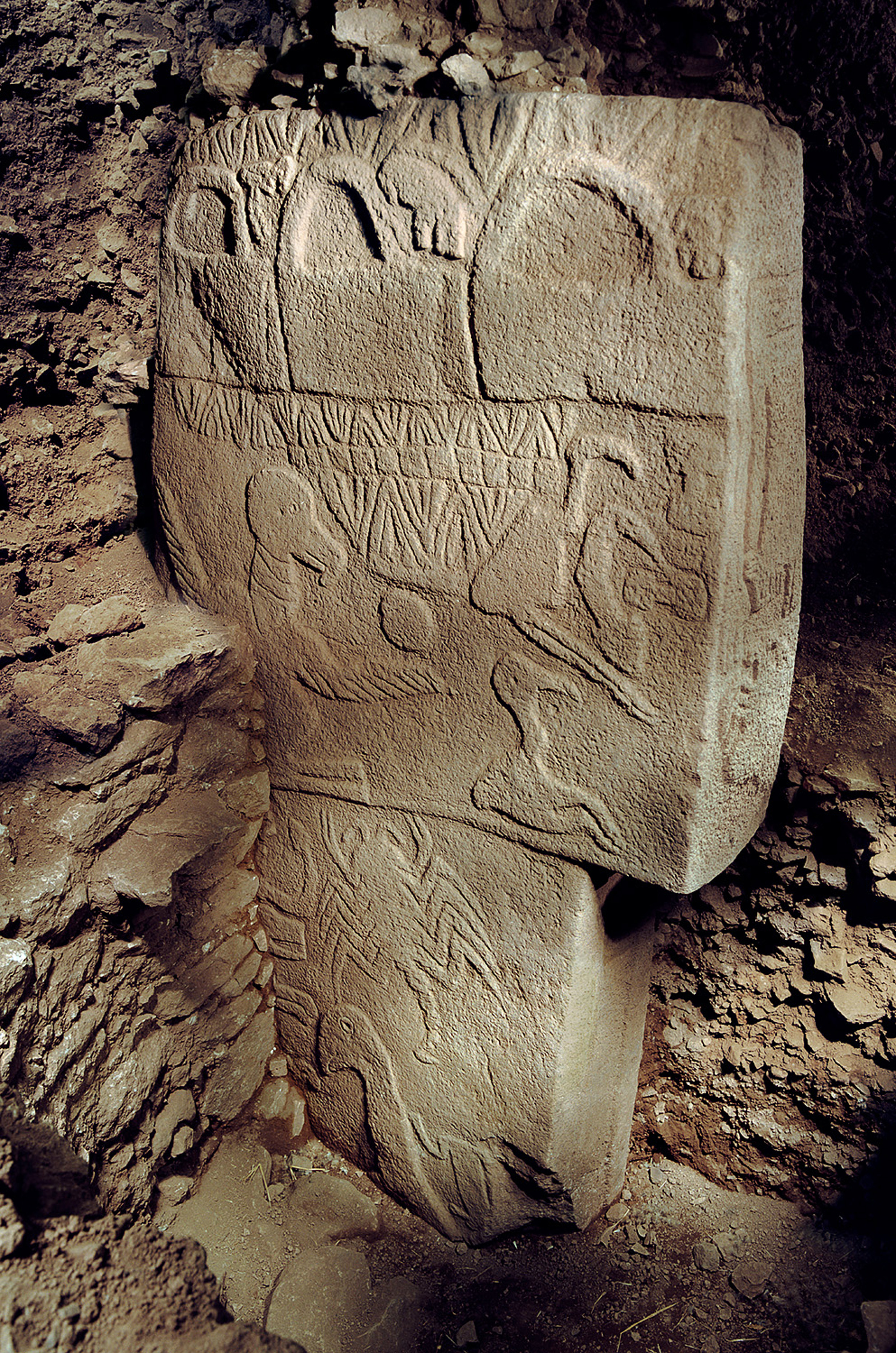
Lost Civilizations and Archaeological Suppression: Göbekli Tepe and Beyond
Few discoveries have rattled the cage of mainstream history quite like Göbekli Tepe in modern-day Turkey. This monumental site, consisting of massive T-shaped limestone pillars arranged in circles and carved with intricate animal reliefs, was deliberately buried around 8,000 BCE. But what truly scandalized the archaeological world was its age: radiocarbon dating pushed its construction back to around 9,600 BCE, a staggering 6,000 years before Stonehenge and predating the invention of pottery, metallurgy, and even agriculture as we knew it.
For decades, the prevailing narrative insisted that complex societies, monumental architecture, and organized religion could only emerge after the Agricultural Revolution provided the necessary surplus of food and labor. Göbekli Tepe turned that story upside down. It suggested that hunter-gatherers, supposedly living in small, egalitarian bands, built the world’s first temple and that the need to feed large gatherings may have triggered agriculture, not the other way around.
So why did it take so long for this hidden truth to see the light? The site was first identified in a 1963 survey, but it was dismissed as an unimportant medieval cemetery. The actual significance wasn’t recognized until Klaus Schmidt began excavations in the mid-1990s. Even then, the implications were so disruptive that many scholars initially downplayed the findings, clinging to the comforting linearity of the old model. The suppression here was not deliberate in a cloak-and-dagger sense, but it was suppression nonetheless—a reluctance to face evidence that threatened a cherished story. Göbekli Tepe is a reminder that the greatest historical cover-ups can be acts of institutional inertia.
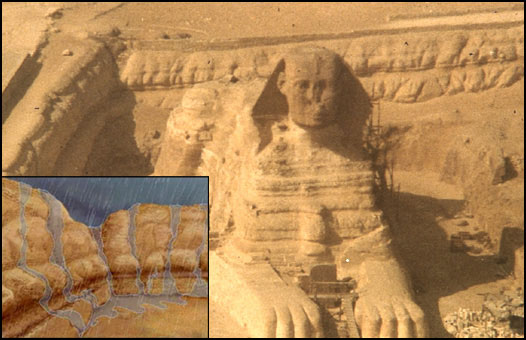
The Sphinx Water Erosion Hypothesis: Rewriting Egyptian Chronology?
In the early 1990s, geologist Robert Schoch dropped a bombshell. After studying the weathering patterns on the Great Sphinx of Giza, he concluded that the monument showed clear evidence of prolonged water erosion—caused by rainfall, not the wind and sand that dominate Egypt’s current climate. Egypt experienced significant rainfall only before 5,000 BCE, implying the Sphinx could be thousands of years older than the accepted date of around 2,500 BCE. If true, this would rewrite the timeline of human civilization, suggesting the existence of a lost, advanced culture predating dynastic Egypt.
The Egyptological establishment reacted with fury. Schoch’s findings were labeled pseudoscience, his motives questioned, and his data dismissed without rigorous engagement. Mainstream Egyptologists pointed to the lack of other artifacts from that era around Giza, but Schoch countered that stone monuments could survive while pottery and wooden tools did not. The entire debate became a case study in how entrenched interests deploy ridicule to protect their turf. Whether or not you accept Schoch’s conclusions, the hostility he faced underscores how difficult it is for revisionist history to gain a foothold when it threatens careers and institutional funding.
Rewriting the 20th Century: Official Stories That Don’t Add Up
Modern history is rife with sanitized narratives that crumble under scrutiny. Government archives, once declassified, often reveal a pattern of deceit that transforms “conspiracy theory” into documented fact.
The JFK Assassination Records: What’s Still Hidden?
Nearly six decades after President John F. Kennedy was killed in Dallas, the U.S. government continues to withhold thousands of documents related to the assassination. The 1992 JFK Records Act mandated full release by 2017, but the CIA and FBI have successfully pressured presidents from Trump to Biden to delay disclosure, citing vague “national security” concerns. What could possibly still be sensitive after 60 years? The lingering redactions fuel suspicion that the official narrative—a lone gunman, Lee Harvey Oswald—was a convenient cover story shielding a more complex reality involving intelligence agencies, organized crime, or anti-Castro Cubans.
The existence of a suppressed history here is not a fringe fantasy; it’s a legal reality confirmed by the government’s own secrecy. As you can explore in the National Archives’ JFK collection, the very act of classifying and reclassifying these documents is an admission that something remains too hot to handle. This pattern of historical cover-ups undermines public trust and invites the kind of revisionist history that fills the gaps with informed speculation.
Operation Northwoods: The War That Never Was
For a truly chilling example of a hidden truth, look no further than Operation Northwoods. In 1962, the U.S. Joint Chiefs of Staff drafted and approved plans to stage false-flag terrorist attacks on American soil—including the bombing of civilian airliners and the sinking of refugee boats—and blame them on Cuba to justify a war against Fidel Castro. President Kennedy rejected the plan, but the fact that the highest levels of the military would even conceive of killing Americans for political gain shatters the myth of benign government.
These documents were declassified decades later, but they got almost no media attention. They remain a footnote, not the shocking headline they deserved. The suppression of this evidence after the fact is a form of passive cover-up: when the documents are available but ignored, the narrative stays intact. This is a critical lesson for any truth-seeker: the hidden truths are sometimes already public, waiting in archives for someone to notice.
The Vatican Secret Archives and Religious Suppression
Religion has always been a powerful gatekeeper of the past. The Vatican’s Secret Archives—now renamed the Vatican Apostolic Archive—hold miles of shelves containing papal correspondence, inquisitorial transcripts, and documents that could illuminate dark corners of church history. For centuries, access was virtually impossible, and even today, researchers face significant restrictions. What might be buried there? Theories range from early gospels that challenge the divinity of Jesus to evidence of the Church’s role in financing wars and silencing dissent.
The suppression of alternative Christianities is well-documented. The discovery of the Nag Hammadi library in 1945 unveiled a treasure trove of Gnostic gospels—texts like the Gospel of Thomas and the Secret Book of John—that present a radically different Jesus, one focused on inner knowledge rather than institutional hierarchy. These texts were literally buried by monks in the 4th century, likely to save them from being burned as heresy after Bishop Athanasius mandated a strictly defined New Testament canon. The historical cover-ups within religion are not just about hiding sex scandals; they’re about preserving a monopoly on spiritual truth that shapes entire civilizations.
Even the Dead Sea Scrolls, celebrated as a great archaeological find, were kept under tight control for decades. Access to the scrolls was restricted to a small, exclusive team of scholars who released translations at a glacial pace, fueling suspicion that the texts contained explosive content about early Christianity. It took a grassroots rebellion—including the publication of bootleg photographs—to break the monopoly and force the release of the full corpus. This saga, which we detailed in our earlier investigation into the Dead Sea Scrolls controversy, is a prime example of how academic gatekeeping can become a form of suppression.
The Digital Age: New Tools for Uncovering Suppressed History
If the 20th century was the age of the cover-up, the 21st may be the age of the leak. The internet has democratized access to historical materials in ways that were unimaginable a generation ago. Digital archives, FOIA (Freedom of Information Act) requests, and decentralized research communities are prying open the vaults. Websites like The Black Vault house millions of declassified pages, allowing citizen sleuths to uncover hidden truths that mainstream institutions ignore.
Revisionist history is no longer a pejorative whispered in dusty hallways; it’s a dynamic, crowd-sourced process. When the COVID-19 pandemic raised questions about the origins of the virus, digital researchers combed through institute websites, genetic databases, and grant records at lightning speed, often outpacing official investigations. The same tools are being applied to everything from the MLK assassination to the Katyn massacre. Yet this openness is a double-edged sword. The ease of publishing also amplifies misinformation, making critical thinking more essential than ever.
How to Approach Suppressed History with a Critical Eye
For scholars and truth-seekers alike, navigating the labyrinth of suppressed history requires discipline. The line between genuine hidden truth and baseless conspiracy can be thin, but several principles can keep you grounded.
First, always prioritize primary sources. If a claim rests on hearsay or a chain of unverifiable documents, treat it with caution. Second, demand corroboration from multiple, independent streams of evidence—archaeological, textual, forensic. A single whistleblower is rarely enough. Third, understand the bias of every gatekeeper, including yourself. The desire to believe in a dramatic historical cover-up can be just as blinding as the desire to deny one.
Consider the tools of professional historians: peer review is flawed but it catches egregious errors; archival footnotes allow you to trace claims back to their source. Use them. And when you encounter resistance from an institution, ask not only “What are they hiding?” but also “What do they stand to lose by admitting the truth?” The answer is often a combination of prestige, funding, and the psychological discomfort of admitting you were wrong.
The Psychological Reason We Cling to Comforting Narratives
Why does suppressed history provoke such visceral reactions? Why did so many intelligent people dismiss the notion of pre-Clovis Americans or water erosion on the Sphinx without even examining the evidence? Cognitive science offers some clues. Human beings have a deep-seated need for narrative coherence. We prefer stories that confirm our existing worldview—a phenomenon called confirmation bias. When a new fact threatens that story, it doesn’t just challenge an academic theory; it attacks a piece of our identity. This is why revisionist history is so often met with hostility: it’s asking people to rebuild their mental furniture.
Institutions amplify this effect. A university department, a museum, or a government agency is a tribe, and tribes protect their origin myths. Acknowledging that your tribe’s foundational story is flawed can feel like treason. Thus, evidence that might overturn decades of scholarship gets marginalized not necessarily out of malice, but out of a collective, unconscious conspiracy to maintain comfort. Recognizing this psychological dimension is crucial for anyone seeking hidden truths. The biggest cover-ups aren’t always orchestrated by men in dark rooms; they’re often sustained by millions of people simply refusing to look.
Conclusion: The Never-Ending Excavation of Truth
The search for suppressed historical evidence is not a quest for a single, shocking revelation that will flip the world on its head. It’s a slow, painstaking excavation through layers of bureaucracy, bias, and deliberate obfuscation. From the buried pillars of Göbekli Tepe to the redacted pages of the JFK files, we see a consistent pattern: power protects its own stories, and truth is often the first casualty.
But the picture is not hopeless. Every time a whistleblower leaks a cache of documents, every time a tenacious researcher publishes findings that disrupt a stale paradigm, the edifice of official history cracks a little more. Revisionist history, when practiced with rigor and integrity, is not an attack on the past—it’s a restoration. It’s the act of giving a voice to the silenced and returning complexity to a world that has been flattened by propaganda.
As a truth-seeker, you are part of this restoration. The hidden truths are waiting in archives, in misunderstood ruins, in the footnotes of forgotten books. Your curiosity is a form of resistance. So where do you go from here? The journey never ends, but you don’t have to walk it alone. For those who hunger for an unvarnished look at the past, we offer a steady stream of in-depth investigations, expert interviews, and exclusive revelations that you won’t find anywhere else.
Subscribe to our newsletter for exclusive updates on suppressed historical evidence. Join a community of thinkers who refuse to accept sanitized narratives. Together, we’ll keep digging—because the truth beneath the rubble is worth every shovelful of dirt.
—
Frequently Asked Questions About Suppressed History
What is suppressed history?
Suppressed history refers to historical evidence, narratives, or events that have been deliberately hidden, destroyed, or marginalized by authorities—governments, religious institutions, or academic gatekeepers. It can involve classified documents, lost archaeological sites, or alternative historical interpretations that challenge the official story.
Is revisionist history legitimate?
Yes, revisionist history is a legitimate and essential scholarly practice when it involves re-examining the past based on new evidence or fresh perspectives. The term is sometimes misused to describe denialism (e.g., Holocaust denial), but genuine historical revisionism has corrected countless errors—like recognizing the advanced societies of pre-Columbian America.
Why are governments still hiding historical evidence today?
Governments often classify historical documents to protect national security, diplomatic relations, or the reputations of powerful figures and agencies. Even decades-old secrets can be withheld if their release might expose illegal acts, embarrass allies, or reveal intelligence methods that are still in use.
How can I tell if a hidden truth claim is credible?
Look for claims backed by primary sources, corroborated by multiple independent lines of evidence, and subjected to scrutiny by experts—even if those experts are dissenting. Be wary of narratives that rely on a single, uncorroborated source or that conveniently assign blame to a shadowy, all-powerful group.
Can suppressed history ever be fully uncovered?
Some suppressed histories will likely never be fully recovered—texts burned in ancient libraries, evidence buried under concrete, testimonies taken to the grave. But history is dynamic. As technologies like LiDAR, DNA analysis, and automated text indexing advance, we are constantly rewriting what we thought we knew. The excavation of truth is a process, not a destination.