Suppressed Historical Evidence: Uncovering the Truth Behind Censored Narratives
Imagine walking through a vast, dimly lit archive where entire shelves sit empty. Not because the records were lost to fire or flood, but because someone, somewhere, decided you shouldn’t see them. What if I told you that much of what you learned about ancient civilizations, pivotal wars, and scientific breakthroughs is only the sanitized official version? The phenomenon of suppressed history isn’t a fringe conspiracy theory reserved for late-night radio; it’s a documented, persistent pattern that spans millennia. From Pharaohs chiseling names off temple walls to intelligence agencies classifying documents for a hundred years, historical cover-ups have shaped our understanding of the past as much as the events themselves.
This isn’t about wild speculation. It’s about looking at the evidence, asking uncomfortable questions, and tracing the fingerprints of power across the historical record. As we journey together, we’ll explore why knowledge gets buried, what hidden truths might tell us about humanity’s real story, and how the quiet war over narrative control continues today. By the end, you might find yourself peering behind the curtain of accepted history—and you’ll never view a textbook the same way again. Ready to dig? Let’s uncover what they didn’t want you to know.
—
The Machinery of Suppression: Why History Gets Buried
You might think suppressing historical facts is a modern invention, born of Orwellian dystopias. But the instinct to control collective memory is as old as civilization itself. The reasons are as varied as they are chilling: political expediency, religious dogma, social stability, or sheer vanity.
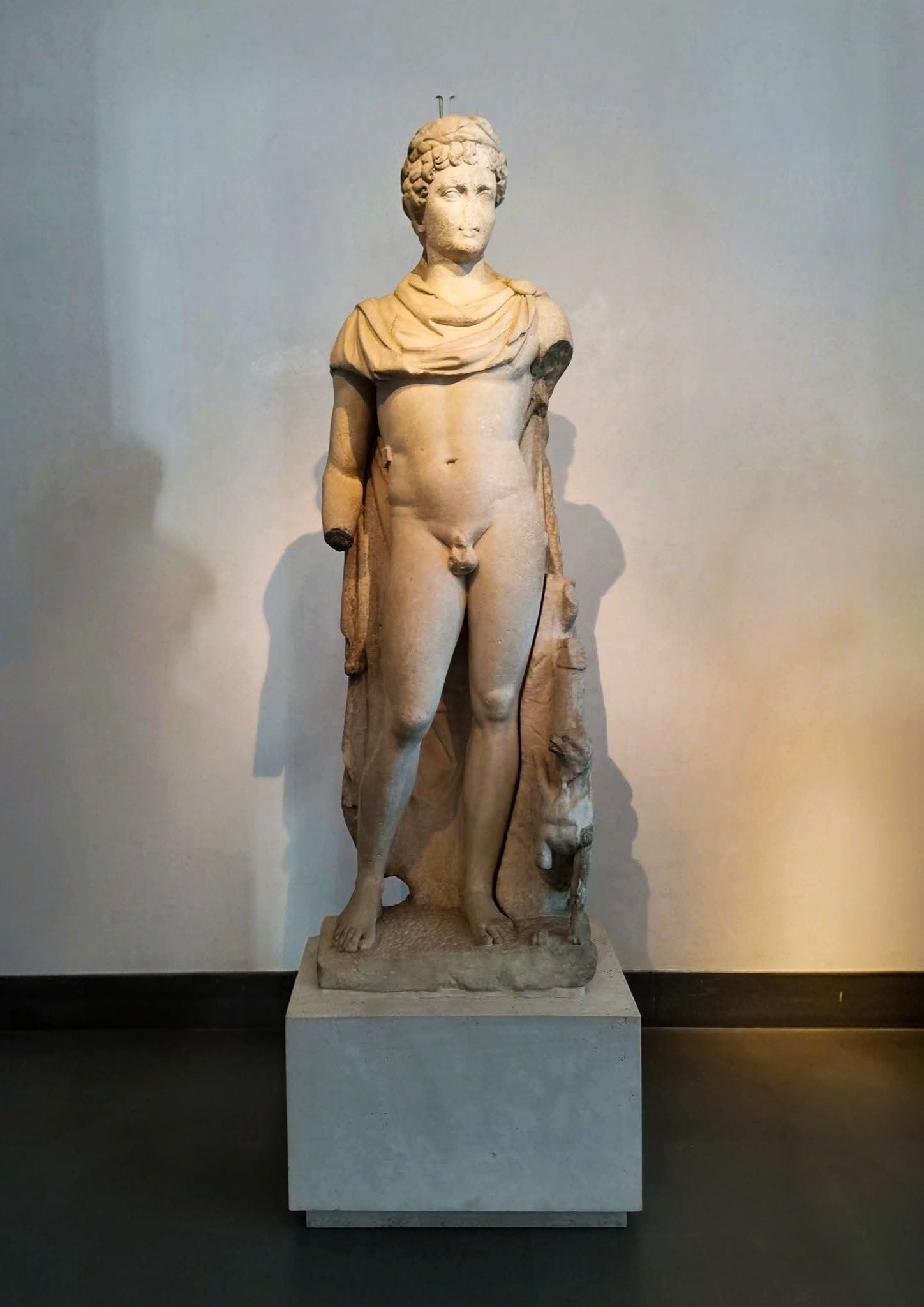
Consider damnatio memoriae, the Roman practice of condemning a person’s memory. After an emperor fell from favor, his statues were defaced, his name scratched from inscriptions, and his coinage melted down. It was a systematic erasure, a declaration that the person not only was dead but had never existed in an honorable sense. The Egyptian Pharaoh Akhenaten suffered a similar fate. His revolutionary monotheism was so threatening to the established priesthood that his successors dismantled his city, chiseled out his royal cartouches, and omitted him from official king lists. For centuries, he was a ghost. Only archaeology brought his hidden truth back to light.
In our era, the machinery is more sophisticated but no less intentional. Governments classify documents under the veil of “national security,” sometimes long after the original sensitivity has evaporated. The British government’s handling of the Hillsborough disaster files, for instance, showed a decades-long attempt to shift blame away from police failures. The truth was there, locked in cabinets while families fought for accountability. When we talk about revisionist history, we’re not just talking about reinterpretation; we’re often talking about deliberate historical cover-ups designed to shape public perception and protect institutions. The biggest lie isn’t always the event itself—it’s the insistence that the official story is the only story.
Lost Civilizations and Hidden Technologies: Rewriting the Timeline
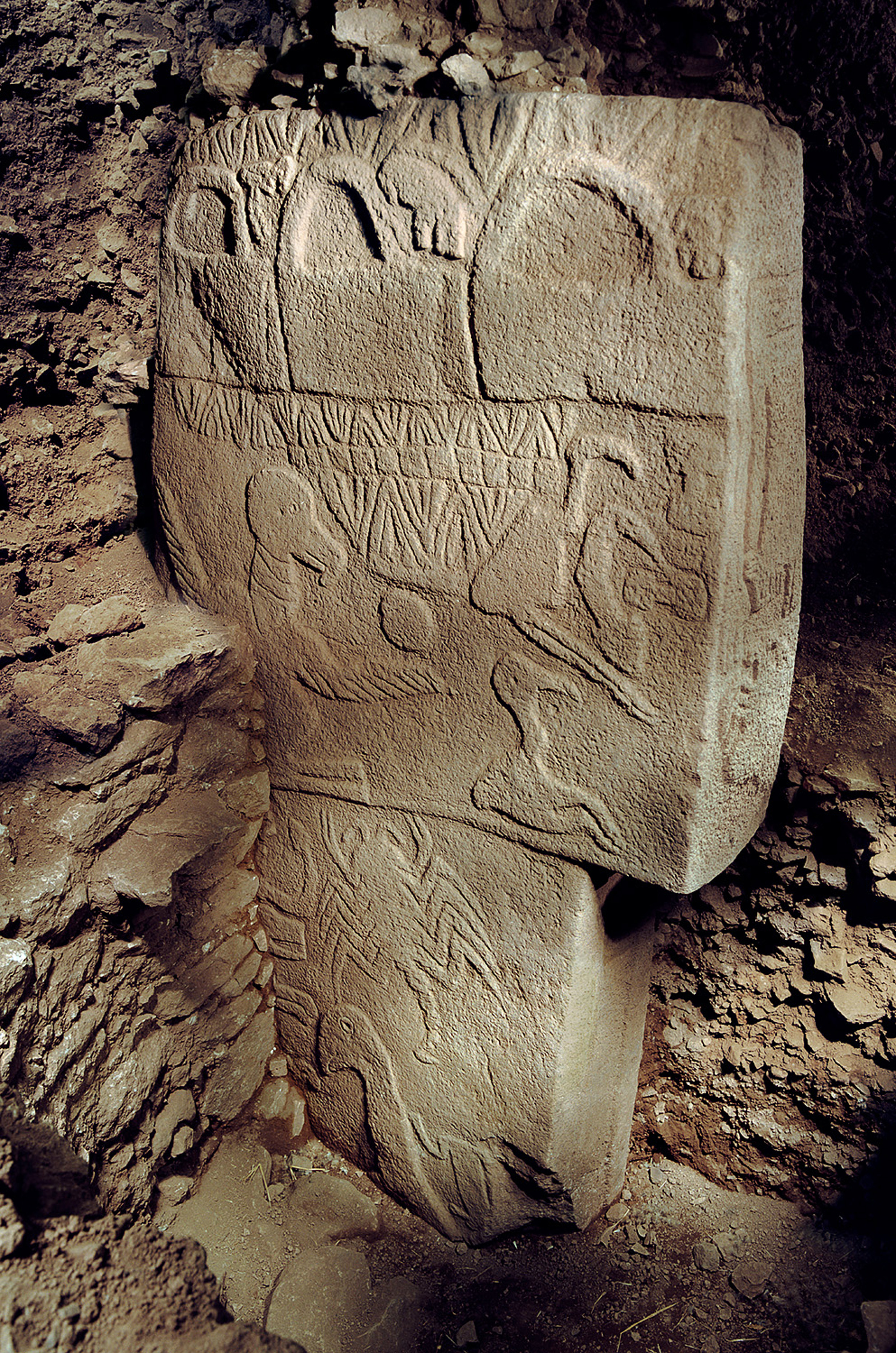
Here’s where the ground really starts to shift beneath your feet. For centuries, Western scholarship clung to a fairly recent and progressive view of human civilization: Mesopotamia, Egypt, Greece, Rome. Then, in the 1990s, Göbekli Tepe emerged from the Anatolian dirt. Massive, intricately carved stone pillars arranged in circles, built around 9600 BCE—more than 7,000 years before the Great Pyramid. This wasn’t a village; it was a monumental complex created by hunter-gatherers.
What did mainstream archaeology do? It didn’t suppress Göbekli Tepe outright—that would be impossible—but it was forced into a painful paradigm shift. Yet many suppressed history enthusiasts point to the long delay in excavating the site (first noted in the 1960s but dismissed) and the cautious, often minimizing language used to describe its implications. The site challenges everything we thought we knew about the dawn of civilization. If such sophistication existed so early, what other hidden truths lie buried, their discoverers afraid of ridicule or funding cuts?
Then there’s the Antikythera mechanism, an astonishing analog computer from ancient Greece, discovered in a shipwreck in 1901. Its complexity anticipated technology we thought hadn’t arisen until the 14th century. For decades, historians labeled it a “astrolabe” or an anomaly until advanced imaging revealed its intricate gears. The suppression here was more subtle: a reluctance to accept that ancient people could be our technological equals. The very framework of progressive linear history acts as a filter, often causing genuine anomalies to be locked away in museum basements or explained away rather than rewriting the textbooks.
Key Examples of Controversial Anomalies:
- The Baghdad Battery: A clay pot, copper cylinder, and iron rod that, when filled with an acidic liquid, produces a small electric current. Dismissed by many archaeologists as a storage jar, yet replicated by engineers as a functional galvanic cell. Was electroplating gold onto silver known 2,000 years ago?
- The Saqqara Bird: A small wooden artifact from ancient Egypt that some aerodynamic experts claim possesses the proportions of a functioning glider. Mainstream Egyptology insists it’s a toy or weather vane. No wind tunnel tests have been officially sanctioned to settle the debate.
- The Piri Reis Map: Drawn in 1513, this map shows the coastline of Antarctica without its ice cap, a landmass not officially discovered until centuries later. Cartographic historians propose it compiles older, lost source maps, but the implications of a pre-ice survey remain radioactive to orthodox geology.
- Digitize & Share: If you have access to local archives or family papers, scan and upload them to platforms like the Internet Archive. You never know what might be a missing puzzle piece.
- Follow the Money: When reading historical accounts, ask who funded the research or the textbook. The Ford Foundation and Rockefeller Foundation have deeply influenced 20th-century historiography.
- Cross-Reference Languages: Crucial evidence is often siloed by language. The Arabic accounts of the Crusades, Chinese records of the Silk Road, or Indigenous oral traditions all offer correctives to Western-centric narratives.
- Support Independent Journals: Academic journals like The Independent Scholar or open-access
Each of these artifacts sits in a gray zone, their potential hidden truths buried under academic caution or outright dismissal. When a dominant paradigm holds sway, evidence that doesn’t fit is not always burned; sometimes, it’s simply never studied.

The Manipulation of Modern History: From Wars to Science
If ancient cover-ups feel like academic squabbles, modern historical suppression hits closer to home—and it often involves bodies in the ground or dollars in the bank. Take the so-called “Business Plot” of 1933. Recently retired Marine Corps Major General Smedley Butler testified before Congress that wealthy industrialists had approached him to lead a coup against President Franklin D. Roosevelt. The McCormack-Dickstein Committee confirmed the plot’s existence but sealed the testimony and named only a few figures. The media, then largely controlled by the same elite, painted Butler as a fall guy. Today, we have his detailed account in his book War Is a Racket, but the full report remains obscure. This is suppressed history in real-time, where powerful financial interests may have tried to overturn democracy—and the story was buried not with dynamite but with ridicule.
Scientific historical cover-ups are equally disturbing. The story of Royal Raymond Rife, an inventor in the 1930s who claimed to have isolated cancer-causing microbes and built a “beam ray” that could destroy them without harming tissue, is a case study in how medical orthodoxy can crush heterodoxy. Rife’s microscope was allegedly capable of magnification far beyond anything possible today, yet the AMA and pharmaceutical interests systematically discredited him. His labs were raided, his papers stolen, and his devices smashed. Did Rife cure cancer? We can’t know for sure—because the evidence was deliberately destroyed, and anyone attempting to replicate his work today faces professional ostracization. Whether he was a genius or a fraud, the suppression itself is a fact that buries any chance of scientific verification.
Modern Cover-Ups at a Glance:
| Incident | Alleged Cover-Up | Current Status |
| :— | :— | :— |
| Operation Paperclip | U.S. recruitment of Nazi scientists, whitewashing their pasts to gain Cold War advantage. | Now acknowledged, but many individual files remain redacted. |
| The Gulf of Tonkin Incident | Exaggeration and false flag elements used to justify escalation in Vietnam. | Declassified documents confirm the second attack likely never happened. |
| MKUltra | CIA mind-control experiments on unwitting citizens. | Most records were illegally destroyed in 1973; surviving fragments reveal horrific scope. |
Each of these reveals a pattern: the initial event is obscured, the official narrative is polished for public consumption, and the revisionist history that emerges decades later is often treated as a shocking revelation—even by the institutions that perpetrated the cover-up.
—
Case Study: The Dead Sea Scrolls and the Vatican’s Grip
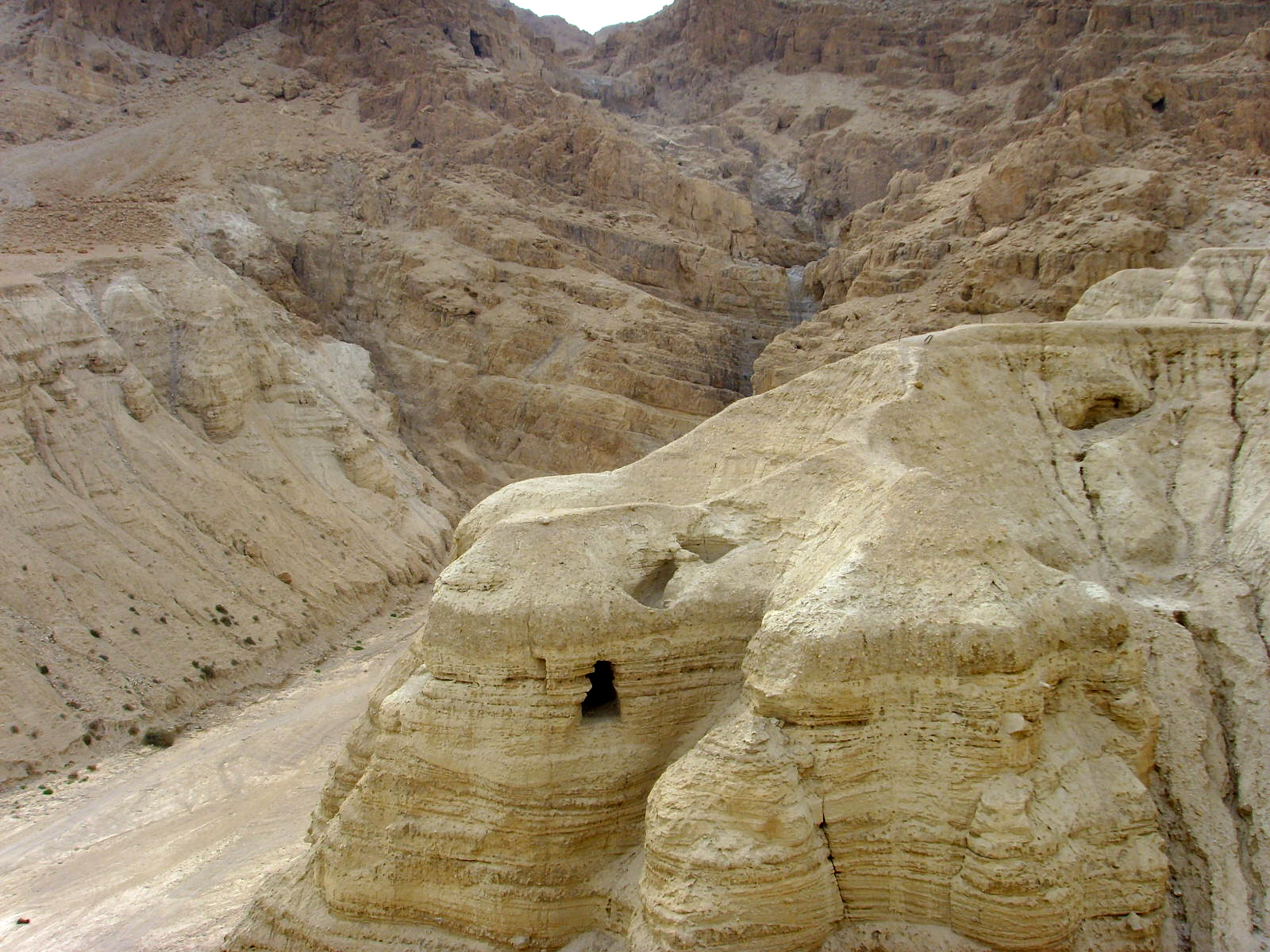
No discussion of hidden truths is complete without the painfully slow unwrapping of the Dead Sea Scrolls. Discovered between 1946 and 1956 in the Qumran caves, these texts contained the oldest known manuscripts of the Hebrew Bible and a trove of sectarian writings from the time of Jesus. Sounds like a scholar’s dream, right? Then why did it take over 40 years for the full corpus to be released?
The initial team, assembled under the auspices of the Jordanian Department of Antiquities and later the Israel Antiquities Authority, was notoriously small and largely Christian. They controlled access with iron fists, granting photographic privileges to only a handful of favored academics. Rumors swirled among history scholars: did the scrolls contain references to a crucified messiah figure predating Jesus, undermining Christian uniqueness? Did they reveal Jesus as a member of the Essene sect, a radical Jewish teacher stripped of his divinity? The team’s delay fueled a fire of speculation.
The turning point came in 1991 when the Huntington Library unilaterally released a complete set of photographs it had stored for decades. The academic monopoly broke, and soon the public could see what had been guarded so jealously. While the scrolls didn’t contain an explicit Jesus biography, they did reveal a rich tapestry of Messianic expectation, a community that called itself “the Way,” and practices that mirrored early Christian rituals. This didn’t debunk Christianity, but it did show that the movement wasn’t a sudden divine bolt out of the blue; it was steeped in its milieu. The hidden truths here weren’t fantasy—they were context. The suppression was about maintaining a certain theological narrative, a classic historical cover-up motivated not by national security but by the fear of unsettling the faithful.

The Rise of Revisionist History: Who Controls the Past Controls the Future
Orwell’s famous phrase isn’t just a dystopian quip; it’s a job description for every power structure in history. Revisionist history gets a bad rap because it’s often associated with Holocaust denial or other malicious distortions. But at its core, revisionism is simply re-examining the historical record with new evidence and fresh eyes. The problem arises when revision becomes forced, erasing uncomfortable facts to suit a political agenda.
Look at Soviet photographs. After purges, political enemies were literally airbrushed out of official photos. Trotsky, once standing beside Lenin, vanished from images as if he’d never existed. The present dictated the past. In the United States, the so-called “Lost Cause” narrative after the Civil War systematically rewrote the conflict as a noble struggle over states’ rights rather than slavery. This wasn’t just a footnote; it shaped textbooks for a century, warping generations’ understanding of race and nation. That’s the power of revisionist history when wielded by the losers.
Today, the battlefield is digital. Information can spread instantly, but so can disinformation. WikiLeaks and FOIA releases have become modern tools for piercing official secrecy, yet governments respond with “anti-fake news” measures that sometimes cast too wide a net. The fight over Confederate statues, the debate over how to teach colonialism in schools—these are all contemporary examples of how societies wrestle with suppressed history. We’re not just looking backward; we’re deciding which truths will be passed on to our children. The act of suppression is constant, and so is the act of uncovering.
Unveiling the Truth: How Scholars and Truth-Seekers Are Fighting Back
Thankfully, the digital age has handed truth-seekers powerful new tools. Once, you needed a library pass and a letter of recommendation to access rare manuscripts. Now, high-resolution scans of the Dead Sea Scrolls, the Nag Hammadi library, and countless declassified documents are free online. Citizen historians, bloggers, and independent researchers are picking up the trail that traditional academics often avoid due to career pressures.
Genealogical DNA analysis has upended family histories and tribal narratives. LiDAR technology is peeling back jungle canopies in Central America, revealing sprawling pre-Columbian cities that challenge population estimates. The settlement of the Americas is being pushed back tens of thousands of years by sites like Monte Verde in Chile and the Cerutti Mastodon site in California. These discoveries faced fierce resistance initially, with standard gatekeepers calling them impossible. But evidence is a stubborn thing. Websites, podcasts, and documentaries now bypass the old gatekeepers entirely, fostering a global community of truth-seekers who compare notes and fund niche research.
How You Can Become a History Detective: