
Whispers of the Forgotten: Unraveling Ancient Mysteries and Lost Knowledge
Imagine holding a relic so advanced that it shouldn’t exist. A device crafted millennia before its time, a manuscript written in a language that resists all decipherment, or a monument aligned with celestial precision that modern engineers struggle to replicate. These aren’t plot points from a fantasy novel—they are the very real ancient mysteries that continue to baffle scholars, scientists, and dreamers alike. Today, we’re stepping into a world where the line between history and legend blurs, where lost knowledge whispers from crumbling stones and enigmatic artifacts challenge everything we thought we knew about the past. Grab a metaphorical torch, because we’re about to explore some of the most tantalizing unsolved puzzles left behind by our ancestors—and trust me, you’ll never look at a textbook the same way again.

The Antikythera Mechanism: A Computer from the Deep
Picture a stormy night off the coast of Greece in 1900. Sponge divers stumble upon a Roman-era shipwreck, hauling up bronze statues, pottery, and… a corroded lump of metal no bigger than a shoebox. For decades, that lump sat in a museum basement, dismissed as just another oddity. Then, in the 1970s, X-ray imaging revealed something extraordinary: an intricate clockwork of at least 30 meshing gears, dials, and pointers.
What it was: The Antikythera mechanism is now widely accepted as the world’s oldest analog computer, built around 100 BCE. By turning a hand crank, you could track the movements of the sun, moon, and planets, predict eclipses, and even follow the four-year cycle of the ancient Olympic Games.
Why it’s a mind-bender: The level of miniaturization and astronomical knowledge encoded in the device wouldn’t resurface until the 14th century. Some researchers compare its complexity to 18th-century clocks. How did the Greeks achieve such precision? Who built it? And perhaps the most haunting question—what other lost knowledge sank with that ship?
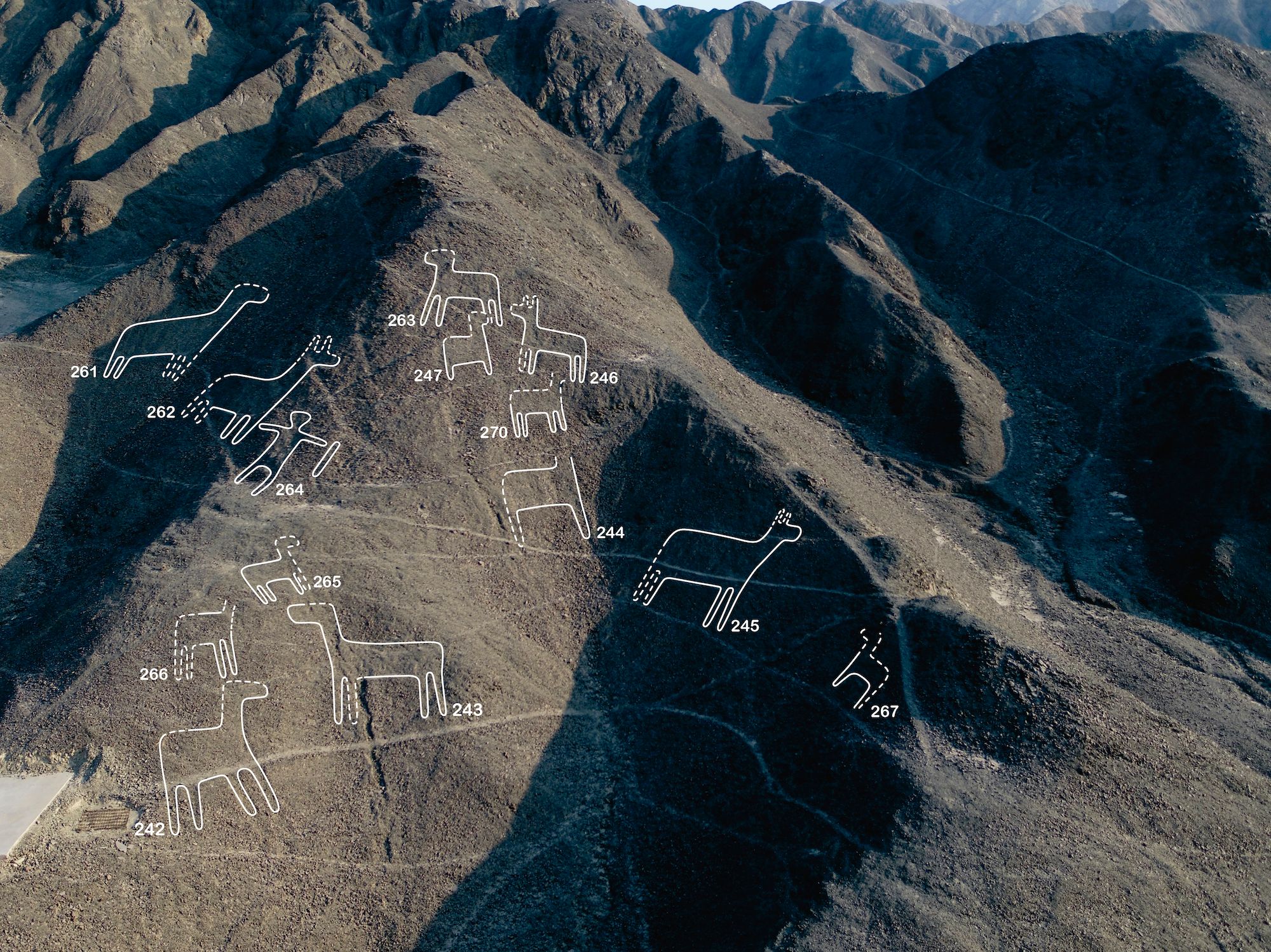
Nazca Lines: Messages to the Sky Gods
Hop across the ocean to the arid coastal plain of southern Peru, where the Nazca culture etched colossal geoglyphs into the desert floor between 500 BCE and 500 CE. These aren’t mere doodles—they’re perfect geometric shapes, spiders, monkeys, hummingbirds, and a 600-foot-long pelican, visible only from the air.
The puzzle: Why would a pre-flight civilization create art you can’t appreciate from the ground? Forked theories abound. Some say they were ritual pathways for water ceremonies. Others point to astronomical calendars, aligning with solstices and constellations. Then there’s the electrifying fringe hypothesis: landing strips for ancient astronauts. While mainstream archaeology rolls its eyes, the fact remains that the Nazca people didn’t have the wheel, let alone a writing system—yet their enigmatic artifacts are so precise that some lines deviate less than a few inches over miles.
A conversational aside: Imagine being one of those early pilots in the 1930s, flying over the pampa for the first time, and suddenly seeing a giant spider staring up at you. Chilling, right? It’s the kind of unsolved puzzle that makes you question whether we’ve underestimated the purpose-driven ingenuity of indigenous cultures.
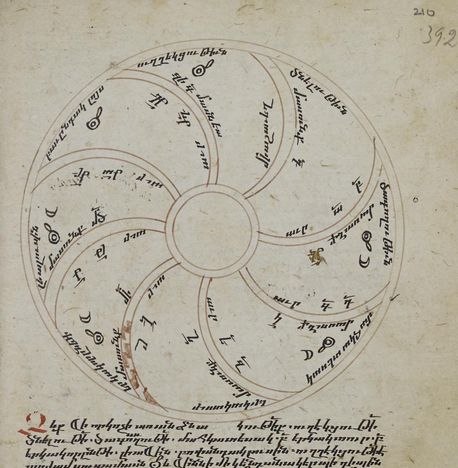
The Voynich Manuscript: A Codex No One Can Read
You’ve probably heard of this one—the holy grail of cryptographers. Housed at Yale University, the Voynich Manuscript is a 240-page vellum book filled with looping, elegant script in an unknown language, accompanied by bizarre illustrations: unidentifiable plants, naked women in green baths, and astrological diagrams that don’t match any known zodiac.
Despite being carbon-dated to the early 1400s and having passed through the hands of alchemists and emperors, not a single word has been convincingly deciphered. Not by Alan Turing’s team, not by the FBI, not by AI algorithms trained on dozens of known languages. Is it an elaborate hoax created by a medieval con man? A code so sophisticated it outsmarts modern computers? Or the lost knowledge of a lone genius who encoded secrets of nature into a private language?
What keeps us hooked: Every few years, someone claims a breakthrough—it’s a Turkish dialect! It’s a coded Latin shorthand!—only to crumble under scrutiny. The manuscript’s resilience teases us with a powerful idea: that some ancient mysteries refuse to yield to our noisy, digital age. If you fancy yourself a sleuth, you might enjoy the interactive puzzle linked at the end.

Puma Punku: Precision Beyond Possibility
High in the Bolivian Andes, near Lake Titicaca, lies a terraced platform complex called Puma Punku. At first glance, it looks like a scattered LEGO set designed by a hyper-intelligent giant. Massive andesite blocks, some weighing over 130 tons, are cut with laser-straight edges, perfect 90-degree angles, and complex interlocking shapes—like dovetails and recessed sockets—that rival modern stone masonry.
Here’s the scratch-your-head part: The stones are so hard that only diamond-tipped tools can scratch them today. Yet the creators carved them with a smoothness that reduces friction to near zero. Mainstream archaeologists suggest copper tools and patient abrasion, but experimental attempts to replicate even a single block have failed. Add to that the fact the site was destroyed by some cataclysmic event around 12,000 years ago, and you’ve got a mystery wrapped in an enigma.
Theories that won’t die: Some alternative researchers propose a lost pre-Incan civilization with advanced machining, possibly even sonic levitation. That sounds fanciful until you stand before the blocks yourself. I’ve spoken with engineers who visit Puma Punku and walk away muttering, “This can’t be done.” It’s one of those enigmatic artifacts that humbles our sense of technological superiority.

The Great Pyramid’s Hidden Chambers
We all know the Great Pyramid of Giza—the last standing Wonder of the Ancient World. But did you know that in 2017, researchers using cosmic-ray muon detection announced the discovery of a massive void above the Grand Gallery? And that’s just the latest in a series of hidden spaces we can’t physically access.
The alignment of the pyramid to true north (within 3/60th of a degree) and its geometric relationships that encode the golden ratio, Pi, and the dimensions of Earth itself, have sparked endless debate. Was Khufu’s pyramid just a tomb, or was it a power plant, a repository of ancient lost knowledge, a geometric message? The void—dubbed the “Big Void”—remains unexplored. What’s inside could rewrite history: a lost library, a technological artifact, or simply a structural quirk. Until robotic explorations breach it, the pyramid guards its secret in stone.
Stonehenge: Celestial Clock or Sacred Portal?
Circle back to Salisbury Plain, England, where Stonehenge stands in stoic silence. Archaeologists now know the bluestones were transported from Wales, 150 miles away, and that the monument was built in phases over 1,500 years. But the core mystery endures: why?
The standard astronomical alignment theory (solstice sunrises) holds up, but the monument’s acoustic properties are under fresh scrutiny. Some researchers found that the stones reflect sound perfectly, creating a resonating chamber ideal for trance states or elaborate ceremonies. There’s also the possibility that it was a healing center, a pilgrimage site for the dying to touch the magical stones. Recent discoveries of ancient human remains with severe injuries from distant lands support this. Still, Stonehenge refuses to be pinned down, its purpose as immovable as its sarsens.
Easter Island: The Walking Moai Enigma
The giant stone heads of Rapa Nui (Easter Island) are iconic, but the how of their movement is a lost knowledge story rivaling any engineering feat. Oral traditions claim the moai “walked” from the quarry to their platforms. When archaeologists tested this by rocking a replica statue with ropes, it actually shuffled forward—a comical yet plausible method that doesn’t require alien levitation.
But then there’s the deeper puzzle: the island’s ecological collapse. The society that carved nearly 1,000 moai deforested their home to roll or slide the statues, leading to famine, civil war, and eventual near-extinction. It’s a sobering cautionary tale of resource mismanagement, but also a testament to human ambition. How far would we go to honor our gods or ancestors? The moai stand as silent witnesses to the glory—and folly—of ancient mysteries.
Lost Knowledge of the Library of Alexandria
No exploration of ancient mysteries is complete without a tribute to the greatest information repository ever destroyed. The Library of Alexandria, established in the 3rd century BCE, didn’t just hold scrolls; it held the collective wisdom of Mesopotamia, Greece, Egypt, and India. Estimates range from 40,000 to 700,000 documents covering astronomy, medicine, mathematics, and history.
What we lost is immeasurable—blueprints for advanced machinery, star catalogs, medical texts that might have discussed early forms of vaccination, perhaps even an equivalent of the Antikythera mechanism’s design. The fire (or fires; it was destroyed in stages) set human knowledge back centuries, if not millennia. Every time we encounter an enigmatic artifact we can’t explain, we feel the phantom pain of that loss. It’s the ultimate unsolved puzzle: would we be traveling the stars today if those scrolls had survived?
FAQ: Ancient Mysteries Decoded Briefly
What’s the most baffling ancient artifact ever found?
While the Antikythera mechanism often tops the list, many would argue the Baghdad Battery—a 2,000-year-old jar possibly used for electroplating—or the Saqqara Bird, an aerodynamic wooden model that resembles a glider, deserve a mention.
Are there any ancient mysteries that have been solved recently?
Yes! The “impossible” Inca stone walls were explained through meticulous chipping and a pecking technique. The Shigir Idol, an 11,500-year-old wooden totem with carved faces, was preserved by a specific type of peat bog, demystifying its survival. Science chips away at unsolved puzzles little by little.
Why do we love ancient mysteries so much?
They remind us that history isn’t a closed book. They tap into our innate curiosity and, frankly, our hope that the past holds secrets more magical than our current understanding permits. Plus, it’s just plain fun to imagine.
The Allure of the Unknown
As we’ve journeyed from the depths of the Aegean to the high plains of Bolivia, one theme becomes unmistakable: the more we learn about ancient civilizations, the more we realize how much we’ve lost. These ancient mysteries are not just intellectual exercises; they are humbling mirrors reflecting our own limitations. They challenge the linear narrative of human progress, suggesting that the ancients possessed a sophistication—whether spiritual, technological, or astronomical—that slipped through the cracks of recorded history.
Perhaps that’s the true pull of lost knowledge. In a GPS-driven, instant-answer world, we’re still drawn to questions without answers, to enigmatic artifacts that keep their silence. They invite us to imagine, to research, and to keep looking up at the stars and down at the earth with wonder. And who knows? Maybe the next big discovery is already waiting, buried under sand or sealed in a pyramid chamber, ready to turn another page in the forever-unfinished manuscript of human history.
So, next time you walk past an ancient monument or see a puzzling artifact in a museum, pause. Lean in. Listen. The past is whispering.
—
Ready to Test Your Sleuthing Skills?
Think you’ve absorbed all the clues? Our interactive quiz will plunge you deeper into these enigmas, challenging you to identify artifacts, decode pseudo-scripts, and match theories to mysteries. It’s the perfect way to see if you’ve got what it takes to unravel history’s greatest unsolved puzzles. Share your