
Suppressed Historical Evidence: Uncovering the Truth Behind Censored Narratives
Imagine walking through a vast library, its shelves stretching into shadow. You pull a book from the shelf only to find entire chapters razored out, passages blotted with ink, the cover rebranded to tell a different story. That library is our collective memory, and the censored books are the suppressed histories we’ve inherited. History, as we know it, is not a neutral record—it’s a carefully curated collection of victories, omissions, and convenient forgettings. As truth-seekers and scholars, we must ask: what exactly was deleted, why was it silenced, and what does recovering those hidden truths do to our understanding of the past and present?
The investigative journey into suppressed historical evidence isn’t a fringe pursuit. It’s a rigorous, necessary excavation that separates official narrative from propaganda, and it requires us to sift through the dust of archives, challenge institutional gatekeeping, and embrace the uncomfortable revelation that much of what we call “history” is actually a product of intentional revisionism. This article will explore the mechanisms of suppression, highlight striking examples of historical cover-ups, and examine how modern technology is finally cracking open sealed vaults. By the end, you’ll understand why the hunger for authentic, unvarnished history is not just an academic exercise—it’s an act of intellectual self-defense.
—
The Anatomy of a Historical Cover-Up: How and Why Narratives Get Silenced
Before we can dig into examples, we need to understand the machinery of suppression. Historical cover-ups rarely happen by accident. They are the result of deliberate decisions by those in power to control memory, legitimize authority, and shape future loyalties. Scholars of historiography point to a few key mechanisms that erase uncomfortable facts from the public record.

1. Destruction of Primary Sources
The most direct method is physical obliteration. From the burning of the Library of Alexandria to the shredding of Stasi files in 1989 and the targeted destruction of Indigenous codices by Spanish conquistadors, regimes know that if you eliminate the evidence, the event becomes rumor. Even today, governments classify documents for decades or “lose” sensitive files, creating a void that revisionist history can later fill with official fictions.

2. Co-opting Academic and Media Gatekeepers
Suppression isn’t always bonfires. It’s often bureaucratic. Funding for research, university curricula, and publication platforms are controlled by institutions that de-legitimize inconvenient findings. When a historian uncovers evidence that contradicts a cherished national myth—say, the nature of atrocities committed by a founding father—they may find themselves denied tenure, disinvited from conferences, or their work labeled “revisionist” in the pejorative sense. Self-censorship then does the rest.

3. Re-framing Through Language and Omission
Textbooks and museums sanitize brutality with euphemisms. “The Indian Removal Act” sounds bureaucratic, not genocidal. “Comfort women” obscures the reality of systemic sexual slavery. By controlling the terminology and what is simply left out, the mainstream narrative becomes so normalized that questioning it feels like paranoia. A suppressed history is often hiding in plain sight—in the footnotes we weren’t taught to read.
4. Smothering Alternative Voices
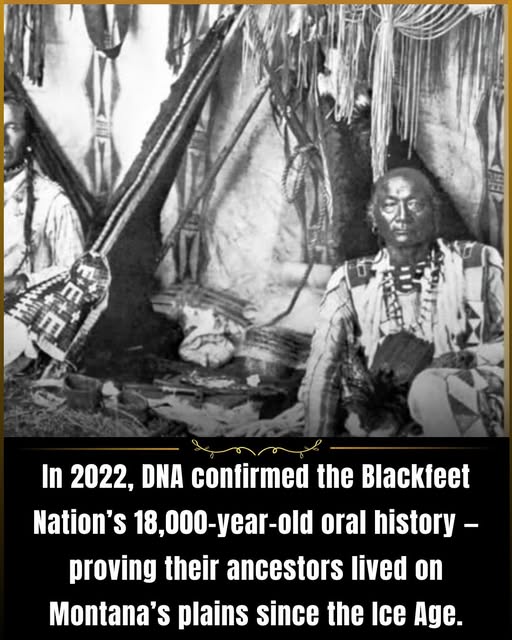
When oral histories, folk memories, and testimonies of marginalized groups survive, they are often dismissed as “myth,” “anecdote,” or “unreliable.” Yet many of these traditions contain kernels of factual events that official records deny. The challenge for truth-seekers is to bring these voices into the same room as written documentation and let them cross-examine each other.
—
Unearthed and Unsettling: Six Suppressed Histories That Rewrite the Map
Let’s move from theory to hard discoveries. The following examples aren’t speculation; they are cases where hidden truths eventually broke through, often after centuries of intentional burial. Each reveals how historical cover-ups operate and why they matter.
1. The Colfax Massacre (1873) and the Erasure of Reconstruction Terror
What was suppressed: In Colfax, Louisiana, white supremacists murdered between 60 and 150 Black citizens who had surrendered after a political conflict. The event was one of the bloodiest acts of racial violence during Reconstruction. Yet for over a century, mainstream textbooks ignored it. The Supreme Court ruling that followed (U.S. v. Cruikshank) effectively gutted federal protections for Black lives, cementing Jim Crow. The cover-up wasn’t just about the bodies—it was about burying the legal precedent that enabled systemic oppression.
Why it resurfaced: Historians like LeeAnna Keith and Charles Lane, along with the 21st-century push to confront racial violence, forced a reckoning. In 2021, Colfax finally received a state historical marker acknowledging the massacre, but most Americans still have never heard of it.
2. The British Empire’s “Lost” Concentration Camps in Kenya
What was suppressed: During the Mau Mau Uprising (1952–1960), the British constructed a network of camps where tens of thousands of Kikuyu were detained, tortured, and subjected to forced labor. Official colonial records claimed the camps were “rehabilitation” facilities. The British government systematically destroyed thousands of documents as decolonization loomed in the 1960s, literally carting away tons of incriminating files for secret burning.
The breakthrough: A group of elderly Kenyans, aided by historians and human rights lawyers, brought a case against the UK government in 2009. The legal discovery process unearthed a cache of surviving documents in the Hanslope Park archive, revealing a meticulous bureaucracy of atrocity. The British government paid reparations, but the story remains largely absent from school curricula.
3. The Real Story of Timbuktu’s Intellectual Empire
What was suppressed: Colonial narratives painted Africa as a “dark continent” without writing or civilization. Yet the city of Timbuktu in Mali housed hundreds of thousands of manuscripts dating back to the 13th century, covering astronomy, medicine, law, and philosophy. European explorers knew about them but dismissed or downplayed their significance to justify the “civilizing mission.”
Why it’s a cover-up: Suppressing history isn’t just about hiding crimes—it’s about stealing intellectual lineage. By ignoring or denigrating these manuscripts, colonial powers erased Africa’s contribution to global knowledge, a suppression that still fuels stereotypes today. The manuscripts survived thanks to families who hid them in caves and cellars during occupations, and now digitalization projects are finally making them accessible.
4. The Flourishing of Queer Histories Before 20th-Century Purges
What was suppressed: The Weimar Republic’s Berlin was a hub of LGBTQ+ culture, with early sexologist Magnus Hirschfeld pioneering research and activism. The Nazis erased this history by burning Hirschfeld’s institute and murdering its members. In colonial contexts, missionary records and Victorian mores systematically wrote out same-sex practices that had been documented in countless cultures. The result is a false perception that queer identity is a modern invention.
The recovery: Archives of the Institut für Sexualwissenschaft have been partially reconstructed, and scholars are re-examining pre-colonial societies through a lens that acknowledges gender fluidity. This is not revisionism for political correctness; it’s restoring the complexity of human existence that was deliberately flattened.
5. The Byzantine “Dark Ages” That Weren’t—The Suppression of Islamic Science’s Debt
What was suppressed: During the European Renaissance, thinkers like Copernicus relied on mathematical models developed by Islamic astronomers such as Ibn al-Shatir. The narrative of a sudden, purely European reawakening after a long intellectual night conveniently ignores the translation movement and the vibrant scholarship in Baghdad, Cairo, and Cordoba. This wasn’t a passive forgetting—it was an active “othering” of Muslim contributions to construct a narrative of Western exceptionalism.
The impact: Many of us still learn that the Dark Ages were a total intellectual void until Italy saved the day. In truth, the evidence was there in Latin translations of Arabic texts, but European scholars often omitted attributions. Modern historians of science like George Saliba have worked to correct this, but the mainstream narrative remains stubbornly Eurocentric.
6. The Repeated Cover-Up of U.S. War Crimes in the 20th Century
What was suppressed: From the Philippine-American War (waterboarding was then called “water cure,” and soldiers wrote home boasting about it) to the My Lai Massacre and beyond, the U.S. military has repeatedly buried evidence of atrocities. In the case of My Lai, initial reports were squashed until whistleblower Ron Ridenhour pieced together testimonies and forced an investigation. Even then, only one soldier was convicted—and served three years of house arrest. The Pentagon Papers revealed a larger pattern of systematic lying about civilian tolls.
Why the pattern matters: Each generation believes it’s exceptional, but the cover-up machinery remains eerily similar. Classified documents, destroyed field reports, and discredited whistleblowers are the modern equivalents of parchment burnings. Understanding this recurring suppression is crucial for scrutinizing current official accounts.
—
Revisionist History: Corrective Lens or Manipulative Tool?
Here’s where our investigation gets thorny. The term “revisionist history” gets hurled as an insult, but all good history is revisionist in the sense that it revises previous errors. The real question is who is doing the revising, and to what end?
Negative revisionism—often called historical negationism or denialism—distorts or fabricates evidence to push an ideological agenda. Holocaust denial is the starkest example: a perversion of scholarship designed to rehabilitate fascism. These false narratives often mimic academic language and cite pseudo-archives to confuse the public.
Positive revisionism—what we’re championing here—uses new evidence, archaeological discoveries, and declassified documents to correct official distortions. It asks: whose story got left out? Why? It doesn’t subtract from the record; it expands it.
For truth-seekers, the litmus test is transparency. A genuine historical correction lays its methodology bare and invites scrutiny. A cover-up, by contrast, hides its tracks. So when we talk about suppressed history, we’re not simply overturning tradition for the thrill of it. We’re restoring the full spectrum of human experience, even when it’s ugly, contradictory, or humbling.
—
The Gatekeepers: Who Decides What You’ll Never Learn?
If suppressed evidence exists, who does the suppressing? It’s easy to imagine a shadowy cabal, but the reality is more diffuse—and more entrenched.
State archives classify files under national security pretexts, often long after any genuine threat has passed. The UK’s “migrated archives” scandal revealed that colonial crimes were hidden from both former colonies and the British public for decades. Museums and textbook publishers decide which artworks, battles, and biographies merit wall space or page counts. When Texas’s school board votes on history curriculum, they shape the historical consciousness of millions.
Academic hierarchies also play a role. Historians who challenge foundational myths of their nation may find that grant committees, peer review, and job markets function as de facto censors. It’s rarely a direct order to be silent; it’s a system that rewards safe, incremental work and penalizes paradigm-shifting revelations. As one historian put it, “It’s not that your paper gets rejected; it’s that you stop writing it after the third warning that it’s ‘not a good career move.'”
Finally, public apathy becomes a gatekeeper. When a documentary reveals hidden truths about, say, the CIA’s role in overthrowing democracies, many viewers are overwhelmed with information fatigue. The cover-up’s final victory is not that the truth never surfaces, but that nobody pays attention when it does.
—
The Digital Silver Lining: How Technology Is Unearthing Hidden Truths
Here’s the optimistic turn in our investigation. The same digital tools that enable surveillance states are also cracking open vaults that were sealed for centuries.
- Mass digitization: Projects like Google Books, Europeana, and the Digital Public Library of America have made rare and suppressed texts accessible to anyone with an internet connection. A dusty pamphlet that once lived only in a remote monastery is now a PDF on your phone.
- Crowdsourced decoding: Citizen archivists and “guerrilla historians” are transcribing handwritten records, tagging data, and connecting dots that traditional academics missed. The Decoding the Civil War project, for instance, let volunteers transcribe thousands of previously unread telegrams, unearthing evidence of corruption and espionage.
- AI and pattern recognition: Machine learning algorithms can scan millions of diplomatic cables, identifying redacted patterns, erased references, or anomalous gaps. Researchers have used such tools to reconstruct redacted portions of declassified documents.
- Social media as evidence vault: Videos of police violence or protest movements, recorded by ordinary people, challenge official narratives in real time. This modern-day record-keeping has created an immediate, unerasable counter-archive—though its longevity depends on digital preservation.
But technology is a double-edged sword. The same torrent of information also enables deepfakes and disinformation. That’s why critical thinking and methodological rigor remain the ethical historian’s most essential tools. We must teach people to verify sources, cross-check testimonies, and understand the context of a document’s creation—the very skills that make suppressed history dangerous to gatekeepers.
—
Why Unearthing Suppressed History Matters Right Now
It’s tempting to think of historical cover-ups as dusty relics, but they have present-day consequences. When we don’t know the true history of systemic racism, we fail to recognize its legacies in housing, policing, and health. When we sanitize the founding violence of nations, we foster toxic nationalism instead of genuine patriotism rooted in accountability. And when we treat uncomfortable truths as “too divisive,” we cede the field to those who’d manufacture a comforting, false past.
Hidden truths are not just about assigning blame; they’re about reclaiming agency. Communities that have been erased from the record find healing when their ancestors’ experiences are finally validated. Nations that reckon with their darkest chapters have a shot at a more just future. The very act of uncovering suppressed history is a declaration that truth matters, that memory is power, and that we are no longer willing to accept curated amnesia.
For truth-seekers and scholars, the task is never finished. Libraries worldwide are full of unprocessed archives. Classified files from the Cold War still rot in sealed boxes. Indigenous oral histories await respectful integration into mainstream accounts. Every one of us can participate by asking a simple, courageous question: “What aren’t we being told?”
—
Your Role in the Great Uncovering
You don’t need a history doctorate to become part of the solution. Start by diversifying your sources. Read marginalized voices in history—women’s diaries, enslaved people’s narratives, colonized peoples’ accounts. Visit local historical societies and inquire about what’s been omitted from official town chronicles. Support independent research and open-access archives. Question your own assumptions about which historical figures were heroes or villains, and be willing to sit with the discomfort of complexity.
The next time a government claims to have lost records of a controversial incident, or when a textbook glosses over a war’s atrocities, you’ll recognize the familiar silhouette of a historical cover-up in progress. You’ll see that suppression is not a myth—it’s a method.
—
Conclusion: The Archive is Alive
Suppressed historical evidence isn’t a conspiracy; it’s a documented, recurring phenomenon that shapes our world. From the burning of manuscripts to the redaction of files, from the silence of archives to the loud denials of perpetrators, the censorship of the past is a form of continued violence against the present. But the archive is also alive. It breathes through the whispers of descendants, the scanned pages of forgotten books, and the tireless work of investigators who refuse to let comfortable lies stand unchallenged.
As we end this journey, consider this: every time you dig deeper, you become a link in the chain of memory that no gatekeeper can break. The truth is rarely lost forever; it’s hidden, waiting for someone with the right question and the stubbornness to find it. So stay curious, stay critical, and never stop excavating the buried stories that define who we are.
—
Hungry for more uncensored history? The truth doesn’t rest, and neither does our search. Subscribe to our newsletter to receive exclusive deep dives, interviews with renegade historians, and updates on the latest uncovered evidence. Join a community of truth-seekers who believe that history belongs to everyone—not just the powerful. Sign up below and let’s keep digging together.