
Here is the polished, publication-ready version of your article. All placeholder text has been removed, and the content has been refined for clarity, flow, and professional presentation.
—
Hidden Empires: Unveiling Forgotten Civilizations Through Modern Archaeology
Imagine standing on a nondescript hill in the Guatemalan jungle or on a dusty mound in Turkey’s Anatolian plains, completely unaware that beneath your feet lies a sprawling metropolis, a forgotten kingdom, or a ceremonial complex that redefines the very birth of civilization. The ground beneath us is a library of lost worlds, and only in the last few decades have we learned to read it fluently. Thanks to a revolution in modern archaeology, we’re no longer just scraping the surface with trowels—we’re peering deep into the earth, beneath dense rainforests, and even across oceans without disturbing a single stone. The result is a cascade of archaeological discoveries that are pushing back the timelines of human ingenuity and revealing hidden empires more astonishing than any fiction.
For history enthusiasts and archaeology buffs, this is a golden age of discovery. Civilizations once dismissed as myths—or simply unknown—are now emerging from the shadows, telling us that our story is far richer and more interconnected than we ever imagined. In this exploration, we’ll journey through four remarkable lost civilizations brought to light by cutting-edge science, and peer into the future of archaeology to ask: what other hidden empires are waiting to rewrite the history books?

The Allure of the Invisible: Why Hidden Empires Captivate Us
There is something profoundly enchanting about a hidden empire. It speaks to our love of mystery, our innate curiosity about the past, and a humbling realization that entire worlds can vanish without a whisper. For centuries, stories of Atlantis or the legendary city of El Dorado fueled imaginations, but the real lost civilizations are often more extraordinary than the myths. The difference is that modern archaeology gives us a tangible connection: a carved relief, a genetic signature, a buried pyramid. We’re not just reading about these cultures; we’re touching their fingerprints.
The concept of a “hidden empire” doesn’t always mean a civilization that was entirely unknown. Sometimes it’s an empire we knew about but vastly underestimated, like the Maya, whose true scale remained cloaked under a kilometer-thick canopy until lasers peeled it away. Other times, it’s a culture that was hiding in plain sight—its significance only recognized when new technologies reinterpreted old evidence. What unites these discoveries is the shock of the new: the thrill of realizing that history is a living, breathing document, and we’re still only on chapter one.
Before we dive into the specific lost civilizations, let’s open the archaeologist’s new toolbox. Because without it, these stories would still be buried.
The Toolbox of Modern Archaeology: From Shovels to Space Lasers
Archaeology was once a discipline of careful digging, educated guesswork, and a great deal of patience. While those virtues remain essential, modern archaeology now resembles a high-tech crime scene investigation of the deep past. Here’s what’s inside the 21st-century explorer’s kit:
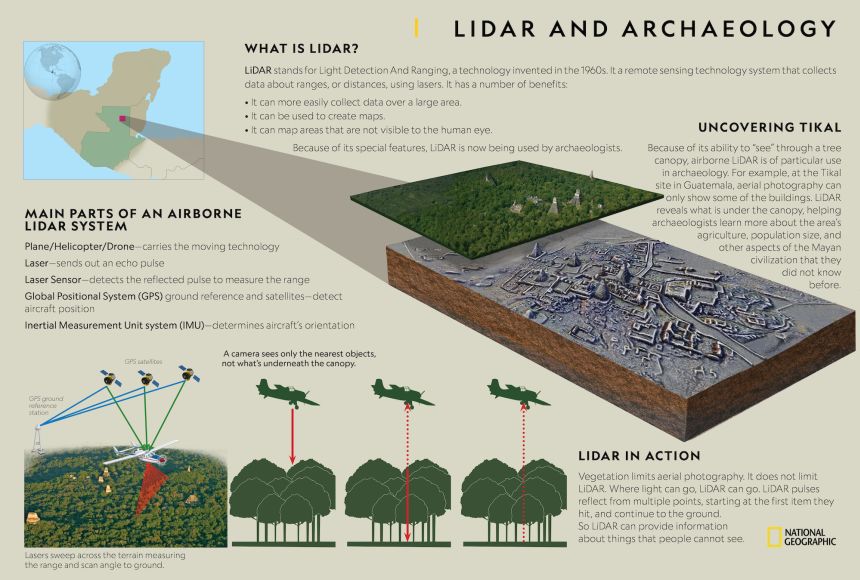
- LiDAR (Light Detection and Ranging): Airborne lasers that strip away vegetation digitally to reveal the bare earth below. It’s like having X-ray vision for forests, and it has transformed our understanding of ancient civilizations in Mesoamerica, Southeast Asia, and the Amazon.
- Ground-penetrating radar (GPR) and magnetometry: These geophysical tools scan beneath the surface without excavation, mapping buried walls, tombs, and entire city grids.
- Satellite imagery: Multi-spectral satellites can spot subtle differences in soil, vegetation, and moisture that indicate human-made structures invisible to the naked eye.
- Ancient DNA analysis: By extracting genetic material from skeletons and even cave dirt, scientists can track migrations, identify populations, and reveal the hidden diversity of past empires.
- Isotope analysis: Tooth enamel and bone chemistry tell us where people grew up, what they ate, and how far they traveled—unlocking patterns of trade and conquest.
These tools have not only accelerated the pace of discovery but have also fundamentally changed the questions we ask. Instead of merely finding “where,” we’re now able to ask “who,” “how,” and “why” with unprecedented clarity. With that toolkit in mind, let’s step into the first hidden empire that shattered everything we thought we knew about the dawn of civilization.
Göbekli Tepe: The Temple Builders Who Shook History
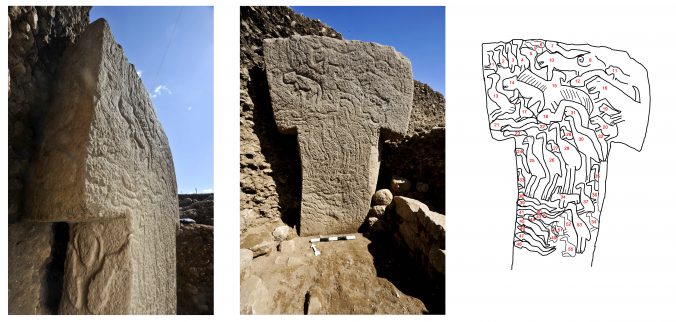
In the arid hills of southeastern Turkey, a site called Göbekli Tepe (“Potbelly Hill”) has been quietly demolishing the conventional timeline of human civilization since its discovery in the 1990s. What archaeologists found was mind-bending: massive T-shaped limestone pillars, some up to 5.5 meters tall and weighing 10 tons, arranged in circles and carved with intricate animal reliefs—scorpions, foxes, snakes, cranes, and more. The catch? These structures were built around 9600 BCE, more than 6,000 years before Stonehenge and before the invention of pottery, metal tools, or even agriculture as we understand it.
For decades, the accepted story was that hunter-gatherers settled down, started farming, and only then developed complex social structures, religion, and monumental architecture. Göbekli Tepe flips that narrative. The people who constructed these temples were still foragers, yet they coordinated hundreds of workers, quarried multi-ton stones, and carved them with sophisticated artistry. It suggests that the need to worship, to gather for ritual feasting, may have been the spark that led to agriculture—not the other way around. The hidden empire here isn’t one of cities and kings, but of a sophisticated shared belief system that predated settlement itself.
Modern archaeology at Göbekli Tepe uses ground-penetrating radar and geomagnetic surveys extensively. The site covers about 9 hectares, but only a fraction has been excavated. Geophysical scans reveal at least 20 monumental enclosures still buried, hinting at a vast ritual landscape. Moreover, the discovery of similar, even older sites in the region—like Karahan Tepe—suggests that Göbekli Tepe was not an isolated anomaly but part of a network of hidden empires of the mind, stretching back into the last Ice Age. The stones whisper that our ancestors were far more intellectually and spiritually complex than we ever gave them credit for.

The Maya Megalopolis: LiDAR Unmasks a Jungle Empire
If you’ve ever pushed through a dense tropical forest, you know how quickly the jungle swallows anything man-made. For over a century, archaeologists hacked through the Petén region of Guatemala, mapping a few hundred Maya structures by hand. They knew the Maya were advanced—with their towering pyramids, intricate calendars, and vibrant art—but the true scale of this ancient civilization remained one of the greatest archaeological discoveries waiting to happen.
Then came LiDAR. In 2018, a consortium of researchers flew a LiDAR-equipped plane over 2,100 square kilometers of the Maya Biosphere Reserve. When the digital canopy was peeled back, the results left the scientific community staggered. The scans revealed more than 60,000 previously unknown structures: houses, causeways, defensive walls, elevated highways, and complex irrigation systems. The Maya world was not a sparse scattering of city-states but a continuous, densely populated, modified landscape supporting an estimated 10 to 15 million people at its peak.
This was a hidden empire in every sense—a sprawling civilization whose agricultural footprint alone included massive raised fields, terracing, and wetland modifications that we had walked over for decades without recognizing. The LiDAR data showed that the Maya drastically reshaped their environment, which may have ultimately contributed to their decline through deforestation and drought. Suddenly, the collapse narrative gained nuance: it wasn’t a sudden disappearance but a long, complex process of over-extension and environmental stress, written in the very earth we now scan.
What makes this modern archaeology revelation so profound is its immediacy. You can view the LiDAR images yourself online—see the geometric grids of buried cities emerge from what looks like a carpet of broccoli. The Maya civilization now stands as a cautionary tale about sustainability, but also as an inspiring testament to human ingenuity. And the work continues: new LiDAR missions in the Yucatán and Belize are adding thousands of structures every year, steadily revealing an empire that refused to be forgotten.

The Caral-Supe: The Peaceful Pyramids of Peru
When most of us think of ancient civilizations in the Americas, the Inca, Maya, or Aztec spring to mind. But long before them, a remarkable society flourished in the Supe Valley of north-central Peru. The Caral-Supe civilization (also known as Norte Chico) emerged around 3000 BCE, making it contemporary with Egypt’s Old Kingdom and Mesopotamia—and the oldest known civilization in the Americas. For decades, its monumental platform mounds, sunken circular plazas, and complex residential areas were mistaken for natural hills or late-period Inca constructions.
The rediscovery of Caral began in the 1990s, led by Peruvian archaeologist Ruth Shady. What she uncovered was a peaceful, trade-based society that built pyramids without weapons or fortifications. Caral lies 23 kilometers from the arid coast, where the Supe River once provided fertile land for cotton, beans, and squash. A key find was evidence of extensive trade in cotton and fish with coastal communities, all conducted without a single depiction of warfare. No battlements, no weapons, no burned structures. Instead, the art depicts birds, serpents, and anthropomorphic figures, while the monumental architecture points to a ritualistic and astronomical orientation.
This hidden empire challenges the long-held assumption that complex societies require warfare or strong central rulers. Caral’s success appears rooted in shared ideology and economic cooperation. Using modern archaeology tools like radiocarbon dating (which firmly pegged the site at 2627–2020 BCE) and isotopic analysis of bones, researchers confirmed that the Caral people enjoyed a varied diet of marine and terrestrial resources. The civilization’s decline around 1800 BCE might have been due to climate shifts, but its legacy lives on in the quipu—knotted string recording devices—and the architectural patterns that would influence Andean cultures for millennia.
What’s most intriguing is how close Caral came to being forgotten entirely. The site was known locally but only gained scientific attention after mid-20th-century surveys, and even then, its age was misjudged. It’s a poignant reminder that hidden empires can lurk in open deserts, beneath our assumptions, waiting for a curious mind armed with new technology to finally see them.
The Swahili Coast: African Empires Reshaped by Ancient DNA
Along the Indian Ocean coastline of modern Kenya, Tanzania, and Mozambique, the ruins of medieval stone towns dot the landscape. Places like Kilwa, Gedi, and Shanga were once thriving port cities, part of a sophisticated trading network that connected Africa with Arabia, Persia, India, and China. For centuries, Western historians framed the Swahili Coast as a product of Arab colonization—implying that Africa’s urbanism was imported. But modern archaeology, especially ancient DNA analysis, has shattered that narrative, revealing a truly African hidden empire.
In 2023, a landmark study published in Nature analyzed the DNA of 80 individuals from Swahili coastal sites dating between 1250 and 1800 CE. The results showed that the majority of ancestry was overwhelmingly African, with a significant but specific influx of Persian-related ancestry beginning around 1000 CE, primarily from male migrants who intermarried with local East African women. This genetic revelation dovetails with archaeological evidence of a distinctly African culture expressed in architecture, pottery, and language. The stone towns were not Arab colonies but cosmopolitan African cities that blended outside influences with indigenous traditions to form a unique Swahili identity.
The Swahili Coast was a hidden empire in the sense that its true African character was hidden by colonial biases. Modern archaeological discoveries are now rewriting that story. The cities were organized around trade hubs, with stone coral houses for the elite, intricate coinage, and a clear governance structure. Kilwa Kisiwani, for instance, controlled the gold trade from the interior of southern Africa, making it one of the wealthiest cities of the medieval world—so wealthy that the Moroccan traveler Ibn Battuta visited in 1331 and marveled at its prosperity.
Today, ground-penetrating radar surveys are being used to map unexcavated areas, while archaeologists comb through middens (ancient trash pits) to understand daily diet and trade goods. The story of the Swahili Coast is a lesson in how history can be distorted by later political agendas, and how science can restore dignity and agency to forgotten civilizations. It’s also a testament to the enduring power of modern archaeology to counter outdated narratives with hard evidence.
The Future of Discovery: What Hidden Empires Await?
If the past few decades are any guide, we are standing on the threshold of still more extraordinary revelations. The tools at our disposal—drones, AI-powered satellite image analysis, and the ability to sequence ancient DNA from a pinch of dust—are opening frontiers that earlier archaeologists could scarcely dream of. So what lost civilizations might be next?
In the Amazon, enormous geoglyphs and earthworks, only visible from the air, are forcing a reevaluation of the rainforest as a pristinely untouched wilderness. Instead, it may have been a carefully managed landscape supporting complex societies of hundreds of thousands. In the North Sea, Doggerland—a vast, now-submerged plain that once connected Britain to mainland Europe—is being mapped with sonar and sediment cores, occasionally yielding stone tools and mammoth bones. It was home to Mesolithic hunter-gatherers and is Europe’s own hidden empire beneath the waves.
Then there’s the lost city of Thonis-Heracleion off the coast of Egypt, where underwater archaeology has brought up colossal statues and intact ships; or the pre-Columbian mound complexes of the Amazon’s Llanos de Mojos region, which LiDAR is now revealing in startling detail. Each new technology brings with it a cascade of archaeological discoveries that challenge our notions of what an ancient civilization could look like—sometimes materially, sometimes conceptually, as with Göbekli Tepe.
The future will see even more integration: artificial intelligence that can identify subtle patterns in satellite data; portable DNA sequencers used in the field; and virtual reality that allows experts and the public alike to walk through reconstructed lost cities from half a world away. The hidden empires are out there, and they’re becoming a little less hidden every day.
A Living Mosaic of Human Ingenuity
What unites the ceremonial circles of Göbekli Tepe, the jungle cities of the Maya, the peaceful pyramids of Caral, and the stone towns of the Swahili Coast is a shared truth: the past is far more inventive, diverse, and interconnected than our history books once allowed. Each hidden empire we uncover doesn’t just add a new chapter—it forces us to rewrite existing ones. And behind every discovery is the marriage of human curiosity with modern archaeology’s relentless technological march.
As history enthusiasts and archaeology buffs, we live in a time when the veil is being lifted at an unprecedented rate. But the real magic isn’t just in the data or even the artifacts; it’s in the stories that emerge when we dare to look beneath the surface. These lost civilizations are not dead—they’re speaking to us across millennia, and for the first time, we have the ears to hear.
Ready to walk through these forgotten worlds and trace the threads that connect them? Explore the secrets of hidden empires with our interactive timeline and journey through 10,000 years of human resilience, ingenuity, and mystery. The past is calling—will you answer?