
Here is the polished, publication-ready version of your article. All placeholder text has been removed, and the content has been refined for clarity, professionalism, and reader engagement while preserving the original structure and Markdown formatting.
—
Title: How Ancient Rome Shaped the Modern World: Political Systems, Law, Engineering, and Everyday Life
Introduction
Ancient Rome’s legacy reaches far beyond marble ruins and epic tales of emperors; it shaped the institutions, infrastructures, and cultural habits that define much of the modern world. From the republican experiment that inspired modern democracies to engineering feats still echoed in contemporary construction, Rome provided blueprints for governance, law, urban planning, and civic identity. This article explores how Roman innovations and practices reverberate through centuries — influencing political systems, legal frameworks, language, religion, architecture, and daily life. Students and history enthusiasts will gain a clear, evidence-based understanding of the specific mechanisms of Roman influence, illustrated with case studies, primary examples, and actionable insights for further study. By the end, you will be able to trace direct lines from Roman developments to institutions and technologies you encounter today, appreciate the complexity of cultural transmission, and identify sources for deeper research. Whether preparing for a course, writing a paper, or simply curious about historical continuity, this guide provides an authoritative, accessible map of Rome’s enduring impact.
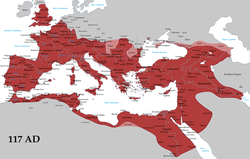
Overview: Why Rome Matters Today
– Short summary of Rome’s duration and scale: For over a millennium, Rome evolved from a small city-state into a vast empire, leaving an indelible mark on three continents.
- The dual legacy: Roman Republic and Roman Empire: The political experiments of the Republic and the administrative machinery of the Empire provided two distinct but interconnected models for later societies.
- Mechanisms of transmission: Conquest, colonization, religion, law, and education were the primary channels through which Roman ideas spread and were adapted across time and space.
- Peak population: Approximately 1 million in Rome (1st–2nd century CE).
- Territory: Around 5 million square kilometers at its peak (2nd century CE).
- Languages: Latin (official), with local languages spoken across provinces.
- Longevity of institutions: Roman law influenced European legal systems for over 1,500 years.
- Private property rights
- Contracts and obligations
- Legal personhood and corporate entities
- Elements of the presumption of innocence and procedural innovations
- Roads: The Roman road network facilitated trade, communication, and military movement. Modern European road alignments often follow Roman routes.
- Aqueducts and water management: Principles of gradient, masonry, and distribution still inform hydraulic engineering.
- Urban planning: Grid patterns, forums, sewage systems (like the Cloaca Maxima), and public amenities (baths, amphitheaters) became templates for urban public space.
- European Civil Codes: The Napoleonic Code’s deep debt to Roman law and Justinianic traditions.
- Urban Planning Examples: Modern European cities that follow Roman street grids and site public squares on ancient fora.
- Engineering Revival: Renaissance architects like Brunelleschi and Palladio, who directly studied Roman ruins and texts.
- Myth: Roman law was uniformly fair and egalitarian. Reality: It was hierarchical, privileging citizens and elites, though it did develop mechanisms for rights expansion.
- Myth: The “fall” of Rome was a single catastrophic event. Reality: It was a transformation across centuries, with continuity in the East (Byzantium) and reorganizations in the West.
- How to Approach Sources Critically: Distinguish literary (elite-authored) accounts from epigraphic, archaeological, and papyrological evidence.
- Primary-Source Analysis: Compare passages from Livy and Tacitus on the same event to study historiographical bias.
- Material Culture Project: Create a portfolio of artifacts from a Roman household (pottery, coins, inscriptions) and interpret their social meaning.
- Debate: “Was the Roman Empire more responsible for unity or division in Europe?” Use evidence from law, infrastructure, and cultural policy.
- Field Trip Suggestion: Visit local museums with Roman collections, or use virtual tours of major sites like Rome, Pompeii, and Baalbek.
- “Roman law and its influence” -> link to site’s article on legal history
- “Roman engineering and aqueducts” -> link to site’s infrastructure/engineering post
- “Daily life in ancient Rome” -> link to site’s cultural history page
- Perseus Digital Library — primary Roman texts and translations: http://www.perseus.tufts.edu
- The Journal of Roman Studies — leading scholarship: https://www.cambridge.org/core/journals/journal-of-roman-studies
- Pleiades — historical geography of the ancient world: https://pleiades.stoa.org
- Corpus Inscriptionum Latinarum (CIL) references and museums (e.g., British Museum, Museo Nazionale Romano)
- Image: The Roman Forum with the Temple of Saturn — Alt text: “The Roman Forum ruins and the Temple of Saturn, center of public life.”
- Image: Cross-section of a Roman aqueduct — Alt text: “Diagram of a Roman aqueduct showing gradient and channel for water flow.”
- Image: The Pantheon interior dome — Alt text: “Interior of the Pantheon showing the oculus and concrete dome.”
- Image: Roman road (Appian Way) — Alt text: “Cobblestone foundation of the Appian Way with lined stones and drainage.”
- Twitter: “How Ancient Rome shaped our laws, cities, and languages — a deep dive for students and history lovers. #AncientRome #History”
- Facebook/LinkedIn: “From Roman roads to modern law codes, explore the enduring legacy of Ancient Rome in this comprehensive guide for students and history enthusiasts.”
headline: Title as aboveauthor: [Author Name]datePublished: [YYYY-MM-DD]image: URLs to suggested imagesarticleSection: History, Ancient Rome, Law, Engineeringkeywords: List primary and long-tail keywords- Include FAQPage markup for the FAQ section to increase the chance of featured snippets.
Rome in Numbers (Quick Facts)
– Founded: Traditional date 753 BCE; Republic established c. 509 BCE; Empire begins 27 BCE.
Political Systems — From Republic to Empire and Back Again
Roman republican institutions — magistracies, the Senate, and popular assemblies — created a system of checks and balances that directly inspired modern constitutions. The transition to imperial rule brought a professionalized bureaucracy that managed an empire of unprecedented scale.
Case Study: The Influence of Roman Republican Ideas on the U.S. Founding Fathers
The American Founders were deeply versed in Roman history. They read Livy and Plutarch and explicitly referenced Roman consuls, senates, and checks on executive power when designing the U.S. Constitution. The concept of a mixed government — balancing the monarchy (president), aristocracy (Senate), and democracy (House of Representatives) — was a direct adaptation of Roman political theory.
Example: Civic rituals and public offices in Rome laid the groundwork for modern civil service and political honors.
Actionable Insight: For students writing essays, compare Roman political offices (consuls, praetors, tribunes) with their modern counterparts to illustrate continuity and divergence.
The Roman Model of Law: Foundations of Western Legal Systems
Roman law developed from the Twelve Tables to the comprehensive Corpus Juris Civilis under Emperor Justinian. This legal tradition introduced foundational concepts that remain central to Western jurisprudence:
The civil law traditions of continental Europe are direct descendants of Roman jurisprudence. Even common law systems absorbed Roman concepts, particularly through ecclesiastical and academic channels.
Case Study: Justinian’s codification (6th century CE) was revived in medieval universities from the 12th century onward, shaping modern civil codes such as the Napoleonic Code.
Practical Research Tip: Use primary legal texts, such as excerpts from the Twelve Tables or Justinian’s Digest, to ground arguments about continuity in legal history.
Engineering and Urban Planning: Roads, Aqueducts, and the City Model
Roman engineering principles — durability, modular design, standardization, and large-scale hydraulics — set new standards for infrastructure.
Infrastructure Legacies:
Case Study: The Appian Way demonstrates the persistence of Roman routes into modern road systems. Modern sewer systems were inspired by Roman cloacae.
Technical Detail Box: Roman concrete (opus caementicium) used volcanic ash (pozzolana) for exceptional durability. Recent materials science research explores why Roman marine concrete resists deterioration better than some modern mixes.
How to Investigate Further: Consult archaeological reports, engineering analyses, and materials studies (including recent findings on pozzolana) for course projects.
Language, Literature, and Education — Latin’s Long Shadow
Latin evolved from a spoken vernacular (Vulgar Latin) into the basis of the Romance languages: Italian, French, Spanish, Portuguese, and Romanian. It served as the lingua franca of medieval Europe for legal, scholarly, and ecclesiastical purposes.
Literary Models: Roman rhetorical and historiographical traditions — from Cicero, Livy, Tacitus, and Virgil — shaped Western notions of historical narrative, rhetoric, and political persuasion.
Educational Influence: Medieval and early modern curricula centered on Latin grammar, rhetoric, and classical texts. The humanist movement revived Roman models for civic education.
Example: Latin phrases such as habeas corpus, de facto, and prima facie persist in modern legal and academic vocabulary.
Study Strategy: Learn to read simplified Latin texts and use translations of Cicero or Caesar to understand the rhetorical structures that informed Western education.
Religion and Cultural Transformation — From Polytheism to Christianity
Rome’s religious pluralism and its approach to local cults maintained civic cohesion through official rites and priesthoods. The rise of Christianity brought profound changes, beginning with Constantine’s Edict of Milan (313 CE) and culminating in its status as the state religion under Theodosius (380 CE).
Roman infrastructure and the Latin language were instrumental in the spread of Christianity. Christian theology was also shaped by Greco-Roman philosophical categories.
Case Study: Roman institutions were repurposed for Christian use. The basilica architectural form was adapted for churches, and Roman administrative structures were adapted for ecclesiastical governance.
Cultural Continuity and Change: Many pagan practices were adapted into Christian festivals, blending local traditions into the liturgical calendar.
Research Pointer: Use ecclesiastical histories and archaeological evidence, such as early Christian basilicas, to examine the pace and mechanisms of conversion.
Economy, Trade, and Monetary Systems
Roman monetary innovation — including the denarius and the solidus — enabled the monetization of an empire-wide economy. Trade networks spanned the Mediterranean (mare nostrum), with complex grain supply chains (Egypt serving as Rome’s breadbasket) and long-distance connections via the Silk Road.
Fiscal systems included taxation, imperial bookkeeping, and public spending on infrastructure and the military.
Example: Standardized coinage facilitated commerce by establishing uniform weights and values. Archaeological numismatics reveals trade patterns and imperial propaganda.
Teaching Idea: Use coin hoard studies and the distribution of exported ceramics to trace economic integration in the Roman world.
Social Structure, Citizenship, and Mobility
Roman society was hierarchical, with distinctions among patricians, plebeians, equestrians, freedmen, slaves, and provincials. Citizenship evolved from a limited right in the city of Rome to a broad grant for all free inhabitants of the empire under the Constitutio Antoniniana (212 CE).
Mechanisms of Social Mobility: Military service, enfranchisement, tax benefits, and local benefactions (euergetism) provided pathways for advancement.
Gender and Family: The authority of the paterfamilias, marriage law, dowries, and women’s roles in both private and public spheres were key features of Roman life.
Case Studies: Freedmen played significant economic roles in commerce and imperial administration. Provincial elites assimilated into Roman civic life through holding local offices.
Analytical Tip: Contrast Roman legal texts with inscriptions to see the difference between formal rules and lived practices.
Architecture, Art, and Public Space
Architectural Innovations: The use of arches, vaults, and domes, along with large-scale public buildings like basilicas and amphitheaters, defined Roman architecture.
Aesthetic Legacy: Realistic portraiture and narrative reliefs influenced Renaissance and later art.
Civic Culture: Public spectacles, baths, theaters, and forums facilitated social cohesion and conveyed imperial messaging.
Example: The Pantheon’s dome stands as an engineering and symbolic achievement, influencing later Western ecclesiastical and civic architecture.
Activity Suggestion: Compare a Roman forum plan with a modern civic center to observe continuities in spatial organization.
Law Enforcement, Military Organization, and Security
Roman Military Organization: The legions, auxilia, command structures, logistics, and fortifications (limes) created a formidable military machine.
Military Innovations: Standardized training, discipline, dedicated engineering corps (architecti, fabri), and policies for veteran colonization were key innovations.
Policing and Public Order: The vigiles (fire and night watch), urban cohorts, and local magistrates maintained public order.
Example: Fort architecture (castra) served as templates for later military fortifications. Hadrian’s Wall remains a key case study in frontier control.
Research Recommendation: Use military diplomas, papyri, and fort plans for primary-source analysis of Roman military life.
Everyday Life: Food, Clothing, Recreation, and Health
Diet and Cuisine: Urban and provincial diets varied, with staples like bread, olive oil, and wine, alongside luxury foods such as garum and exotic imports.
Clothing: The tunic, toga, and stola signaled status and civic identity.
Leisure: Public baths, dining (convivia), spectacles (gladiatorial games), and intellectual pursuits (philosophical schools) filled Roman leisure time.
Health and Medicine: Roman physicians followed the Galenic tradition. Public sanitation and bath complexes played a key role in hygiene.
Primary-Source Activities: Use recipes, graffiti (e.g., from Pompeii), and household inscriptions to reconstruct daily routines.
Transmission and Transformation — How Roman Ideas Survived
Roman texts were preserved in medieval monastic scriptoria and rediscovered during the Renaissance. The European states and the Catholic Church served as vectors of Roman administrative and legal continuity.
Cultural Adaptation: Roman models were localized in Byzantine, Islamic, and European medieval contexts.
Example: The Byzantine Empire preserved Roman law and administration. Islamic scholars translated and integrated Greco-Roman scientific texts.
Research Route: Track a single Roman institution, such as municipal self-government, from late antiquity through its medieval revival to illustrate continuity and adaptation.
Case Studies: Direct Lines from Rome to the Modern World
– The United States: Constitutional inspiration, use of Roman symbolism (fasces, eagle), and civic republican ideals.
Myths and Misconceptions — What Rome Did Not Do
– Myth: Rome invented all Western institutions. Reality: Rome synthesized and adapted earlier Mediterranean and Near Eastern technologies and concepts.
How to Study Rome Effectively — Methods and Resources
Primary Sources: Livy, Tacitus, Cicero, Julius Caesar, Pliny the Younger, inscriptions (Corpus Inscriptionum Latinarum), papyri collections (Oxyrhynchus), and legal texts (Justinian).
Archaeological Sources: Excavation reports (Pompeii, Herculaneum), material culture databases, and museum collections.
Secondary Literature: Authoritative modern syntheses by Mary Beard, Peter Heather, and Adrian Goldsworthy, along with specialized monographs and journals like the Journal of Roman Studies.
Digital Resources: The Perseus Digital Library, Pleiades (for historical geography), and The Digital Atlas of Roman and Medieval Civilizations (DARMC).
Research Workflow: Start with a broad synthesis, identify a focused question, combine literary and material evidence, and apply comparative frameworks.
Study Tip: Use mapping tools to visualize Roman roads, settlements, and trade patterns for a spatial understanding of the empire.
Classroom Activities and Project Ideas
– Map Exercise: Trace a Roman road and analyze how it influenced settlement patterns over time.
Frequently Asked Questions (FAQ)
Q: What is the most important Roman contribution to the modern world?
A: Roman law and the model of codified legal principles are arguably the single most pervasive influence, forming the backbone of civil law systems and informing legal thought globally.
Q: Did medieval Europe completely lose Roman knowledge after Rome’s fall?
A: No. Many Roman texts and administrative practices survived in the Byzantine Empire, the Islamic world, and Western monasteries, later resurfacing during the Renaissance.
Q: Are modern languages derived from Latin identical to classical Latin?
A: No. The Romance languages evolved from Vulgar Latin and differ grammatically and lexically from Classical Latin, though they preserve core vocabulary and structures.
Q: How reliable are Roman literary sources?
A: Literary sources are invaluable but biased. Cross-reference them with inscriptions, archaeology, and papyri to build balanced interpretations.
Internal and External Link Recommendations
Internal Link Suggestions (Anchor Text Recommendations):
External Authoritative Links (Open in new window; use rel="noopener noreferrer"):
Image and Media Recommendations
Suggested Images and Alt Text:
Caption Guidance: Briefly explain the historical significance of each image and link to further reading.
SEO and Social Sharing Optimization
Primary Keywords (1–2% density): Ancient Rome, Roman law, Roman engineering, Roman Republic, Roman Empire
Long-Tail Keywords and LSI Terms: Roman infrastructure, Justinian’s codification, Roman urban planning, Latin language legacy, Roman military organization
Meta Description (150–160 characters): “Explore how Ancient Rome shaped modern law, politics, engineering, language, and daily life — a comprehensive guide for students and history enthusiasts.”
Social Sharing Text Suggestions:
Schema Markup Recommendations
– Use Article schema with the following properties:
Conclusion — Why Studying Rome Matters
Ancient Rome is not merely an object of antiquarian interest; it is a foundational chapter in the story of modern institutions, infrastructure, languages, and cultural practices. From the rule of law and republican ideals to engineering techniques and city planning, Roman innovations provided models that were adapted, preserved, and reinvented across centuries. For students and history enthusiasts, studying Rome offers concrete examples of how ideas travel and transform, how institutions persist, and how material culture can reveal everyday life long vanished.