
Empowering Narratives: Women Driving Change in Science, Technology, and Social Justice
Women have been pivotal architects of progress across science, technology, and social justice, yet their stories often remain under-told. From early mathematicians who coded the foundations of computing to activists who demanded equitable laws and access, women leaders in STEM and social movements have persistently reshaped societies and knowledge. This article traces the arc of women in history — trailblazers who dismantled barriers, defined disciplines, and inspired waves of women empowerment that continue today.
Readers will learn about specific influential women across disciplines, examine how their contributions changed institutions and public life, and explore modern movements amplifying women’s achievements. Educators, students, and history enthusiasts will find actionable steps to support representation and equity, along with recommended organizations and resources for deeper engagement. Through case studies, statistics, and practical guidance, this piece offers a thought-provoking and informative examination of how women drive change and how each reader can play a role in sustaining that progress.
Why These Stories Matter: The Impact of Women in History and STEM
Women’s contributions are not ancillary—they are foundational. Recognizing women in history and elevating women leaders in STEM rewrites curricula, corrects institutional memory, and creates role models for future generations. Inclusion improves outcomes: diverse teams produce more innovative research, technology that better serves users across demographics, and more equitable policy outcomes.
Key facts and figures:
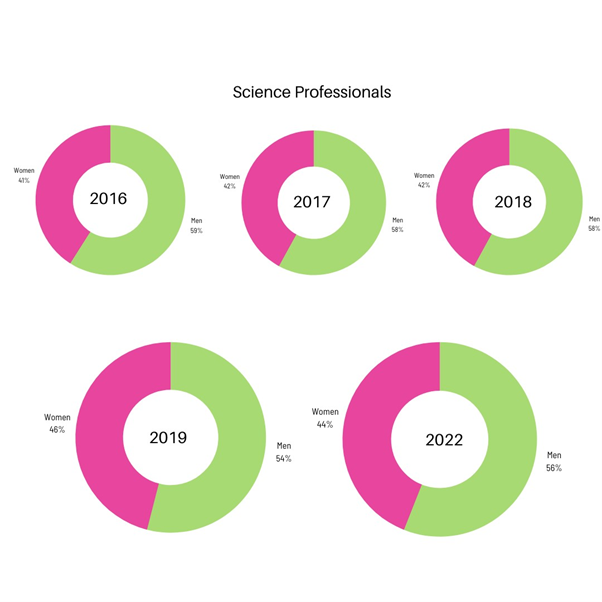
- Women make up roughly 30% of the global STEM workforce in many high-income countries, with significant variation by field. Representation falls below 20% in engineering and computer science in several regions.
- Diverse research teams (including gender diversity) often produce higher-impact publications and patents.
- Studies show girls who encounter female role models in STEM are more likely to pursue STEM majors and careers.
- Key legacy: Conceptual link between mathematics and creative problem-solving in computing.
- Classroom use: Introduce Lovelace when teaching algorithms and the history of computing to highlight early visionary thinking.
- Key legacy: Demonstrated scientific rigor under extreme adversity and gender bias.
- Teaching note: Curie’s laboratory notebooks and biography illustrate experimental perseverance and scientific ethics.
- Key legacy: Importance of fair attribution, collaborative transparency, and the ethics of credit in science.
- Key legacy: Demonstrates intersections of environmental science and social justice.
- Grace Hopper (1906–1992): Developed early compilers and popularized the term “debugging,” contributing foundational work for modern programming languages.
- Katherine Johnson (1918–2020): NASA mathematician whose orbital calculations were critical to early space missions.
- Radia Perlman (b. 1951): Inventor of the Spanning Tree Protocol, fundamental to network routing.
- Host a “Women in Tech” speaker series featuring local professionals.
- Run a code sprint where students refactor biased datasets or build accessibility-focused apps.
- Sojourner Truth (1797–1883): Abolitionist and women’s rights advocate, best known for challenging exclusionary rhetoric in the famous “Ain’t I a Woman?” moment.
- Emmeline Pankhurst (1858–1928): Led suffrage movements that transformed political participation in the UK and inspired global campaigns.
- Angela Davis (b. 1944): Scholar-activist whose work links race, gender, and prison reform and continues to influence contemporary abolitionist movements.
- Example: The contributions of women in colonial and postcolonial contexts are frequently marginalized in global histories.
- Educational approach: Incorporate primary sources and oral histories from diverse communities to build a richer, more accurate historical record.
- Girls Who Code, Black Girls Code: Programs targeting gender and racial gaps in tech by providing coding education and mentorship.
- Women in STEM scholarships and fellowships: Financial support for graduate study and research.
- Advocacy organizations (e.g., International Women’s Health Coalition, Association for Women in Science): Policy advocacy, research funding, and professional development.
- Scholarship and mentorship programs correlate with higher retention in STEM majors.
- Community-based initiatives boost local employment and civic participation, especially among women in under-resourced areas.
- Integrate microhistories of women trailblazers into curricula across disciplines.
- Use inclusive sourcing—assign texts by women and from diverse perspectives.
- Create assessment projects that have students profile influential women and analyze systemic barriers.
- Join or found clubs focusing on women in STEM, coding, or activism.
- Seek mentorship through formal programs and reach out to professionals for informational interviews.
- Volunteer with local organizations that promote girls’ education and leadership.
- Support digitization projects that preserve letters, diaries, and artifacts created by women.
- Attend public lectures and recommend books that highlight underrepresented figures.
- Gender-equity hiring and promotion targets with transparent accountability.
- Paid parental leave and flexible tenure clocks for academics.
- Grants and funding streams specifically for women-led research and startups.
- Anti-harassment policies with independent reporting mechanisms.
- Henrietta Lacks (1920–1951): Her cells (HeLa) transformed biomedical research. Her story raises ethical questions about consent and recognition.
- Hedy Lamarr (1914–2000): A film actress who co-invented frequency-hopping spread spectrum communication, foundational to modern wireless protocols.
- Malala Yousafzai (b. 1997): Young activist for girls’ education who leverages global platforms to influence policy and funding.
- Funding disparities: Women-led projects receive less venture capital and research funding in many contexts.
- Cultural stereotypes: Gendered expectations about competence and leadership remain strong in certain fields.
- Visibility gaps: Media and textbooks often underrepresent women’s contributions, perpetuating cycles of exclusion.
- Girls Who Code — programming education for girls.
- Association for Women in Science — advocacy and professional development.
- National Girls Collaborative Project — resource hub for STEM outreach.
- Women Who Code — global network for women in software engineering.
- “Hidden Figures” by Margot Lee Shetterly — historical account of Black women at NASA.
- “The Double X Economy” by Linda Scott — economic analysis of women’s contributions.
- Scholarly journals like Gender and Education and Women’s Studies International Forum for deeper academic perspectives.
- UNESCO reports on women in STEM
- National Institutes of Health resources on inclusive research
- UN Women for global gender-equality policy and programs.
- “Portrait of Ada Lovelace, early computing pioneer”
- “Marie Curie in her laboratory handling scientific equipment”
- “Students in a coding workshop led by women mentors”
- Percentage of women in leadership roles in academia, tech companies, and government.
- Gender breakdown of grant recipients and startup funding.
- Retention rates of women in STEM degree programs and careers.
- Media representation metrics: percentage of history curricula that include women’s contributions.
- Donate to or volunteer with organizations supporting girls’ STEM education.
- Advocate for equitable hiring and family-friendly policies at your school or workplace.
- Mentor a student or early-career professional—send one informational email or schedule a 30-minute conversation.
- Share stories of influential women in history via social media and classroom assignments to increase visibility.
- Suggested Tweet: “From Ada Lovelace to Malala — discover how women trailblazers shaped science, tech, and social justice. Learn how you can support initiatives promoting women’s achievements. [link]”
- Suggested Facebook Post: “Empowering Narratives: A deep dive into the women who changed science, technology, and social justice — and what we can do today to keep the momentum going. Read more: [link]”
These statistics underscore the importance of celebrating trailblazers and investing in structural change to expand opportunities.
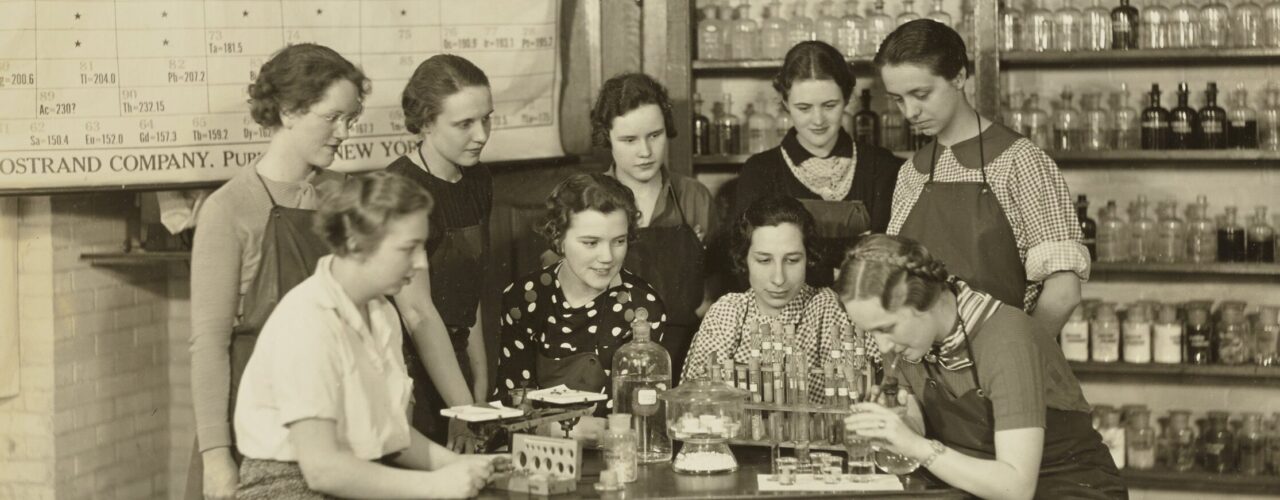
Trailblazers in Science: Pioneering Minds Who Broke Barriers
Ada Lovelace — The First Programmer
Ada Lovelace (1815–1852) conceptualized how machines could manipulate symbols beyond mere calculation. Her notes on Charles Babbage’s Analytical Engine included what many consider the first algorithm intended for machine processing, earning her recognition as the first computer programmer.
Marie Curie — Twice a Nobel Laureate
Marie Curie (1867–1934) pioneered radioactivity research, winning Nobel Prizes in Physics (1903) and Chemistry (1911). Her work enabled advancements in medical imaging, cancer treatment, and nuclear physics.
Rosalind Franklin — The Unsung Vision in DNA Discovery
Rosalind Franklin (1920–1958) produced X-ray diffraction images crucial to understanding DNA’s double helix. Her contributions were undercredited during her lifetime, highlighting systemic issues in scientific recognition.
Wangari Maathai — Ecology and Environmental Justice
While best known as an environmental activist and Nobel Peace Prize laureate, Wangari Maathai (1940–2011) bridged ecology, women’s rights, and community development through the Green Belt Movement, planting millions of trees and empowering rural women in Kenya.
Women Leaders in Technology: From Pioneers to Present-Day Innovators
The tech industry’s story includes iconic women whose ideas and leadership shaped computing, software, and internet culture.
Contemporary leaders include executives, founders, and researchers spearheading AI ethics, biotech, and open-source communities. Their work addresses not only technical advancement but also the social implications of technology, including bias reduction, accessibility, and equitable access.
Practical classroom or club activities:
Social Justice Champions: Women Shaping Rights and Policy
Women have led movements that expand civil rights, labor protections, and democratic access. Key figures include:
Case study — The Civil Rights and Women’s Movements:
Women often served as strategic organizers, though historical narratives sometimes foreground male leaders. Recognizing women’s leadership reveals how grassroots organizing, legal advocacy, and cultural work interlock to create policy change.
Intersectionality: Understanding Compounded Challenges
An impactful narrative about women in history must attend to intersectionality—the ways race, class, sexuality, disability, and geography compound barriers. For instance, women of color, Indigenous women, and women in low-income regions often face layered exclusion from STEM education and leadership roles.
Modern Movements Advancing Women Empowerment
There are numerous initiatives today promoting women’s achievements and leadership across science, technology, and social justice:
Impact metrics:
How Educators and Students Can Champion Change
Practical, actionable steps to promote women empowerment in history and STEM:
For educators:
For students:
For history buffs:
Institutional Change: Policies That Work
Structural shifts are essential for long-term progress. Effective policies include:
Case study — University reforms:
Universities that implemented tenure-clock extensions and caregiver policies saw increased retention of early-career women faculty, particularly those balancing family responsibilities.
Highlight: Stories That Reframe the Narrative
Short profiles demonstrating varied forms of leadership:
Each story shows a different pathway—scientific discovery, invention, grassroots advocacy—through which women have driven societal change.
Challenges That Remain
Persistent obstacles include:
Understanding these challenges is the first step toward crafting targeted interventions.
Tools and Resources: Where to Learn and Get Involved
Recommended organizations and resources:
Suggested reading:
External link recommendations:
Image alt text suggestions:
FAQs — Optimized for Quick Answers
Q: Who are the most influential women in history in STEM?
A: Influential figures include Ada Lovelace, Marie Curie, Grace Hopper, Katherine Johnson, Rosalind Franklin, and Radia Perlman, among many others who contributed foundational ideas and leadership.
Q: How can schools incorporate women’s stories into curricula?
A: Integrate biographies, primary-source analysis, project-based learning centered on women’s contributions, and invite guest speakers to provide real-world perspectives.
Q: What are effective ways to support women in technology right now?
A: Volunteer as a mentor, donate to scholarship funds, recruit women for internships, run inclusive hiring practices, and support policy changes that reduce systemic barriers.
Measuring Progress: Metrics That Matter
Trackable indicators for institutional and societal progress:
Regular assessment drives accountability and helps refine programs promoting women empowerment.
How You Can Take Action Today
Concrete, immediate steps:
Discover how you can support initiatives promoting women’s achievements — sign up for newsletters from Girls Who Code or AWIS, volunteer locally, or contribute to scholarship funds. Your voice and action amplify the next generation of women leaders in science, technology, and social justice.
Conclusion
The arc of progress is shaped by countless women—visible and unsung—who have driven scientific discovery, technological innovation, and social transformation. Celebrating influential women in history is not merely about honoring the past; it’s about constructing an equitable future in which talent is nurtured regardless of gender. Students, educators, and history buffs each have a role: to teach truthfully, to mentor generously, and to advocate relentlessly.
By lifting up women’s stories, reforming institutions, and investing in emerging leaders, we expand the pool of ideas that tackle our most urgent challenges. Take one concrete step today—mentor, donate, or advocate—and help ensure the next generation of women trailblazers can change the world.
—
Schema Markup Recommendation (JSON-LD snippet):
json

{
  "@context": "https://schema.org",
  "@type": "Article",
  "headline": "Empowering Narratives: Women Driving Change in Science, Technology, and Social Justice",
  "description": "Explore how women trailblazers shaped science, technology, and social justice, and discover ways to support initiatives promoting women's achievements.",
  "author": {
    "@type": "Person",
    "name": "Editorial Team"
  },
  "publisher": {
    "@type": "Organization",
    "name": "YourSiteName",
    "logo": {
      "@type": "ImageObject",
      "url": "https://yoursite.com/logo.png"
    }
  },
  "datePublished": "2026-04-19"
}
Social Sharing Suggestions: