
The Hidden Heroes: Revealing the Untold Stories of World War 2 Female Cryptographers
World War II is often recounted through tales of brave soldiers on battlefields, daring pilots in the skies, and resilient sailors on the seas. Yet, beneath the surface of these visible conflicts, a secret war was waged—a war of minds, mathematics, and intricate codes. At the heart of this clandestine struggle were the unsung heroes of signals intelligence: the WWII codebreakers, many of whom were women whose critical contributions remained shrouded in secrecy for decades. These extraordinary individuals, equipped with intellect and unwavering dedication, played an indispensable role in altering the course of the war, saving countless lives, and ultimately securing Allied victory.
For too long, the narrative of wartime intelligence has focused predominantly on a select few, leaving the vast majority of contributors in the shadows. This article aims to pull back the curtain on the untold stories of World War 2 female cryptographers, revealing their profound impact and the sheer brilliance they brought to the Allied war effort. From the hallowed halls of Bletchley Park in the UK to the bustling intelligence centers in the United States, thousands of women in WWII intelligence meticulously deciphered enemy communications, unraveling complex ciphers that provided crucial insights into Axis strategies. Their work, often tedious and mentally exhausting, was performed under immense pressure and strict secrecy, demanding not only intellectual prowess but also incredible resilience. Join us as we explore the vital roles these forgotten WWII heroes played, illuminating a critical chapter in secret war history and ensuring their incredible legacy is finally recognized.

Breaking the Enigma: Bletchley Park’s Brilliant Minds
In the quiet English countryside, nestled amidst Buckinghamshire, lay Bletchley Park—the nerve center of British codebreaking efforts. Here, thousands of individuals, predominantly women, engaged in a relentless intellectual battle against the seemingly impenetrable Enigma and Lorenz ciphers used by Nazi Germany. Their work was not just about cracking codes; it was about understanding the enemy’s intentions, predicting their movements, and giving the Allies an unprecedented advantage.
The Recruitment Drive: Seeking Minds, Not Muscles
The scale of the codebreaking operation at Bletchley Park required an enormous workforce, and the British government quickly realized that women possessed the cognitive abilities, meticulousness, and patience essential for the task. Recruitment efforts were often unconventional, seeking out individuals with exceptional intellectual aptitude rather than traditional military training. Advertisements for crossword puzzle competitions, chess tournaments, and even bridge clubs served as subtle calls for talent. Women from diverse backgrounds—teachers, mathematicians, linguists, debutantes, and even former secretaries—were recruited, often without being told the true nature of their work until they arrived on site. They were told they were needed for “clerical work” or “administrative duties,” only to discover they were joining the clandestine world of cryptanalysis.
These women, often young and fresh out of universities or schools, were subjected to rigorous tests of logic, memory, and pattern recognition. The selection process was designed to identify minds capable of abstract thought, sustained concentration, and an innate ability to spot anomalies in vast amounts of data. Their willingness to leave behind conventional lives and commit to an unknown, highly secretive mission underscored their patriotism and intellectual curiosity.
From Clerks to Cryptanalysts: Roles and Responsibilities
Once at Bletchley Park, the women were assigned to various sections, each playing a crucial role in the complex codebreaking ecosystem. While some performed vital administrative and logistical tasks, many were directly involved in the intricate process of cryptanalysis.
- Bombe Operators: Perhaps one of the most mechanically demanding roles, women operated the sophisticated electromechanical “Bombes,” machines designed by Alan Turing and Gordon Welchman to rapidly test possible Enigma settings. These machines whirred and clacked incessantly, and the women operating them often worked long, grueling shifts, feeding in coded messages and monitoring for “stops” that indicated a potential solution. Their precise and tireless work was fundamental to breaking the daily Enigma keys.
- Codebreakers and Linguists: Women like Mavis Batey (nee Lever) demonstrated extraordinary talent in cryptanalysis. Batey, initially recruited for her strong linguistic skills, became instrumental in breaking complex German Abwehr (intelligence service) codes, including those that revealed crucial information about German preparations for D-Day. Another prominent figure was Joan Clarke, a brilliant mathematician and colleague of Alan Turing, who rose to become Deputy Head of Hut 8, responsible for breaking German Naval Enigma. Her contributions were vital to winning the Battle of the Atlantic.
- Traffic Analysts: These women meticulously analyzed patterns in encrypted messages—who was sending to whom, at what times, and in what volume. This “metadata” provided invaluable intelligence even before the messages themselves were deciphered, helping to identify enemy units, predict submarine movements, and understand the structure of German communications networks.
- Indexers and Librarians: Managing the vast amounts of intercepted data, deciphered texts, and cryptographic keys required a highly organized system. Women in these roles maintained meticulous records, cross-referencing information that was vital for cryptanalysts to identify recurring patterns and build comprehensive intelligence pictures.
- JN-25 Interception and Decryption: Women worked tirelessly to intercept, process, and decrypt messages encoded with JN-25. This involved multiple steps, from initial interception by radio operators (many of whom were also women) to traffic analysis, cryptanalysis, and translation. Their efforts provided crucial intelligence about Japanese fleet movements, supply convoys, and strategic intentions.
- The Battle of Midway: The breaking of JN-25 is widely credited as a pivotal factor in the Battle of Midway in June 1942. Intelligence derived from decrypted Japanese communications allowed American commanders to anticipate the Japanese attack, set an ambush, and decisively defeat the Japanese fleet—a turning point in the Pacific War. The ability of American female codebreakers to confirm the target of the attack (Midway) and the composition of the Japanese force was invaluable.
- Submarine Warfare: Beyond major battles, the intelligence gleaned from Japanese codebreaking helped the Allies track and sink Japanese merchant shipping and submarines, severely disrupting their supply lines and logistical capabilities. This continuous attrition of Japanese resources was a silent but deadly campaign, orchestrated in large part by the diligence of these women in WWII intelligence.
- Battle of the Atlantic: The breaking of the German U-boat Enigma cipher by Bletchley Park’s female cryptographers was crucial. It allowed Allied convoys to reroute around U-boat wolfpacks, significantly reducing shipping losses and ensuring vital supplies reached Britain. This intelligence turned the tide in the Atlantic, a battle Winston Churchill famously described as “the only thing that really frightened me.”
- D-Day Preparations: Detailed intelligence on German troop movements, fortifications, and counter-attack plans, much of it gleaned from deciphered messages, was indispensable for the planning and success of the D-Day landings. The ability to confirm the Germans believed the invasion would occur elsewhere was a direct result of the work of WWII codebreakers, including Mavis Batey’s critical contributions.
- Strategic Bombing Campaigns: Intelligence from codebreaking helped refine target selection for Allied bombing raids, focusing on vital enemy infrastructure and industrial targets, thereby maximizing their impact and minimizing civilian casualties.
- Pacific Campaign: As highlighted earlier, the breaking of Japanese codes provided critical early warnings, most famously at Midway, but also continuously throughout the island-hopping campaign, allowing Allied forces to anticipate enemy movements and exploit their weaknesses.
The sheer volume of work was staggering. By 1945, around 75% of Bletchley Park’s 10,000 staff were women. Their collective efforts, often in noisy, cramped conditions, were a testament to their dedication and an integral part of the secret war history that remained hidden for decades.
Across the Atlantic: American Women in Signals Intelligence
While Bletchley Park is perhaps the most famous example, the United States also leveraged the intellectual power of women on a massive scale for its signals intelligence efforts. Thousands of American women served in secret facilities, primarily at Arlington Hall in Virginia (for the Army) and the Naval Communications Annex in Washington D.C. (for the Navy), tackling Japanese and German codes with equal fervor.
The Army and Navy’s Secret Weapons: WAVES and WACs
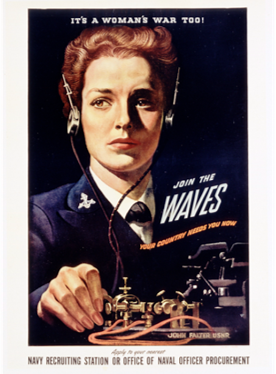
As the U.S. entered the war, the demand for skilled intelligence personnel skyrocketed. The Women’s Army Corps (WACs) and Women Accepted for Volunteer Emergency Service (WAVES) programs became crucial pipelines for recruiting talented women into specialized roles. The recruitment strategy mirrored that of the British, targeting college graduates, particularly those with degrees in mathematics, linguistics, music (for pattern recognition), and even library science. These women were perceived to possess the necessary analytical skills, attention to detail, and capacity for sustained, repetitive work.
At Arlington Hall, which grew from a small school to a massive intelligence complex, WACs formed the backbone of the Army’s codebreaking operations. They worked on German and Japanese codes, often in highly specialized units. Similarly, the Naval Communications Annex saw thousands of WAVES personnel immersed in the challenging task of breaking Japanese naval codes. These women lived under strict security protocols, often working around the clock in shifts, their days filled with the intense concentration required to manipulate complex code systems.
Cracking Japanese Codes: The Pacific Theater’s Silent Victories
American female codebreakers were particularly instrumental in the Pacific Theater, where their work had a direct and often immediate impact on naval strategy and combat outcomes. Their primary target was the Japanese naval code, JN-25, a complex cipher that underwent frequent changes.
The meticulous work of these women, often behind the scenes and without public recognition, directly contributed to the saving of countless American and Allied lives and significantly shortened the war in the Pacific. They were truly forgotten WWII heroes, whose contributions were as vital as any on the front lines.
Beyond the Machines: The Diverse Skills of Female Codebreakers
The success of Allied codebreaking was not solely dependent on advanced machinery like the Bombes; it relied heavily on the diverse and often extraordinary cognitive skills of the individuals involved. Women brought a unique combination of talents to the cryptanalysis effort, proving that intelligence comes in many forms.
Linguistic Prowess and Pattern Recognition
Many female recruits possessed strong linguistic abilities, an essential skill for understanding and translating intercepted enemy messages once partially or fully decrypted. Proficiency in German, Japanese, Italian, and other Axis languages allowed them to identify nuances, colloquialisms, and technical terms that were critical for accurate intelligence assessment.
Beyond language, an innate talent for pattern recognition was paramount. Cryptanalysis is, at its core, the science of finding patterns in seemingly random data. Women with backgrounds in music, mathematics, and even literature often excelled at this. A musician might recognize rhythmic structures in message traffic, a mathematician might spot numerical sequences, and a linguist might discern subtle grammatical cues that hinted at the underlying encryption. This ability to see the “invisible” was a common thread among the most successful WWII cryptographers. They were adept at identifying repeated phrases, common message formats, and anomalies that could provide a toehold into a complex cipher system.
The Power of Collaboration and Teamwork
While popular culture often portrays codebreaking as the solitary pursuit of a lone genius, the reality at Bletchley Park and Arlington Hall was one of intense collaboration and teamwork. Women worked in shifts, often passing on their partial findings to the next team, building upon each other’s insights. The sheer volume of intercepted communications meant that no single individual could manage the entire process.
The success of codebreaking was a collective triumph. Teams of women would pore over reams of encrypted text, each contributing a piece of the puzzle. One might identify a repeating element, another might deduce a possible key, and yet another might translate a crucial segment. This collaborative environment fostered innovation and efficiency, allowing for the rapid processing of intelligence. The camaraderie and shared sense of purpose, despite the immense secrecy, were vital for maintaining morale under extraordinary pressure. Their ability to work harmoniously and effectively as part of a larger intelligence apparatus was a cornerstone of Allied victory, highlighting the collective strength of these untold stories of World War 2 female cryptographers.
The Impact and Legacy: Shifting the Tides of War
The contributions of female codebreakers were not merely academic exercises; they had tangible, life-saving consequences that profoundly influenced the outcome of World War II. Their work demonstrably shortened the war and saved countless lives, yet for decades, this monumental achievement remained a closely guarded secret.
Direct Influence on Allied Victories
The intelligence derived from decrypted Axis communications provided the Allies with an unparalleled advantage, shaping strategic decisions across all theaters of war.
These are just a few examples of how the “Ultra” (Bletchley Park intelligence) and “Magic” (U.S. intelligence) intercepts, largely processed and deciphered by women, provided the Allies with an indispensable edge, fundamentally altering the course of major campaigns and shortening the war by an estimated two to four years.
Post-War Silence and Delayed Recognition
Despite their immense contributions, the secret war history of these women remained locked away for decades due to the Official Secrets Act. They returned to civilian life, often unable to share their experiences even with their closest family members. Many struggled with the transition, carrying the burden of their extraordinary secrets in silence. The nature of their work meant that their heroism was largely unacknowledged, leading to their status as forgotten WWII heroes.
It wasn’t until the 1970s, with the gradual declassification of intelligence documents, that the first glimpses of their work began to emerge. Over the subsequent decades, books, documentaries, and finally, personal testimonies from the surviving codebreakers themselves, started to piece together the full picture. This delayed recognition meant that many of these incredible women passed away without ever receiving the public acknowledgment they so richly deserved. However, in recent years, there has been a concerted effort to honor their legacy, with memorials, exhibitions, and academic studies finally giving these untold stories of World War 2 female cryptographers the prominence they deserve.
Unveiling the Truth: Why These Stories Matter Today
The revelation of the female codebreakers’ contributions is more than just a historical correction; it carries significant contemporary relevance, challenging existing narratives and inspiring future generations.
Inspiring Future Generations in STEM
The stories of these female codebreakers powerfully demonstrate women’s exceptional capabilities in fields traditionally dominated by men. Their work in mathematics, logic, linguistics, and early computing serves as an enduring inspiration for young women and girls considering careers in Science, Technology, Engineering, and Mathematics (STEM). By highlighting their intellectual prowess and critical impact, we can break down persistent stereotypes about gender roles in technical fields. The legacy of women in STEM from WWII reminds us that diverse perspectives and talents are essential for innovation and problem-solving, particularly in critical areas like cybersecurity and artificial intelligence today. Their achievements underscore the importance of fostering inclusive environments where talent, regardless of gender, can flourish and contribute to society’s most pressing challenges.
Redefining Heroism and Historical Narratives
These forgotten WWII heroes compel us to redefine our understanding of heroism. It wasn’t just found on the front lines but also in the quiet, intense concentration of a woman poring over encrypted messages for hours on end, knowing that a single mistake could have catastrophic consequences. Their bravery was intellectual, their endurance mental, and their impact global.
By bringing these narratives to light, we enrich and complete our understanding of World War II. History is not a monolithic story but a tapestry woven from countless individual experiences. Acknowledging the profound contributions of women in WWII intelligence challenges the traditional, male-centric recounting of wartime achievements and ensures that the full spectrum of human effort and sacrifice is recognized. It’s a testament to the fact that courage and intellect know no gender, and that the greatest victories often emerge from the most unexpected places. Their stories are a crucial part of secret war history that deserves to be known, celebrated, and preserved for generations to come.
Conclusion
The untold stories of World War 2 female cryptographers represent one of the most compelling and inspiring chapters in the history of human ingenuity and resilience. From the intricate machinery of Bletchley Park to the intense analytical work at Arlington Hall, thousands of women served with unparalleled dedication, their brilliant minds dismantling the enemy’s most guarded secrets. They were the silent architects of victory, their contributions directly influencing major battles, shortening the war, and saving countless lives.
These WWII codebreakers were not just anonymous figures; they were extraordinary individuals like Mavis Batey and Joan Clarke, whose intellectual courage and unwavering commitment shone brightly in the darkest hours of conflict. Their belated recognition reminds us of the importance of seeking out and celebrating the hidden figures of history, ensuring that their sacrifices and achievements are never truly forgotten. Their legacy extends beyond the war, serving as a powerful testament to women’s capabilities in intelligence, technology, and leadership.
It is our collective responsibility to ensure these forgotten WWII heroes receive the enduring honor they deserve. Their secret war history is a vital part of our shared heritage, a reminder that heroism can be found in every corner of society, often where we least expect it.
Share this untold story to help keep their incredible memory alive.