
Wisconsin’s Civil Rights Marches: Unveiling Untold Stories from the 1960s
When we reflect on the American Civil Rights Movement, our minds often turn to the iconic images and pivotal events of the Deep South: the Montgomery Bus Boycott, the Selma to Montgomery marches, or the March on Washington. These moments undoubtedly shaped the nation, but they represent only a fraction of the widespread struggle for equality. Across the country, in cities and towns far from the glare of national headlines, ordinary people waged their own battles against systemic racism. Wisconsin, a state often overlooked in the broader narrative, stands as a powerful testament to this truth, holding a rich tapestry of untold Wisconsin civil rights stories from the 1960s—tales of courage, resistance, and the relentless pursuit of justice.
The fight for civil rights in Wisconsin was not merely an echo of the South; it was a distinct, vital movement confronting its own unique forms of prejudice and segregation. While Jim Crow laws didn’t exist in the same codified way, de facto segregation in housing, employment, and education created significant barriers for African American communities and other marginalized groups. The 1960s in Wisconsin saw a surge of activism, characterized by determined marches, powerful voices, and a deep commitment to dismantling the invisible walls of discrimination. This article delves into these crucial yet often unheralded chapters, bringing to light the figures, events, and enduring legacy of Wisconsin’s transformative civil rights era.
The National Drumbeat and Wisconsin’s Echo: A Local Civil Rights Context
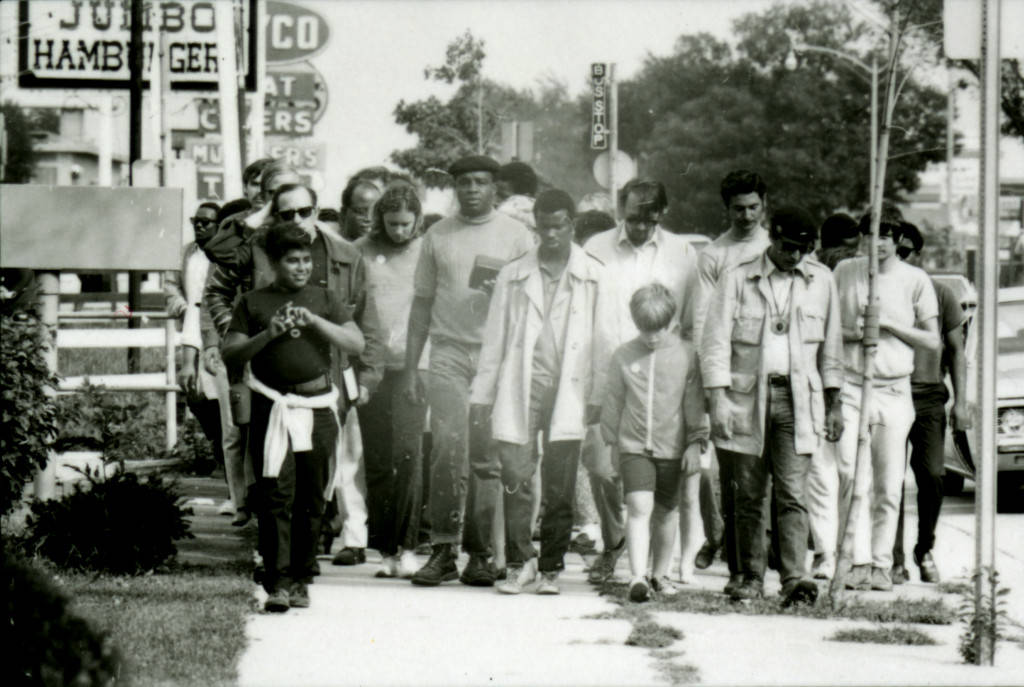
The Civil Rights Movement of the 1960s was a nationwide phenomenon, ignited by the courage of individuals and fueled by deeply entrenched injustices. While the South grappled with overt segregation and state-sanctioned violence, the North faced a more insidious form of racism: de facto segregation. This unwritten, yet equally potent, system of discrimination manifested in housing covenants, discriminatory lending practices, employment barriers, and segregated schools. Northern cities, including those in Wisconsin, were far from immune to racial strife.
Many African Americans had migrated north during the Great Migration, seeking better opportunities and an escape from Southern oppression, only to encounter new forms of discrimination. In Wisconsin, particularly in its urban centers like Milwaukee, Racine, and Madison, black communities were often confined to specific neighborhoods, denied access to well-paying jobs, and subjected to unequal treatment. The national movement, with its calls for desegregation and voting rights, resonated deeply in these communities, inspiring local activists to confront their own regional injustices. Wisconsin’s civil rights struggle, therefore, was not a mere imitation but a necessary localized response to pervasive racial inequality.
Milwaukee’s Open Housing Marches: The “Northern Selma” and Father Groppi
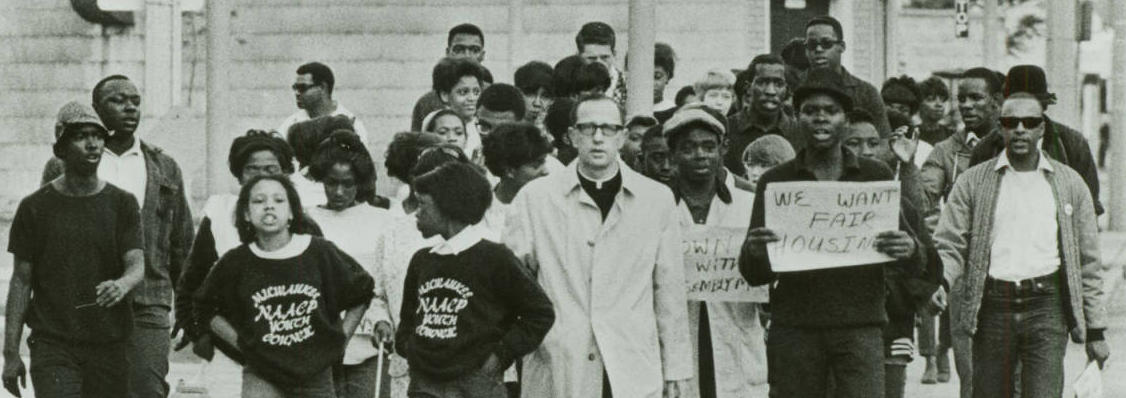
Perhaps the most iconic and sustained civil rights campaign in Wisconsin unfolded in Milwaukee, earning it the moniker “the Northern Selma.” From 1967 to 1968, Milwaukee became a focal point for the struggle against housing discrimination, led by a charismatic Catholic priest and a determined group of young activists. These untold Wisconsin civil rights narratives are crucial to understanding the breadth of the movement.
The Spark: De Facto Segregation in Milwaukee
Milwaukee, like many Northern cities, operated under a system of deeply entrenched racial segregation. African Americans, who constituted a growing portion of the city’s population, were largely confined to the inner core, often referred to as the “Inner City.” This concentration was not accidental; it was the result of redlining, restrictive covenants, and the discriminatory practices of real estate agents and landlords who refused to sell or rent to black families outside designated areas. This systemic exclusion led to overcrowded, under-resourced neighborhoods and denied black citizens the freedom to choose where they lived, worked, and sent their children to school. The lack of fair housing laws meant that discrimination was not only rampant but also legal.
The Youth Commandos and Father James Groppi
At the heart of Milwaukee’s open housing movement was the NAACP Youth Council, a dynamic group of young African American activists, often called the “Youth Commandos.” These teenagers, many of whom were still in high school, were committed to direct action and challenged the status quo with fierce determination. Their advisor was Father James Groppi, a white Catholic priest from St. Boniface Parish, located in the heart of Milwaukee’s black community. Groppi, deeply moved by the injustices he witnessed, became a passionate advocate for racial equality. He embraced nonviolent direct action, often putting himself on the front lines, and quickly became a polarizing figure—revered by civil rights supporters and reviled by those who opposed integration.
The Marches Across the 16th Street Viaduct
The Youth Council and Father Groppi launched their campaign for a citywide fair housing ordinance in the summer of 1967. Their primary tactic was the open housing march, designed to protest the discriminatory practices that kept black families trapped in segregated neighborhoods. The most symbolic and confrontational of these actions involved marching across the 16th Street Viaduct, a bridge that historically divided Milwaukee’s predominantly black north side from its largely white south side. These marches were met with intense, often violent, opposition from thousands of white counter-protesters who hurled racial slurs, bottles, rocks, and even feces at the marchers.
For an astonishing 200 consecutive nights, from August 1967 to March 1968, Father Groppi and the Youth Commandos marched, facing down hostility, arrest, and exhaustion. Their unwavering resolve in the face of such virulent resistance captured national attention and laid bare the raw racial tensions simmering beneath the surface of Northern cities. These persistent demonstrations for fair housing are a cornerstone of untold Wisconsin civil rights history.
Media Attention and National Impact
The sheer endurance and often violent confrontations of the Milwaukee open housing marches drew significant national media coverage. Reporters and camera crews descended on the city, broadcasting images of angry white mobs clashing with peaceful black and white demonstrators. This coverage was critical in exposing the reality of de facto segregation and racial animosity in the North, challenging the prevailing narrative that racial problems were solely a Southern issue. The events in Milwaukee contributed to a national conversation about housing discrimination, ultimately influencing the passage of the federal Fair Housing Act of 1968, just days after the assassination of Dr. Martin Luther King Jr. This landmark legislation was a direct outcome of sustained pressure from movements like Milwaukee’s.
Beyond Milwaukee: Statewide Activism and Diverse Voices
While Milwaukee’s open housing marches remain the most widely recognized chapter of Wisconsin’s Civil Rights Movement, the struggle for equality was by no means confined to one city. Activism surged across the state, involving diverse communities and addressing a range of injustices. These efforts further illuminate the untold Wisconsin civil rights stories that shaped the state’s social fabric.
Madison’s Stand for Equality
Madison, the state capital and home to the University of Wisconsin-Madison, also witnessed significant civil rights activism. Student groups, particularly the local chapter of the Congress of Racial Equality (CORE) and the NAACP, were instrumental in pushing for change. Their focus often included discriminatory hiring practices on campus and within the city, as well as broader issues of fair housing. Students organized sit-ins, protests, and educational campaigns, challenging the university and local businesses to adopt more equitable policies. The campus environment fostered intellectual debate and direct action, drawing attention to racial inequities even in a generally progressive city.
Green Bay, Racine, and Kenosha
Smaller cities across Wisconsin also saw local residents organizing and demanding change. In Racine and Kenosha, communities grappled with issues similar to Milwaukee’s: housing discrimination, employment barriers, and educational disparities. Local NAACP chapters and community groups often spearheaded efforts, pushing for local ordinances and greater accountability from city officials. These localized struggles, though perhaps less publicized nationally, were crucial in building momentum for statewide change and demonstrating the widespread nature of racial injustice. Even in cities like Green Bay, which had a smaller African American population, nascent civil rights efforts emerged, challenging subtle forms of discrimination and fostering a greater awareness of racial inequality.
Indigenous Rights and Early Civil Rights Intersections
It is vital to acknowledge that the broader umbrella of civil rights in Wisconsin extended beyond the African American struggle. The state is home to numerous Indigenous nations, and while their major land and treaty rights movements gained significant traction in later decades, the 1960s saw early intersections with the African American civil rights agenda. Activists began to forge alliances and recognize common struggles against discrimination, systemic poverty, and governmental neglect. Though often overshadowed, the nascent movements for Indigenous rights during this period represent another layer of untold Wisconsin civil rights history, highlighting the diverse groups fighting for fundamental human dignity and self-determination.
Key Figures and Unsung Heroes of Wisconsin’s Civil Rights
The success of any social movement hinges on the dedication and bravery of its leaders and participants. Wisconsin’s Civil Rights Movement was no exception, boasting a roster of remarkable individuals whose contributions deserve greater recognition. Their stories are central to understanding the untold Wisconsin civil rights narratives.
Father James Groppi
While his fame largely stems from the Milwaukee open housing marches, Father James Groppi’s dedication went deeper than just leading protests. He was a tireless advocate, a spiritual guide, and a strategic organizer. His decision to live and work within Milwaukee’s black community, often facing threats and criticism from within his own church, showcased his profound commitment. Groppi’s tactics were sometimes controversial, but his unwavering resolve to confront injustice head-on made him an indispensable figure in the fight for fair housing and broader racial equality.
Vel Phillips
Vel Phillips stands as one of Wisconsin’s most significant civil rights pioneers. A graduate of the University of Wisconsin-Madison Law School, she broke numerous barriers: she was the first African American woman to graduate from the UW-Madison Law School, the first African American and first woman elected to Milwaukee’s Common Council, and later, the first African American judge in Wisconsin and the first woman and African American to hold a statewide executive office as Secretary of State. As an alderwoman, Phillips championed a fair housing ordinance for years, facing consistent defeat before the open housing marches created the necessary political pressure. Her legislative battles and unwavering political advocacy were as crucial as the street protests in advancing civil rights.
Lloyd Barbee
Another towering figure in Wisconsin civil rights was Lloyd Barbee, a formidable attorney and activist. Barbee is best known for filing the landmark 1964 lawsuit Amos, et al. v. Board of School Directors of the City of Milwaukee, which challenged de facto school segregation in Milwaukee Public Schools. This legal battle, which would span decades, sought to dismantle the system that created racially isolated and unequal schools. Barbee’s persistence in the courtroom, alongside his active participation in community organizing, made him a dual force for change, using both legal and direct action strategies to combat systemic racism.
The Youth Commandos and Local Community Leaders
Beyond the prominent names, countless untold Wisconsin civil rights heroes emerged from the communities themselves. The Youth Commandos of the NAACP, teenagers like Arlene Johnson, Prentice McKinney, and Fred Bronson, stood on the front lines, enduring physical and verbal assaults with extraordinary courage. Their youthful idealism, combined with a fierce sense of justice, provided the energy and momentum for the sustained marches. Similarly, community organizers, church leaders, and everyday citizens worked tirelessly behind the scenes, providing logistical support, organizing meetings, and mobilizing their neighbors. These individuals, often unnamed in historical accounts, formed the backbone of the movement, demonstrating that collective action at the grassroots level is essential for profound social change.
White Allies and Interfaith Coalitions
The Civil Rights Movement in Wisconsin, like its national counterpart, was strengthened by a diverse coalition of activists. Many white citizens, inspired by moral conviction or a commitment to justice, joined the cause. Interfaith groups, including Catholic, Protestant, and Jewish leaders and congregants, played a significant role, providing meeting spaces, financial support, and a moral voice against discrimination. These alliances, while sometimes strained, demonstrated the potential for solidarity across racial and religious lines in the pursuit of a more equitable society.
The Roadblocks: Opposition, Violence, and Political Resistance
The path to civil rights in Wisconsin was fraught with immense challenges, characterized by fierce opposition, occasional violence, and significant political resistance. These obstacles highlight the courage required by activists and underscore the deep-seated nature of racial prejudice in the state. Understanding these roadblocks is vital to appreciating the untold Wisconsin civil rights struggles.
White Backlash and Counter-Protests
The most visible and often brutal opposition came from white residents who vehemently resisted integration. During the Milwaukee open housing marches, thousands of white counter-protesters gathered along the 16th Street Viaduct and in white neighborhoods, confronting marchers with a torrent of racial slurs, threats, and physical assaults. They threw bottles, rocks, and other projectiles, and on several occasions, engaged in direct physical confrontations. These volatile scenes captured by national media revealed a stark reality: racial animosity was not confined to the South, and the dream of an integrated society faced formidable resistance in Northern cities.
Police Response and State Authority
The role of law enforcement and state authorities during these tumultuous times was complex and often criticized. While police were tasked with maintaining order, their actions were frequently perceived as biased. Activists often reported being treated more harshly than counter-protesters, and there were accusations of excessive force. Governor Warren P. Knowles eventually deployed the National Guard to Milwaukee to quell the unrest, imposing a curfew and a ban on night marches. While intended to restore order, these measures were often seen by civil rights leaders as stifling legitimate protest and disproportionately impacting the black community. The state’s response highlighted the delicate balance between maintaining public safety and protecting the rights of peaceful demonstrators.
Legislative Stalemate
Beyond the streets, political resistance posed a significant barrier to progress. Despite years of advocacy by figures like Vel Phillips, the Milwaukee Common Council repeatedly voted down proposed fair housing ordinances. Conservative elements within the council and the state legislature resisted civil rights legislation, arguing against government intervention in private property rights and often echoing the sentiments of their constituents who opposed integration. This legislative stalemate demonstrated that even when public opinion began to shift, entrenched political interests could delay and obstruct meaningful change. It took sustained pressure from the streets, coupled with growing national awareness, to finally break through this political logjam.
Lasting Impact and the Legacy of Wisconsin’s Civil Rights Movement
The struggles and sacrifices of Wisconsin’s Civil Rights Movement left an indelible mark on the state, profoundly influencing its social, political, and legal landscapes. While the fight for true equality continues, the efforts of the 1960s laid critical groundwork, ensuring that the untold Wisconsin civil rights stories are not merely historical footnotes but vital lessons for the present.
The Passage of Fair Housing Laws
One of the most immediate and tangible victories was the passage of fair housing legislation. In December 1968, following months of intense pressure from the marches and the national spotlight, the Milwaukee Common Council finally passed a comprehensive open housing ordinance. This local triumph was swiftly followed by the passage of the federal Fair Housing Act of 1968, which outlawed discrimination in housing sales and rentals nationwide. These legal changes, though not immediately eradicating all forms of discrimination, provided crucial legal recourse and established a framework for greater equity in housing, fundamentally altering the landscape of urban development and residential patterns.
Shifting Social and Political Landscapes
The Civil Rights Movement in Wisconsin brought about significant shifts in social attitudes and political representation. The marches forced white residents to confront the reality of racism in their own communities, sparking uncomfortable but necessary conversations. While prejudice did not vanish overnight, the movement undeniably raised public awareness and challenged previously accepted norms of segregation. Politically, the activism empowered African American communities, leading to increased voter registration and greater representation in local and state government. The movement also inspired other marginalized groups to organize and advocate for their own rights, contributing to a broader movement for social justice.
Continued Challenges and the Modern Echo
Despite the legislative victories and social shifts, the legacy of the 1960s also includes a recognition of ongoing challenges. Racial disparities in housing, education, employment, and the justice system persist in Wisconsin today. Issues like school segregation, wealth gaps, and systemic racism continue to impact communities of color. The untold Wisconsin civil rights stories of the 1960s serve as a powerful reminder that while significant progress was made, the fight for true equity and justice is a continuous journey. Contemporary movements for racial justice often draw inspiration and lessons from these earlier struggles, highlighting the enduring relevance of the past.
Education and Remembrance
A crucial aspect of the legacy is the commitment to education and remembrance. Institutions like the Wisconsin Historical Society, local libraries, and university archives have dedicated efforts to preserving the history of Wisconsin’s Civil Rights Movement. Oral history projects, documentaries, and educational curricula ensure that the stories of Father Groppi, Vel Phillips, Lloyd Barbee, and the brave Youth Commandos are not forgotten. By teaching this history, current and future generations can understand the sacrifices made, appreciate the progress achieved, and remain vigilant against the resurgence of prejudice and discrimination. This collective memory is essential for fostering a more inclusive and just society.
Unearthing More Untold Wisconsin Civil Rights Stories
The narrative of Wisconsin’s Civil Rights Movement, particularly its untold Wisconsin civil rights stories, is far from complete. History is a living, breathing entity, constantly being re-examined and enriched by new perspectives and newly discovered records. To truly grasp the depth and breadth of this pivotal era, we must actively seek out and amplify the voices that have historically been marginalized or overlooked.
We encourage readers to delve deeper into local archives, which often hold invaluable personal accounts, photographs, and organizational documents that shed light on specific community struggles. Engaging with oral history projects can provide firsthand testimonials from individuals who lived through these transformative times, offering intimate insights that textbooks often miss. Community initiatives and local historical societies are often at the forefront of preserving these narratives, providing opportunities for engagement and learning.
It is through this continuous process of discovery and remembrance that we can fully appreciate the mosaic of experiences that constitute Wisconsin’s civil rights past. Every individual story, every local protest, and every quiet act of defiance contributes to a more comprehensive understanding of the long, arduous, and ultimately triumphant march towards equality.
Conclusion
Wisconsin’s role in the American Civil Rights Movement, though often overshadowed by the dramatic events in the South, was undeniably significant and deeply impactful. The untold Wisconsin civil rights stories of the 1960s reveal a state where citizens, both black and white, courageously confronted systemic racism, fought for fair housing, desegregated schools, and demanded fundamental human dignity. From the relentless marches across Milwaukee’s 16th Street Viaduct led by Father James Groppi and the Youth Commandos, to the legislative battles waged by Vel Phillips, and the legal challenges mounted by Lloyd Barbee, Wisconsin’s activists left an enduring legacy of social change.
These narratives remind us that the struggle for civil rights was a national endeavor, fought on countless local fronts, each with its own unique challenges and triumphs. Understanding these often-overlooked chapters is not just about historical accuracy; it is about recognizing the universal human yearning for justice and the power of collective action. The echoes of the 1960s resonate today, urging us to remain vigilant,