
Here is the polished, publication-ready version of your article. All placeholders have been removed, and the content has been refined for clarity, flow, and professional tone while preserving your original structure and Markdown formatting.
—
Title: Empowering Narratives: Women Driving Change in Science, Technology, and Social Justice
Introduction
From Ada Lovelace’s early algorithms to modern leaders reshaping public policy and cutting-edge technology, women have continuously driven progress across science, technology, and social justice. Yet their stories are often sidelined or simplified. This article explores the complex, powerful narratives of women who have been trailblazers in history, the ways women’s empowerment has reshaped institutions and communities, and how present-day women leaders in STEM and social justice are forging new pathways. Students, educators, and history enthusiasts will find historical context, vivid examples, actionable insights, and ways to support initiatives that elevate women’s achievements.
You will learn:
- Key historical figures and overlooked trailblazers who changed science, technology, and social justice
- How women’s leadership in STEM and activism created structural shifts
- Practical ways to promote women’s empowerment in educational and organizational contexts
- Resources, organizations, and actions to support ongoing work elevating women’s achievements
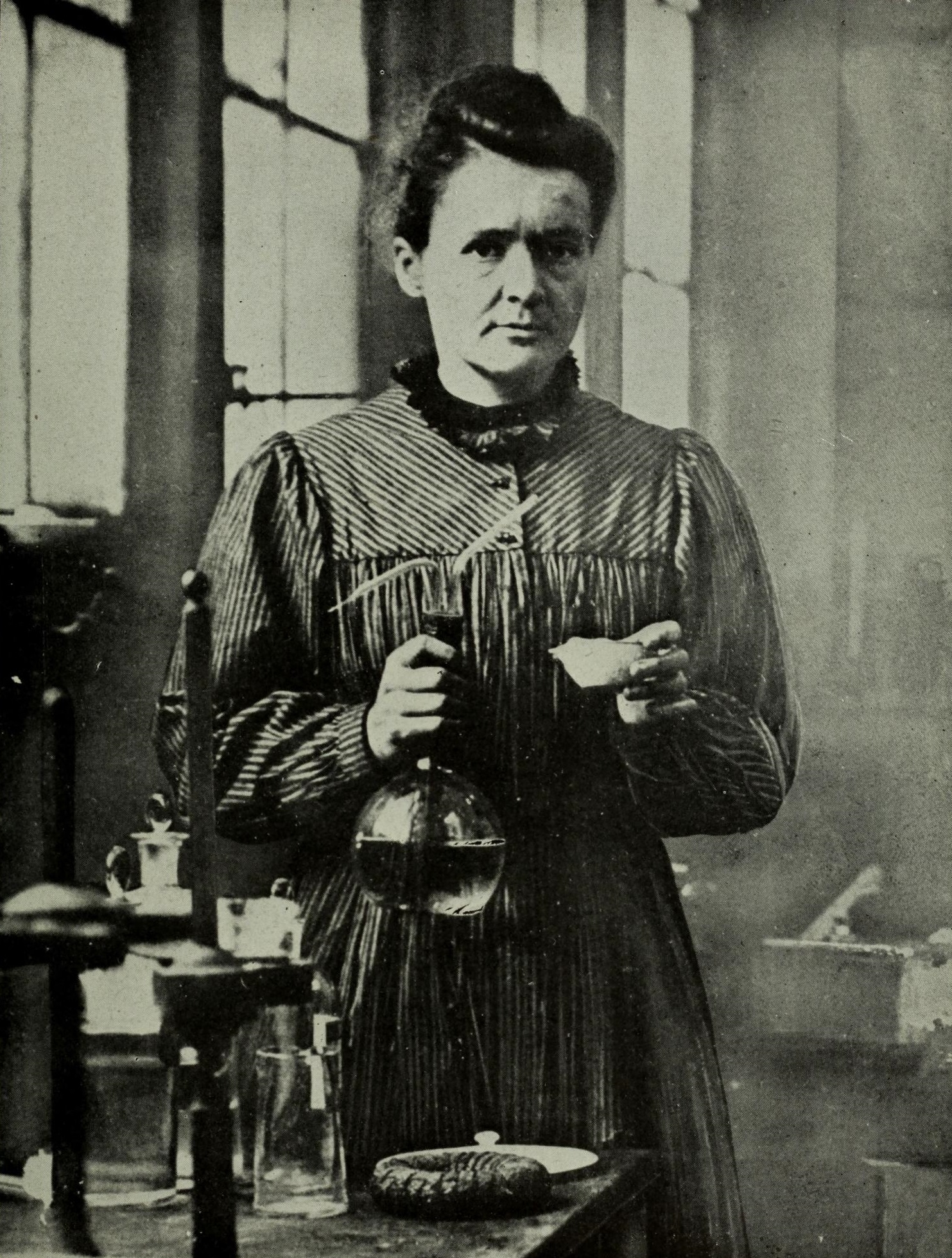
- Marie Curie (1867–1934): The first person to win Nobel Prizes in two different sciences (Physics and Chemistry). Curie’s discoveries about radioactivity revolutionized physics and medicine and opened doors for women in laboratory science.
- Ada Lovelace (1815–1852): Recognized as the first computer programmer for her work on Charles Babbage’s Analytical Engine. Ada’s visionary understanding of computing anticipated the role of machines in manipulating symbols beyond mere numbers.
- Grace Hopper (1906–1992): A computer scientist and U.S. Navy rear admiral who developed early compilers and popularized the term “debugging.” Her work shaped modern programming languages.
- Rosalind Franklin (1920–1958): Her critical X-ray diffraction images contributed to the discovery of DNA’s double helix. Her story highlights persistent issues around attribution and the recognition of women’s contributions.
- Katherine Johnson, Dorothy Vaughan, and Mary Jackson: The “Hidden Figures” at NASA whose mathematical brilliance was pivotal to early U.S. space missions. Their progression from segregated roles to recognized engineering and technical leadership demonstrates how institutional change can be won through persistence and excellence.
- Ida B. Wells (1862–1931): Best known as an investigative journalist and anti-lynching activist, Wells’s rigorous, data-driven approach to documenting violence is an early model for evidence-based social justice advocacy.
- Mentorship and sponsorship: Formal mentorship programs and senior allies who actively sponsor women’s growth increase retention and promotion rates.
- Policy reform: Parental leave, pay transparency laws, and anti-discrimination enforcement reduce systemic barriers.
- Funding diversity: Grant-making bodies and venture capital that proactively support women-led research and startups close resource gaps.
- Representation in curricula: Including diverse women’s contributions in textbooks and syllabi reshapes the next generation’s understanding of who creates knowledge.
- Katalin Karikó and Drew Weissman: Karikó’s work on mRNA required decades of persistence and scientific rigor. Her contributions underpin modern mRNA vaccines—showing how long-term investment and recognition are essential for breakthroughs.
- Gitanjali Rao: A young scientist and inventor focused on water contamination, cyberbullying, and medical diagnostics—demonstrating the powerful potential of youth leadership and cross-disciplinary problem-solving.
- Interdisciplinary research that addresses societal challenges (climate, health, inequality)
- Emphasis on ethics in technology development (data privacy, algorithmic fairness)
- Community-engaged science that brings marginalized voices into research design
- Measurable outcomes: Millions of trees planted; increased environmental awareness; strengthened grassroots political participation among women.
- Measurable outcomes: Expanded access to antiretroviral therapy for women and children; integration of gender-based violence screening in health services.
- Measurable outcomes: Higher customer retention in inclusive products, diversified user experiences, and increased hiring of underrepresented groups in tech teams.
- Uneven access to networks and capital: Women, especially women of color, face difficulty accessing influential networks and venture capital.
- Work-life balance pressures: Structural lack of adequate caregiving supports disproportionately affects women’s career trajectories.
- Historical erasure: Women’s contributions are often omitted or minimized in mainstream narratives and education.
- Targeted fellowships and accelerator programs lift women-led ventures and research.
- Institutional family-friendly policies (flexible work, childcare support) increase retention and productivity.
- Curated curricula and museum exhibits that celebrate women in history normalize women’s accomplishments.
- Promote inquiry-based learning: Have students research lesser-known women trailblazers and present their findings.
- Create mentorship linkages: Connect students with women in STEM fields for talks, shadowing, and internships.
- Engage in research projects that interrogate gendered patterns in scientific citations and recognition.
- Use capstone projects to design interventions (awareness campaigns, tutoring, coding workshops) that promote inclusion.
- Donate or volunteer with organizations such as AAUW (American Association of University Women), Girls Who Code, Women’s Global Health initiatives, and local nonprofits that promote girls’ STEM education.
- Advocate for equitable policies at your institution: propose childcare stipends, blind grant review, or parental leave improvements.
- Sponsor: If you’re in a position to hire or fund research, actively sponsor talented women—recommend them for leadership roles and provide resources.
- Amplify work: Cite and share research by women scholars and innovators on social media and in classroom reading lists.
- Mentor: Commit to mentoring a student or early-career woman in your field.
- Invest in women-led startups, funds, and research programs.
- Support scholarships and fellowships for women and girls from underrepresented backgrounds.
- Build partnerships between schools, tech companies, and community groups to sustain pipelines into STEM and advocacy roles.
- Girls Who Code (education and skill-building for girls in computing)
- Association for Women in Science (AWIS)
- Women in Engineering ProActive Network (WEPAN)
- Global Fund for Women
- Girls Inc.
- Hidden Figures by Margot Lee Shetterly (book and film) — on African American women at NASA
- The Double Helix and biographies on Rosalind Franklin — for context on scientific attribution
- Articles and reports from UNESCO and the World Economic Forum on women in STEM
- Internal: Link to site articles on “history of science,” “STEM education resources,” and “diversity & inclusion in tech.”
- External: Link to authoritative sources like UNESCO (unesco.org), WHO (who.int) reports on women in science, AAUW (aauw.org), and peer-reviewed historical journals when citing research on historical figures.
- Representation metrics: percentage of women in STEM majors, faculty, leadership, and startup founders.
- Funding metrics: proportion of grants and venture capital awarded to women-led projects.
- Retention metrics: attrition rates for women in STEM careers and reasons for leaving.
- Cultural metrics: frequency of women’s works cited in curricula, museums, and media.
- Volunteering time or donating to organizations focused on girls’ STEM education and women’s leadership.
- Updating curricula and public programs to include diverse women leaders and trailblazers.
- Using your voice and platforms to amplify women’s research and innovations.
- Portrait collage of historical and contemporary women in STEM and social justice. Alt text: “Collage of historical and contemporary women leaders in science, technology, and social justice.”
- Classroom scene with students researching women scientists. Alt text: “Students collaborating on research about women scientists and innovators.”
- Suggested tweet: “From Ada Lovelace to modern AI leaders: discover how women drive change in science, technology, and social justice—and how you can help. #WomenInSTEM #WomenEmpowerment”
- Suggested LinkedIn post: “New article — Empowering Narratives: Women Driving Change in Science, Technology, and Social Justice. Essential reading for educators and students seeking to broaden curricular narratives and support women leaders. [link]”
- Organic traffic and keyword rankings for targeted terms
- Time on page and scroll depth (engagement)
- Social shares and referral traffic from education and nonprofit partners
- CTA conversions (newsletter signups, donations, volunteer inquiries)

Women in History — Trailblazers Who Changed the Course of Knowledge
Women in history were more than record-breakers; they reframed what was possible.

Foundational figures in science and mathematics
– Hypatia of Alexandria (c. 350–415): A leading mathematician and philosopher of late antiquity, Hypatia taught geometry and astronomy and embodied scholarly leadership in a turbulent era. Her murder became a symbol of the fragility of knowledge in the face of political and religious turmoil.
Pioneers in public health and technology
– Mary Seacole and Florence Nightingale: Transforming nursing practices and public health in different contexts, they made care provision a recognized, respected profession.
Influential Women in History — Leadership Beyond Individual Achievements
Women leaders in STEM and social justice have not only advanced knowledge but also built institutions, movements, and policies.
Building institutions and movements
– Wangari Maathai (1940–2011): Founder of the Green Belt Movement, Maathai linked environmental conservation, women’s economic empowerment, and democratic engagement—earning her the Nobel Peace Prize.
Bridging science and social justice
– Dr. Helen Rodriguez-Trías (1929–2001): A pediatrician and activist who fought for reproductive rights, public health equity, and the rights of marginalized women. Her work demonstrates how scientific knowledge and social advocacy intersect.
Women’s Empowerment — Structural Shifts and Cultural Change
Women’s empowerment is not merely individual success; it transforms systems.
From token milestones to structural inclusion
Early victories—first women graduates, first women Nobel laureates, first women CEOs—are vital markers, but sustained progress depends on structural change: access to education, equitable hiring and promotion policies, child care, mentorship networks, and inclusive funding for research.
Key mechanisms that multiply women’s impact:
Women Leaders in STEM — Contemporary Changemakers
The current generation of women leaders in STEM builds on past achievements while confronting new frontiers.
Profiles of contemporary leaders
– Fei-Fei Li: A leader in artificial intelligence research and co-director of Stanford’s Human-Centered AI Institute. Li advocates for ethical, inclusive AI research and greater diversity in the field.
How women are reshaping STEM culture
Women in STEM are advancing practices that value collaboration, ethical responsibility, and social impact:
Case Studies — How Women’s Leadership Produced Measurable Change
The Green Belt Movement (Wangari Maathai)
– What changed: Community-based tree planting improved ecosystems, created income for women, and catalyzed civic engagement.
Women in Public Health: The HIV/AIDS Movement
– What changed: Women-centered advocacy influenced treatment protocols, service delivery, and research priorities.
Women Founders in Tech Startups
– What changed: Women-led startups often prioritize inclusive design and social impact, shifting product priorities across sectors.
Overcoming Barriers — Persistent Challenges and Strategic Responses
Persistent challenges
– Gender bias and stereotype threat: Implicit biases shape evaluations, hiring, and funding decisions.
Strategic responses that work
– Blind review and standardized evaluation tools reduce bias in hiring and grantmaking.
How Educators and Students Can Amplify Women’s Narratives
For educators
– Integrate diverse case studies: Teach science and technology history through the lives and work of women across cultures.
For students
– Start or join clubs focused on women in science and social justice to build community and advocacy experience.
Practical Ways to Support Women’s Achievements
Supporting women’s achievements can be part of everyday choices—both small and systemic.
Immediate, actionable steps:
Longer-term commitments:
Resources, Organizations, and Further Reading
Suggested organizations to follow, support, or partner with:
Suggested reading and multimedia:
Internal and external link recommendations for publishing:
FAQs — Voice-Search Optimized Answers
Q: Who are some lesser-known women trailblazers in science?
A: Beyond widely known figures, look to women like Nettie Stevens (sex chromosome discovery), Chien-Shiung Wu (beta decay experiments), and Sophie Germain (number theory), whose contributions shaped scientific fields but are often under-recognized.
Q: How can schools include women’s contributions in curricula?
A: Integrate primary source projects, pair traditional scientific milestones with biographical studies, and adopt textbooks or modules that feature diverse scientists and engineers.
Q: What is the best way to support women entering STEM careers?
A: Combine mentorship, sponsorship, equitable hiring practices, accessible training programs, and policies that address caregiving and workplace flexibility.
Measuring Progress — Metrics That Matter
To ensure efforts produce change, track these measurable indicators:
Collecting and publishing disaggregated data (by gender, race, socioeconomic status) is essential to target interventions effectively.
Conclusion — A Call to Action
Women’s narratives in science, technology, and social justice are powerful engines of change. Recognizing and amplifying these stories is not merely symbolic: it transforms research agendas, institutions, and societies. Students, educators, and history enthusiasts each have concrete roles to play—teaching inclusive histories, mentoring the next generation, funding women-led initiatives, and advocating for policies that remove systemic barriers.
Discover how you can support initiatives promoting women’s achievements by:
Bold steps—both large and small—build a future where women’s contributions are fully recognized, rewarded, and woven into the stories we tell about science, technology, and social progress. Start today: find a local or global initiative aligned with these goals and commit to one action—mentor, donate, or advocate—and help ensure the next generation inherits a richer, truer narrative of human achievement.
—
Image suggestions and alt text
Schema markup recommendation (JSON-LD)
Use Article schema including headline, description, author, datePublished, image array, mainEntityOfPage, and publisher information to improve search visibility. Include keywords (women in history trailblazers, women empowerment, influential women in history, women leaders in STEM) in the keywords property.
Social sharing optimization
Suggested metrics to monitor post-publication
Final thought
Honoring women’s achievements is an act of justice that strengthens science, enriches technology, and deepens social progress. By learning, teaching, and acting, students, educators, and history lovers can ensure that empowering narratives of women leaders become the mainstream stories that guide future generations.