
Empowering Narratives: Women Driving Change in Science, Technology, and Social Justice
Introduction
Across centuries and continents, women in history have been trailblazers whose discoveries, leadership, and advocacy reshaped societies and accelerated progress. From pioneering scientists who decoded the molecules of life to community leaders who transformed civil rights and access to education, influential women in history have repeatedly defied expectations and expanded the realm of possibility.
This article explores how women leaders in STEM and social justice built movements, advanced knowledge, and changed institutions—and why their stories matter today. Students, educators, and history buffs will gain an integrated view of landmark figures, lesser-known changemakers, and practical ways to support the continued advancement of women’s achievements. You’ll find thematic case studies, structural analysis of persistent barriers, examples of programs and policies that work, and concrete actions you can take to promote women empowerment. Read on to discover how these empowering narratives can inform classroom practice, inspire civic engagement, and guide institutional change.
—
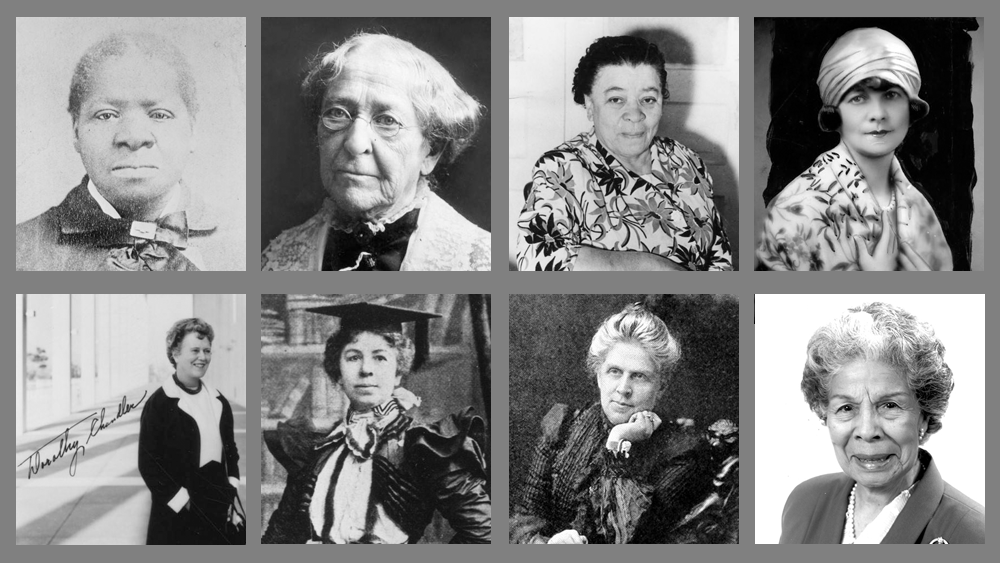
Women in History: Trailblazers Who Pioneered New Frontiers

Scientific Pioneers Who Changed Understanding
Marie Curie (1867–1934): The first person to win Nobel Prizes in two different sciences (Physics 1903, Chemistry 1911). Her work on radioactivity expanded physics and enabled medical applications like radiotherapy.
Rosalind Franklin (1920–1958): Her X-ray crystallography produced the critical Photo 51 that revealed DNA’s double helix structure. Though under-recognized in her lifetime, Franklin’s contributions are now widely acknowledged.
Katherine Johnson (1918–2020): A mathematician at NASA whose orbital calculations were vital to early U.S. human spaceflight. Her story highlights intersectional barriers and the power of institutional recognition.
Innovators in Technology and Engineering
Ada Lovelace (1815–1852): Often called the first computer programmer for her 19th-century notes on Charles Babbage’s Analytical Engine, demonstrating visionary insight into computing’s potential.
Hedy Lamarr (1914–2000): Beyond acting, co-invented spread-spectrum frequency-hopping technology—a precursor to modern wireless communications.
Radia Perlman (b. 1951): A computer scientist whose Spanning Tree Protocol made robust Ethernet networking possible; an exemplar of women leaders in STEM shaping foundational technologies.
Women Who Transformed Public Life and Social Justice
Sojourner Truth (c. 1797–1883): An abolitionist and women’s rights advocate whose speeches, including “Ain’t I a Woman?”, bridged race and gender in reform movements.
Emmeline Pankhurst (1858–1928): A leader of the British suffrage movement whose organizing tactics helped secure women’s political rights.
Malala Yousafzai (b. 1997): A contemporary activist for girls’ education whose global advocacy and Nobel Peace Prize exemplify modern intersectional activism.
—
Patterns in Empowerment: How Women Built Movements and Institutions
Education, Mentorship, and Informal Networks
Education has been a recurring lever for women empowerment. Formal schooling opened doors, but so did mentorship, study circles, and apprenticeship models. Women often advanced by creating their own networks—salons, clubs, and professional associations—where knowledge, resources, and influence accumulated.
Collective Action and Movement Strategies
Successful social and scientific change often came through collective action. Suffrage campaigns, labor unions led by women, and modern STEM advocacy groups demonstrate strategies like coalition-building, strategic litigation, public persuasion, and targeted policy advocacy.
Leveraging Institutions and Creating Parallel Structures
When existing institutions excluded women, they created alternatives: women’s colleges (e.g., Bryn Mawr, Smith), research labs led by women, and community-based NGOs. These parallel structures incubated talent and produced leaders who later transformed mainstream institutions.
—
Structural Barriers and Contemporary Challenges
Persistent Obstacles in Access and Recognition
Despite gains, women still face structural barriers: gender bias in hiring and promotion, pay gaps, underrepresentation in leadership roles, and citation and credit disparities in academia and tech. Intersectional factors—race, class, disability, and geography—compound these obstacles.
Cultural Norms and Implicit Bias
Stereotypes about aptitude (e.g., “boys are naturally better at math”) and leadership stereotypes (e.g., agentic behavior penalized for women) continue to limit opportunities. Implicit bias affects evaluation processes, funding decisions, and media representation.
Pipeline Problems vs. Leaky Pipelines
While encouraging girls into STEM matters, many systems suffer from “leaky pipelines” where women leave due to hostile climates, lack of support for caregiving, and limited advancement opportunities. Addressing retention is as urgent as boosting entry rates.
—
Case Studies: How Women Leaders in STEM and Social Justice Made Impact
From Laboratory to Policy—Marie Curie and Public Health
Marie Curie’s scientific work translated directly into public and medical benefits: isolating radium, developing mobile radiography units during WWI, and establishing research institutions. Her career shows how scientific excellence combined with public engagement can scale impact.
Community Organizing to National Policy—The Movement for Reproductive Rights
Women-led grassroots organizations have repeatedly shifted reproductive health policy. From early maternal health advocates to modern coalitions using litigation and legislatures, these efforts demonstrate organizing tactics that couple local mobilization with national strategy.
Tech Activism and Digital Inclusion—Contemporary Examples
Organizations like Black Girls Code and Girls Who Code provide education and community to underrepresented youth, addressing both the skills gap and cultural representation. Their measurable outcomes—increased confidence, portfolio projects, internship placements—highlight scalable interventions.
—
Educational Strategies to Teach Empowering Narratives
Integrate Diverse Biographies into Curricula
Replace token “first woman” mentions with integrated units that examine how gender, race, and class shaped scientific and social achievements. Use primary sources—letters, lab notes, speeches—to humanize historical figures.
Project-Based Learning and Role-Play
Encourage students to research a woman trailblazer and present a case study on her methods, obstacles, and impact. Role-play hearings, design sprints, or mock grant panels to teach how women navigated institutional constraints.
Cross-Disciplinary Modules
Pair STEM content with history and civics—for example, study the science of the polio vaccine while examining public health campaigns, or analyze the coding contributions of Ada Lovelace alongside computational theory.
—
Programs and Policies That Work: Evidence-Based Interventions
Institutional Reforms for Retention and Promotion
– Transparent hiring and promotion criteria reduce bias.
- Sponsorship programs (senior leaders advocating for junior women) increase advancement.
- Flexible tenure clocks and parental leave policies reduce attrition.
- Coalition-building: Movements that succeeded typically bridged class, race, and professional divides.
- Knowledge and narrative: Scientific breakthroughs accompanied public narratives that linked facts to human needs, amplifying adoption.
- Choose project topics highlighting women trailblazers and present to peers.
- Volunteer with local education nonprofits to tutor or run workshops for girls.
- Invite women leaders—scientists, technologists, activists—for talks and panels.
- Use service-learning projects that connect students to community organizations promoting women’s empowerment.
- Advocate for public programming that highlights women’s achievements.
- Donate to scholarships or fellowships for women in STEM and social-justice leadership.
- “women leaders in STEM” → /education/women-stem-leadership
- “women empowerment programs” → /programs/women-empowerment
- Katherine Johnson profile — NASA (https://www.nasa.gov) (rel=”noopener noreferrer”)
- Girls Who Code programs and resources (https://www.girlswhocode.com) (rel=”noopener noreferrer”)
- Photograph of Katherine Johnson at a NASA console — alt: “Katherine Johnson calculating trajectories at NASA”
- Photo of girls coding in a workshop — alt: “Young women collaborating on code during a tech workshop”
- Structural barriers persist; effective change requires both targeted interventions and broad cultural shifts.
- Education, mentorship, and storytelling are powerful levers to build sustained pathways for women leaders in STEM and social justice.
- Individual action and institutional reform together scale progress.
- Suggested tweet: “From Marie Curie to modern changemakers — how women leaders in STEM and social justice shaped history and how you can support their legacy. #WomenInHistory #WomenInSTEM”
- Suggested Facebook snippet: “Learn how women in science, technology, and social justice built movements, overcame barriers, and continue to inspire. Discover practical ways to support initiatives promoting women’s achievements.”
Funding, Grants, and Fellowships Targeted to Underrepresented Women
Targeted fellowships (e.g., postdoctoral awards for women scientists, grants for women-led startups) can accelerate careers and diversify leadership pipelines. Evidence shows early-career funding has outsized effects on later leadership.
Mentorship, Sponsorship, and Peer Networks
Mentorship provides guidance, but sponsorship opens doors by connecting protégés to high-impact opportunities. Peer networks offer emotional and practical support, helping address the leaky pipeline.
—
Influential Women in History Whose Stories Still Teach Us
Cross-Cutting Lessons from Selected Figures
– Resilience under constraint: Many leaders developed creative strategies when formal pathways were blocked.
Lesser-Known but Pivotal Figures
Chien-Shiung Wu (1912–1997): Experimental physicist who led key experiments disproving parity conservation—a crucial contribution often overshadowed in public memory.
Alice Ball (1892–1916): Developed the first effective treatment for leprosy; her work was historically misattributed for decades.
Wangari Maathai (1940–2011): Founder of the Green Belt Movement in Kenya, combining environmentalism with community empowerment and women’s leadership.
—
How Storytelling Shapes Recognition and Policy
Media Representation and Public Memory
Which stories get told—and by whom—influences who is celebrated and who is forgotten. Museums, textbooks, and media shape public memory; inclusive storytelling corrects omissions and builds role models.
Museums, Exhibitions, and Digital Archives
Curated exhibits and online archives amplify women’s contributions. Virtual timelines, annotated document collections, and oral histories make the past accessible to students and the public.
—
Concrete Actions Students, Educators, and History Buffs Can Take
For Students
– Join or start women-in-STEM clubs; create mentorship circles.
For Educators
– Audit curricula and reading lists for gender balance and inclusion.
For History Buffs and Community Members
– Support local museums and archives that preserve women’s histories.
—
How Institutions and Funders Can Scale Impact
Structural Investment Priorities
Funders and institutions should prioritize: early-career grants for women, leadership development programs, research on gendered barriers, and support for community-based initiatives that produce local leaders.
Metrics and Accountability
Track representation across recruitment, retention, promotion, and grant-awarding. Publish equity reports and tie leadership compensation to measurable progress on inclusion.
—
Social and Technological Innovations Advancing Equity
Digital Platforms for Visibility and Mentorship
Online mentorship platforms, open-access repositories of women’s research, and virtual networks expand access to role models and reduce geographic barriers.
Data-Driven Interventions
Use disaggregated data to identify gaps and target interventions. Predictive analytics can help institutions design retention strategies before the pipeline leaks.
—
FAQs—Answering Common Questions
Q: Why highlight individual women when structural change is needed?
A: Individual narratives humanize broader structural issues; they inspire action and reveal patterns that help design systemic solutions.
Q: Are targeted programs for women fair?
A: Targeted programs address historical and structural imbalances. When designed transparently and with clear goals, they accelerate equity and produce broader benefits for institutions and society.
Q: How can small-scale actions matter?
A: Mentorship, classroom choices, and local advocacy collectively shift norms and create pathways. Small actions scale through networks and institutions.
—
Resources and Further Reading
Biographical resources: Biographies and primary sources on Marie Curie, Rosalind Franklin, Katherine Johnson, Ada Lovelace.
Organizations: Girls Who Code, Black Girls Code, Association for Women in Science (AWIS), UN Women.
Archives and interactive exhibits: National Women’s History Museum, Library of Congress digital collections.
Internal Link Suggestions
– “women in history trailblazers” → /history/women-trailblazers
External Link Suggestions (Open in New Window)
– Marie Curie biography — Nobel Prize (https://www.nobelprize.org) (rel=”noopener noreferrer”)
Image Suggestions and Alt Text
– Portrait of Marie Curie in her laboratory — alt: “Marie Curie working in her laboratory, early 20th century”
—
Key Takeaways
– Women in history have shaped science, technology, and social justice through innovation, organizing, and institution-building.
—
Conclusion
Empowering narratives about women driving change are not just histories to admire; they are roadmaps for action. Whether you are a student inspired to study a STEM field, an educator rethinking your syllabus, or a history enthusiast championing inclusive public memory, your choices matter. Support organizations that fund women’s research and leadership, advocate for institutional reforms like transparent hiring and flexible career policies, and center women’s stories in classrooms and museums.
Small acts—mentoring a young person, sharing a lesser-known biography, or donating to a scholarship—ripple outward. Discover how you can support initiatives promoting women’s achievements by joining local chapters of advocacy groups, volunteering with STEM education nonprofits, or contributing to funds and fellowships dedicated to women leaders. Together, we can ensure that the narratives we pass on reflect the full breadth of human ingenuity and that more women are able to lead, innovate, and transform the world.
—
Call to Action
Discover how you can support initiatives promoting women’s achievements: join a mentorship program, donate to scholarships for women in STEM, volunteer with organizations like Girls Who Code or AWIS, and advocate for inclusive policies at your school or workplace. Start today by exploring local programs, signing up for volunteer opportunities, or sharing a story of an influential woman in history to help inspire the next generation.
—
Written by an education and history specialist with experience in gender equity in STEM and public history programming.
—
Meta Description: Explore how women in history reshaped science, technology, and social justice—and learn concrete ways to support women’s achievements today.
Keywords: women in history trailblazers, women empowerment, influential women in history, women leaders in STEM
Schema Markup Recommendation: Use Article schema with fields: headline, author, datePublished, keywords, description, mainEntityOfPage, image. Include Publisher with logo and WebSite structured data.
Social Sharing Optimization: