
The Rise and Fall of Empires: A Comprehensive Guide for Students and History Enthusiasts
Why do empires rise to extraordinary heights only to crumble generations later? From Rome to the Mongol khanates, the history of empires is a repeated story of innovation, conquest, cultural florescence—and collapse. This article examines the political, economic, social, environmental, and military factors that drive imperial expansion and eventual decline. It synthesizes classic theories—such as overstretch and institutional decay—with modern research on climate stress, disease, and global trade shifts, using detailed case studies to illustrate how these forces interacted in different contexts.
Students and history enthusiasts will gain a structured framework to analyze empires, concrete examples spanning ancient to early modern periods, and practical tools for classroom essays or research projects. You’ll find comparative timelines, cause-and-effect charts, discussion questions, citation-ready sources, and recommendations for further reading. By the end, you’ll be able to distinguish between proximate triggers and deep structural causes of imperial collapse—and to apply that understanding to both historical and contemporary global powers.
—
1. Defining “Empire” and Key Concepts

What is an empire?
An empire is a political unit that extends authority over diverse peoples and territories, typically maintained through centralized control, military power, tributary relationships, and administrative institutions. Empires vary by structure: direct rule (Roman provinces), indirect rule (British Raj’s princely states), or confederations (Mongol khanates).
Essential terms and distinctions
– Imperial expansion: The process of acquiring territory and influence.
- Metropole and periphery: The imperial center (capital or administrative core) versus outlying territories.
- Overextension (imperial overstretch): When logistical and fiscal demands exceed capacity.
- Hegemony vs. empire: Hegemony denotes leadership through consent and economic dominance; empire usually implies formal political control.
- Inflation, debasement of currency, and unsustainable military expenditures
- Decline in productive capacity due to loss of skilled labor or land degradation
- Soil erosion, deforestation, and resource depletion degrade the economic base.
- Pandemics (e.g., Justinianic Plague, Black Death) cause population collapse and labor shortages.
- Political fragmentation and succession crises weakened central authority.
- Economic strain: heavy taxation, debased currency, and declined urban economies.
- Military pressures from Germanic migrations and the Huns, combined with overreliance on foederati (barbarian federates).
- Administrative complexity and difficulty defending long frontiers.
- Fiscal strain due to court corruption, land concentration, and tax exemptions for elites.
- Peasant rebellions (Yellow Turban Rebellion) eroded state capacity.
- Breakdown of central control and rise of regional warlords.
- Military defeat catalyzed by Spanish conquest (superior firearms, cavalry, and alliances with disaffected subject peoples).
- Smallpox and other epidemics decimated indigenous populations, undermining labor and morale.
- Internal political rivalries and tributary resentments made the empire vulnerable to external manipulation.
- Administrative divergence and cultural differentiation across vast territories.
- Succession disputes and decentralizing tendencies among khans.
- Integration challenges: governing settled agrarian societies versus nomadic pastoral traditions.
- Chronicles and letters
- Material culture: coins, pottery, architecture
- Use a framework: structural versus proximate causes; internal versus external factors.
- Bring in primary evidence and secondary scholarship; cite specific episodes (e.g., plague, battle, tax revolt).
- Compare cases briefly to show generalizability or uniqueness.
- Conclude by assessing the weight of evidence and suggesting alternative interpretations.
- How do ideology and legitimacy interact with material causes of collapse?
- Can modern states learn resilience strategies from historical empires?
- Invest in institutions that adapt to changing conditions.
- Manage resource usage and heed environmental indicators.
- Prevent extreme inequality to avoid social unrest.
- Maintain flexible foreign-policy tools rather than permanent military commitments beyond capacity.
- Cambridge University Press — books on empire history (opens in new window)
- JSTOR — scholarly articles on empires (opens in new window)
- Encyclopaedia Britannica — overviews of specific empires (opens in new window)
- Nature/Science — interdisciplinary research on climate and historical collapse (opens in new window)
- Peter Heather, The Fall of the Roman Empire
- Joseph Tainter, The Collapse of Complex Societies
- Willard McNeill, Plagues and Peoples
- Justin Pollard, Empires of the World: A Comparative History
- Climate and History
- History of Military Technology
- Cambridge Journals — empire studies (opens in new window)
- Nature — articles linking climate and history (opens in new window)
- Maps of imperial extents (Rome, Mongol Empire)
- Archaeological photos (ruins, coinage)
- Paleoclimate graphs
- “Map showing territorial extent of the Roman Empire at its height”
- “Tree-ring climate reconstruction indicating drought during late Bronze Age”
- “Coin of the Ottoman Empire illustrating imperial iconography”
—
2. Major Theories Explaining the Rise of Empires
Economic drivers
Access to resources, trade routes, and surplus production fuel expansion. Agricultural productivity and control of long-distance trade—silk routes, spice trade, trans-Saharan routes—provided the economic base for state formation and military investment.
Military innovation and organization
Superior military technologies, tactics, or logistics—such as Roman engineering, Mongol cavalry mobility, or Ottoman artillery—allowed states to conquer and hold wide territories.
Political and institutional factors
Centralized bureaucracies, taxation systems, and legal frameworks enabled empires to administer diverse populations. Effective administration could integrate conquered elites through co-optation and clientage systems.
Cultural and ideological motivations
Religion, ideology, and legitimizing narratives—divine kingship, jihad, the “civilizing mission”—mobilized populations and justified expansion. Shared elite languages and literatures (Latin, Persian, Arabic) facilitated governance and cultural cohesion.
—
3. Why Empires Fall: Core Causes and Mechanisms
Collapse is seldom monocausal. Empires typically fail through interacting stressors that erode resilience over time. Below are recurring mechanisms identified by historians, archaeologists, and political scientists.
1. Economic decline and fiscal crisis
– Loss of revenue from tax base shrinkage or declining trade
2. Military defeats and overstretch
Military overextension strains resources; simultaneously facing multiple fronts invites defeat. Logistics, supply lines, and recruitment challenges undermine battlefield effectiveness.
3. Political fragmentation and elite competition
Succession crises, factionalism, and loss of central authority fragment states. When elites prioritize local power over imperial cohesion, administrative systems collapse.
4. Social unrest and internal rebellion
Heavy taxation, forced labor, demographic shifts, or cultural marginalization provoke revolts. Repeated internal uprisings sap military and fiscal strength and erode legitimacy.
5. Environmental stress and disease
– Climate change (droughts, cooling or warming periods) reduces agricultural yields.
6. Technological and trade shifts
Changes in trade routes—such as maritime paths that bypassed land empires—or military technologies can undermine older imperial models. Economic centers shift, leaving previous hubs marginalized.
7. Ideological and cultural change
Loss of ideological cohesion or confidence in ruling institutions weakens consent. Competing religions or identities can realign loyalties away from imperial authority.
—
4. Case Studies: How Causes Interact in Practice
Below are representative case studies illustrating different combinations of causes. Each case highlights proximate triggers and deeper structural weaknesses.
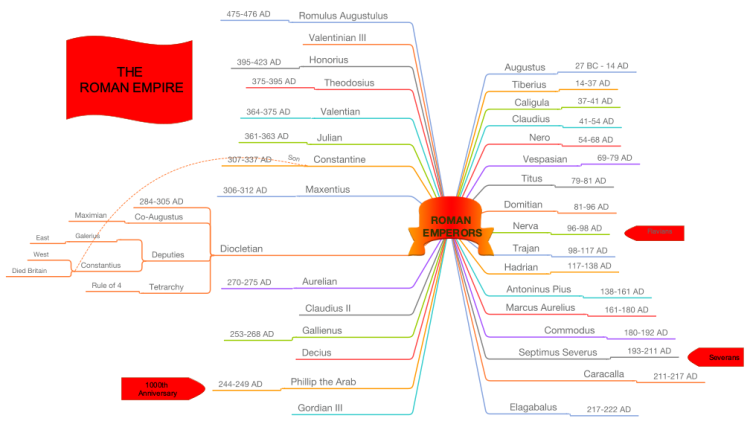
Roman Empire (Western Empire’s fall, 5th century CE)
Key factors:
Interacting causes: Repeated invasions exposed military and fiscal weakness while internal political divisions prevented coherent responses.
Han Dynasty (China, end of 2nd century CE)
Key factors:
Interacting causes: Economic inequality sparked social unrest, which compounded political fragmentation and military breakdown.
Aztec Empire (16th century)
Key factors:
Interacting causes: Disease and military technology were proximate triggers, but existing social cleavages enabled rapid collapse.
Mongol Empire (fragmentation after Kublai Khan)
Key factors:
Interacting causes: The sheer scale of the empire and lack of durable institutional integration led to political fragmentation and the formation of successor states.
—
5. Comparative Patterns and Cross-Cutting Themes
Structural weaknesses precede collapse
Empires rarely fall overnight. Long-term structural imbalances—economic inequality, administrative decay, unsustainable military models—create vulnerability. Short-term shocks (invasion, plague, climate event) often act as catalysts.
Scale matters
Larger empires face greater coordination problems: slower communications, diverse populations, and longer supply lines. Scale amplifies both benefits (resource pool) and vulnerabilities (logistical challenges).
Adaptation and resilience determine longevity
Successful empires adapt: reform taxation, co-opt elites, invest in infrastructure, and innovate militarily. Examples include Tang China’s reforms and the Ottoman millet system, which managed diversity effectively for centuries.
—
6. Tools and Methods for Studying Empires
Primary sources
– Administrative records (tax rolls, inscriptions, legal codes)
Archaeological and environmental data
Pollen cores, tree rings, and sediment analysis reveal climate patterns. Settlement archaeology shows urban decline or continuity. Bioarchaeology exposes demographic and health trends.
Quantitative and comparative methods
Historical datasets (population estimates, battle frequencies, coin hoards) enable statistical analysis. Comparative frameworks reveal recurring patterns across civilizations.
Interdisciplinary approaches
Combining history, archaeology, climatology, epidemiology, and economics yields richer explanations than single-discipline models.
—
7. Classroom Applications and Essay Strategies
How to build a strong essay on empire collapse
1. Define terms clearly and state the thesis: argue whether one factor or multiple factors caused the collapse.
Discussion questions for classrooms
– Were environmental factors decisive in any empire’s collapse, or merely contributory?
—
8. Contemporary Relevance: Lessons for the Modern World
While modern nation-states differ from historical empires, parallels exist. Global powers face overextension risks, economic interdependence creates vulnerabilities, and climate change poses systemic threats. Key lessons include:
Quotable takeaway: “Empires do not die from one cause; they crumble where long-standing structural weaknesses meet sudden shocks.”
—
9. Timeline: Selected Empires — Rise and Fall (Concise Reference)
| Empire | Peak Period | Primary Causes of Decline |
|——–|————-|—————————|
| Roman (West) | 1st–2nd centuries CE | Political fragmentation, economic strain, barbarian invasions |
| Han China | 2nd century BCE–2nd century CE | Corruption, land concentration, peasant rebellion |
| Gupta India | 4th–6th centuries CE | Regional fragmentation, Huna invasions |
| Byzantine Empire | 6th–10th centuries CE | Military losses, economic contraction, Crusader sacking |
| Mongol Empire | 13th century CE | Succession disputes, administrative divergence |
| Aztec Empire | 15th–16th centuries CE | Conquest by Spanish, disease, internal resentments |
| Ottoman Empire | 16th–17th centuries CE | Military stagnation, fiscal strain, nationalist movements |
—
10. Recommended Readings and Authoritative Sources
Suggested external links to authoritative sources:
Recommended monographs and introductions:
—
11. Internal and External Link Suggestions for Website Publication
Internal links (anchor text recommendations)
External links (authoritative sources)
– Encyclopaedia Britannica — “Empire” (opens in new window)
—
12. Frequently Asked Questions (FAQ)
Q: Are environmental factors more important than political ones in empire collapse?
A: Neither alone explains collapse universally. Environmental stress can trigger crises, but political institutions’ resilience determines whether societies adapt or disintegrate.
Q: Could modern states collapse like ancient empires?
A: Structural parallels exist—economic strain, environmental threats—but global institutions, nuclear deterrence, and economic interdependence create different dynamics. Collapse in today’s context would look different and likely be more gradual or partial.
Q: Which single factor most often precedes collapse?
A: Political fragmentation and loss of central authority are frequent proximate precursors across cases, though they usually arise from deeper economic, social, or environmental problems.
—
13. Image and Accessibility Recommendations
Suggested images:
Image alt text examples:
—
14. Schema Markup Recommendation
Use Article schema (JSON-LD) with properties: headline, description, author, datePublished, mainEntityOfPage, image, and keywords (include: rise and fall of empires, causes of empire decline, imperial expansion). Ensure external links open in a new window and internal links open in the same window for UX consistency.
—
Conclusion — Key Takeaways and Next Steps
The history of empires shows repeating patterns: material prosperity and military prowess enable expansion; long-term structural weaknesses and sudden shocks precipitate collapse. Understanding these dynamics requires an interdisciplinary approach that weighs proximate triggers against deep-rooted causes. Students should practice applying a multi-causal framework to case studies, while enthusiasts can deepen knowledge through primary sources and archaeological reports.
Action steps: