Here is the polished, publication-ready version of the article. All placeholder text has been removed, and the content has been refined for clarity, flow, and professional presentation.
—
Unveiling the Legacy of Women Trailblazers: Stories of Pioneering Figures Who Shaped History
Women in history have shaped civilizations, led movements, and broken barriers across science, politics, arts, and social justice. As Women’s History Month 2026 approaches, it’s vital to revisit the lives and legacies of famous women in history and the powerful women in history whose courage transformed their eras. This article explores inspiring women from history—some household names, others overlooked—tracing how their decisions, discoveries, and defiance redefined what was possible. Students and history enthusiasts will gain context, insights, and resources to deepen their understanding and appreciation of these pioneers.
Introduction: Why Women’s Stories Matter
Women’s contributions have often been marginalized in traditional narratives, yet their influence ripples through every domain of human progress. Recognizing these contributions matters for historical accuracy, cultural inclusion, and empowering future generations. During Women’s History Month 2026 and beyond, retelling the stories of trailblazing women illuminates patterns of resilience and innovation that continue to inspire activists, scientists, artists, and leaders today.
In the sections that follow, we profile a diverse set of women across time and geography, examine common themes in their journeys, and offer resources for learners who want to explore further. Each profile highlights context, achievements, challenges overcome, and lasting impact—providing both factual detail and interpretive insight to support classroom work, research projects, or personal enrichment.
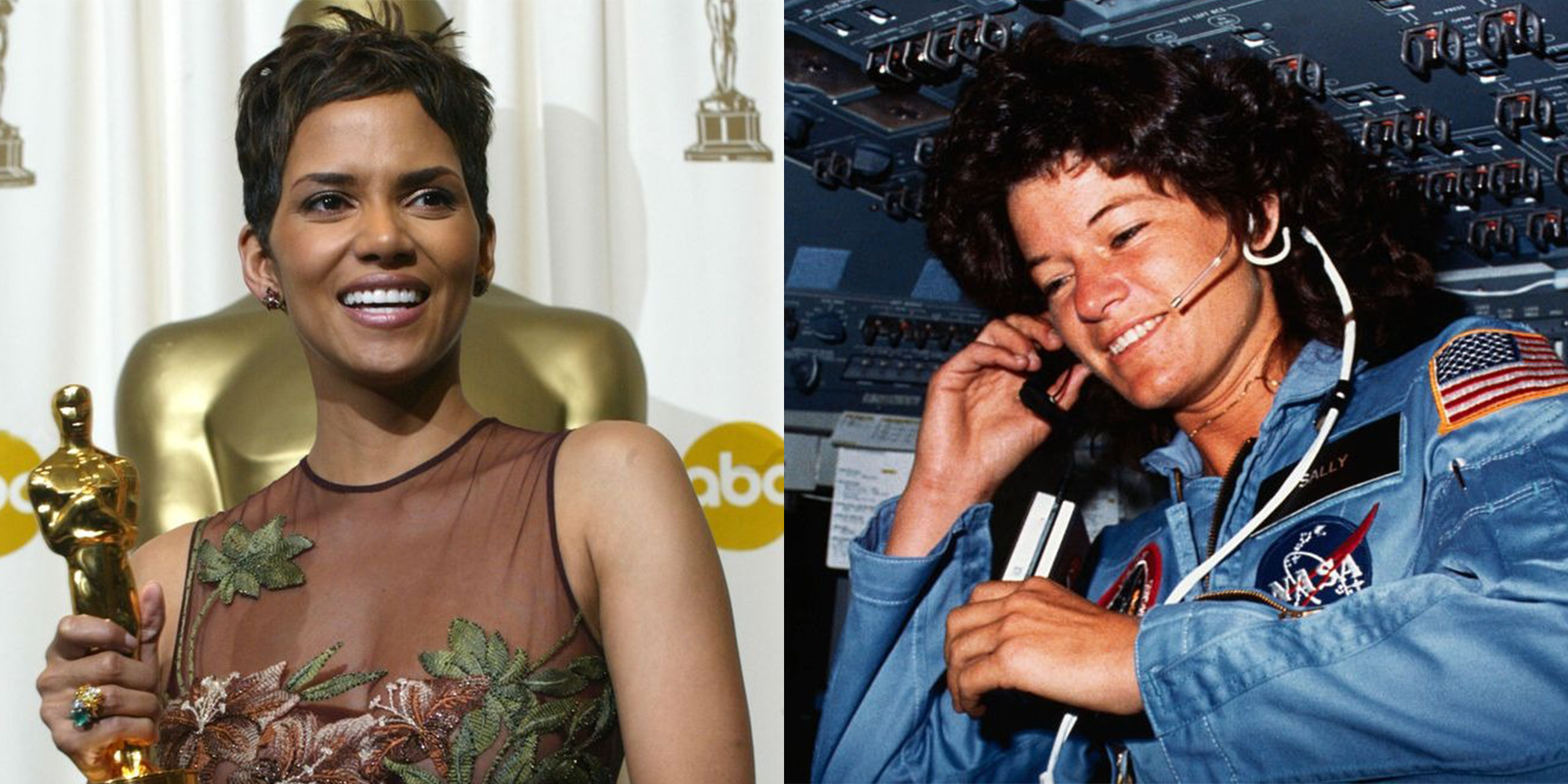
Iconic Trailblazers: Famous Women in History Who Changed the World
These figures are widely recognized for landmark achievements that altered political landscapes, scientific understanding, and cultural norms.
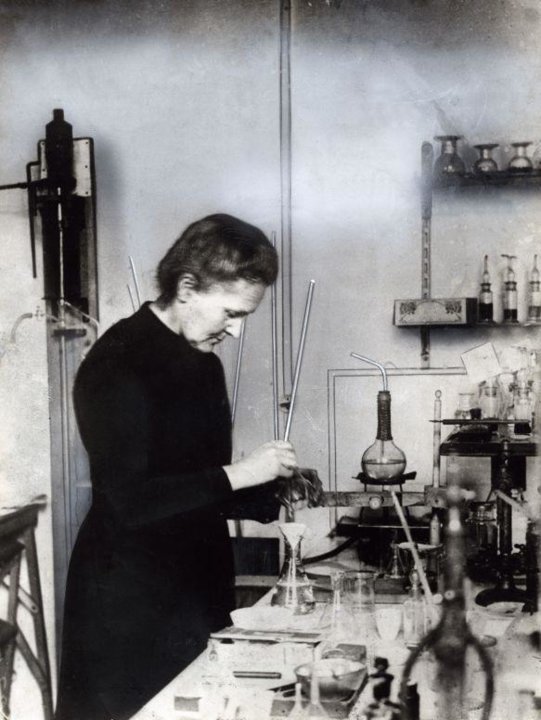
Marie Curie (1867–1934) — Pioneering Scientist and Double Nobel Laureate
Marie Curie’s work on radioactivity established foundational principles in physics and chemistry. She was the first person awarded two Nobel Prizes in different sciences (Physics, 1903; Chemistry, 1911). Curie discovered polonium and radium, developed methods for isolating radioactive isotopes, and applied her knowledge to medical uses of radiation. Her career confronted sexism in academia and limited resources, yet she persevered—establishing the Radium Institute in Paris and training a new generation of scientists.
Legacy: Curie’s techniques advanced cancer treatment and nuclear science; her life is a study in ethical complexity and dedication to research.
Sojourner Truth (c. 1797–1883) — Abolitionist, Women’s Rights Advocate
Born into slavery in New York, Sojourner Truth escaped and became an influential preacher and advocate. Her 1851 “Ain’t I a Woman?” speech powerfully challenged gender and racial norms in antebellum America, critiquing both white suffrage activists and slaveholders. Truth fought for abolition, land grants for formerly enslaved people, and women’s rights, collaborating with Frederick Douglass and others.
Legacy: Truth’s intersectional advocacy foregrounds modern discussions about race, gender, and justice.
Rosa Parks (1913–2005) — Catalyst of the Montgomery Bus Boycott
Rosa Parks’s refusal to give up her seat to a white passenger in Montgomery, Alabama, in 1955 sparked a mass-led boycott that became a cornerstone of the American Civil Rights Movement. Parks’s quiet courage and civic engagement—along with the organizing of leaders such as Dr. Martin Luther King Jr.—helped dismantle segregationist policies and steered legal and social reforms toward equality.
Legacy: Parks exemplifies how individual moral resolve can galvanize collective action and legislative change.
Emmeline Pankhurst (1858–1928) — Architect of the Women’s Suffrage Movement in Britain
Emmeline Pankhurst founded the Women’s Social and Political Union (WSPU) in 1903, championing militant tactics to ensure women’s suffrage. Her activism included protests, civil disobedience, and hunger strikes while imprisoned. Pankhurst’s strategies accelerated suffrage debates and helped secure voting rights for British women after World War I.
Legacy: Pankhurst’s leadership highlights strategic diversity in social movements and the complexities of protest ethics.
Groundbreakers in Science, Medicine, and Technology
From laboratories to battlefields, women have made decisive contributions to knowledge and health—often against institutional resistance.
Rosalind Franklin (1920–1958) — Key Contributor to DNA’s Discovery
Rosalind Franklin’s X-ray diffraction images of DNA, particularly Photo 51, were pivotal to understanding the molecule’s double-helix structure. Though James Watson, Francis Crick, and Maurice Wilkins received primary recognition and the Nobel Prize in 1962, Franklin’s work is now widely acknowledged as essential to molecular biology.
Legacy: Franklin’s experience underscores ongoing discussions about recognition, gender bias in science, and scientific collaboration ethics.
Elizabeth Blackwell (1821–1910) — First Female Physician in the United States
Elizabeth Blackwell overcame gendered barriers to become the first woman to receive a medical degree in the U.S. in 1849. She opened a dispensary to serve poor women and co-founded the New York Infirmary for Women and Children. Blackwell advocated for women’s medical education and public health reforms.
Legacy: Blackwell paved the way for women in medicine and shaped early public health initiatives focused on women and children.
Katherine Johnson (1918–2020) — NASA Mathematician and Spaceflight Pioneer
Katherine Johnson’s orbital mechanics calculations were critical to the success of early U.S. spaceflights, including John Glenn’s 1962 orbital mission. Working at NASA during segregation and gender discrimination, Johnson’s precision and analytical skills helped safeguard human spaceflight trajectories.
Legacy: Johnson’s story highlights contributions of Black women in STEM and inspires efforts to broaden access to technical fields.
Leaders and Stateswomen: Powerful Women in History Who Held Office
Women have governed nations, navigated crises, and reframed diplomacy. Their leadership styles and policy priorities reveal varied approaches to power.
Queen Elizabeth I (1533–1603) — The Elizabethan Age and Consolidation of Power
Reigning for 45 years, Elizabeth I balanced religious tensions, naval expansion, and political intrigue to stabilize England after turbulent mid-16th-century rule. Her patronage of the arts ushered in the Elizabethan cultural flourishing and cemented England’s emergence on the world stage.
Legacy: Elizabeth I demonstrates how political acumen and personal branding can steer national identity.
Indira Gandhi (1917–1984) — India’s First Female Prime Minister
Indira Gandhi, serving multiple terms as India’s prime minister, centralized political power and pursued ambitious economic and social programs, including the Green Revolution. Her leadership was marked by decisive action—sometimes authoritarian—such as the 1975–1977 Emergency. Gandhi’s tenure reshaped modern India’s political landscape.
Legacy: Gandhi’s complex legacy invites reflection on leadership, development policy, and civil liberties.
Ellen Johnson Sirleaf (b. 1938) — Africa’s First Elected Female Head of State
As Liberia’s president (2006–2018), Ellen Johnson Sirleaf led post-conflict reconstruction, debt relief efforts, and initiatives to strengthen governance and women’s roles in public life. A Nobel Peace Prize laureate, she emphasized economic recovery and reconciliation after civil war.
Legacy: Johnson Sirleaf’s tenure shows how female leadership can prioritize stability, international cooperation, and inclusion.
Artists, Writers, and Cultural Pioneers
Women have shaped cultural narratives and artistic expression, expanding how societies interpret identity, resistance, and beauty.
Frida Kahlo (1907–1954) — Icon of Artistic Self-Expression
Frida Kahlo’s paintings blended surrealism, Mexican folk traditions, and personal biography. Her candid exploration of pain, identity, and gender challenged artistic norms. Kahlo’s image and work have become enduring symbols of resilience and cultural pride.
Legacy: Kahlo’s art invites conversations about gender, disability, and national identity in creative practice.
Toni Morrison (1931–2019) — Literary Architect of African American Experience
Toni Morrison’s novels—Beloved, Song of Solomon, The Bluest Eye—reoriented American literature by foregrounding Black voices, memory, and trauma with lyrical depth. Morrison’s 1993 Nobel Prize in Literature recognized her transformative storytelling and moral imagination.
Legacy: Morrison’s work demonstrates how narrative can recover suppressed histories and foster empathy.
Resistance, Activism, and Social Reformers
Activists and reformers often risked personal safety to confront injustice and reshape public consciousness.
Harriet Tubman (c. 1822–1913) — Conductor of the Underground Railroad
Harriet Tubman escaped slavery and then risked her life repeatedly guiding others to freedom via the Underground Railroad. During the Civil War, she served as a scout, spy, and nurse for the Union Army. Tubman’s courage and tactical skill stand as powerful examples of resistance.
Legacy: Tubman’s life illustrates the intersection of moral courage, strategic organizing, and liberation politics.
Malala Yousafzai (b. 1997) — Education Advocate and Youngest Nobel Peace Laureate
After surviving an assassination attempt by the Taliban for advocating girls’ education in Pakistan, Malala Yousafzai became a global symbol for educational rights. She co-founded the Malala Fund and continues to campaign for girls’ access to quality education worldwide.
Legacy: Malala’s advocacy links youth leadership, global policy, and grassroots education initiatives.
Underrecognized and Overlooked Women in History
Many influential women received little recognition in their lifetimes. Spotlighting these figures corrects historical gaps and broadens our understanding of agency across eras.
Nellie Bly (1864–1922) — Investigative Journalist and Reformer
Nellie Bly pioneered investigative reporting with undercover exposés, including a famous investigation of asylum conditions in 1887. Her audacious journalism combined empathy with tenacity, leading to institutional reforms and the expansion of women’s roles in media.
Legacy: Bly’s career advanced investigative standards and opened journalism to women practitioners.
Wang Zhenyi (1768–1797) — Qing Dynasty Astronomer and Mathematician
Wang Zhenyi wrote about eclipses, calculated planetary motions, and advocated for educational access for women in 18th-century China. Her compact but influential writings showed rigorous scientific thinking at a time when female scholarship was rare.
Legacy: Wang Zhenyi’s life challenges assumptions about historical geographic and gendered limitations on scientific work.
Common Threads: What Unites Women Trailblazers?
Despite diverse contexts, several themes recur across these women’s lives:
- Courage to defy prevailing norms and expectations.
- Commitment to education, whether formal or self-directed.
- Use of networks—family, allies, social movements—to amplify impact.
- Strategic blending of moral argument and practical tactics.
- A legacy that often deepens in recognition after their lifetime.
- Create biographical timelines that link individual lives to global events.
- Host debates on ethical dilemmas faced by historical figures (e.g., Emmeline Pankhurst’s militancy).
- Produce multimedia presentations (podcasts, short documentaries) spotlighting local women in history.
- Conduct oral history projects interviewing older community members about women leaders they recall.
- The Women Who Changed the World — anthologies and biographies (various authors)
- Hidden Figures by Margot Lee Shetterly — on Black women mathematicians at NASA
- Beloved and other novels by Toni Morrison — literary study of memory and trauma
- Library of Congress digital collections — primary sources and curated exhibits
- National Women’s History Museum — biographies and teaching guides
- UNESCO and UN Women reports — global perspectives on women’s leadership and rights
- Library of Congress (https://www.loc.gov) — primary source collections
- National Women’s History Museum (https://www.womenshistory.org) — biographies and educator tools
- Nobel Prize archive (https://www.nobelprize.org) — laureate biographies and lectures
- United Nations Women (https://www.unwomen.org) — global gender equality resources
- “Women’s History Month resources” → /womens-history-month-resources
- “Profiles of women scientists” → /women-in-science-profiles
- “How to teach women’s history” → /teaching-womens-history-guide
- Social sharing meta text suggestion: “Uncover the stories of women trailblazers who reshaped history—read profiles, lessons, and classroom activities for Women’s History Month 2026.”
- Suggested Open Graph image: Collage of portraits (Marie Curie, Sojourner Truth, Katherine Johnson, Frida Kahlo) with bold title text overlay.
- Image alt text examples: “Portrait of Marie Curie in her laboratory,” “Sojourner Truth speaking at a rally,” “Katherine Johnson calculating flight paths at a desk,” “Frida Kahlo self-portrait.”
- “@type”: “Article”
- “headline”: “Unveiling the Legacy of Women Trailblazers: Stories of Pioneering Figures Who Shaped History”
- “description”: “An empowering and enlightening exploration of women in history, from scientists and leaders to activists and artists, with resources for students and educators.”
- “author”: { “@type”: “Person”, “name”: “Editorial Team” }
- “datePublished”: “2026-03-01”
- “image”: [URL to Open Graph image]
- “keywords”: “women in history, women’s history month 2026, famous women in history, powerful women in history, inspirational women from history”
- Women across eras used varied strategies to achieve influence—education, protest, leadership, and creative expression.
- Marginalized women often faced compounded obstacles yet contributed profoundly to social change and knowledge.
- Studying women’s history requires interdisciplinary methods and attention to primary sources and oral testimony.
- Celebrations like Women’s History Month 2026 are opportunities to renew commitment to inclusive historical narratives and to inspire new generations.
These patterns offer lessons to students and activists: structural barriers can be overcome through persistence, creativity, and coalition-building. Studying these women provides models for leadership that value both conviction and adaptability.
How to Study Women’s History: Tools and Approaches for Students
Engaging effectively with women’s history requires specific methods that center marginalized voices and diversify source materials.
Primary Sources and Oral Histories
Seek letters, diaries, speeches, legal documents, photographs, and recorded testimonies. Oral histories, especially for recently marginalized communities, capture perspectives absent from official archives.
Intersectional Analysis
Consider how race, class, sexuality, and geography shaped each woman’s experience. Intersectionality reveals differing constraints and strategies within broader categories like “women.”
Comparative Case Studies
Compare figures across time or place to identify recurring strategies: how did women in different societies use cultural institutions, legal reforms, or direct action to advance change?
Contextualizing Achievements
Place accomplishments within the political, economic, and social systems of their time. This helps differentiate individual brilliance from structural opportunities or constraints.
Educational Activities and Classroom Applications
Teachers and students can deepen engagement with hands-on and collaborative projects:
These activities cultivate research skills, critical thinking, and empathy—key competencies for history learners.
Frequently Asked Questions (FAQ)
Why is Women’s History Month important?
Women’s History Month centers the study of women’s contributions that have historically been minimized. It promotes inclusive curricula, celebrates role models, and encourages ongoing scholarship that corrects omissions in mainstream narratives.
How can I find credible sources about lesser-known women in history?
Use academic databases (JSTOR, Project MUSE), digitized archives (Library of Congress, national archives), and university press books. Local historical societies and oral history repositories often hold unique materials on regional figures.
Which famous women in history should students start with?
Start with a mix of widely known figures (Marie Curie, Rosa Parks) and lesser-known trailblazers (Wang Zhenyi, Nellie Bly). This balanced approach shows both institutional impact and grassroots influence.
Practical Resources and Further Reading
Recommended books and digital resources for deeper study:
Suggested external links to cite and explore (authoritative sources):
Internal link suggestions (anchor text recommendations):
Social Sharing Optimization and Image Suggestions
To increase engagement and accessibility, add social sharing elements and descriptive images:
Include captioned images to spotlight primary source documents (e.g., Radium research notes, a photograph from the Montgomery Bus Boycott) to deepen reader connection.
Schema Markup Recommendation
Use Article schema with detailed fields to improve search visibility. Key attributes:
Quotes and Key Takeaways
> “Recognizing women’s histories is not an act of nostalgia but of justice—accurately recording who we were makes clearer who we can become.”
Key takeaways:
Conclusion: Carrying the Torch Forward
The women profiled here—famous and underrecognized—offer more than biographies; they provide frameworks for thinking about courage, creativity, and civic responsibility. Their stories remind us that history is not a fixed record but a living conversation. As we honor their contributions, we are called not only to remember but to act—to carry their torch forward by championing equity, amplifying underrepresented voices, and writing the next chapter of progress.