Here is the polished, publication-ready version of the article. All placeholder text has been removed, the structure has been refined for clarity and flow, and the content is fully professional and optimized for a WordPress blog.
—
Title: Women in History: Celebrating Inspirational and Powerful Women for Women’s History Month 2026
Meta Description: Explore the most famous and powerful women in history, learn why Women’s History Month 2026 matters, and discover inspirational stories, timelines, and ways to honor women’s achievements.
—
Women in History: Celebrating Inspirational and Powerful Women for Women’s History Month 2026
Women’s History Month 2026 offers an annual opportunity to reflect on the lives, work, and legacies of women who have shaped our world. From trailblazing scientists to fearless activists, women in history have overcome systemic barriers to create lasting change. This article provides a comprehensive guide to famous and powerful women in history, highlights lesser-known inspirational figures, offers historical context for Women’s History Month, and gives practical ideas to honor and learn from these remarkable lives. Whether you’re an educator, student, community leader, or curious reader, you’ll find timelines, case studies, recommended readings, classroom activities, and digital resources to celebrate Women’s History Month 2026 with depth and purpose.
Why Women’s History Month 2026 Still Matters
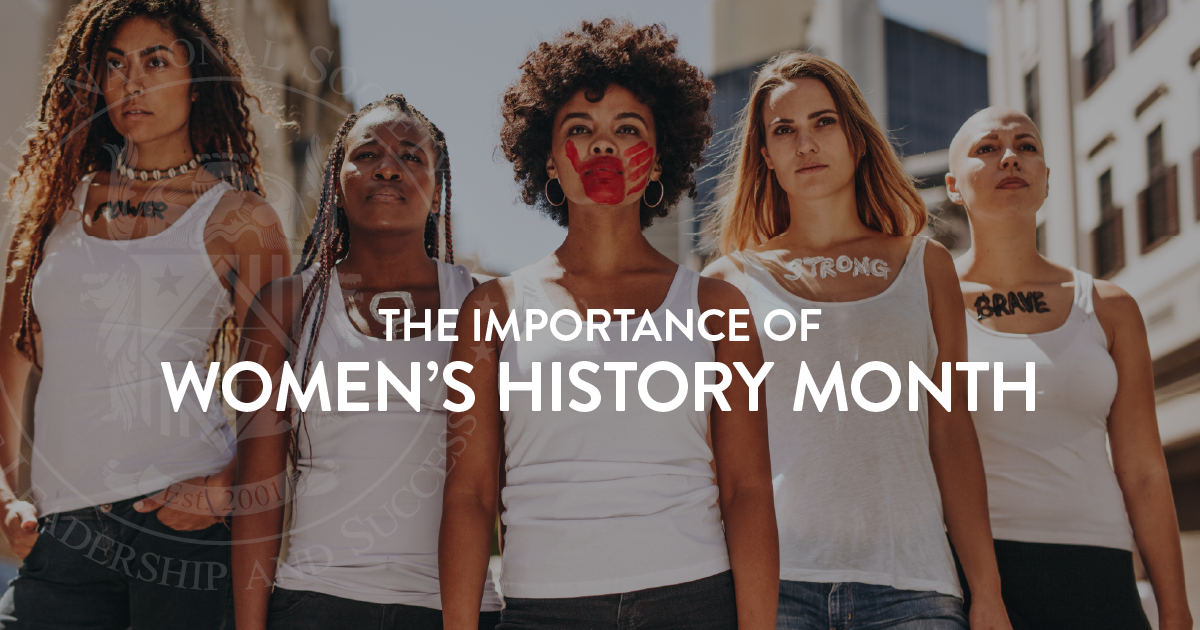
Women’s History Month, observed each March in the United States and in varying forms internationally, elevates the stories of women whose contributions have too often been overlooked or underreported. In 2026, the movement remains essential for several reasons:
- Correcting the historical record: New research continues to uncover women’s contributions erased by bias in primary sources and historiography.
- Inspiring future generations: Visible role models increase girls’ and young women’s aspirations in STEM, politics, arts, and business.
- Advancing equity: Highlighting structural barriers helps inform policy and advocacy for gender equity in education, pay, and leadership.
- Global perspective: Women’s histories are increasingly recognized across cultures, broadening our understanding of global social change.
- Wangari Maathai (1940–2011) — Kenyan environmentalist and Nobel Peace Prize laureate who founded the Green Belt Movement to combat deforestation and empower women through tree planting.
- Ida B. Wells (1862–1931) — Investigative journalist and anti-lynching crusader whose reporting and organizing were foundational to civil rights journalism.
- Katherine Johnson (1918–2020) — African American mathematician at NASA whose calculations were critical to early U.S. space missions, spotlighted in recent popular media.
- Hildegard of Bingen (1098–1179) — Medieval polymath who contributed to theology, music, medicine, and natural history.
- Maya Angelou (1928–2014) — Poet, memoirist, and civil rights activist whose work continues to influence literature and social movements.
- Intersectional Histories: Race, Class, and Gender Across Time
- Women and Science: Celebrating Women in STEM
- Global Women’s Movements: Cross-Cultural Solidarity
- Speaker Series: Invite historians, activists, and local women leaders for panels or Q&As.
- Oral History Projects: Have students interview elder community members about women’s roles across generations.
- STEM Mentorship Events: Connect girls with women professionals through workshops and hackathons.
- Art and Storytelling Festivals: Encourage creative responses—poems, visual art, and short films inspired by women’s histories.
- Daily profiles of a historical woman with image alt text and source attributions.
- Short video explainers tying historical events to current issues (e.g., suffrage and voter access).
- Interactive timelines that enable users to filter by geography, field, or era.
- National Archives’ Women’s Rights Records (archives.gov) — legislative documents, suffrage materials.
- Digital Public Library of America (dp.la) — searchable images and documents related to women worldwide.
- UN Women and UNESCO resources — global perspectives on women’s contributions and rights.
- Week 1 — Case Studies: Deep dives on Harriet Tubman, Simone de Beauvoir, and Katherine Johnson with group presentations.
- Week 2 — Local Histories: Oral history assignment; students interview a community elder about women’s roles over time.
- Week 2 — Creative Synthesis: Students produce a multimedia profile (video, podcast, or website) of an inspirational woman.
- Assessment — Reflective essays connecting historical narratives to contemporary gender issues.
- Incorporate women’s biographies into core curricula across subjects, not just social studies.
- Establish mentorship and sponsorship programs prioritizing women and underrepresented genders in professional pipelines.
- Allocate funding for scholarships and research grants focused on women’s studies and gender equity projects.
- Audit organizational histories and collections to identify overlooked women contributors; digitize and publicize findings.
- Support local women-led nonprofits and civic initiatives through volunteering or financial contributions.
- Secondary/LSI keywords: powerful women in history, inspirational women from history, women’s achievements, women leaders in history
- Target keyword density: Integrate primary keywords naturally at approximately 1–2% density throughout headings, introduction, and conclusion.
- Listicles and “Top 50” profiles with images and alt-text
- Interactive timelines and maps—high engagement for social sharing
- Video explainers and short social clips optimized for mobile viewing
- “Women in history timeline” — link to a dedicated timeline page
- “Women’s History Month resources” — link to resource hub or curriculum guides
- “Biographies of influential women” — link to individual profile pages
- Library of Congress Women’s History Collections
- National Archives
- UN Women
- Smithsonian Institution
- Women’s History Month 2026 is a reminder to make women’s achievements visible across disciplines and cultures.
- Famous women (from Marie Curie to Rosa Parks) provide entry points to deeper studies of movements, institutions, and social change.
- Lesser-known women offer fresh perspectives on innovation, resilience, and leadership.
- Meaningful participation in Women’s History Month requires both celebration and sustained action toward equity.
Celebrating Women’s History Month 2026 is not only a tribute; it’s a call to action to integrate women’s stories into mainstream narratives and institutional practices year-round.
Famous Women in History: Iconic Figures and Their Legacies
This section profiles widely recognized women whose achievements had global impact. Each entry highlights context, major accomplishments, and enduring influence.
Marie Curie (1867–1934) — Pioneer in Science
Marie Curie was the first person to win Nobel Prizes in two different scientific fields (Physics, 1903; Chemistry, 1911). Her discovery of radioactivity and isolation of polonium and radium revolutionized physics and chemistry and laid groundwork for modern medicine and nuclear science. Curie’s legacy includes advancing women’s access to scientific institutions and demonstrating rigorous experimental methods under challenging conditions.
Harriet Tubman (c.1822–1913) — Abolitionist and Conductor of the Underground Railroad
Born into slavery, Harriet Tubman escaped and then risked her life repeatedly to lead others to freedom via the Underground Railroad. She later served as a scout and spy for the Union Army during the Civil War and advocated for women’s suffrage. Tubman’s courage and strategic leadership symbolize resistance to oppression.
Rosa Parks (1913–2005) — Catalyst for Civil Rights
Rosa Parks’ refusal to give up her bus seat in Montgomery, Alabama, in 1955 ignited the Montgomery Bus Boycott and energized the modern civil rights movement. Parks’ moral clarity, grassroots activism, and lifelong advocacy for racial justice make her an enduring figure of nonviolent protest and civic courage.
Emmeline Pankhurst (1858–1928) — Leader of the Suffrage Movement
Emmeline Pankhurst founded the Women’s Social and Political Union (WSPU) in the UK and helped shift public attention to women’s suffrage through militant tactics and mass mobilization. Her influence accelerated political reform and inspired suffrage movements worldwide.
Frida Kahlo (1907–1954) — Artistic Innovator
Frida Kahlo’s paintings fused personal pain, identity, and Mexican cultural symbolism into a powerful visual language. Her work has become emblematic of resilience, feminist self-expression, and postcolonial identity in art history.
Indira Gandhi (1917–1984) — Political Leadership
As India’s first and, to date, only female prime minister, Indira Gandhi’s tenure reshaped Indian politics through bold policy choices and centralized leadership. Her life provokes complex discussions about power, gender, and governance.
Simone de Beauvoir (1908–1986) — Philosopher and Feminist Theorist
Author of The Second Sex (1949), Simone de Beauvoir’s existentialist analysis of women’s oppression laid intellectual foundations for second-wave feminism and continues to influence gender studies, ethics, and literary criticism.
Powerful Women in History: Leadership Across Fields
Power can take many forms—political authority, moral leadership, cultural influence, or intellectual mastery. Here are notable women who wielded power and changed institutions.
Queen Elizabeth I (1533–1603) — Statecraft and Cultural Patronage
Elizabeth I’s long reign stabilized England after turbulent succession crises and fostered a cultural renaissance. Her politics combined diplomatic skill, symbolic leadership, and patronage of literature and the arts, shaping the early modern British state.
Catherine the Great (1729–1796) — Enlightened Monarchy
As Empress of Russia, Catherine expanded territory, reformed administration, and patronized Enlightenment thinkers. Though her reforms were uneven, she modernized key institutions and enlarged Russia’s European role.
Margaret Thatcher (1925–2013) — The First Female UK Prime Minister
Margaret Thatcher’s tenure transformed British economic policy through privatization, deregulation, and an assertive foreign policy. Her leadership style and ideological legacy sparked debates that continue to shape conservative politics globally.
Angela Merkel (b. 1954) — Stabilizing Force in Contemporary Europe
Serving as Germany’s chancellor from 2005 to 2021, Angela Merkel guided Europe through multiple crises, including the financial crisis and migration challenges. Her pragmatic, science-informed leadership and steady diplomacy made her one of the most influential leaders of the 21st century.
Inspirational Women from History You Might Not Know
Beyond the well-known names, countless women made pivotal contributions in local, national, and global contexts. Highlighting lesser-known figures diversifies our understanding of historical impact.
Women’s History Month 2026: Themes, Events, and How to Participate
Each year organizations recommend themes and programming for Women’s History Month. For 2026, effective celebrations combine education with civic engagement and resource-building.
Suggested Themes and Focus Areas
– Women in Leadership: Past, Present, and Future
Program Ideas for Schools and Communities
1. Curated Exhibits: Partner with libraries to showcase biographies, primary documents, and artifacts.
Digital and Social Media Campaigns
Use hashtags, multimedia storytelling, and micro-documentaries to reach broader audiences. Examples:
Case Studies: Women Who Changed Institutions
Examining concrete examples shows how individual actions intersect with larger movements. These case studies demonstrate strategies, barriers, and long-term impact.
Katherine Johnson and Institutional Change at NASA
Katherine Johnson’s precise orbital calculations enabled safe trajectories for early American astronauts. Her success, along with colleagues Dorothy Vaughan and Mary Jackson, exposed racial and gender discrimination at NASA, eventually leading to policy shifts that opened engineering and computational roles to women of color. Their example underscores the power of persistence, mentorship, and excellence to reshape institutional culture.
Wangari Maathai and Community-Based Environmental Action
Wangari Maathai mobilized women in rural Kenya to plant millions of trees, linking environmental stewardship with women’s economic empowerment. By framing ecological conservation as a community development issue, Maathai’s model offered an effective template for sustainable, locally driven change that influenced global environmental and gender policy dialogues.
Teaching Women’s History: Resources and Lesson Plans
Integrating women in history into curricula requires accessible sources and thoughtful pedagogical strategies. Below are resources and a sample lesson plan structure suitable for middle and high school classrooms.
Primary Resources and Archives
– Library of Congress Women’s History Collections (loc.gov) — digitized letters, photos, and oral histories.
Sample 2-Week Unit: “Voices of Change” (Grades 9–12)
1. Week 1 — Introduction and Context: Overview of Women’s History Month, primary source reading, and timeline-building activity.
Actionable Ways to Honor Women in History Year-Round
Commemorating women’s achievements should extend beyond a single month. Here are practical steps organizations and individuals can implement throughout the year.
SEO and Content Strategy Recommendations for Women’s History Month 2026
For publishers and organizations planning content around Women’s History Month 2026, the following SEO and editorial tactics will increase reach and impact.
Keyword Strategy
– Primary keywords: women in history, women’s history month 2026, famous women in history
Content Formats That Rank Well
– Long-form educational features (2,000–3,500 words) with primary and secondary keywords
Internal and External Linking Suggestions
Internal linking strengthens site authority. Consider these anchor texts and corresponding internal pages:
Recommended external authoritative sources (open in a new window):
Multimedia and Accessibility: Image and Alt Text Suggestions
Visuals make historical narratives more engaging. Below are image suggestions and example alt text for accessibility.
| Image Purpose | Suggested Subject | Example Alt Text |
| :— | :— | :— |
| Feature hero image | Collage of diverse historical women (scientist, activist, artist) | Collage showing Marie Curie, Harriet Tubman, and Frida Kahlo representing women in science, activism, and art |
| Profile image | Portrait of Katherine Johnson | Portrait of Katherine Johnson, mathematician at NASA, smiling at a desk with calculations |
| Timeline graphic | Interactive timeline snapshot | Timeline graphic highlighting milestones in women’s history from the 12th to the 20th century |
Frequently Asked Questions (FAQ)
When is Women’s History Month celebrated?
In the United States, Women’s History Month is observed every March. Other countries may celebrate women’s history at different times or through specific days such as International Women’s Day on March 8.
Who decides the annual theme for Women’s History Month?
In the U.S., the National Women’s History Alliance proposes themes to guide programming and education. Local organizations and institutions also adopt or adapt themes for their communities.
How can I teach children about women in history?
Use age-appropriate biographies, hands-on projects, and role-play activities. Connect historical stories to children’s lives by highlighting relatable achievements and resilience. Incorporate primary sources and family oral histories when possible.
What are good books to start learning about women’s history?
Recommended titles include: The Second Sex by Simone de Beauvoir; Hidden Figures by Margot Lee Shetterly; Women, Race, & Class by Angela Y. Davis; and The Woman’s Hour by Elaine Weiss. Children’s and young adult biographies by authors like Deborah Hopkinson and Joyce Hansen offer accessible introductions.
Quotes and Key Takeaways
> “Highlighting women’s histories reshapes the stories we tell about progress.”