Forgotten Voices
The names were there once. Then they slipped out of the record.
Forgotten Voices is where True Histories pulls those people and places back into the light. This page is a living archive of individuals, buildings, laboratories, institutions, and moments that shaped modern history—then quietly disappeared from textbooks, headlines, and official memory. Some were erased by secrecy laws. Others were sidelined by politics, profit, or convenience. A few were simply inconvenient to remember.
Each entry offers a brief, factual profile—who they were, where they stood, what they did, and why their story matters now. You’ll find overlooked scientists, miscredited innovators, silenced whistleblowers, shadowed sites of invention, and forgotten crossroads where history bent in a different direction than we were taught. Whenever possible, original photographs and archival imagery accompany these stories, grounding them in verifiable record rather than rumor.
If you’re searching for the real people behind classified breakthroughs, erased contributors to technology and culture, or the hidden locations where history quietly changed course, you’re in the right place. These are not myths or conspiracy folklore. They are documented stories that fell between footnotes—and this is where they’re finally heard again.
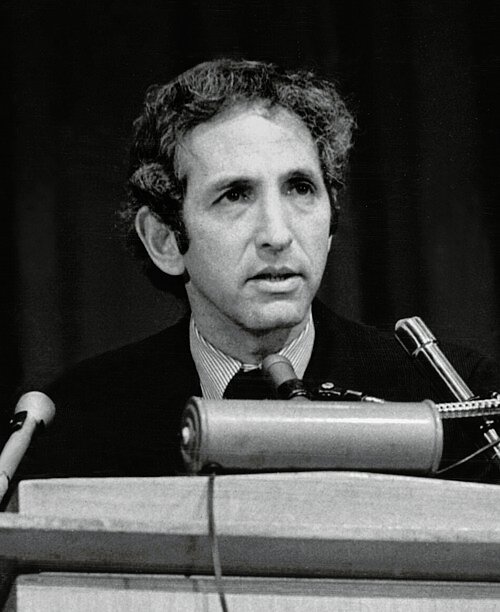
Daniel Ellsberg
The Man Who Exposed the Vietnam War Lies
Featured in: Ashes of Silence – The Global History of Censorship
Daniel Ellsberg was not a radical outsider. He was a trusted insider — a Harvard-trained economist, a Marine Corps veteran, and a senior analyst for the RAND Corporation with top-level security clearance.
In the late 1960s, Ellsberg worked on a classified Defense Department study examining U.S. involvement in Vietnam. What he discovered shattered his faith in government transparency. The documents revealed that multiple U.S. administrations had knowingly misled the public about the war’s progress, privately acknowledging it was unwinnable while publicly promising victory.
Ellsberg faced a moral crossroads: remain silent and protect his career, or tell the truth and risk prison.
In 1971, he chose disclosure.
By leaking what became known as the Pentagon Papers to major newspapers, Ellsberg triggered one of the most important Supreme Court cases in U.S. history — a ruling that affirmed the press’s right to publish classified information in the public interest.
The Nixon administration charged Ellsberg under the Espionage Act, threatening him with more than a century in prison. The case collapsed after government misconduct and illegal surveillance against him were exposed — misconduct that later fed directly into the Watergate scandal.
Ellsberg spent the rest of his life warning Americans about the dangers of secrecy, unchecked executive power, and the quiet normalization of lying in the name of “national security.” When modern whistleblowers emerged decades later, Ellsberg recognized the pattern immediately.
He died in 2023, having lived long enough to see censorship evolve from classified files to algorithmic silence — but his warning remains painfully current:
the greatest threat to democracy is not suppressed speech, but comfortable silence.

Edward Snowden
The Whistleblower Who Revealed the Surveillance State
Featured in: Ashes of Silence – The Global History of Censorship
Edward Snowden was a systems administrator working inside America’s intelligence community when he discovered the scale of modern government surveillance. Through classified programs operated by the NSA, vast amounts of phone data, internet activity, and digital communications were being collected — not just from foreign targets, but from ordinary citizens.
Snowden believed the public had been misled about how deeply surveillance had expanded after 9/11. Internal oversight mechanisms, he concluded, were not functioning in a meaningful way.
In 2013, Snowden provided journalists with documentary evidence showing how mass data collection had become normalized under the banner of national security. The disclosures sparked global debate, lawsuits, legislative reforms, and a permanent shift in how privacy, technology, and government power are discussed.
The U.S. government charged Snowden under the Espionage Act. His passport was revoked mid-travel, leaving him stranded in Russia, where he remains in exile.
To supporters, Snowden is a whistleblower who exposed unconstitutional surveillance.
To critics, he is a traitor who leaked classified information.
What cannot be disputed is this: Snowden forced the world to confront a system that operated almost entirely in secret, reshaping the boundaries between citizen and state without public consent.
His story marks a turning point in modern censorship — one where information was not banned, but hidden behind classification, complexity, and silence.
Jean Jennings Bartik
The Programmer Who Helped Invent Software — Then Vanished from the Story
Featured in: Hidden Figures, Erased Codes – The Women Who Built the Digital Age and Vanished from History Books
Jean Jennings Bartik was one of the original programmers of the ENIAC, the first general-purpose electronic digital computer. Long before “software engineer” was a recognized profession, Bartik and her colleagues were inventing the discipline from scratch — without manuals, without programming languages, and without precedent.
Born in 1924 in rural Missouri, Bartik studied mathematics at Northwest Missouri State Teachers College before being recruited during World War II to work as a human “computer” at the University of Pennsylvania. When the U.S. Army unveiled the ENIAC, Bartik was selected as one of six women tasked with figuring out how to make the massive machine work.
They were not given schematics.
They were not trained by engineers.
They were expected to teach themselves how to program a machine that had never existed before.
Bartik and her team learned by crawling inside the ENIAC’s panels, tracing wires, configuring switches, and translating abstract mathematical problems into physical operations. They invented programming logic through experimentation — debugging by trial, error, and intuition.
Yet when the ENIAC was unveiled to the public in 1946, Bartik and the other women were not introduced as programmers. They were often mislabeled as “operators,” “assistants,” or simply ignored. Photographs of the machine circulated widely — with the women cropped out or unidentified.
For decades, Bartik’s contributions were erased from mainstream computing history. The men who designed the hardware received credit. The women who made the machine function disappeared from the narrative.
It wasn’t until the 1980s and 1990s — after persistent advocacy and archival research — that Bartik’s role was formally acknowledged. She spent her later years speaking publicly about the forgotten women of early computing, insisting that history had misunderstood not just who built the digital age, but how it was built.
Jean Jennings Bartik died in 2011. Today, she is recognized as a foundational figure in computer programming — a reminder that the digital world rests on labor that history almost erased.

Grace Hopper
The Woman Who Taught Computers to Speak Human Language
Featured in: Hidden Figures, Erased Codes – The Women Who Built the Digital Age and Vanished from History Books
Grace Hopper was a mathematician, naval officer, and computer scientist whose work fundamentally reshaped how humans interact with machines. At a time when computers were programmed exclusively in machine code, Hopper imagined something radical: that computers should adapt to humans — not the other way around.
Born in 1906, Hopper earned a PhD in mathematics from Yale University and later joined the U.S. Navy during World War II. She was assigned to work on the Harvard Mark I, one of the earliest electromechanical computers, where she quickly became known for her sharp intellect and refusal to accept “impossible” as an answer.
Hopper’s most transformative idea was the compiler — a program that translates human-readable instructions into machine code. At the time, the concept was dismissed by many as impractical. Computers, critics insisted, could never understand language-like commands.
Hopper proved them wrong.
Her work laid the foundation for COBOL, one of the first high-level programming languages, which was designed to resemble English. Decades later, COBOL systems still underpin major banking, government, and infrastructure operations worldwide.
Despite her accomplishments, Hopper spent much of her career fighting skepticism — not about her ideas, but about her authority. She was frequently underestimated, talked over, or treated as an exception rather than a pioneer. Her contributions were celebrated late, often framed as quirky or symbolic rather than central to computing history.
Hopper herself pushed back against that framing. She insisted that innovation required questioning tradition, challenging hierarchy, and refusing to accept artificial limits — whether technical or social.
She retired from the Navy as a rear admiral, one of the oldest active-duty officers in U.S. history, and spent her final years lecturing tirelessly on computing, leadership, and curiosity.
Grace Hopper died in 1992, but her influence is everywhere — embedded in every programming language designed to be readable, adaptable, and human-centered. Her story exposes a persistent truth of technological history: that revolutionary ideas often survive despite institutional resistance, not because of it.