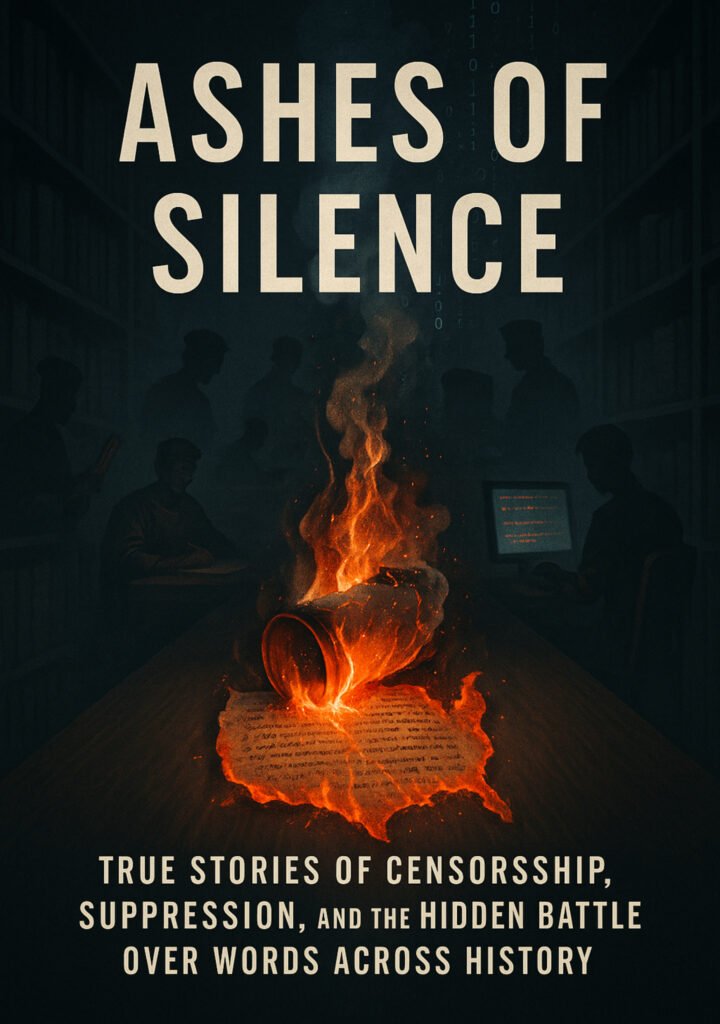
Ashes of Silence
The hidden battle over speech, censorship, and the truth America wasn’t allowed to hear.
Overview
Ashes of Silence investigates the moments when speech became dangerous in America — and the forces that worked behind the scenes to control what the public was allowed to know. Through suppressed reports, political pressure, leaked memos, and cultural flashpoints that never made the full record, this book traces the quiet machinery that shaped the nation’s understanding of truth.
Rather than retelling history from a distance, it follows the paper trails, the silenced voices, and the stories that were buried under the weight of convenience, fear, or power.
Why This Story Matters
So much of what the country believes about itself comes from headlines, broadcasts, and official accounts. But the truth often lived in the silence between them. This book exposes the gaps, contradictions, redactions, and omissions that shaped national memory — and continue to shape it
What This Book Reveals
Behind every attempt to censor, restrict, or reshape speech, there’s a motive — and a consequence. Ashes of Silence explores:
- investigations shut down before they reached the public
- political actors who rewrote narratives to protect themselves
- media pressure and editorial decisions that erased uncomfortable facts
- individuals who paid a price for speaking
- the long shadow those moments cast on modern America
- The story isn’t just about what was said — but what wasn’t allowed to be said.
Who This Book Is For
This book is for readers who:
✅ question official stories
✅ wonder what was edited out of history
✅ are fascinated by suppressed truths
✅ enjoy investigative nonfiction
✅ want storytelling backed by evidence
✅ crave narratives that reveal what lies beneath
If you’ve ever felt like the real story was hiding just off-camera, this book meets you there.
Frequently Asked Questions About the Book
Is Ashes of Silence based on real events?
- Yes. Every chapter is rooted in documented history — including archived articles, government papers, court filings, and declassified material.
Does the book take a political side?
- No. It examines power, influence, and suppression across eras and parties.
Is any part of the book fictionalized?
- No invented events, no composite characters. When uncertainty exists, it’s acknowledged — not glossed over.
Is this modern history or earlier history?
- Primarily 20th and 21st century, where documentation and suppression collide most clearly.