Unveiling the Legacy of Women Trailblazers: Stories of Pioneering Figures Who Shaped History
Across continents and centuries, women have been architects of change—challenging norms, leading revolutions, advancing science, enriching arts, and building institutions that endure today. Yet their stories have often been marginalized or simplified. In this article, we celebrate women in history whose courage, intellect, and leadership reshaped societies and inspired generations. As we approach future observances, these profiles and themes offer context, nuance, and inspiration for students and history enthusiasts eager to understand the full tapestry of the past. You’ll find detailed accounts of famous women in history, insights into lesser-known influencers, and reflections on how powerful women changed systems and ideas. Read on to discover inspirational women from history whose legacies continue to reverberate.
Introduction: Why Women’s Stories Matter
History is not just a chronicle of events—it’s a record of human choices, struggles, and triumphs. Women’s history corrects long-standing omissions and re-centers narratives that shape cultural memory. Understanding the contributions of powerful women in history helps students and enthusiasts grasp how social movements, scientific breakthroughs, artistic revolutions, and political transformations unfolded. It also provides role models and frameworks for thinking about leadership, resilience, and innovation.
In this article, we highlight pioneering women across eras and regions. Each profile explores context, achievements, and broader impact. We also examine recurring themes: the interplay of gender and power, strategies of advocacy, and how these women navigated obstacles. Whether you’re preparing a classroom lesson or seeking inspiration, these stories illuminate the courage behind progress.
Section I: Political Leaders and Revolutionaries
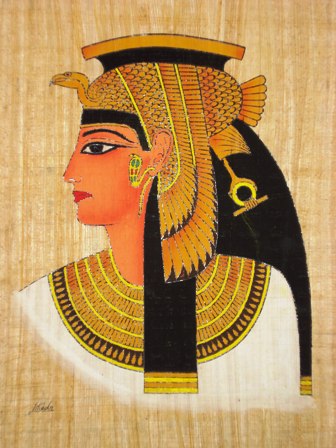
Cleopatra VII (69–30 BCE) — The Diplomat Monarch
Cleopatra VII of Ptolemaic Egypt combined political acumen with cultural fluency. Fluent in multiple languages and a skilled stateswoman, she navigated Roman power struggles, forged alliances with Julius Caesar and Mark Antony, and promoted Egypt’s economy and culture. Cleopatra’s legacy is often filtered through myth, but her life demonstrates the strategic role of female rulers in ancient geopolitics.
Empress Wu Zetian (624–705) — China’s Only Female Emperor
Wu Zetian rose from concubine to de facto ruler and then declared herself emperor of the Tang Dynasty. She expanded the civil service examination system, promoted meritocratic governance, and supported Buddhism and the arts. Her reign challenged Confucian patriarchal assumptions and showed how a woman could wield centralized imperial power effectively.
Sojourner Truth (1797–1883) — Abolitionist and Women’s Rights Advocate
Born into slavery as Isabella Baumfree, Sojourner Truth became an influential voice against slavery and for women’s rights. Her 1851 “Ain’t I a Woman?” speech highlighted intersections of race and gender decades before intersectionality was named. Truth’s activism underscores how marginalized women linked civil rights and gender justice.
Indira Gandhi (1917–1984) — India’s Transformative Prime Minister
As India’s first and, to date, only female prime minister, Indira Gandhi led through turbulent times—implementing the Green Revolution, nationalizing banks, and navigating regional conflicts. Her tenure demonstrates the complexities of female political leadership amid development challenges and authoritarian pressures.
Section II: Pioneers in Science and Medicine
Hypatia (c. 350–415) — Philosopher, Mathematician, Teacher
Hypatia of Alexandria symbolizes women’s early contributions to mathematics, astronomy, and philosophy. As head of the Neoplatonist school, she taught rhetoric and science to a diverse student body. Her violent death became a cautionary tale about intolerance and the fragility of intellectual freedom.
Marie Curie (1867–1934) — Nobel Laureate in Physics and Chemistry
Marie Curie’s pioneering research on radioactivity earned her two Nobel Prizes—first in Physics (1903, shared) and later in Chemistry (1911). Her discoveries advanced cancer treatment and nuclear science. Curie also established institutions for scientific research and training, carving space for women in scientific fields long dominated by men.
Rosalind Franklin (1920–1958) — DNA Structural Pioneer
Rosalind Franklin’s X-ray diffraction images, notably Photograph 51, were crucial to understanding DNA’s double helix. Though Watson and Crick received popular credit, Franklin’s meticulous work underpinned the discovery. Her story raises critical questions about scientific recognition and gender bias in research credit.
Dr. Wangari Maathai (1940–2011) — Environmentalist and Political Activist
Kenyan scientist and activist Wangari Maathai founded the Green Belt Movement, mobilizing women to plant millions of trees to combat deforestation and poverty. She linked environmental conservation to democratic governance and human rights, becoming the first African woman to win the Nobel Peace Prize (2004).
Section III: Writers, Artists, and Cultural Innovators
Jane Austen (1775–1817) — Social Observer Through Fiction
Jane Austen’s novels offered sharp critiques of class, gender, and marriage in early 19th-century England. Works like Pride and Prejudice and Emma use irony and close social observation to illuminate women’s constrained choices, influencing literary realism and later feminist readings.
Harper Lee (1926–2016) — Voices Against Racial Injustice
Through To Kill a Mockingbird, Harper Lee captured the moral crisis of racial prejudice in the American South. The novel centers empathy and ethical courage, making it a pivotal text in American literature and civic education.
Frida Kahlo (1907–1954) — Icon of Self‑Expression and Identity
Frida Kahlo’s paintings explored identity, pain, and Mexican culture. Her unflinching self-portraits challenged gender norms and became emblems of resilience. Kahlo’s legacy intersects art, politics, and gender studies, influencing generations of artists and cultural theorists.
Toni Morrison (1931–2019) — Chronicler of African American Experience
Toni Morrison’s novels—Beloved, Song of Solomon, and more—probe memory, identity, and trauma. Morrison’s work reshaped American letters, centering Black experience with lyrical prose and moral depth. She received the Nobel Prize in Literature in 1993.
Section IV: Civil Rights, Feminist Leaders, and Social Reformers
Mary Wollstonecraft (1759–1797) — Early Feminist Theorist
Mary Wollstonecraft’s A Vindication of the Rights of Woman (1792) argued for women’s education and rational autonomy. Her ideas laid intellectual groundwork for later feminist movements and debates about citizenship, autonomy, and equality.
Emmeline Pankhurst (1858–1928) — Militant Suffrage Organizer
As leader of the British suffragettes, Emmeline Pankhurst used direct action to secure voting rights for women. The suffragette campaign highlighted how civil disobedience and public protest can force political institutions to expand democratic inclusion.
Rosa Parks (1913–2005) — Catalyst of the American Civil Rights Movement
Rosa Parks’ refusal to give up her bus seat in Montgomery, Alabama, sparked a year-long boycott that propelled the civil rights movement forward. Parks’ courage and strategic partnerships illustrate how individual acts of defiance can galvanize collective action.
Simone de Beauvoir (1908–1986) — Existentialist Feminist Philosopher
Simone de Beauvoir’s The Second Sex (1949) analyzed how societies construct “woman” as Other. Her existentialist framework and insistence on freedom and responsibility influenced feminist thought worldwide.
Section V: Explorers, Athletes, and Innovators
Amelia Earhart (1897–1937) — Aviation Pioneer
Amelia Earhart broke records as an aviator and used her celebrity to advocate for women’s opportunities in aviation and beyond. Her disappearance during a world flight attempt remains one of the 20th century’s enduring mysteries.
Valentina Tereshkova (b. 1937) — First Woman in Space
In 1963, Soviet cosmonaut Valentina Tereshkova became the first woman to orbit Earth, symbolizing women’s capabilities in STEM and serving as a political statement during the space race. Her flight opened paths for future generations of women in space exploration.
Wilma Rudolph (1940–1994) — Track Champion and Symbol of Resilience
Overcoming childhood polio, Wilma Rudolph won three gold medals at the 1960 Olympics. Her triumphs provided inspiration for civil rights-era African American communities and highlighted how athletic success can intersect with social change.
Section VI: Patterns and Themes in Women’s Leadership
Navigating Structural Barriers
Across contexts, women trailblazers faced structural obstacles: legal restrictions, limited access to education, and social norms restricting public roles. Their strategies varied—working within institutions (e.g., Marie Curie), building movements (e.g., Emmeline Pankhurst), or carving independent intellectual spaces (e.g., Hypatia). Understanding these approaches helps students analyze how social change occurs.
Intersectionality: Race, Class, and Gender
Many influential women navigated intersecting identities. Sojourner Truth and Wangari Maathai illustrate how race and economic status shaped activism. Intersectionality reveals that progress for women is not monolithic; it requires attention to overlapping systems of oppression.
Recognition and Historical Memory
Recognition of women’s achievements has often lagged. Stories like Rosalind Franklin’s reveal how contributions can be minimized. Re-evaluating archives, promoting inclusive curricula, and creating public memorials are ways societies can recover erased histories.
Section VII: Case Studies — Deep Dives into Impact
Case Study 1: The Green Belt Movement’s Multiplier Effect
Wangari Maathai’s approach linked environmental restoration with women’s economic empowerment. By organizing tree-planting groups, the movement created jobs, combated soil erosion, and fostered civic participation. It demonstrates how localized, women-led initiatives can scale into national and international influence.
Case Study 2: The Suffrage Movement’s Tactics and Legacy
The suffrage movement combined petitions, marches, legal challenges, and—when necessary—civil disobedience. Leaders like Elizabeth Cady Stanton, Susan B. Anthony, and Emmeline Pankhurst adapted strategies to political contexts. The legacy of suffrage movements reshaped democratic institutions and expanded civic inclusion.
Case Study 3: Women in Science and Institutional Change
From Marie Curie founding labs to modern policies for equitable research funding, women in science have transformed institutions. Programs encouraging girls’ STEM participation, mentorship networks, and gender-conscious hiring practices are practical extensions of these pioneers’ legacies.
Section VIII: How to Use These Stories — For Students and Educators
These narratives can be used in classrooms, research projects, and public history programs. Here are actionable ways to integrate women’s history into learning and engagement:
- Project-Based Learning: Assign students to research a local or global woman trailblazer and create multimedia presentations.
- Comparative Essays: Compare strategies used by two leaders across different eras to achieve social change.
- Primary Source Analysis: Use letters, speeches, and contemporary newspaper accounts to analyze bias and perspective.
- Interdisciplinary Modules: Combine literature, science, and civics curricula to explore women’s influence across fields.
- Community Exhibits: Partner with libraries and museums to showcase artifacts, oral histories, and student work.
- Ida B. Wells (1862–1931) — Investigative journalist and anti-lynching crusader.
- Huda Sha’arawi (1879–1947) — Egyptian feminist and nationalist leader.
- Chien-Shiung Wu (1912–1997) — Experimental physicist who made key contributions to nuclear physics.
- Yaa Asantewaa (c. 1840–1921) — Queen Mother of Ejisu who led resistance against British colonialism.
- Susan La Flesche Picotte (1865–1915) — First Native American woman physician in the United States.
- Digital Archives: Access scanned letters, photographs, and newspapers from national archives and digital libraries.
- Interactive Timelines: Visualize historical intersections and life histories of women trailblazers.
- Podcasts and Documentaries: Use audio-visual storytelling to supplement readings and foster engagement.
- Open Educational Resources (OER): Incorporate free lesson plans and primary source collections into curricula.
Section IX: Frequently Asked Questions (FAQ)
Q: Why focus on individual women rather than movements?
A: Both perspectives are essential. Individual stories humanize historical forces and reveal choices and challenges. Movements show collective power and institutional change. Combining both yields richer analysis.
Q: How can I find reliable sources about these women in history?
A: Start with academic biographies, peer-reviewed journals, and reputable archives. Primary documents—letters, speeches, official records—are especially valuable. Suggested external sources include the <a href="https://www.loc.gov" target="blank” rel=”noopener”>Library of Congress, <a href="https://www.womenshistory.org" target="blank” rel=”noopener”>National Women’s History Museum, and university presses.
Q: How can teachers include diverse narratives?
A: Diversify syllabi by including women from different regions, races, classes, and fields. Use multimedia resources, invite guest speakers, and center student-led research to broaden perspectives beyond canonical figures.
Section X: Notable Lesser-Known Women to Explore
While famous women in history warrant study, many lesser-known figures offer powerful lessons:
Section XI: Digital and Pedagogical Resources
For students and educators, the digital era offers interactive ways to learn about women’s history:
Conclusion: Carrying Forward the Legacy
The women profiled here—and countless others whose names remain less known—demonstrate that change arises from courage, creativity, and persistence. From the laboratories of Marie Curie to the streets organized by Emmeline Pankhurst and the forests planted by Wangari Maathai, these stories reveal strategic approaches to overcoming barriers and expanding human possibility. As students and history enthusiasts, engaging with women’s history enriches historical understanding and equips us to imagine more equitable futures.
Boldly reclaiming and teaching these histories matters not just for accuracy but for inspiration. The legacy of these pioneering women invites us to reflect on how leadership, solidarity, and imagination can reshape societies. Celebrate their achievements, interrogate the contexts that limited recognition, and use their lessons to inform activism, scholarship, and daily life.
Explore more about these remarkable women in our interactive timeline.