
Title: The Renaissance: Rebirth of Art, Science, and Humanism — A Comprehensive Guide for Students and History Enthusiasts
Introduction
The Renaissance—literally “rebirth”—was a sweeping cultural movement that transformed Europe between the 14th and 17th centuries. It reshaped art, science, literature, politics, and philosophy, creating the foundations of the modern Western world. For students and history enthusiasts, understanding the Renaissance illuminates how ideas, technologies, and institutions evolved from medieval structures into more secular, human-centered frameworks. This article explains the origins, major figures, breakthroughs, and lasting legacies of the era. You’ll learn how economic changes and patronage fueled artistic innovation, why humanism shifted intellectual life, how scientific inquiry began to challenge traditional authority, and how Renaissance politics and exploration changed global relationships. Throughout, we provide timelines, case studies, and study tips to help you grasp the era’s complexity and significance.

The Renaissance: An Overview
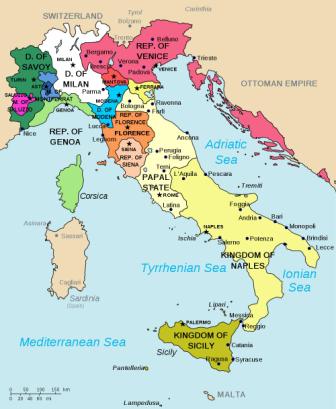
The Renaissance was a period of intense cultural and intellectual revival, characterized by a renewed interest in classical antiquity and a new emphasis on human potential. While its core timeline spans roughly the 14th to the 17th centuries, it unfolded in phases: the Early Renaissance (c. 1400–1490), the High Renaissance (c. 1490–1527), and the Northern Renaissance (c. 1500–1600). Geographically, it began in the wealthy city-states of Italy—most notably Florence, Venice, and Rome—before spreading across Europe, adapting to local contexts in Germany, France, England, and the Netherlands.
Origins of the Renaissance
Economic and Social Catalysts
The Renaissance was born from a unique convergence of wealth and social change. The rise of powerful, independent Italian city-states like Florence, Venice, and Milan created hubs of commerce and banking. Vast trade networks brought not only goods but also ideas from the Byzantine and Islamic worlds. This wealth accumulation created a new class of merchants and bankers who could become patrons of the arts. Furthermore, the catastrophic Black Death (1347-1351), while devastating, disrupted the feudal labor system, increased social mobility, and prompted a greater focus on life on earth.
Cultural and Intellectual Precursors
Intellectually, the Renaissance was fueled by the recovery of classical Greek and Roman texts, long preserved by Byzantine and Islamic scholars. The fall of Constantinople in 1453 sent a wave of Greek scholars and manuscripts westward. This influx, combined with a growing dissatisfaction with medieval scholasticism’s rigid focus on theology, sparked a new mode of inquiry. Scholars began to study classical texts not just for religious insights but for their rhetorical style, moral philosophy, and historical perspectives, laying the groundwork for humanism.
Humanism: The Intellectual Heart of the Renaissance
What is Humanism?
Renaissance humanism was not a philosophy denying religion, but an educational and cultural program that emphasized the studia humanitatis: grammar, rhetoric, history, poetry, and moral philosophy. It marked a shift from purely theological study to secular subjects, celebrating human potential, critical thinking, and eloquent communication. Humanists believed that engaging with the wisdom of the ancients could cultivate virtuous citizens and leaders.
Key Humanist Figures
* Petrarch (1304-1374), often called the “Father of Humanism,” championed the study of classical Latin and Cicero’s prose.
Lorenzo Valla (1407-1457) used philology—historical linguistic analysis—to prove the Donation of Constantine*, a document used to justify papal temporal power, was a medieval forgery.
Desiderius Erasmus (1466-1536) embodied Northern Humanism, applying classical learning to the reform of Christian society and the Church, most famously in In Praise of Folly*.
Art and Architecture: Style, Technique, and Meaning
Innovations in Artistic Technique
Renaissance artists developed revolutionary techniques to create more realistic and emotionally compelling works:
- Linear Perspective: Pioneered by Filippo Brunelleschi and formalized by Leon Battista Alberti, this created the illusion of depth on a flat surface.
- Chiaroscuro & Sfumato: The use of strong light and shadow (chiaroscuro) and the subtle blending of tones (sfumato, mastered by Leonardo da Vinci) added volume and mystery.
- Naturalism: Artists like Michelangelo conducted detailed anatomical studies to depict the human form with unprecedented accuracy.
- Titian (c. 1488-1576): The master of Venetian colorism, using vibrant color and loose brushwork to convey drama and sensuality.
- Filippo Brunelleschi (1377-1446) engineered the massive dome of Florence Cathedral, a feat of technical and aesthetic brilliance.
- Leon Battista Alberti (1404-1472) wrote influential treatises and designed church facades (e.g., Santa Maria Novella) based on Roman principles.
- Palaces and Public Spaces: Buildings like the Palazzo Rucellai emphasized rational order, while urban planning began to focus on idealized city squares.
- Galileo Galilei (1564-1642): Used the telescope to make revolutionary astronomical observations and championed the experimental method.
- Johannes Gutenberg (c. 1400-1468): The movable-type printing press (c. 1450) democratized knowledge, allowing for the rapid and accurate spread of new ideas.
- Michel de Montaigne (1533-1592) invented the modern essay, a personal form of reflective writing.
- The competitive landscape of independent city-states and nascent nation-states fostered sophisticated diplomacy, espionage, and statecraft.
- Compare and Contrast: Analyze an Italian and a Northern Renaissance painting side-by-side to identify regional differences.
- Read Primary Sources: Engage directly with excerpts from Machiavelli, Petrarch, or Luther to understand their voices.
- Essay Writing: Focus on a clear thesis about change or impact (e.g., “How did humanism redefine the purpose of education?”) and support it with specific examples of figures, works, or events.
- Digital Archives: The Metropolitan Museum of Art’s Heilbrunn Timeline of Art History, the British Museum online collection, the Internet History Sourcebooks Project (Fordham University).
- For more on “Florence under the Medici,” see our detailed city guide.
- Explore the technical breakthroughs in our article on Renaissance art techniques.
- Understand the wider impact in our piece on the printing press.
- External Authoritative Links (open in new window):
- The British Museum for artifacts from the period.
- The Metropolitan Museum of Art Heilbrunn Timeline for excellent contextual essays.
- Internet History Sourcebooks Project (Fordham University) for a vast collection of primary sources.
- Image: A page from the Gutenberg Bible. Alt text: “A detailed page from the Gutenberg Bible, showcasing the crisp typography of the first major book printed with movable type in the West.”
- Image: Map of major Renaissance trade routes. Alt text: “Historical map illustrating the Mediterranean and European trade networks that connected Italian city-states during the Renaissance.”
- The Renaissance marked a decisive shift toward human-centered learning, artistic realism, and individual expression.
- Technical innovations in perspective, printing, and the scientific method transformed how knowledge was produced and disseminated.
- The patronage system within competitive Italian city-states was a primary engine for cultural flourishing.
- The movement spread northward, intertwining with religious reform and the Age of Exploration to reshape global history.
Major Artists and Masterpieces
* Giotto (1267-1337): His frescoes in the Scrovegni Chapel introduced emotional expression and spatial realism, heralding the proto-Renaissance.
Leonardo da Vinci (1452-1519): The epitome of the “Renaissance Man,” known for masterpieces like The Last Supper and the Mona Lisa*, and his boundless scientific curiosity.
Michelangelo (1475-1564): A sculptor, painter, and architect who created defining works like the marble David* and the Sistine Chapel ceiling.
Raphael (1483-1520): Celebrated for harmonious composition and clarity, as seen in The School of Athens*, a perfect visual summation of Renaissance humanism.
Architecture and Urban Design
Renaissance architecture rejected Gothic complexity for classical symmetry, proportion, and geometry.
Science and Technology: From Observation to Experimentation
The Scientific Mindset
The Renaissance fostered a new empirical mindset, valuing direct observation and experimentation over reliance on ancient authorities like Aristotle or Galen. This spirit was often born in the workshop, where the lines between artisan, engineer, and scientist blurred.
Pioneers and Inventions
* Nicolaus Copernicus (1473-1543): Proposed a heliocentric (sun-centered) model of the universe, challenging the geocentric Ptolemaic system.
Andreas Vesalius (1514-1564): Published De humani corporis fabrica*, an illustrated anatomical text based on direct human dissection.
Literature, Philosophy, and Education
Vernacular Literature and New Genres
While Latin remained the language of scholarship, writers increasingly used their native tongues (vernacular), making literature more accessible.
Dante Alighieri’s Divine Comedy (Italian), Petrarch’s sonnets, and Boccaccio’s Decameron* established vernacular literary models.
Education Reform
Humanists reformed education around the studia humanitatis, aiming to produce well-rounded, articulate individuals. New schools and academies, often supported by patrons, spread this model, emphasizing critical engagement with texts over rote memorization.
Politics, Patronage, and Power
Patronage Systems
Cultural flourishing was directly funded by powerful patrons. The Medici family in Florence, the Sforza in Milan, and various popes in Rome used patronage to demonstrate their wealth, power, piety, and taste. This system provided financial security for artists and scholars, directing the themes and scales of their work.
Political Thought and Practice
Niccolò Machiavelli (1469-1527): In The Prince*, he analyzed power politics with stark realism, separating political practice from moral philosophy.
The Northern Renaissance: Spread and Distinctiveness
Differences from the Italian Renaissance
The Renaissance spread north of the Alps through trade, travel, and the printing press. It often retained a stronger religious emphasis, with humanists like Erasmus focusing on Church reform. Northern artists displayed a meticulous attention to detail, domestic interiors, and landscape.
Key Figures and Works
* Albrecht Dürer (1471-1528): German artist who mastered woodcut and engraving, spreading Renaissance ideas through prints.
Jan van Eyck (c. 1390-1441): Flemish painter who perfected oil painting techniques, achieving stunning realism in works like the Ghent Altarpiece*.
Thomas More (1478-1535): English humanist and author of Utopia*, exploring ideas of an ideal society.
Religion and Reform
The Church, Art, and Contested Authority
The Church was a major patron (e.g., the Sistine Chapel), using art to inspire faith and assert its authority. However, Renaissance humanism also fostered a critical eye, with scholars and the public increasingly questioning Church corruption and practices like the sale of indulgences.
Prelude to the Reformation
The humanist call for a return to the original sources of Christianity (ad fontes) and its tools of textual criticism created an intellectual environment ripe for reform. Martin Luther’s 95 Theses (1517) directly ignited the Protestant Reformation, which the Catholic Church later countered with its own internal reforms, known as the Counter-Reformation or Catholic Reformation, solidified at the Council of Trent (1545-1563).
Exploration, Trade, and Global Consequences
Age of Discovery and Cultural Exchange
Driven by a Renaissance spirit of curiosity and search for new routes, explorers like Christopher Columbus and Ferdinand Magellan expanded the European worldview. This brought immense wealth in bullion and new trade goods, further fueling European economies.
Consequences for Non-European Societies
The “Age of Discovery” initiated the Columbian Exchange (transfer of plants, animals, diseases, and people) and led to the colonization of the Americas. This had catastrophic consequences for indigenous societies through disease, displacement, and exploitation, a critical subject for ethical and historiographical debate.
Case Studies: Deep Dives
Case Study 1 — Florence under the Medici
Florence, a republic in name, was effectively controlled by the Medici banking family for much of the 15th century. Patrons like Cosimo de’ Medici and his grandson Lorenzo “the Magnificent” funded architects (Brunelleschi), artists (Donatello, Botticelli), and philosophers (Ficino’s Platonic Academy), making Florence the epicenter of the Early Renaissance. Their patronage was a calculated blend of civic pride, personal glorification, and political stabilization.
Case Study 2 — The Sistine Chapel: Art, Theology, and Politics
Pope Julius II’s commission of Michelangelo to paint the Sistine Chapel ceiling (1508-1512) was a monumental act of papal patronage. Michelangelo’s complex iconography, from the Creation to the Fall, visualized core Catholic theology with overwhelming power. The project served to glorify the papacy, assert Church authority, and demonstrate Rome’s cultural supremacy.
Case Study 3 — The Printing Press and the Reformation
The printing press was the social media of the Reformation. It allowed Martin Luther’s pamphlets and German Bible translation to spread at an unprecedented speed, beyond the control of Church authorities. Similarly, Erasmus’s scholarly editions and satires reached a wide audience, proving that the press was an unstoppable engine for both intellectual and religious revolution.
Teaching and Study Tips for Students
* Create Timelines: Visually plot key events in art, politics, and science to see connections.
Frequently Asked Questions (FAQ)
When did the Renaissance begin and end?
There are no fixed dates. It began gradually in 14th-century Italy and is generally considered to have ended in the 17th century, blending into the Scientific Revolution and Enlightenment. The traditional end point for the Italian High Renaissance is often the Sack of Rome in 1527.
Why did it start in Italy?
Italy’s unique conditions—wealthy, independent city-states, a rich classical heritage visible in ruins, and strategic position for Mediterranean trade—made it the ideal incubator.
Was the Renaissance a unified movement?
No. It was a collection of interrelated cultural shifts that occurred at different times and in different ways across Europe, from the civic humanism of Florence to the religious intensity of the Northern Renaissance.
How did the Renaissance affect science?
It promoted observation, experimentation, and questioning of ancient authorities. This empirical approach, combined with technical innovations like the printing press, laid the methodological foundations for the Scientific Revolution.
What is the connection between Renaissance art and religion?
Most art was still religious in subject, commissioned by the Church or devout patrons. However, the treatment became more human-centered, emotional, and naturalistic, reflecting humanist values even in sacred contexts.
Legacy and Modern Relevance
Enduring Contributions
The Renaissance established the core principles of modern science, secular scholarship, and art education. It left an institutional legacy in universities, museums, and libraries. The very concept of the individual as a creative, rational agent is a Renaissance ideal.
How the Renaissance Shapes Today’s World
Humanism’s focus on critical thinking and eloquent communication remains central to liberal arts education. Renaissance artistic techniques are still taught, and its architectural motifs are echoed in public buildings worldwide. The period fundamentally shaped Western attitudes towards innovation, individualism, and the legacy of the classical past.
Recommended Primary and Secondary Sources
Primary Sources: Dante’s Divine Comedy, Petrarch’s Letters, Machiavelli’s The Prince, Erasmus’s In Praise of Folly, Giorgio Vasari’s Lives of the Artists*.
Secondary Sources/Textbooks: Jacob Burckhardt’s The Civilization of the Renaissance in Italy (a foundational, if debated, work), Lisa Jardine’s Worldly Goods, Stephen Greenblatt’s The Swerve, Paul Johnson’s The Renaissance: A Short History*.
Internal and External Linking Recommendations
* Internal Links:
Image Suggestions and Alt Text
Image: Sandro Botticelli’s The Birth of Venus. Alt text: “Sandro Botticelli’s The Birth of Venus*, tempera on canvas, 1480s, depicting a classical myth with Renaissance idealism and flowing beauty.”
Image: Michelangelo’s David. Alt text: “Michelangelo’s marble statue David*, 1501–1504, a masterpiece of Renaissance sculpture showcasing idealized human anatomy and concentrated expression.”
Conclusion
The Renaissance remains one of the most influential periods in Western history. By blending classical learning with new modes of observation and expression, Renaissance thinkers and artists launched changes that still reverberate in modern education, science, governance, and culture. For students and enthusiasts, studying the Renaissance offers a masterclass in how ideas spread and societies transform. Use the case studies, primary sources, and study strategies provided here to deepen your understanding, and follow the recommended links to continue your exploration. Delve into original texts, visit museum collections online or in person, and consider how the Renaissance’s humanistic impulse continues to shape debates about knowledge, creativity, and civic life.
—
Author: [Author Name], PhD — Historian specializing in early modern Europe and public history.
Key Takeaways
Call to Action
Subscribe to our newsletter for weekly deep dives into history, and download our free illustrated timeline of major Renaissance events and figures to support your studies.